REVIEW · MADRID
Madrid: Prado Museum Guided Tour
Book on GetYourGuide →Operated by Amigo Tours Spain · Bookable on GetYourGuide
Ninety minutes, and the Prado clicks. I love the way the guide connects masterpieces to real context and I love the focus on technique, not just names, including crowd-pleaser Las Meninas. One thing to plan for: the tour is tight, and a little extra time gets used to sort things before the full commentary starts.
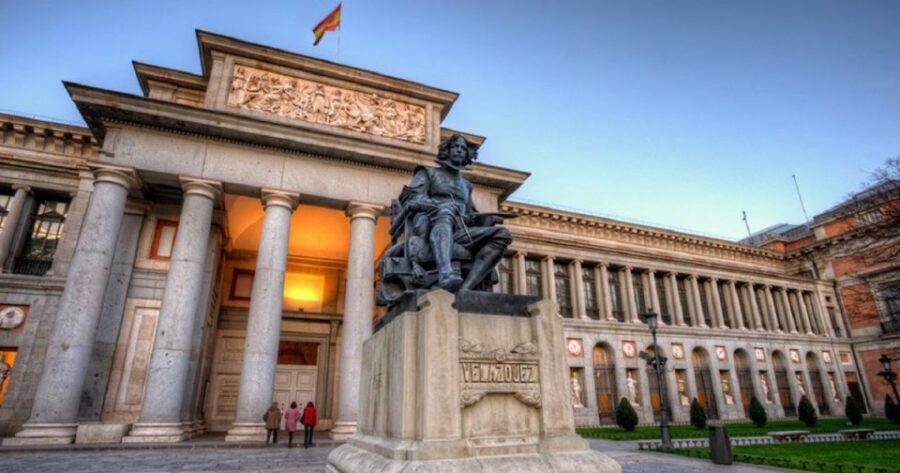
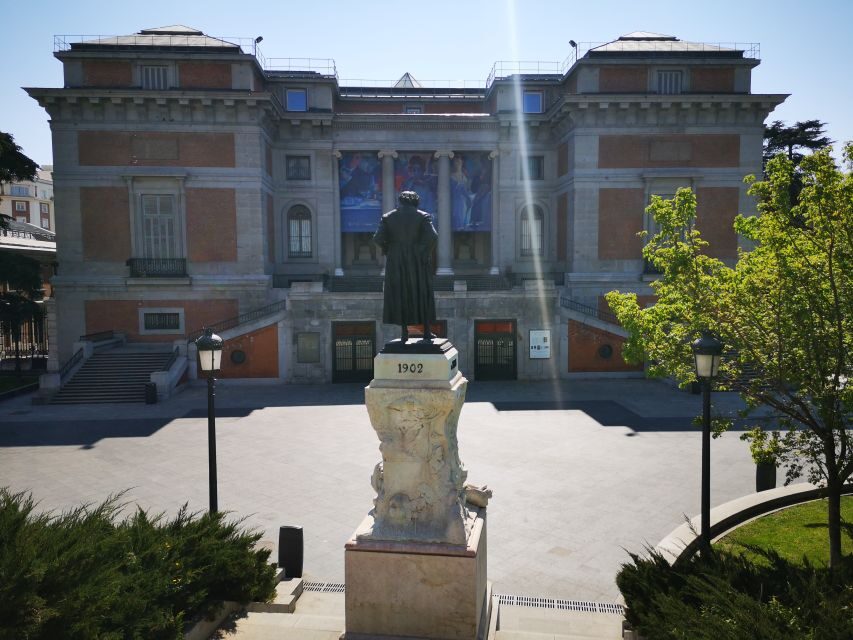
You meet at the Monumento a Velázquez (Paseo del Prado, 11) with an Amigo Tours sign, step into Spain’s top art museum, and get live English/Spanish narration (with Italian also offered). After the guided part, you can stay inside the museum to roam your own route.
In This Review
- Key things I’d watch for
- Getting to the Prado fast: Velázquez Statue to front-row stories
- What a 12th-to-20th-century museum visit feels like in 90 minutes
- How the guide makes Las Meninas feel less mysterious
- The big artists and works you’ll focus on
- Learning the why behind the paintings, not just the what
- Small groups, bilingual guidance, and hearing in a crowded museum
- Rules inside: no cameras and no flash
- What you do after the guided portion (and why it matters)
- Price and value: why $34 can be a smart buy here
- Who should book this Prado Museum guided tour?
- Should you book this Prado Museum guided tour with Amigo Tours?
- FAQ
- Where is the meeting point for the Prado Museum guided tour?
- How long is the guided tour?
- Is museum entrance included?
- Do I skip the ticket line?
- What languages are offered during the tour?
- Can I take photos or record video inside the museum?
- Are large bags or luggage allowed?
- Is the tour wheelchair accessible?
- Can I stay in the museum after the guided part ends?
- Is hotel pickup included?
Key things I’d watch for
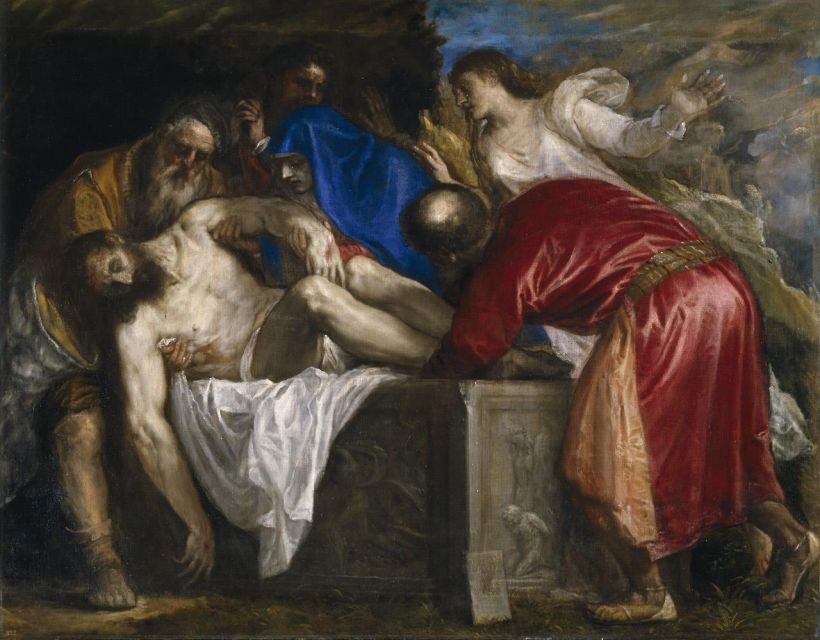
- Meet at the Velázquez statue on the museum side so you don’t waste time hunting in a huge complex
- Skip the ticket line and focus on the art instead of queue math
- Las Meninas, El Jardín de las Delicias, and the big names get explained with technique and intent
- You cover art from the 12th century to the 20th century, but with a guided hit list so it doesn’t feel endless
- Photography is not allowed inside, so bring your attention, not your camera
Getting to the Prado fast: Velázquez Statue to front-row stories

The Prado can feel like a workday for your feet. This tour helps you start with momentum. You meet at the Monumento a Velázquez by the museum entrance side (Paseo del Prado, 11), and the guide carries an Amigo Tours sign, which cuts down on the usual “Is this the right spot?” stress.
The other smart move is skipping the ticket line. Even if you’re comfortable with museums, the Prado’s popularity is real. A guided format is usually worth it here because you’re paying not just for access, but for time. At $34 per person, the goal is to get the art explanation you’d miss if you wander in solo.
Timing matters a bit. The tour is listed at 1.5 hours, but the guide may need extra moments to organize tickets and get settled. That doesn’t mean the experience is short on content, but it does mean you should arrive ready to go, not strolling around the plaza like you’ve got all day.
You can also read our reviews of more guided tours in Madrid



What a 12th-to-20th-century museum visit feels like in 90 minutes
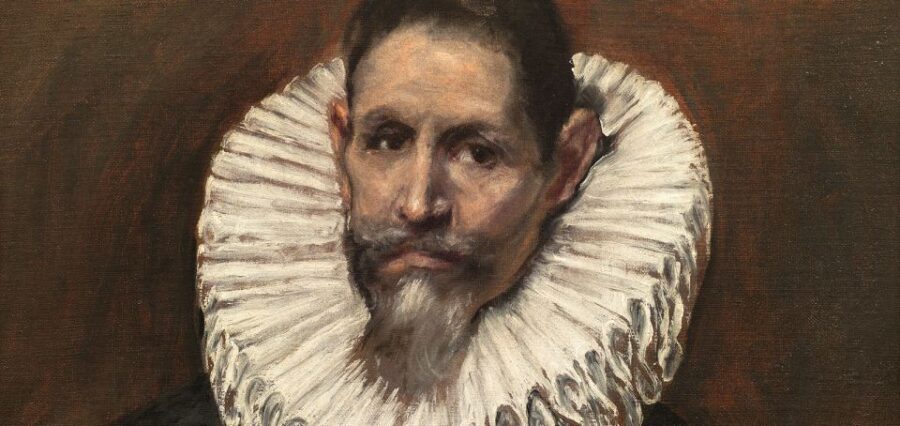
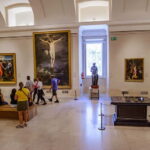
The Prado’s collection spans an enormous timeline, from the 12th century through the end of the 20th. The genius of a guided highlights tour is that it doesn’t ask you to “see it all.” Instead, you get a curated path through the museum’s most influential European art, with the guide acting like a translator for themes you might otherwise miss.
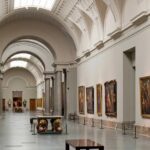
The museum itself is also part of the deal: a Neoclassical building that houses everything from old master painting traditions to later movements. In a large museum, your brain does a common trick: it reduces paintings to decoration. A good guide tries to prevent that by teaching you how to look at what you’re seeing—composition, lighting, perspective, and how an artist’s choices connect to the world they lived in.
In this format, the guide’s focus is on more than recognition. You’ll learn the aims, lives, and circumstances behind works, and how the historic moment shapes the image. That’s what turns a visit from “I saw famous paintings” into “I understand why they matter.”
How the guide makes Las Meninas feel less mysterious
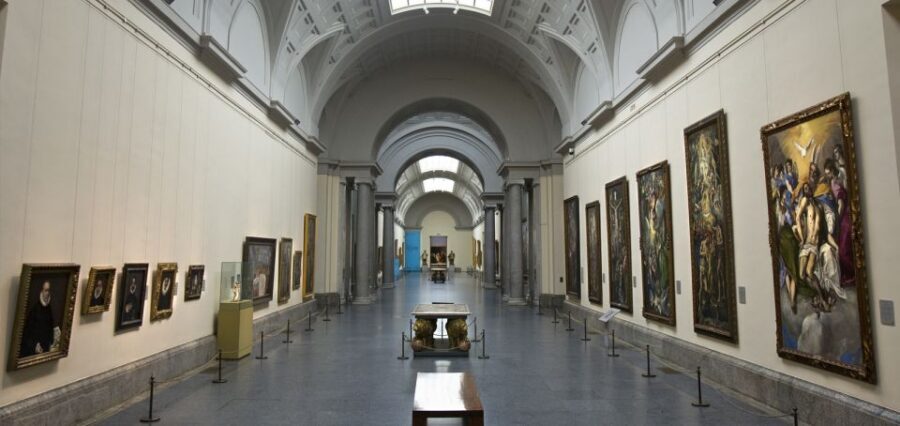
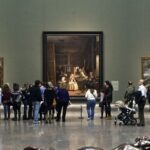
If you’ve heard of one Prado painting before, it’s probably Las Meninas by Velázquez. The reason this tour gets attention is that it doesn’t treat it like a museum screenshot. You get the behind-the-scenes ideas—often the kind of details that are hard to notice when you’re trying to read a plaque in a crowd.
The guide’s job here is to help you see how the painting works as a system: the arrangement of figures, the implied gaze, and the way Velázquez creates meaning through perspective and staging. Once you understand the logic of the scene, the painting stops being a locked box.
Another big payoff is that the tour keeps technique on the same level as story. Instead of just saying an artist was important, the guide explains the unique art methods used by different painters. That makes the Prado feel like a classroom, but with eye candy and human stakes.
You also get a practical advantage: a guide can point out what to notice first. In a museum this size, that alone is a huge time saver.
The big artists and works you’ll focus on
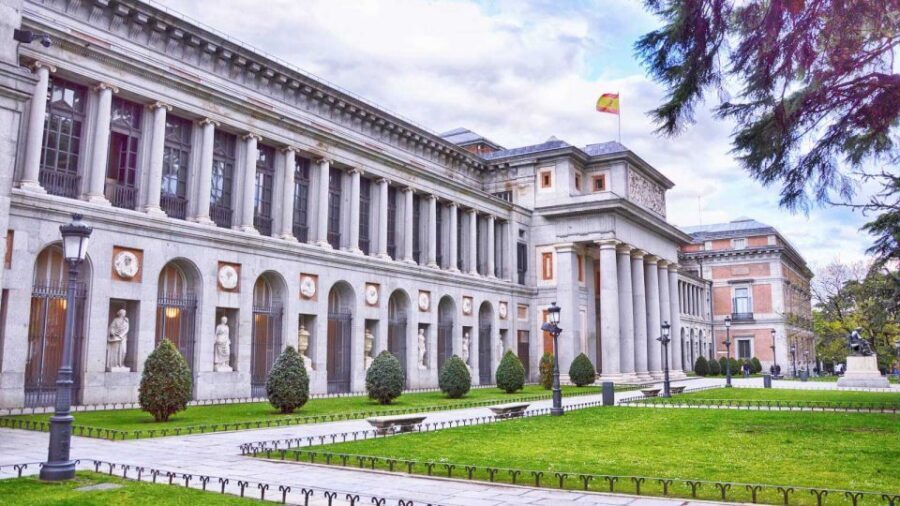
This tour’s hit list is built around the Prado’s European heavyweights. Expect emphasis on major figures like Velázquez, Goya, El Greco, and El Bosco, plus other major Italian and Flemish artists such as Rubens.
Here are the themes you can expect around the marquee works:
- Velázquez: why his perspective and composition became a model for later painters
- Goya: how his approach connects to emotion and atmosphere, including darker works often discussed in tours such as Goya’s Black Paintings
- El Bosco: how surreal imagery in El Jardín de las Delicias can be decoded through symbolism and layered meaning
- El Greco: what makes his style different from other artists working around the same era, especially in how he uses form and impact
The guide also frames these artists as influential thinkers, not just painters. Some explanations land on how art functions like politics or philosophy on canvas. Other explanations focus more on lived circumstances—where the artist was, what they were responding to, and why a particular visual choice made sense then.
That balance is what keeps the tour from feeling like a history lecture with pictures. You’re learning, yes. But you’re also looking.
Learning the why behind the paintings, not just the what
What makes this tour work for first-timers is that it treats each painting like a message with a structure. You’re not only told who painted what. You’re shown what the artist was trying to achieve and how the painting’s choices communicate it.
You’ll hear plenty about the historic moment the work was made in. That’s crucial in the Prado because the collection isn’t one style in one room. It’s a map of changing tastes, changing politics, and changing ideas about how images should function.
One reason the tour earns such high marks is pacing with purpose: the guide doesn’t speed-run the museum while you’re left behind. The goal is to keep you oriented, help you connect one artwork to another, and give you a mental framework you can carry into your independent time afterward.
And yes, some people are surprised by how emotional the stories can get. When you understand context—who commissioned a work, what an artist was responding to, how a style signals allegiance or shock—the art stops being distant.
You can also read our reviews of more museum experiences in Madrid





Small groups, bilingual guidance, and hearing in a crowded museum
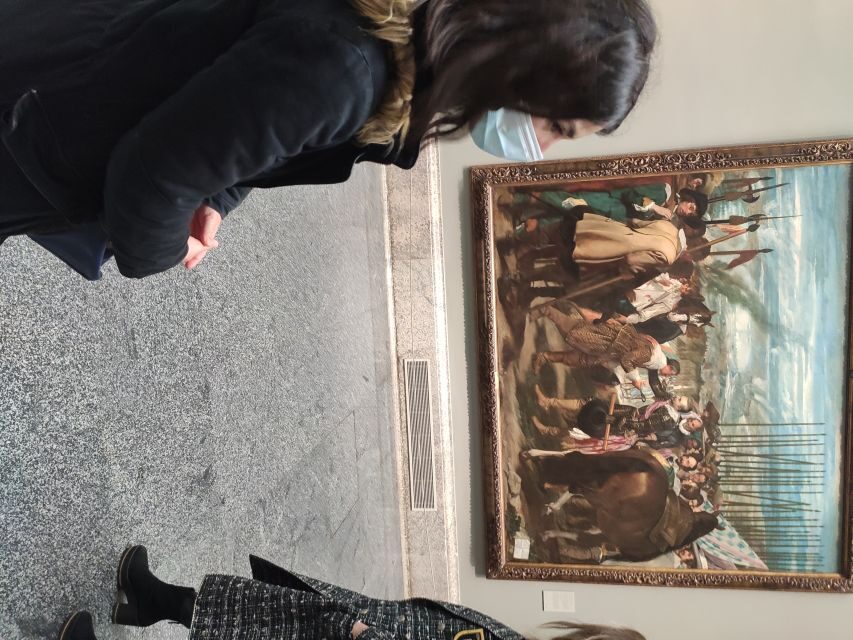
This experience can run as private or small groups, which is a big deal at the Prado. A smaller group means you can actually get close enough to ask questions and hear the point of a painting without playing dodge-the-stanchion.
You’ll have live commentary in English and Spanish, and the tour can include Italian as well. During winter months, the format may be held simultaneously in English and Spanish due to lower demand. Practically, that means you may be paired with one language path, and the guide will work to keep timing moving without breaking the flow.
Crowds are still crowds. In one instance, the audio setup in a busy moment made it harder to catch every word. My advice: don’t “phone-in” your position. Stay near the guide when the room gets loud, and ask for clarification early rather than trying to catch up at the end of a stop.
If you care about details—brushwork, unusual perspective effects, why a figure is placed where it is—this tour style is a good match because it’s built to explain those details in real time.
Rules inside: no cameras and no flash
Inside the Prado, the rules are straightforward: no cameras and no flash photography, with photography not allowed inside. That changes how you experience the museum.
Instead of relying on screenshots, you’ll have to do the slower, better method: look, absorb, then decide if you want to write a quick note while it’s fresh. The guide’s explanations help you remember because you’re not just collecting images. You’re collecting meaning.
This can actually be a relief. For some people, museums with photo rules and endless phone screens feel exhausting. Without that temptation, the tour encourages you to stay present with the paintings.
Just be aware: because you can’t photograph inside, you won’t be able to “save” everything for later. The guide can’t explain every corner of every canvas either. So take the guide’s cues—what to look for first, what details matter, and what to return to when you go on your own.
What you do after the guided portion (and why it matters)
Once the guided visit ends, you can stay in the museum and explore independently. That’s one of the best parts of this format, because 90 minutes gives you direction, and then the Prado becomes your personal choice.
Here’s how to use that time well:
- Revisit one or two works the guide emphasized, not everything.
- Pick a theme you liked from the tour—perspective, symbolism, political tone—and walk through other paintings using that lens.
- If you’re tired, don’t fight the urge to sit. The Prado is easier when you pause and let your brain sort what you just learned.
Because you’ve already learned how to look, you’ll get more from the museum even if you only see a fraction of the galleries. That’s the quiet advantage of a guided highlights route.
Price and value: why $34 can be a smart buy here
At $34 per person for a 1.5-hour guided visit, you’re paying for three things: entrance, an actual local guide, and live commentary that helps you interpret the collection. The skip-the-line piece also matters. If you’ve ever queued at a major museum on a good day, you know how fast time disappears.
The time you’re paying for is also the hard part of the Prado experience. Without a guide, it’s easy to bounce between rooms, skim plaques, and end up with a vague sense of “big art, big deal.” With a guide, you get focused stops like Las Meninas and El Jardín de las Delicias, plus explanations of technique and intent.
One consideration is the tight schedule. Since there’s extra time needed for ticket organization, the live commentary has to be efficient. If you’re the kind of person who likes to linger for 30 minutes on one painting, you’ll probably want to stay afterward, when the tour ends and you can slow down.
Overall, for the Prado, $34 feels like the kind of price that buys understanding faster than self-guided wandering does.
Who should book this Prado Museum guided tour?
This is a strong fit if:
- You’re short on time and want the Prado’s core works with context
- You want explanations of technique and story, not just a list of famous artists
- You like small-group attention and live Q&A moments in a museum setting
It may be less ideal if:
- You’re determined to photograph inside (the museum doesn’t allow it here)
- You prefer complete freedom and don’t want your pace shaped by a guide
- You need a very quiet, slow experience where you can spend extra minutes on every single canvas
One practical note: it’s wheelchair accessible, so it’s set up for mobility access within the museum experience.
Should you book this Prado Museum guided tour with Amigo Tours?
I’d book it if you want the Prado to make sense quickly. This tour is designed for that moment when the museum feels too huge to enjoy fully. You get the front-load of context, the big-name works, and the “how to look” lesson that makes your independent time feel richer.
If you’re the type who plans to do plenty of independent museum wandering afterward, this is a smart way to start. You’re not just paying for entry. You’re buying a guided map through Europe’s influential art history, told with the tools you need to keep seeing after the tour ends.
FAQ
Where is the meeting point for the Prado Museum guided tour?
Meet the guide at the Velázquez Statue at Paseo del Prado, 11. The guide will carry an Amigo Tours sign.
How long is the guided tour?
The guided portion lasts 1.5 hours.
Is museum entrance included?
Yes. The price includes entrance to the Prado Museum.
Do I skip the ticket line?
Yes. The tour includes skipping the ticket line.
What languages are offered during the tour?
Live commentary is available in English and Spanish, and Italian is also offered.
Can I take photos or record video inside the museum?
No. Photography inside the Prado Museum is not allowed, and cameras are not permitted.
Are large bags or luggage allowed?
No. Luggage or large bags are not allowed.
Is the tour wheelchair accessible?
Yes. The tour is wheelchair accessible.
Can I stay in the museum after the guided part ends?
Yes. After the guided visit, you can stay in the museum to explore independently.
Is hotel pickup included?
No. Hotel pickup and drop-off are not included.