REVIEW · MADRID
Prado walking Tour with an Art Lover
Book on Viator →Operated by Joaquin Guide Madrid · Bookable on Viator
Prado art can feel like homework. This tour keeps it human. You get a small group (up to seven) and a certified guide, Joaquín, plus skip-the-line entry so you spend your energy on looking, not waiting. The main trade-off: it’s focused on one big museum experience for about 2.5 hours, so it’s not a multi-stop city stroll.
What I like is the way the visit turns the Prado into a clear story from the 15th to the 19th century. You’ll move through the evolution of art while learning how painters like Bosch, Raphael, Titian, Velázquez, and Goya shaped Spanish art and even influenced later generations. If you want a fast skim of highlights, this might feel a bit slower, but if you want your eyes to understand what you’re seeing, it’s a strong fit.
In This Review
- Key Points That Make This Prado Tour Worth It
- How the Goya Monument Meeting Point Helps You Start Smooth
- Skip-the-Line Entry and the Small-Group Pace
- Inside the Prado: Building a 15th–19th Century Art Story
- Bosch to Goya: Why These Artists Matter in Your Head
- Spanish History You Can Actually See
- Pace and Personalization: What the 7-Person Limit Changes
- Ending Inside the Museum: Get Your Bearings for More Looking
- Price and Value: What $76.89 Buys You Here
- Who This Prado Tour Suits Best
- Should You Book This Prado Walking Tour?
- FAQ
- How long is the Prado walking tour?
- What is the price per person?
- How big is the group?
- Is the tour offered in English?
- Is skip-the-line admission included?
- Do I get a mobile ticket?
- What do I receive after the tour?
- Where do we meet, and where does the tour end?
- Is hotel pickup or drop-off included?
- What is the cancellation policy?
Key Points That Make This Prado Tour Worth It
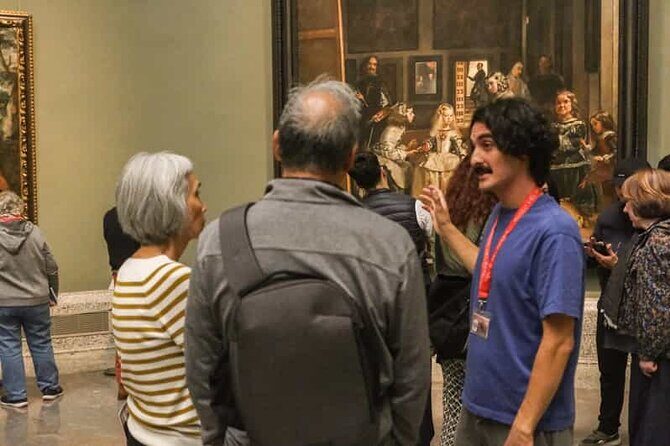
- Up to 7 people means you’re not lost in a crowd, and Joaquín can steer the pace to your questions.
- Skip-the-line tickets save time at one of Madrid’s most popular museums.
- Art history from the 15th to the 19th century gives you a framework instead of random masterpieces.
- Major artists covered include Bosch, Raphael, Titian, Velázquez, and Goya, tied to the big story of Spanish painting.
- A post-tour PDF helps you keep exploring with a plan, not guesswork.
- A local eating list near the museum makes it easier to turn art time into a real meal plan.
How the Goya Monument Meeting Point Helps You Start Smooth
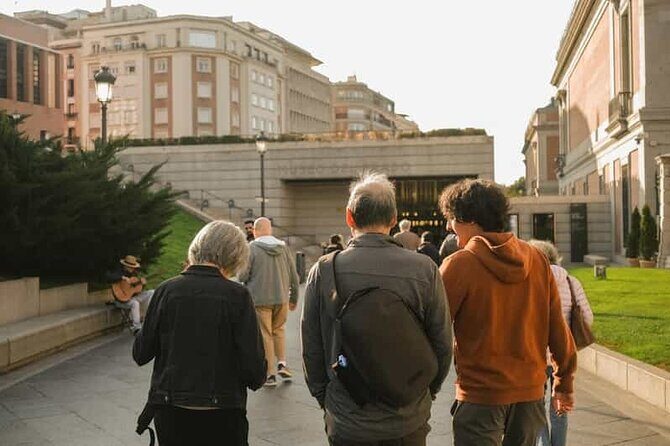
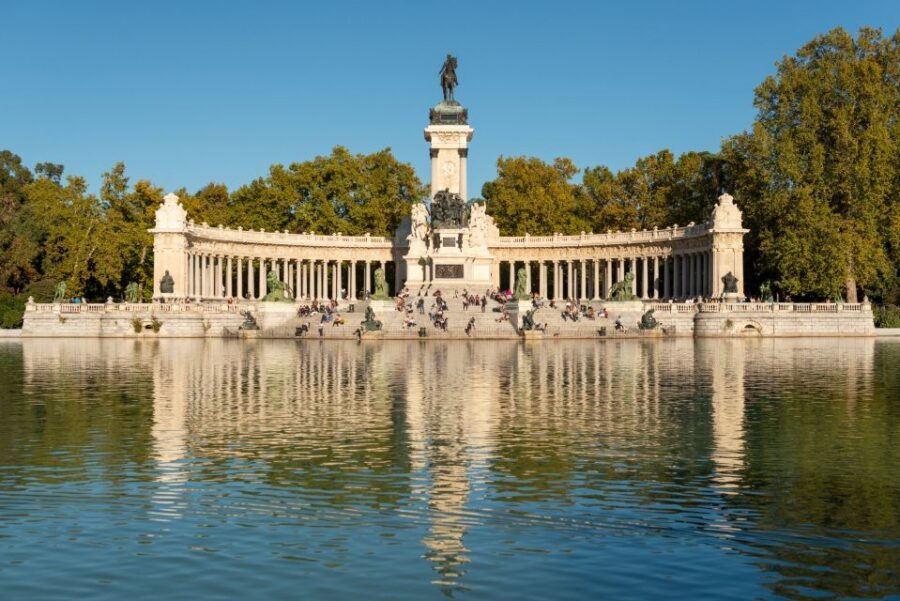
The tour starts at the Monument to Goya (C. de Felipe IV, s/n, Retiro). That’s not just convenient naming. It’s a smart cue: the Prado is built around the same world of ideas and artistic ambition that Goya represents, so starting here helps your brain switch from street mode into museum mode.
Because it’s near public transportation, I find this kind of meeting point reduces stress. You’re less likely to show up flustered, late, or already tired before the art even starts.
One small detail to know: you’ll finish inside the museum on its southernmost side. If you’re the type who likes to get a full visual “map” of where things are, that matters. The good part is the guide can take you back to the main entrance if you need it.
You can also read our reviews of more walking tours in Madrid



Skip-the-Line Entry and the Small-Group Pace
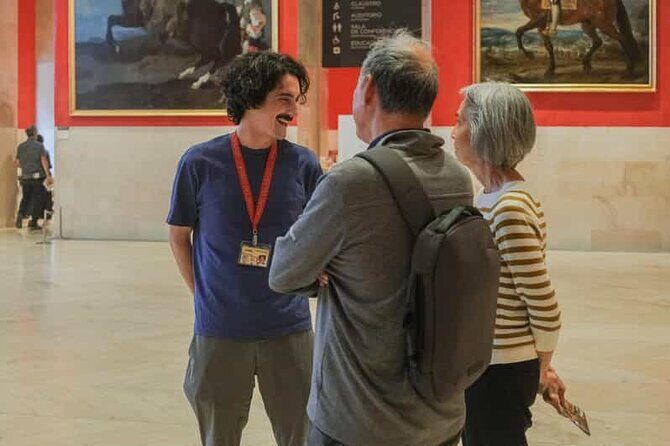
This experience costs $76.89 per person and runs about 2 hours 30 minutes. For Madrid, that’s the kind of pricing where you should ask: what am I paying for beyond a museum ticket?
Here’s what you’re paying for:
- Skip-the-line tickets (admission is included)
- A certified guide
- A maximum group size of seven
- Extra planning help after the tour (the PDF and nearby meal ideas)
The skip-the-line piece is practical value. The Prado can have long waits, and waiting can ruin museum focus. When you walk in with time intact, you actually have the mental bandwidth to look slowly and learn.
The small-group size is the other big value driver. In a group this size, you’re more likely to get explanations that match what you care about. In the real world, that turns a “see famous paintings” experience into a “understand what I’m seeing” experience.
Inside the Prado: Building a 15th–19th Century Art Story
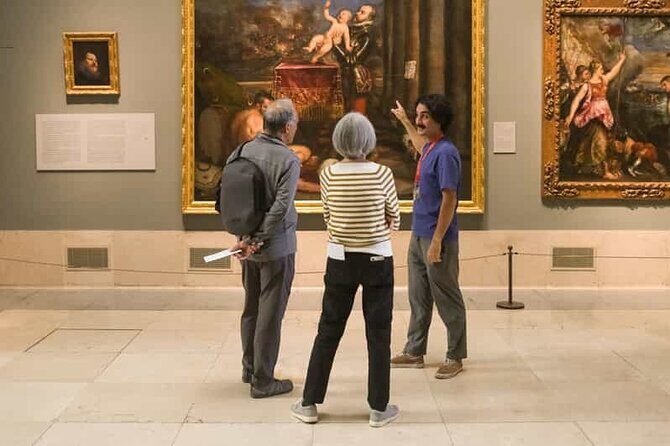
You’re spending the whole tour at the Museo Nacional del Prado, and that matters. Instead of hopping between stops, you’re guided through the museum as a timeline.
The guide’s core promise is approachable art history: tracing the evolution of art across the 15th to the 19th centuries. That time range can sound academic, but it gets practical fast when someone helps you connect style changes to the bigger historical context.
Here’s what you can expect the tour to feel like:
- You’ll get a guided path through the museum so you don’t bounce aimlessly.
- You’ll learn how painters developed techniques over time.
- You’ll get stories behind masterpieces, not just names.
The “all levels” part is also important. If you’re new to art, the structure helps you avoid the classic problem: you see a painting, you don’t know what matters, so you move on quickly. If you’re already an art fan, the framework still helps because it connects individual works to the broader shift in style and influence.
Bosch to Goya: Why These Artists Matter in Your Head
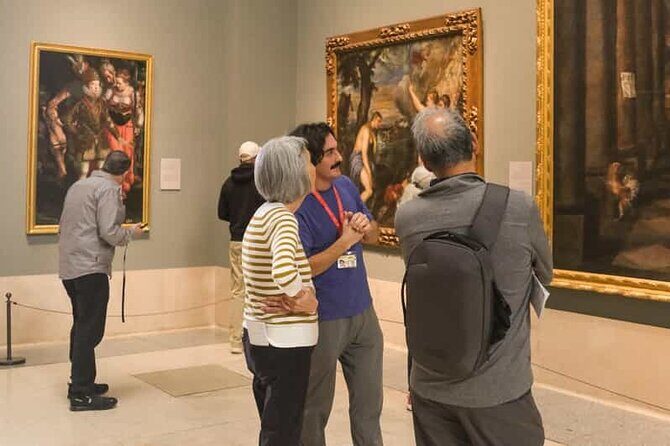
The tour highlights major painters including Bosch, Raphael, Titian, Velázquez, and Goya. Rather than treating them like separate trophies, the guide ties them together as part of how Spanish art developed.
Think of it like this: you’re not just collecting facts. You’re learning a set of visual signals. Once you start recognizing those signals, you’ll walk through the Prado differently on your own after the tour.
A few reasons this lineup is so useful:
- Bosch represents imagination and story-driven imagery that teaches you how artists can build meaning with symbolism.
- Raphael helps you track the influence of major Renaissance ideas on later art.
- Titian is key for understanding how color, atmosphere, and technique became central tools for painters.
- Velázquez is one of the big reasons Spanish painting feels modern. You’ll get context for why his approach had lasting impact.
- Goya brings the story into Spain’s own darker, sharper edge and shows why his influence extends well beyond his century.
The tour also connects these painters to the idea that later artists learned from them. That’s the payoff for art lovers: you start seeing how the Prado isn’t locked in the past.
Spanish History You Can Actually See
One of the things you’re paying for is the guide’s ability to connect art to Spain in a way that doesn’t drown you in dates.
The tour includes Spanish history and artistic techniques in a way meant to be understandable. In practice, that usually means you’ll hear what to notice: composition choices, figure emotion, the feel of a scene, and why a technique matters.
If you’ve ever stood in front of a painting and thought, I like it, but I don’t know what I’m looking at, this is the antidote. The guide’s job isn’t to impress you with jargon. It’s to help your eyes work. And once your eyes work, the Prado becomes a lot more satisfying.






Pace and Personalization: What the 7-Person Limit Changes
This experience caps at seven people. That’s not a marketing number. It affects how long you can linger at key works and still keep moving.
With a group this size:
- you can ask questions without feeling like you’re blocking the flow
- the guide can adjust the emphasis to the group’s interests
- the tour can stay conversational instead of strictly lecture mode
That also makes the visit easier for families. If you’re bringing teenagers or younger adults who might otherwise speed through, the guide’s ability to adapt helps. The goal is to get everyone past skimming famous names and into understanding what’s on the canvas.
Ending Inside the Museum: Get Your Bearings for More Looking
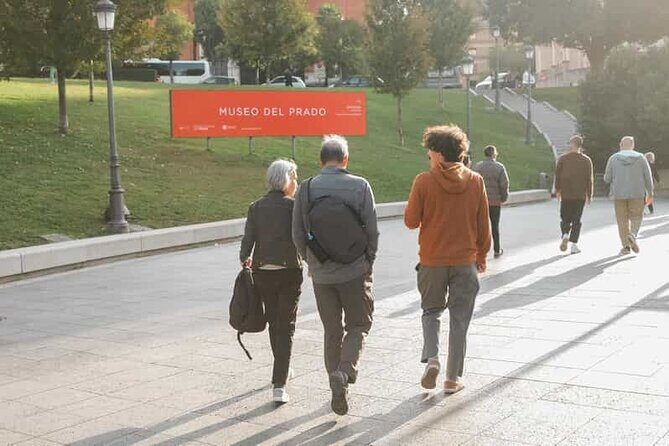
The tour ends inside the museum on its southernmost side (Pl. Murillo, 1, Retiro, 28014 Madrid). If you’re imagining a neat finish back at the main entrance, it’s worth planning a small adjustment.
Good news: the guide can take you back to the main entrance if you need it. That’s an easy fix if you want to reorient before continuing on your own.
Also, you’ll be leaving with help for that next stage:
- a PDF with recommendations to continue your visit after the tour
- a list of recommended places to eat near the museum
That kind of follow-up is underrated. Museums work better when you have a second plan. It’s the difference between wandering for 30 minutes and hitting a few extra works you would have otherwise missed.
Price and Value: What $76.89 Buys You Here
Let’s talk value without fantasy math.
You’re paying $76.89 for:
- Skip-the-line admission
- a certified guide
- a 2.5-hour guided storyline through a major museum
- a PDF to extend your visit
- an eating list near the Prado
If you go on your own, you can absolutely see famous paintings. But the real question is whether you’ll see them with context. At the Prado, context changes your experience. A guide gives you a path and the “why it matters” behind the masterpieces.
And because the group is small, the guide’s time isn’t diluted. That’s why this feels like better value than a generic large-group museum tour, even if the price is higher than a bare ticket.
One practical note: the tour is often booked about 34 days in advance. That suggests it’s a popular pick for art lovers who want the timing to work.
Who This Prado Tour Suits Best
I’d put this tour at the top of the list if:
- you’re an art lover who wants a structured route through the Prado
- you’re new to art and want help making sense of what you’re looking at
- you’re visiting with teenagers and want something that holds attention
- you like Spanish culture and want it explained through what painters actually made
It’s offered in English, so that’s the main language consideration. The good part is that it’s designed to work for all levels, not just experienced museum people.
Also, this is a museum experience with one base location. If you dislike long stretches indoors, you should know you’ll be focused on Prado time rather than outdoor sightseeing.
Should You Book This Prado Walking Tour?
Yes, if you want your Prado visit to feel guided, clear, and easy to carry with you after you leave.
Book it if:
- you hate museum lines and want skip-the-line entry
- you want a small group and a more personal vibe
- you’d rather learn the story behind the works than just take photos
Hold off if:
- you’re comfortable touring a museum on your own with less structure
- you’re looking for a multi-stop day with lots of different neighborhoods
For most people who care about art (even a little), this is a smart way to get more from a place that can otherwise overwhelm.
FAQ
How long is the Prado walking tour?
It lasts about 2 hours 30 minutes.
What is the price per person?
The price is $76.89 per person.
How big is the group?
The tour has a maximum group size of seven travelers.
Is the tour offered in English?
Yes, it’s offered in English.
Is skip-the-line admission included?
Yes. Skip-the-line tickets and admission are included.
Do I get a mobile ticket?
Yes, it’s listed as a mobile ticket.
What do I receive after the tour?
You get a PDF with recommendations to continue your visit and a list of recommended places to eat near the museum.
Where do we meet, and where does the tour end?
You start at the Monument to Goya (C. de Felipe IV, s/n, Retiro, 28014 Madrid) and end inside the museum on its southernmost side (Pl. Murillo, 1, Retiro, 28014 Madrid). The guide can take you back to the main entrance if you need.
Is hotel pickup or drop-off included?
No. Pick-up or drop-off is not included.
What is the cancellation policy?
You can cancel for a full refund up to 24 hours before the experience starts. Free cancellation is available, and changes within 24 hours of the start aren’t accepted.