REVIEW · MADRID
Reina Sofia Museum Guided Tour in Madrid
Book on Viator →Operated by Amigo Tours Spain · Bookable on Viator
Guernica lands harder with a guide. This 1 hour 15 minute Reina Sofía Museum tour takes you through the museum’s old hospital building, where Picasso, Dalí, and Miró make modern art feel personal, not random. I love the way the guide connects the big ideas like Cubism and Surrealism to what you’re seeing, and one trade-off is that the pace can feel tight if you want to linger on more than a handful of works.
I also like the small group setup, with a maximum of 15 people, plus bilingual narration in English and Spanish at the same time. That means you can keep up without getting stuck behind the logistics—or losing the thread while the galleries twist into each other.
In This Review
- Key highlights to watch for
- Reina Sofía’s old-hospital setting and why it changes the visit
- The 1 hour 15 minute flow: how the time is used inside the museum
- Guernica and the Spanish modern-art storyline you’ll actually follow
- The art movements: Cubism, Surrealism, and what to look for in each room
- Picasso, Dalí, Miró, and the bonus international thread with Diego Rivera
- What to know before you meet up at C. de Sta. Isabel 52
- Inside rules: photography, lockers, and how to avoid the rushed feeling
- Is it worth $34.99 for a Reina Sofía guided tour?
- Who this Reina Sofía tour is best for
- Should you book this Reina Sofía Museum guided tour?
- FAQ
- How long is the Reina Sofía guided tour?
- What is included in the $34.99 price?
- Is the tour offered in English?
- Where do I meet the guide?
- Can I take photos inside the museum?
- What if I need to cancel?
Key highlights to watch for
- Old hospital building setting: Reina Sofía is not a blank white box, it’s a real historic space
- Guernica-focused payoff: you’ll get the context so the painting actually makes sense
- Bilingual narration: English and Spanish delivered simultaneously for smoother follow-along
- Small group size (15 max): better flow through rooms than big bus tours
- Modern art “movement spotting”: you’ll learn what to look for in Cubism, Surrealism, abstraction, and modernism
Reina Sofía’s old-hospital setting and why it changes the visit
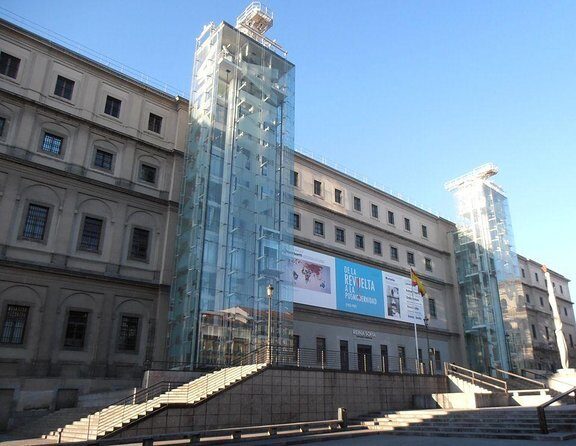
Reina Sofía works differently than the classic museum vibe you might be used to. It’s housed in an older hospital building, so the museum feels more like you’re moving through history than just passing gallery walls. That matters, because modern art can feel like it’s playing by different rules, and the building gives you a stronger sense of place before you even hit the major works.
This is where a guided format helps. When the guide frames what you’re seeing—why it was made, what it reacts to, and what styles are doing—you stop treating the art like puzzle pieces scattered across a maze. Instead, you start noticing patterns. That shift is the real value of booking this kind of Reina Sofía experience rather than only wandering on your own.
One more thing: photography isn’t allowed inside. So plan to use your eyes and your memory during the visit. The guide’s explanations are designed to replace the urge to rely on photos later.
You can also read our reviews of more guided tours in Madrid


The 1 hour 15 minute flow: how the time is used inside the museum
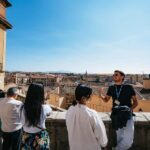
On paper, 1 hour 15 minutes doesn’t sound like much time to cover a museum full of modern Spanish art. In practice, this tour is built around depth over distance—meaning you get a guided path to the most important ideas and works, not a sweep of everything on every floor.
Before you even get to the core galleries, there’s a short stop at an emblematic place dedicated to the memory of Goytisolo. Even if you only treat it as a quick context moment, it sets a tone: Spanish culture here isn’t just about paintings, it’s about writers and history too.
Then you’ll be inside the Reina Sofía with the guide. This is where the itinerary typically concentrates on recognizable anchors like Picasso and Guernica, plus related artists and movements. A few people have noted that they saw fewer than a dozen pieces, which can feel rushed if you expect a broad tour. If you’re the type who likes to sit with one painting longer, it’s smart to plan extra time afterward on your own.
Guernica and the Spanish modern-art storyline you’ll actually follow
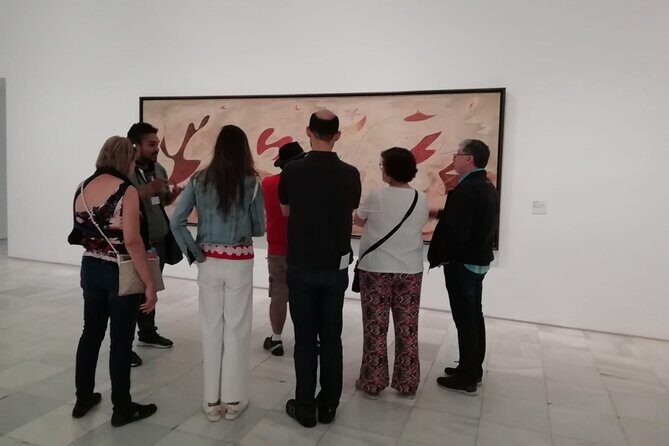
The big reason people book this Reina Sofía Museum guided tour is Guernica. It’s the painting everyone points to, and the guide’s job is to help you see why it hits so hard and why it became such a lasting symbol. Without context, Guernica can feel chaotic. With context, you start recognizing the logic of the imagery and the emotional intent behind the fractured forms.
You’re also set up to connect Guernica to the broader Spanish modern-art timeline. The guide explains major styles like abstractionism, cubism, surrealism, and modernism in a way that translates into real viewing. If you’ve ever looked at Cubism and thought, I know what I’m seeing, but I don’t know what it’s saying, this tour aims to fix that.
You’ll get to see works by Pablo Picasso, plus other Spanish artists such as Salvador Dalí and Joan Miró. Even if the museum doesn’t group everything neatly by artist or movement, a good docent-like guide helps you build your own mental map.
A practical note: you’re not going to see every Picasso you wish you could. Several guides have been praised for being engaging and focused, and others have been praised for making complex works clearer. Your best strategy is to go in knowing this is a guided highlight session, not an all-day art history seminar.
The art movements: Cubism, Surrealism, and what to look for in each room
Modern art can feel like a language you don’t speak yet. The strongest part of this Reina Sofía tour is the way the guide turns art movements into something you can spot while you’re standing in front of the work.
Here’s the practical version of what you’re learning:
- Cubism: look for fractured perspectives and multiple viewpoints. The guide’s explanations help you understand why that breakdown isn’t just style—it’s a way of representing reality.
- Surrealism: expect dream logic and unusual juxtapositions. The guide’s framing helps you see symbolism instead of treating the scene as random.
- Abstractionism / modernism: you’ll hear how modern artists broke from older rules. When you know the intent, the shapes stop feeling like accidents.
People have highlighted guides like Gabriela for breaking down the Cubism-to-Surrealism pathway and then bringing it back to the power of Guernica. Others have praised guides such as Helena and Elena for clear explanations in English and for helping non-specialists make sense of what modern art is doing.
If the tour audio equipment is part of your experience (and it often is, since bilingual narration is happening at once), do yourself a favor and confirm you can hear. One review mentioned audio clarity issues and another mentioned ear-piece support for hearing aids, so your real takeaway is: check your device early so you don’t spend the first part straining to understand.
Picasso, Dalí, Miró, and the bonus international thread with Diego Rivera
This Reina Sofía tour is strongly rooted in Spanish artists, and that’s the point. The museum’s modern identity largely comes from that Spanish perspective: post-early 20th century changes, politics, and experimentation.
Still, you do get an international thread. The tour includes mention of Diego Rivera, the Mexican painter, among other names seen on the route. The guide helps you place non-Spanish work in the context of what’s happening in Europe and what Spanish modern art is responding to.
That matters if you’re trying to understand Reina Sofía as more than a wall of famous names. International works show how ideas traveled and how artists learned from one another across borders. It also gives you a wider lens if you’re used to thinking of Spanish art as only Spanish.
If you want a strict “Spain-only” art history flow, this tour won’t overload you with international artists. But if you want a guided experience that explains how different modern art currents connect, the inclusion of figures like Rivera gives you something extra to chew on after the visit.
You can also read our reviews of more museum experiences in Madrid
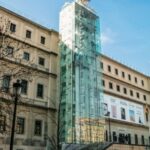



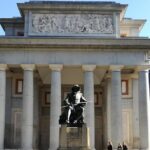

What to know before you meet up at C. de Sta. Isabel 52
Your tour starts at C. de Sta. Isabel, 52, Centro, 28012 Madrid, with a set meeting time around 12:45 pm. You meet the guide by the statue outside the main entrance. The tour ends back at the meeting point.
This is the part where small details matter. Some people reported meeting point confusion because map directions can route you to a different side of the museum with a different entrance setup. So here’s a simple rule: go to the statue area and wait there until it’s time to start. If you’re early, stay put. Don’t wander off chasing directions.
Because the tour group is small (max 15), you don’t want to be the person who misses the start due to chasing an alternate entrance. Arriving 10 minutes early gives you time to find your bearing and get the headset/audio set right if your tour uses one.
Inside rules: photography, lockers, and how to avoid the rushed feeling
Inside the museum, no photography is allowed. Plan on taking notes in your phone only if allowed by your own preference, but don’t count on screens as a replacement for actually seeing the work.
Also, the tour experience includes practical museum rules that can eat time if you’re not ready for them. Reviews mention that part of the early minutes can go to ticket exchange or locker use, and sometimes the headset handoff is tied to the group leaving together. One common complaint was that time spent on logistics felt like it reduced time for art explanations.
You can reduce that by being prepared:
- travel light, and know you may need a locker
- use restroom time wisely if you have a tight schedule
- keep your questions for moments when you’re not waiting in a line
When the logistics go smoothly, the tour works well as a focused guided route. When they don’t, the main art lesson can feel truncated. That’s why picking the right expectations matters: this is a short, structured highlight tour.
Is it worth $34.99 for a Reina Sofía guided tour?
For $34.99, you get the essentials: a professional art historian guide plus entrance to the Reina Sofía, and the visit is guided in English or Spanish (with bilingual narration happening simultaneously). The value is that you’re paying for interpretation, not just access.
A solo museum visit can be cheaper, but modern art at Reina Sofía is spread out and not always intuitive. A guide helps you avoid the most common problem: spending your time walking and only half-understanding what you’re seeing. If Guernica is a top priority, the context you gain can make the painting feel far more meaningful than a quick stop in a crowd.
The drawback side of value is also clear: you don’t get a long, slow pace. If your goal is to see lots of Picasso and spend an hour on every major room, you might want to pair this with independent time after the tour. Several people wished the tour lasted longer because they wanted to see more works and more Picasso connections.
My take: at this price, it makes the most sense when you’re time-limited, you want the big anchor works (Guernica and the surrounding movements) explained, and you prefer a guided route to wandering.
Who this Reina Sofía tour is best for
This guided Reina Sofía Museum tour is a good match for you if you want:
- a structured modern art intro that connects style to meaning
- a short itinerary that hits Picasso, Guernica, and major movements
- a guide-led explanation in English, even if you don’t know modern art yet
It can also work well for families, since guides have been praised for engaging storytelling and for keeping explanations friendly rather than stiff. If you’re traveling with an older adult, there have been mentions of hearing-aid support through the audio device, which is a practical comfort detail.
If you’re an art scholar and want to see everything in depth, this is likely too short. If you want a quick modern-art orientation plus the emotional payoff of Guernica, this format is a solid use of your Madrid time.
Should you book this Reina Sofía Museum guided tour?
Yes, if Guernica and the main Spanish modern-art story are your priorities and you’d rather learn how to look than just walk room to room. I’d book it especially when you want Cubism and Surrealism explained in plain language, and when you like having a guide point you to the works that matter most in a short visit.
I’d think twice if you’re the type who needs lots of quiet time with many paintings, or if you’re worried about a rushed pace. In that case, consider booking this for the context, then adding extra independent time after the tour so you can linger.
FAQ
How long is the Reina Sofía guided tour?
The tour runs for about 1 hour 15 minutes.
What is included in the $34.99 price?
The price includes entrance to the Reina Sofía and a guided visit with a professional art historian guide.
Is the tour offered in English?
Yes. The tour is offered in English, and it is guided bilingually (English and Spanish).
Where do I meet the guide?
Meet at C. de Sta. Isabel, 52, Centro, 28012 Madrid, Spain, by the statue outside the main entrance.
Can I take photos inside the museum?
No. Photography is not allowed inside the museum.
What if I need to cancel?
You can cancel for a full refund if you cancel at least 24 hours before the experience starts. If you cancel less than 24 hours before, the amount paid is not refunded.