REVIEW · SAN LORENZO DE EL ESCORIAL
Royal Site of San Lorenzo de El Escorial Entrance Ticket
Book on GetYourGuide →Operated by Distributor: GetYourGuide Tours & Tickets GmbH · Bookable on GetYourGuide
El Escorial is weirdly magical. The outside can look stern, even prison-like, but the inside opens up with frescos and royal decoration. I love the contrast, and I also love the royal crypt that connects the site to the royals who once lived here. The main drawback: this is admission, not a guided tour, so you’ll rely on your own pacing and reading.
The day trip works well from Madrid. You can take the train (under an hour), then expect a 25 to 30 minute uphill walk from the station to the monastery. It’s also a long walking day, and it’s not suitable for mobility impairments.
In This Review
- Key things I’d prioritize
- San Lorenzo de El Escorial: the prison-looking exterior, palace-level interior
- Price and what you actually get for your $21 ticket
- How to plan your Madrid-to-El Escorial day (train plus uphill stroll)
- Inside the Royal Site: monastery, Charles V, and an almost unchanged layout
- The Basilica of 1574 and the royal crypt for Philip II fans
- Art by Juan de Villanueva and the Italian-Flemish mix
- Gardens, Renaissance courtyards, and Sierra de Guadarrama views
- A side look toward the Valley of the Fallen basilica
- Price and logistics: how to avoid the common hassle
- Who should buy this admission and who should skip it
- Should you book this Royal Site of San Lorenzo de El Escorial ticket?
- FAQ
- Where is the Royal Site of San Lorenzo de El Escorial?
- How much does the entrance ticket cost?
- How long does this experience take?
- What’s included in the ticket?
- Is a guide included?
- Will I get a ticket confirmation after purchase?
- Is it refundable and is it accessible for mobility impairments?
Key things I’d prioritize
- Skip-the-line express security helps you start exploring faster
- Self-guided entry gives you control over how much time you spend in the basilica vs. the gardens
- Juan de Villanueva connections make the art and architecture feel linked, not random
- Unchanged spaces (library, palace areas, basilica) let you experience the site as it has stayed largely the same
- Outdoor gardens and views offer a breather once you’ve stared at enough stone and royal symbolism
San Lorenzo de El Escorial: the prison-looking exterior, palace-level interior
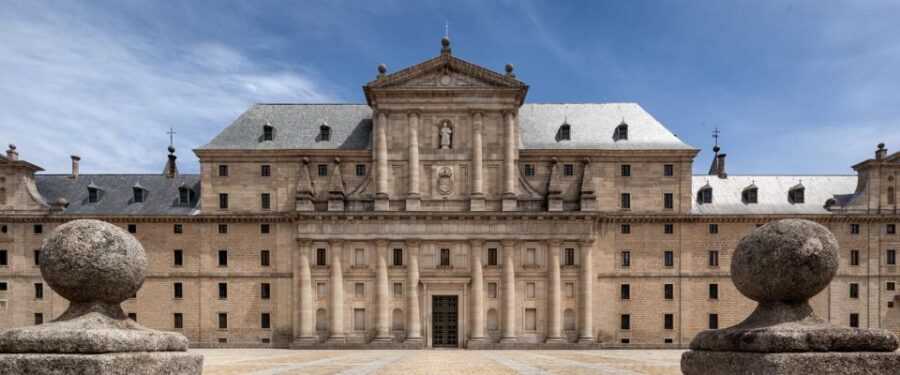
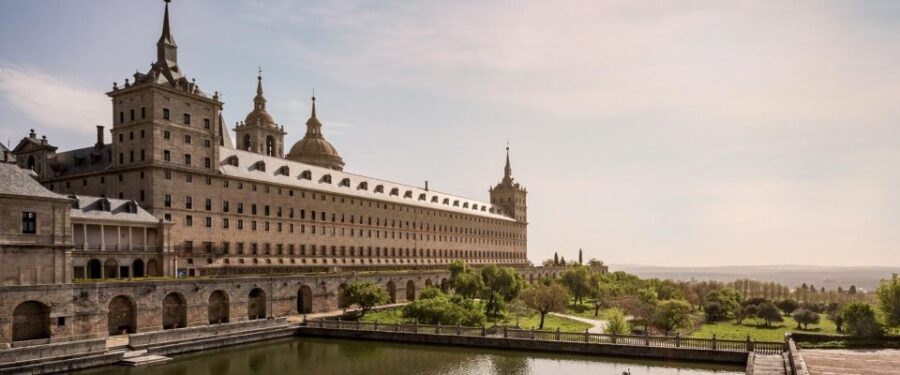
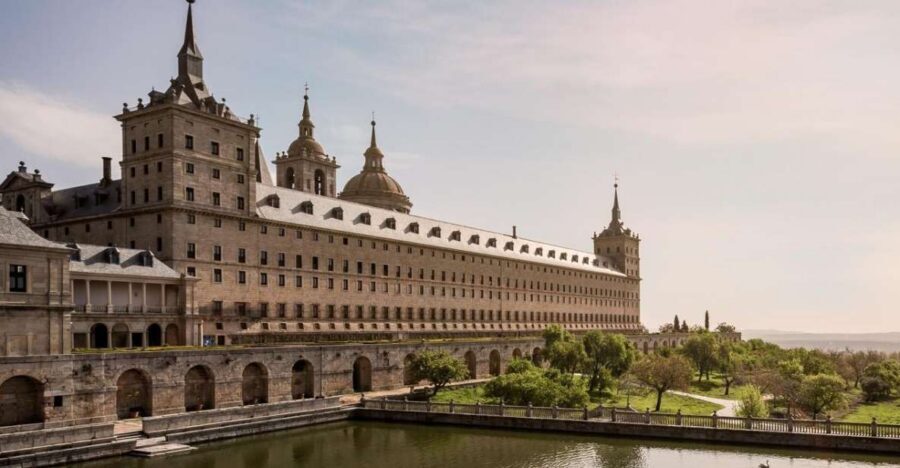
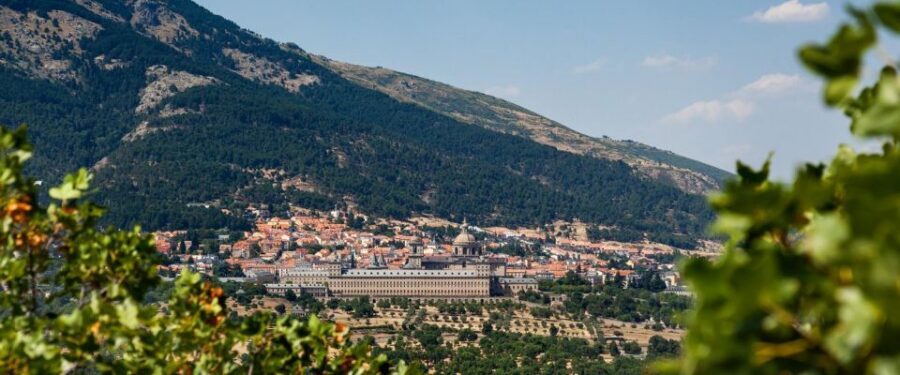
San Lorenzo de El Escorial is one of those places that plays mind games with you. From afar, the Royal Site can read as severe and plain. Then you step inside and it’s a different world, with painted surfaces, ornate royal detailing, and a layout that feels designed for power, faith, and control.
That contrast is part of the charm. If you go expecting a cute, postcard palace, you might be disappointed at first. If you go ready for a fortress of ideas, you’ll get it.
I also like how the site feels intentional rather than decorative. Even if you only skim the main spaces, you can sense how the building serves multiple roles at once: monastery for the monks of the Order of St. Jerome, royal residence functions, and major religious focus.
You can also read our reviews of more tours and experiences in San Lorenzo De El Escorial.

Price and what you actually get for your $21 ticket
At about $21 per person, this is a straightforward admission ticket. What makes it good value is not just entry. It’s the combination of entry plus a skip-the-line express security check, which helps you avoid the worst bottlenecks when you arrive.
The trade-off is that you shouldn’t buy this expecting deep narration. A guide isn’t included, and some people even report problems with guide expectations. So if you want someone to connect the dots between Philip II, Charles V, the art styles, and the Spanish Golden Age ideology, you’ll need to bring curiosity and patience—or pair this with your own supplemental reading or a guided option.
Think of it like this: the ticket gets you inside the machine. You decide how much you want to understand the gears.
How to plan your Madrid-to-El Escorial day (train plus uphill stroll)
This is very doable as a day trip. The train from Madrid takes under an hour, and then you’ll walk about 25 to 30 minutes uphill to reach the monastery area. I’d treat that walk as part of the experience, because it warms you up and gives you a chance to adjust before the big entry.
Bring layers. Even in January, fog and cold don’t stop the architecture from being dramatic, but they do make waiting and walking less fun. One good rule: dress for chilly stone, not for comfortable sidewalk weather.
Also, plan timing with realistic entry friction. Even with express security, you’ll still go through checks and spend time moving through a complex site. If you arrive late, you may feel rushed in the spaces that need time—especially chapels and the basilica areas.
Inside the Royal Site: monastery, Charles V, and an almost unchanged layout
Once you’re through security and inside, the Royal Site basically becomes a self-guided walking route through centuries of Spanish ambition. The buildings were created for the monks of the Order of St. Jerome, but the site later connects to major royal figures too.
A key reason I like visiting without a guide is that you can slow down where your brain wants to slow down. You can start anywhere and then link the major zones. The flow you’ll likely notice is that the site functions like a compact world: monastery areas, library and palace spaces, and then religious focal points.
The layout is described as largely unaltered to this day. That matters. When a place keeps its internal organization, you don’t just see artifacts—you experience the structure of the thinking behind them. You can move from library-type spaces toward palace areas and then toward the basilica without feeling like you’re looking at a theme park reconstruction.
You’ll also encounter connections to Emperor Charles V and his wife, who once lived there. Even if you only catch bits from your own reading, the personal royal presence adds weight to the spaces. This isn’t just a monastery that happens to have royal decor. It’s a monastery-shaped statement.
The Basilica of 1574 and the royal crypt for Philip II fans
The basilica is a must-see anchor point. It was erected in 1574, and it’s the kind of religious centerpiece that makes you stand still more than once. Even if you’re not a church architecture person, the scale and the way the space pulls you forward make it hard to rush.
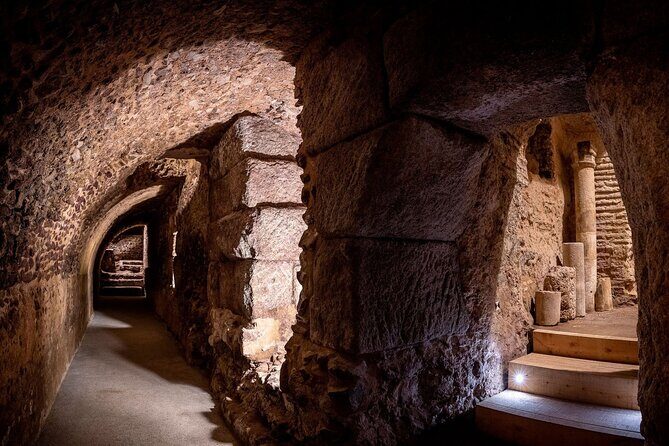
This is also where the story of power becomes physical. The Royal Site includes a crypt connected to the royals who used to live there. That detail is useful because it changes how you interpret the whole complex. You’re not only looking at the public-facing side of Spain’s Golden Age—you’re also confronting the private, dynastic layer.
If you love art details, plan time for the basilica areas and then don’t immediately sprint to the next room. Take a breath and let your eyes reset. The frescos and decorations can be visually intense, and a tired brain misses what makes the place special.
Art by Juan de Villanueva and the Italian-Flemish mix
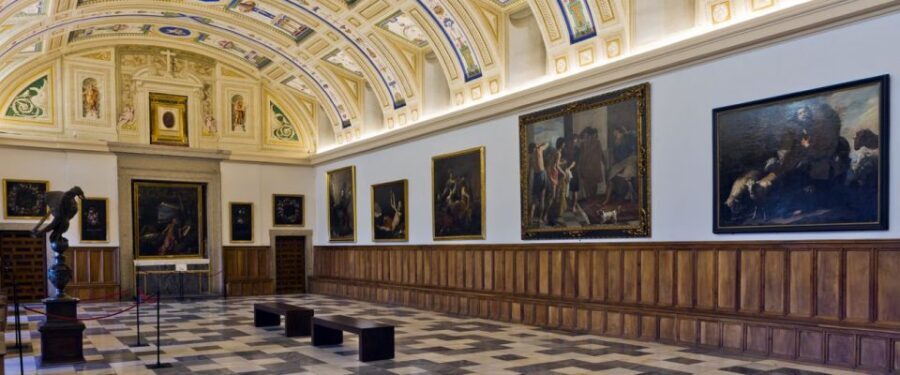
The experience isn’t only about stone. You’re also here for artistic direction—especially ties associated with Juan de Villanueva. The idea that an architect and artist connection is part of the “why” of El Escorial helps you notice more than you would at a purely historical site.
The site is also described as blending Italian and Flemish artistic forms. What that means for you in practice: you may see stylistic choices that feel different within the overall Spanish Renaissance frame. If you like to spot influences, this is a fun place to do it, because you’re not stuck with one look.
I found that when you pair the art with the building’s layout, it feels less random. The art supports the space. The space supports the art. Even without a guide, you’ll likely feel the connection if you stop long enough to look at how decoration changes from one type of room to the next.
Gardens, Renaissance courtyards, and Sierra de Guadarrama views
The Renaissance buildings aren’t limited to indoors. You’ll also spend time around gardens and outdoor areas tied to the monastery complex. The grounds are maintained, and that maintenance matters because the gardens act like a pause between dense indoor spaces.
There are also town-square-like areas described as part of the Renaissance experience. That helps break the day into something more human-scaled. When you’re walking for hours inside a royal complex, you start craving geometry you can stand in without squinting upward at frescoes.
Then there’s the view component. On clearer days, you can see toward the Sierra de Guadarrama mountain range. Even if the weather turns gray, the mountains still frame the site and make it feel anchored to the wider region. Fog can reduce the drama, but it doesn’t erase the sense of being in the mountains’ shadow.
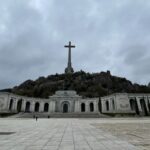
A side look toward the Valley of the Fallen basilica
One of the included highlights is access to the basilica at the Valley of the Fallen, along with views connected to the Sierra de Guadarrama. This is a big emotional contrast if you pair it with El Escorial, because these are both monumental, ideologically heavy sites, just from different eras and with different intentions.
What’s valuable here is not just seeing another famous structure. It’s comparing how Spain’s leaders used architecture to express faith, power, and national identity. If you’re the type who likes noticing how politics and religion get turned into stone, you’ll get extra mileage from including this stop.
If you want to keep your day from feeling like “royal buildings all day,” treat this as your planned palate cleanser. After El Escorial’s internal logic, shift your attention outward and focus on scale, setting, and the feeling of monumentality.
Price and logistics: how to avoid the common hassle
This ticket is designed to speed up one part of the process: security. But your day can still wobble based on how you manage arrival and meeting instructions.
A few people reported getting sent to the wrong place, ending up with long lines, and even needing to repurchase entry. I can’t guarantee your experience will match theirs, but I strongly recommend doing two things:
- Confirm exactly where you’re told to go before you leave Madrid.
- Give yourself extra buffer time, so you’re not stuck sprinting uphill while frustrated.
Also, set expectations about your own pace. The option is self-guided. That means you may miss context if you just walk through at speed. If you’re the type who loves reading plaques and connecting names like Philip II and Charles V to what you’re seeing, this format is a good match.
Who should buy this admission and who should skip it
Buy it if you want a classic Spanish royal-monastery day trip and you’re comfortable doing your own learning in the moment. I think this works best for:
- People who enjoy architecture, art details, and visual contrasts
- Travelers who like flexible timing rather than a fixed group schedule
- Anyone who wants to connect the Spanish Golden Age to real spaces, not just photos
Skip it (or reconsider) if any of these are true:
- You need step-free access. This activity is not suitable for people with mobility impairments.
- You want a full narrative from a guide. Admission is included, but a guide is not.
- You dislike uphill walks and long indoor viewing time.
Should you book this Royal Site of San Lorenzo de El Escorial ticket?
If you’re building a Madrid itinerary and want one day that truly feels tied to the Spanish Golden Age, I’d book it. The value is solid for the price, especially because you get admission plus express security and a full pass through a complex site with indoor art, chapel and basilica areas, gardens, and included connections to major basilica and mountain views.
But be honest with yourself. This is best when you’re the kind of visitor who enjoys self-guided discovery. If you need heavy interpretation and easy pacing, you might feel like you’re doing homework without the teacher.
FAQ
Where is the Royal Site of San Lorenzo de El Escorial?
It’s in the Community of Madrid, Spain, visiting the Monastery of San Lorenzo de El Escorial.
How much does the entrance ticket cost?
The price is listed as $21 per person.
How long does this experience take?
The duration is 1 day. Starting times depend on availability.
What’s included in the ticket?
The included item is admission, plus skip-the-line through an express security check.
Is a guide included?
No. A guide is listed as not included.
Will I get a ticket confirmation after purchase?
You should receive a booking confirmation within 48 hours.
Is it refundable and is it accessible for mobility impairments?
It’s non-refundable, and it is not suitable for people with mobility impairments.