REVIEW · SEGOVIA
Segovia: guided route on an electric bicycle (ebike)
Book on GetYourGuide →Operated by NATURCLETA · Bookable on GetYourGuide
Segovia has a way of grabbing you fast. This guided electric bicycle route turns the big sights into an easy, story-filled loop. You get to cover the Aqueduct, the medieval walls, and the neighborhoods inside the old city without arriving wrecked.
I like two things a lot: the balance of major monuments and less-common corners (including the Jewish Quarter streets), and the way the guide ties each stop to legends and real details. On top of that, the ride stays genuinely manageable because the ebike does the heavy lifting.
One thing to consider: you do need to be comfortable riding a bike, and the tour has age and body-size limits (plus some people won’t be able to join at all). If you’re unsure, check the restrictions before you reserve.
In This Review
- Key Takeaways Before You Ride
- Starting at the Aqueduct, Then Letting the Ebike Do the Work
- From Aqueduct Views to Plaza del Azoguejo
- Plaza de San Lorenzo and the Romanesque Church Pause
- Following the Eresma River: Senda de los Molinos to Alameda del Parral
- Church of Vera Cruz: The Maltese Cross and a Dodecagonal Surprise
- The Alcázar Footsteps: Fuencisla Esplanade Viewpoints
- Into the Historic Wall Loop, Then the Jewish Quarter Through Arco del Socorro
- Cathedral Backside, Antonio Machado House Museum, and San Esteban’s Tower
- Mirador del Postigo and the Aqueduct Legend with the Devil Statue
- A Local Bar Aperitif Break That Keeps the Tour Social
- Finishing Back at the Aqueduct: What You’ll Feel After 3 Hours
- Price: Is $59 Worth It for an Ebike, Guide, and Covered Highlights?
- Who This Tour Suits Best (and Who Should Rethink It)
- Should You Book This Segovia E-Bike Tour?
- FAQ
- FAQ
- Where does the tour start?
- How long is the tour?
- What is included in the price?
- Are there language options for the guide?
- How big is the group?
- Is the Church of Vera Cruz included?
- What should I bring?
- Who can’t join the tour?
Key Takeaways Before You Ride
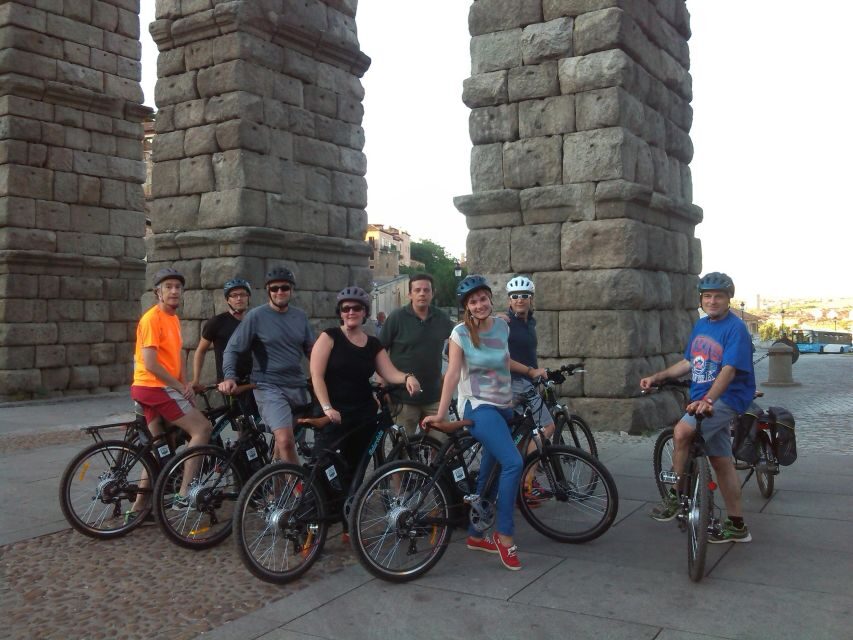
- Small-group pacing (limited to 10) makes stops feel human, not rushed.
- Aqueduct-to-Alcázar viewpoint route gives you photo-worthy angles without steep slog.
- Medieval wall focus plus strategic viewpoints helps you understand the city’s shape.
- Jewish Quarter intramural route brings you into streets you’re less likely to find alone.
- Church of Vera Cruz and Maltese Cross connection adds a surprising architectural detour.
- First-ride support and safety focus keep the ebike experience calm and confidence-building.
Starting at the Aqueduct, Then Letting the Ebike Do the Work
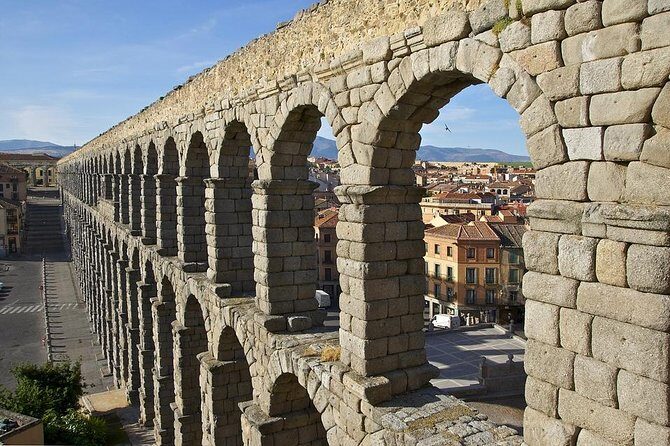
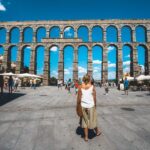
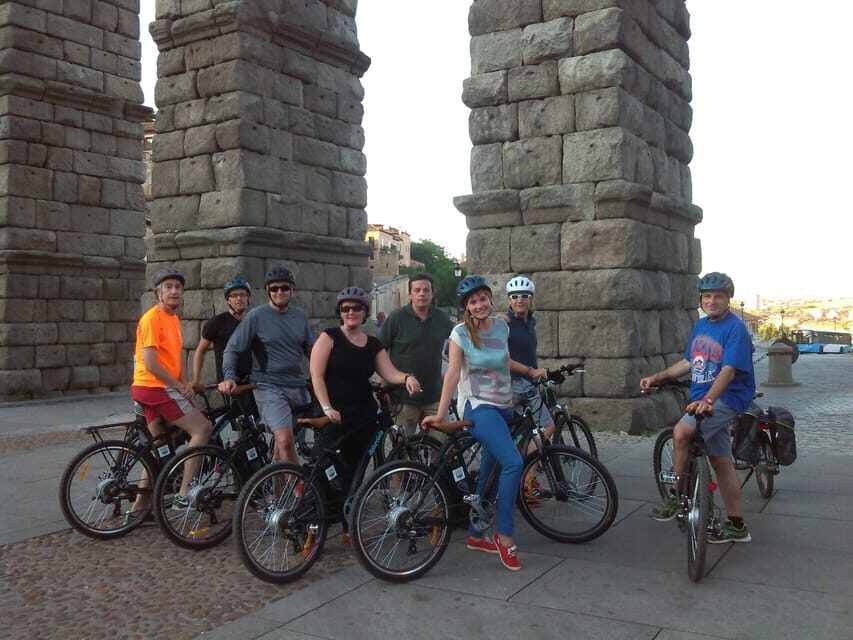
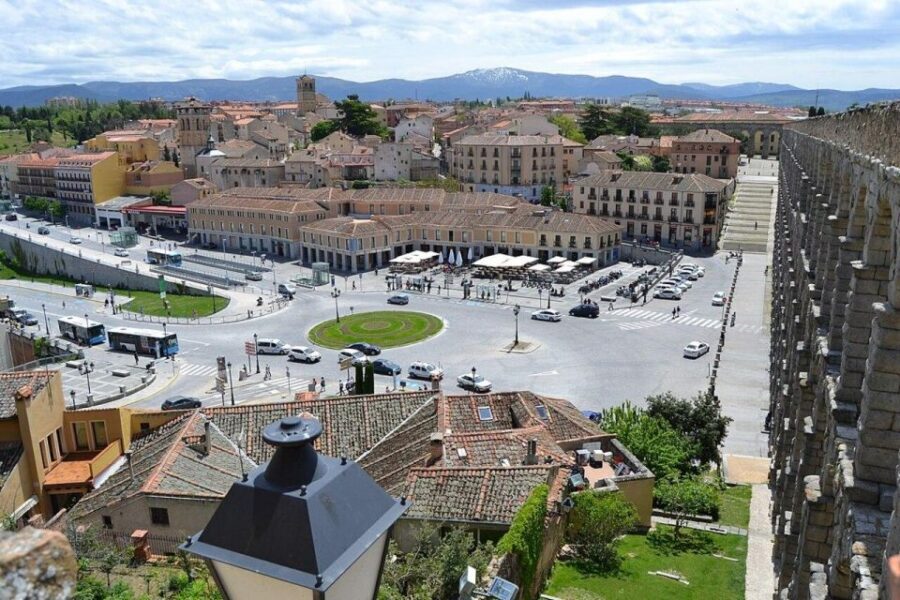
The tour begins right at the Acueducto de Segovia (Monumental Aqueduct), at Avenida Padre Claret. That’s a smart start. You’re already at one of the city’s signature landmarks, and the guide can orient you instantly: where the aqueduct fits in the old-city layout, and what you’ll be seeing as you move around.
Ebike tours are often sold as effortless, but the real value here is control. You keep pedaling, but the assistance smooths out Segovia’s hills and distances so you spend your energy on looking, listening, and taking in viewpoints. In practice, it helps a lot if you’re not a super confident cyclist, because the guide sets the pace and keeps the group together.
From the very beginning, you’re not just “passing by” the aqueduct. You accompany its journey toward Plaza del Azoguejo, so you start to grasp how it shapes movement and sightlines through the historic center.
You can also read our reviews of more tours and experiences in Segovia.

From Aqueduct Views to Plaza del Azoguejo
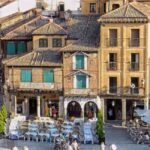
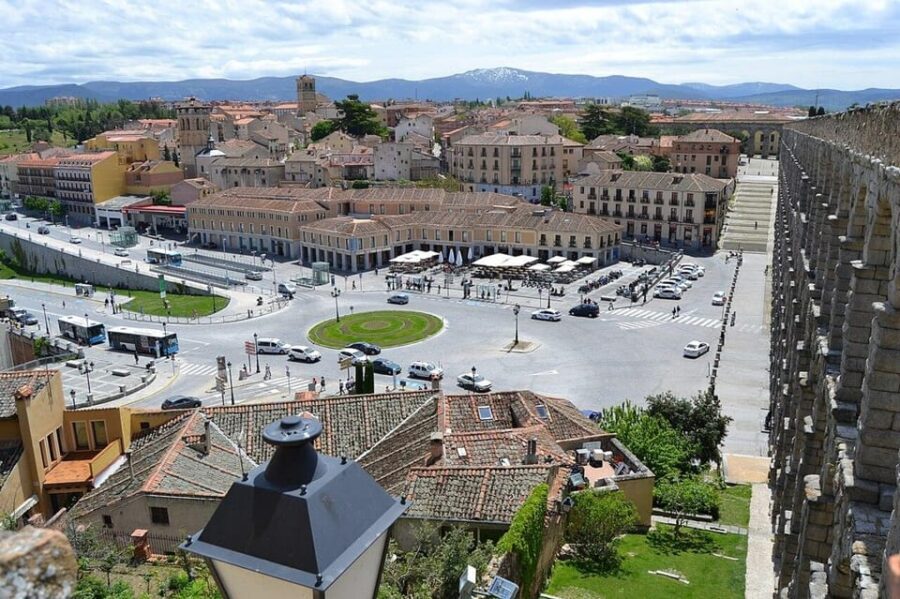
You’ll roll along the area around the aqueduct, then head toward Plaza del Azoguejo. This part matters because it sets the tone: Segovia rewards you when you slow down and look at how different levels of the city connect.
The Aqueduct of Segovia is dramatic from ground level, but there’s another layer to it. As you ride, the guide points you toward angles that make the structure feel even more engineered and intentional. You also get early context for the stories that pop up later, including the legend connected to the construction.
The ride segment here is short, which is good. You’re gearing up for a longer, more complete arc through the old town.
Plaza de San Lorenzo and the Romanesque Church Pause
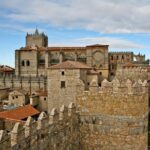
Next, you move toward the medieval wall and up to Plaza de San Lorenzo, where there’s a Romanesque church in the center. This is where you start getting the “princess story” feeling the tour promises. Standing near the walls, you can sense the city as a fortress, not just a sightseeing stop.
This stop works well because it’s not just about architecture. It’s about scale and placement. You’re seeing how the church and plaza sit within the historic fabric, and the ebike keeps you from burning time getting there the hard way.
A small drawback: the medieval areas mean the ground and turns can feel more “historic-city” than “modern-bike-lane.” It’s still manageable, and helmets are included, but it’s not the vibe of a flat, car-free track.
Following the Eresma River: Senda de los Molinos to Alameda del Parral
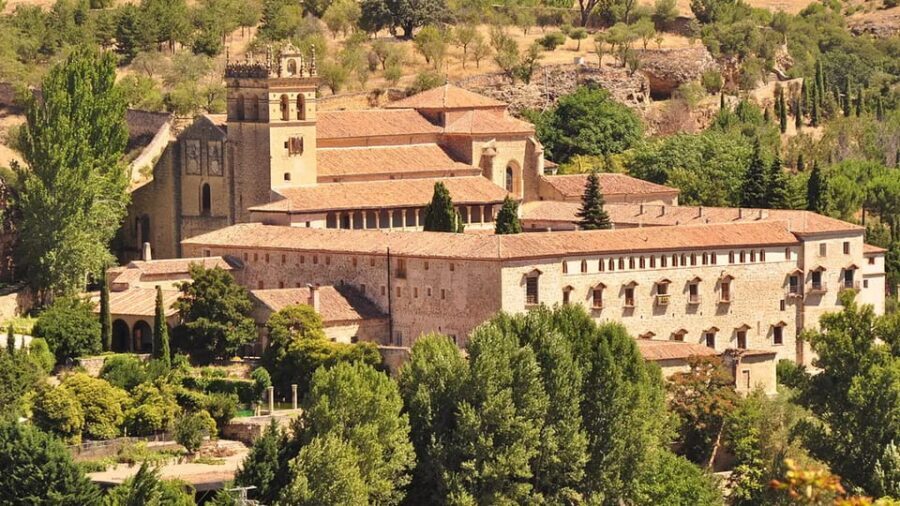
Now you shift from walls and plazas to a greener stretch. The route heads in search of the Eresma River via the Senda de los Molinos, then continues to Alameda del Parral.
This part is valuable because it breaks the stone-heavy rhythm of Segovia. Even though you’re still in the historic center orbit, you get a different mood: more open views, a calmer feel, and a path that helps you understand the city beyond its monuments.
You’ll reach Monastery of Santa María del Parral, and you’ll also be able to see the Royal Mint. That combination is a great example of why this tour isn’t just a “top 10 sights” list. It connects religious heritage, craftsmanship, and the city’s institutional history, without turning the ride into a lecture marathon.
Church of Vera Cruz: The Maltese Cross and a Dodecagonal Surprise
As you move toward Fuencisla and head closer to the Alcázar, you pass by the Church of Vera Cruz. This is a standout detour: it belongs to the Order of the Maltese Cross and has a dodecagonal plan (twelve-sided layout).
One practical note: the church visit itself isn’t fully included. The tour includes the stop, but you can pay an additional €3 if you want to go inside. If you’re the type who loves architecture details, it’s often worth it for this one.
This stop also helps your Alcázar experience later. You’re not just chasing the big silhouette. You’re learning how power, religion, and symbolism show up in small, clever ways throughout Segovia.
You can also read our reviews of more guided tours in Segovia

The Alcázar Footsteps: Fuencisla Esplanade Viewpoints
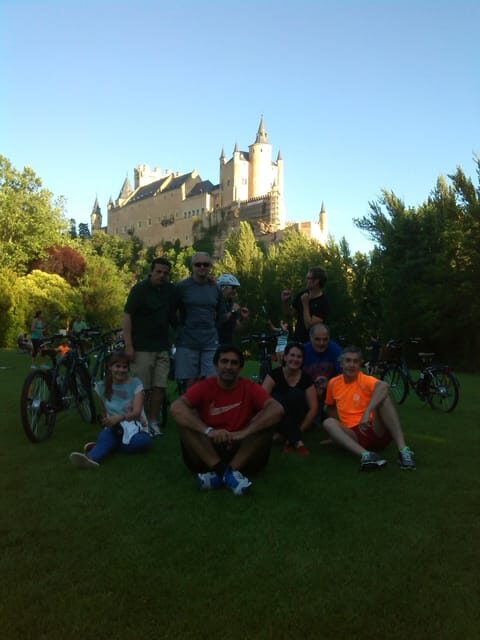
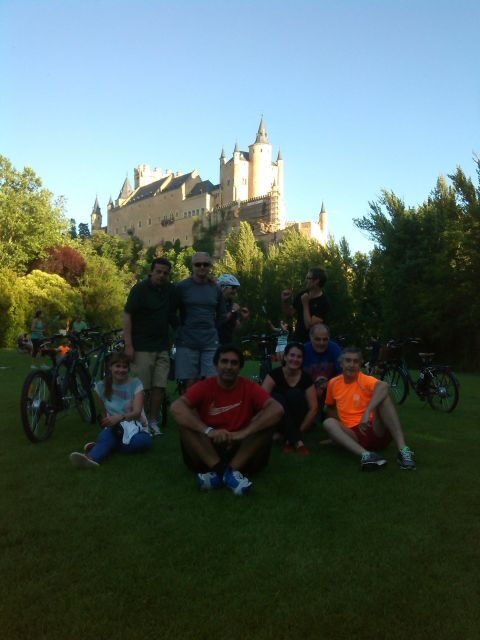
From the esplanade of Fuencisla, you get spectacular views at the foot of the Alcázar. This matters because the Alcázar is one of those monuments where a single viewpoint can make the difference between seeing it and really understanding it.
The ebike route gets you close to where the angles work, then keeps you moving so you don’t just park and guess. You also continue along the wall afterward, so you’re using this moment to orient your eyes before the next neighborhood loop.
If you’re worried about picture-taking: you’ll have enough time to stop and look. The ride includes multiple short bike segments with viewpoint breaks, not a continuous sprint.
Into the Historic Wall Loop, Then the Jewish Quarter Through Arco del Socorro
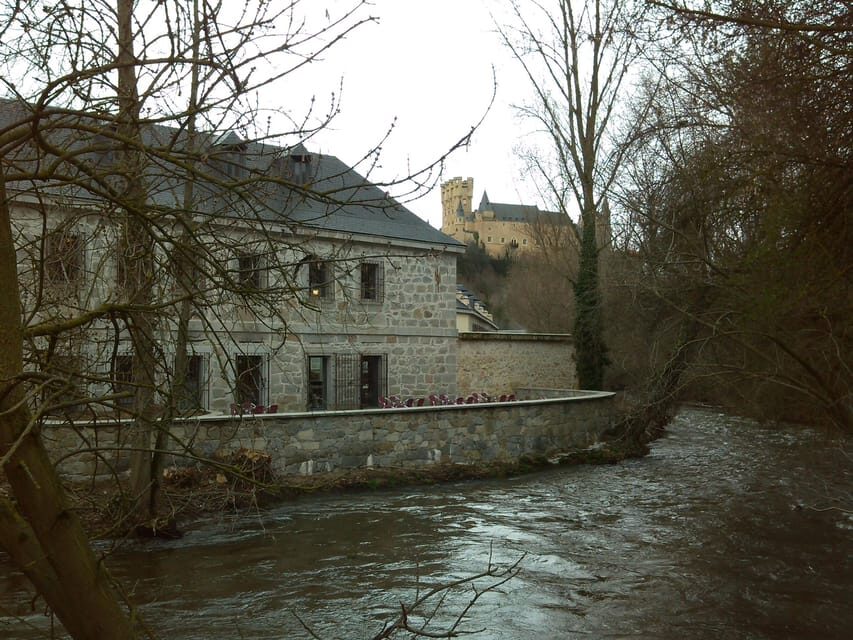
After the Alcázar-area viewpoints, the tour continues along the city wall, taking in the larger historical complex of Segovia. This section is great for two reasons:
- It helps you visualize how Segovia’s old defenses shaped daily life.
- It gives repeated “checkpoints” so you can track what you’ve been seeing.
Then comes one of the smartest parts of the whole experience: entering the Jewish Quarter through the Arco del Socorro.
Walking-only tours often keep you near the main routes. Here, you ride in and explore on streets that feel more intimate and less choreographed. The guide helps you spot the corners that don’t shout for attention, and that’s exactly where Segovia becomes more personal.
Cathedral Backside, Antonio Machado House Museum, and San Esteban’s Tower
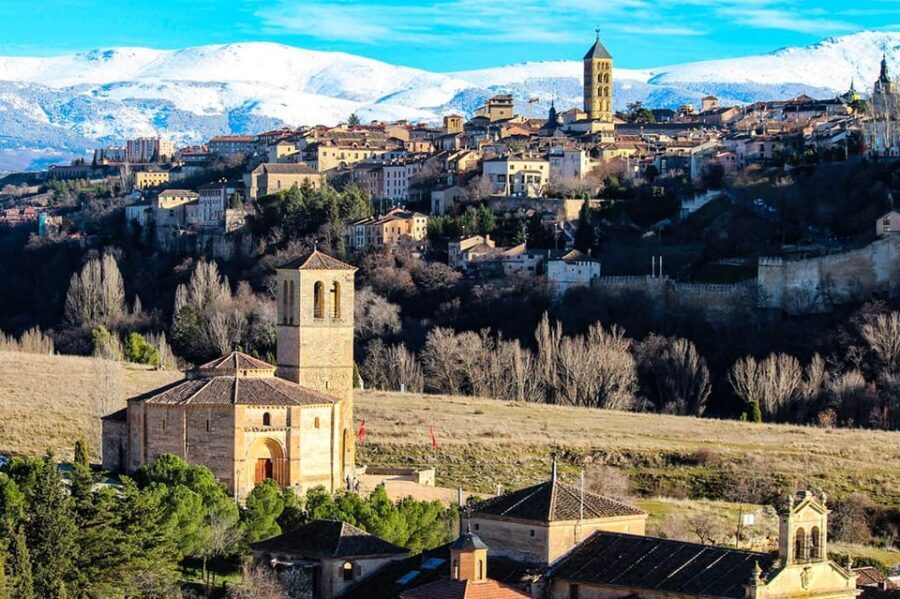
Inside the Jewish Quarter area, you’ll see several major cultural anchors without needing to plan separate visits.
You’ll pass by the back of the Cathedral, which is a different kind of viewpoint than the postcard front. There’s also the Casa-Museo de Antonio Machado (Antonio Machado House Museum). Even if you’re not a die-hard literature fan, this stop adds texture. It connects Segovia to Spain’s more modern cultural life, not only medieval monuments.
Then you reach Iglesia de San Esteban, known for having the tallest Romanesque tower of Spain. This is one of those moments where the guide’s pacing pays off. You’re positioned to appreciate the tower’s height and its relationship to surrounding streets, rather than just spotting it from far away.
If you care about the feeling of place, this part delivers. The narrow streets plus the tower reveal create a sense of discovery that a bus stop simply can’t.
Mirador del Postigo and the Aqueduct Legend with the Devil Statue
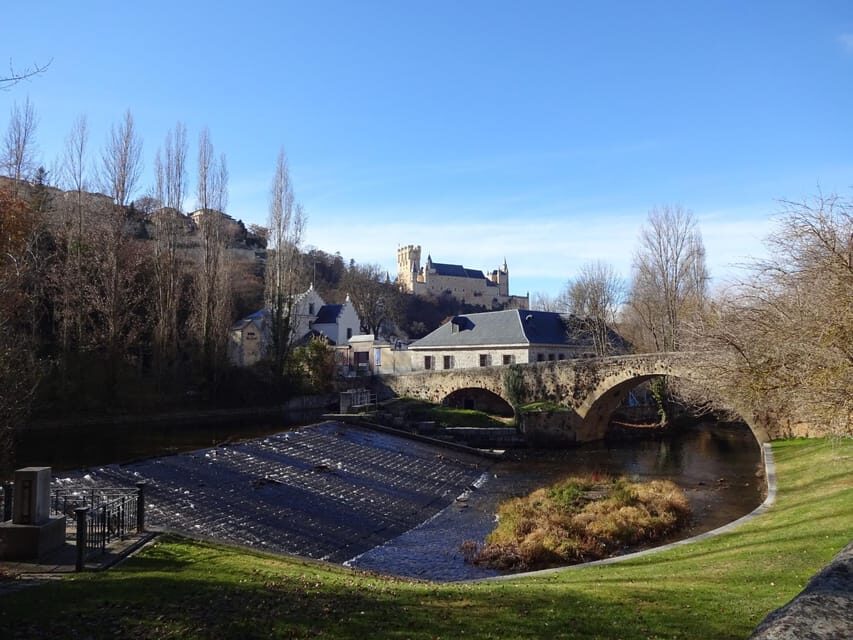
You continue toward Mirador del Postigo, a viewpoint at the top of the aqueduct area (as part of the route). Then you’ll encounter the statue of the Devil, which relates to the legend about how the aqueduct was constructed.
This is one of the tour’s emotional highlights. It’s not just folklore for entertainment. It gives you a story lens for what you’re seeing, and you end up looking at the aqueduct with a different mindset: human effort, fear, bargaining with forces bigger than people.
Guides often vary on storytelling style, but the ones on this tour are clearly tuned to safety and clarity while still making the legends feel grounded in the city’s identity. In particular, Ángel is praised for his ability to connect history with the places you’re standing in front of.
A Local Bar Aperitif Break That Keeps the Tour Social
Midway through the day, there’s a local bar aperitif segment lasting about 20 minutes. This is small, but it’s smart. It lets you reset your body after more stops and turns, and it gives the group a shared break so the mood stays relaxed.
It’s also a practical reminder: Segovia isn’t only about monuments. The city has an everyday rhythm, and a pause with a drink and conversation is one way this tour acknowledges that.
Finishing Back at the Aqueduct: What You’ll Feel After 3 Hours
You end back where you started at the Inicio Acueducto de Segovia. That loop matters. Returning to the aqueduct area gives you a clean landing point, and it’s easy to continue on your own from there.
By the end, you’ll have a mental map of Segovia that goes beyond one major attraction. You’ll know how the aqueduct and Alcázar relate visually, how the wall frames the historic center, and how the Jewish Quarter fits into the story of the city.
That’s the real value of a guided ebike tour: you’re not just ticking boxes. You’re building relationships between sights in a short time.
Price: Is $59 Worth It for an Ebike, Guide, and Covered Highlights?
At $59 per person for a 3-hour guided experience, you’re paying for more than the bike.
Here’s what you’re actually getting for the money:
- A qualified Spanish/English guide guiding you through multiple key zones
- Electric bicycle + helmet
- Insurance coverage (civil liability and accident insurance are included)
- A route designed to cover the aqueduct, walls, viewpoints, and the Jewish Quarter efficiently
- Extra structured time at a local bar aperitif and multiple stop-and-look moments
Could you do Segovia by yourself? Yes, but you’d likely spend more time walking between far-apart areas and you might miss the less obvious corners the route emphasizes. For many people, the ebike is the difference between a “good enough” day and a day where you actually enjoy the city instead of fighting your legs.
Who This Tour Suits Best (and Who Should Rethink It)
This tour is a strong fit if you:
- want to see the big highlights like the Aqueduct of Segovia and the Alcázar without exhausting climbs
- enjoy guided storytelling and legend-based context
- like small groups and prefer efficient route planning
It’s less suitable if you:
- can’t ride a bike, or don’t feel steady enough for street turns
- fall into the listed age limits (children under 6 are not suitable; there are also restrictions for certain ages and bike availability)
- are pregnant
- are over 287 lbs / 130 kg or over 75 years (limits are explicitly stated)
It’s also practical to plan around sizing. You need to indicate your height so the operator can set the correct bike size, and kids have specific height/age rules. If you travel with a child aged 1–5, a baby carrier can be incorporated at no extra cost.
Should You Book This Segovia E-Bike Tour?
If you want a guided way to experience Segovia’s old city that covers both the monuments and the quieter streets, I’d book it. The route design focuses on meaningful areas: the aqueduct journey, the wall loop, the Vera Cruz detour, and the Jewish Quarter interior streets. And the ebike keeps the whole thing enjoyable instead of tiring.
I’d only hesitate if you don’t ride bikes comfortably or you’re not up for the tour’s set 3-hour flow. If that’s you, consider walking tours instead. But if you can ride, this is one of the easiest ways to see Segovia with context, not just photos.
FAQ
FAQ
Where does the tour start?
You meet at the beginning of the Acueducto de Segovia on Avenida Padre Claret.
How long is the tour?
The duration is 3 hours.
What is included in the price?
The tour includes an electric bicycle, a titled Spanish/English guide, helmet, and insurance (civil liability / accident insurance). It also includes the guided route through the main stops and a 20-minute aperitif at a local bar.
Are there language options for the guide?
Yes, the live guide offers English and Spanish.
How big is the group?
The group is limited to 10 participants.
Is the Church of Vera Cruz included?
The stop is part of the route, but visiting the Church of Vera Cruz costs an additional €3.
What should I bring?
Bring your passport or ID card and comfortable clothes.
Who can’t join the tour?
It’s not suitable for people who can’t ride a bike, pregnant women, people over 287 lbs / 130 kg, people over 75 years, and children under the listed minimum ages (under 6 years), plus it has additional restrictions for certain child age ranges and for babies under 1 year.