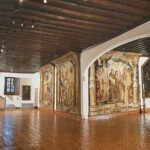
Toledo can feel like a puzzle box. This tour helps you solve it fast with a smart start and a clear plan. I like the guided walking orientation first, then you’re let loose to wander, which is the right way to handle Toledo’s steep streets. I also like the round-trip transport from central Madrid, so you spend less time figuring out buses and more time looking up at stone. One drawback: timing can be tight, and when departures slip, the walking portion can feel rushed and free time gets cut.
The site list is the real payoff: the Gothic cathedral, a landmark synagogue turned museum, a royal monastery tied to the Battle of Toro, plus Toledo’s best-known Jewish-quarter lanes and a famous former mosque. It’s capped at a maximum of 55 people, so it won’t be a one-on-one stroll—but it’s also not a tiny private tour. If the guide is strong (Barbara is specifically praised for English-Spanish switching), you’ll get a lot out of the history without drowning in facts.
In This Review
- Key points to know
- Toledo Express: a smart way to tackle Toledo’s hills
- NeptunoCentro pickup and the bus ride: convenient, but watch the timing
- The Cathedral of Saint Mary of Toledo: High Gothic you can spot from the inside
- Santa María la Blanca: a synagogue museum with a 1180 footprint
- San Juan de los Reyes monastery: royal power, memorial symbolism, and Isabelline style
- Jewish Quarter time and the Mosque of Cristo de la Luz: the three-cultures walk
- Panoramic bus tour value: context on the cheap
- Price vs. time: when “half day” feels like the real story
- Group size and guide quality: how the experience can swing
- Timing reality check: what to do when the day runs behind
- Who should book Toledo Express?
- Make the most of your day: practical moves
- Should you book Toledo Express?
- FAQ
- Where does the Toledo Express tour start in Madrid?
- How long is the Toledo Express tour?
- Is round-trip transportation included?
- Is the tour offered in English?
- How many people are in the tour group?
- Is there a mobile ticket?
- What are the main stops on the walking tour?
- Is free cancellation available?
- Do I get time to explore Toledo on my own?
Key points to know
- Orientation first: get your bearings before you explore on your own
- Cathedral time is focused: High Gothic architecture you can actually make sense of
- Three-cultures stops: synagogue, monastery, Jewish quarter, and a former mosque
- Easy Madrid pickup/drop-off: NeptunoCentro makes the start simple
- Schedule can run short: if things slip, free time may shrink
Toledo Express: a smart way to tackle Toledo’s hills
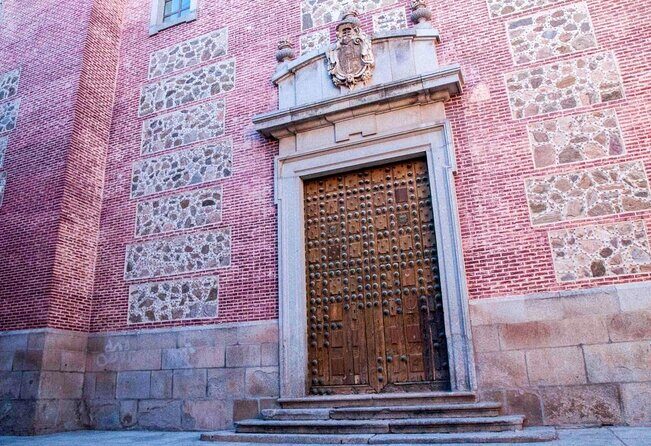
Toledo is one of those places where you look up first and ask questions later. The old streets twist, the viewpoints pop out of nowhere, and suddenly you’re walking through centuries of overlapping faiths. The biggest challenge with a day trip is not the sights—it’s pace. Toledo is compact on a map, but it’s vertical in real life.
That’s why this format works. You start with a guided orientation, designed to help you connect what you’re seeing to what matters. Then you get leisure time to circle back, take photos, and choose where to slow down. In other words, you’re not stuck moving like a metronome the whole time.
The other big advantage is getting the logistics out of your way. The tour includes round-trip transport from the center of Madrid, with a travel assistant onboard and a panoramic ride. That means less stress on travel day, especially if it’s your first time in Spain’s capital and you’d rather not gamble on connections.
You can also read our reviews of more tours and experiences in Madrid.



NeptunoCentro pickup and the bus ride: convenient, but watch the timing
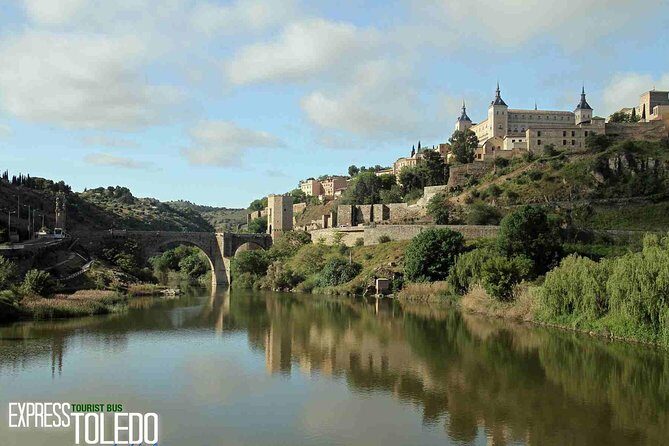
Your meeting point is NeptunoCentro, 28014 Madrid, and the tour ends back at the same spot. That matters more than it sounds. It reduces the risk of ending up in the wrong neighborhood when you’re tired and trying to get back fast.
The ride is in a tourist bus with a travel assistant and a panoramic tour. In practice, that kind of ride is less about comfort and more about context. You’ll get a broader sense of where things are before you start walking. You also avoid the headache of self-arranging transportation, which can eat up a surprising chunk of a short trip.
Here’s the one practical caution: the schedule can wobble. Some departures have run late, and when the walking guide isn’t in place on time, the itinerary can shift. If you’re the type who hates delays, plan your day like you might need a Plan B for lunch timing and museum visits. I’d still book this tour for the sites, but I’d keep your expectations for free time flexible.
The Cathedral of Saint Mary of Toledo: High Gothic you can spot from the inside
Toledo’s cathedral isn’t just another pretty church on a postcard. It’s the Primate Cathedral of Saint Mary of Toledo, a Roman Catholic seat for the Metropolitan Archdiocese. The building is known for its 13th-century High Gothic style, and some authorities consider it the magnum opus of Gothic in Spain. Even if you’re not a gothic-architecture nerd, you’ll feel the shape of the place: vertical lines, dramatic interior space, and details that keep drawing your eyes upward.
Why this stop is valuable on a day trip: a guided orientation helps you read the cathedral rather than just look at it. You’re not only taking photos—you’re learning what to notice, which makes the time inside feel more complete.
What to watch for:
- Time inside can be limited, so look for the biggest architectural cues first, not the tiny carvings.
- If your guide’s English pacing is uneven, the cathedral visit can feel rushed. Ask a question if something isn’t clicking; even a quick clarification can change how you experience the room.
If you want a “see one major Toledo site and understand why it matters” kind of stop, this is it.
Santa María la Blanca: a synagogue museum with a 1180 footprint
Next up is the Synagogue of Santa María la Blanca, originally called the Ibn Shushan Synagogue. The site’s story begins with its construction: it was erected in 1180, according to an inscription on a beam. The building is considered, though disputably, the oldest synagogue structure in Europe still standing. Today it operates as a museum, and it’s preserved by the Catholic Church.
This is the kind of stop where the building does the storytelling. You’ll likely notice the sense of continuity and change—how one religious space can survive across major historical shifts, then get reinterpreted under new stewardship. Even if you only catch the highlights, you walk away with a more grounded sense of Toledo’s layered past.
The practical angle: synagogue museum hours can be unpredictable on a tight schedule. One common failure point on day trips is missing a closing window when you’re stuck in the wrong place at the wrong time. If there’s a specific exhibit you care about, keep your eyes on timing once you’re on site, and don’t rely on vague reassurance.
San Juan de los Reyes monastery: royal power, memorial symbolism, and Isabelline style
The Monastery of San Juan de los Reyes is an Isabelline-style monastery built in the 15th century by the Catholic Monarchs. It was commissioned by King Ferdinand II of Aragon and Queen Isabella I of Castile, tying the site to two specific events: the birth of their son, Prince John, and their victory at the Battle of Toro in 1476 over the army of Afonso V of Portugal.
So what do you actually get from this stop on a short day trip? You get a way to connect architecture to political messaging. Monasteries like this weren’t built only for prayer; they were built to mark power, memory, and legitimacy. If your guide gives you the story at the right moment, the stone starts to feel like a message you can read.
What to keep in mind:
- Monastery visits can be more “watch and listen” than “free wandering,” so pay attention early.
- If the tour runs late, this is one of the stops that can get squeezed, since you may need to move along before you’ve absorbed everything.
If you like religious architecture but also care about the political history behind it, this stop is worth taking seriously.






Jewish Quarter time and the Mosque of Cristo de la Luz: the three-cultures walk
Toledo’s reputation as a “city of three cultures” isn’t marketing fluff here—it’s built into the route. You’ll spend time in one of the best Jewish quarters around the world. That’s not just a label; it’s a reminder that the Jewish presence in Toledo was substantial for centuries, alongside Christian and Muslim communities.
Then you’ll reach the Mosque of Cristo de la Luz. This structure began as a mosque and is one of ten that existed in the city during the Moorish period. The building was then known as Mezquita Bab-al-Mardum, named after the city gate Bab al-Mardum. It’s near the Puerta del Sol, in an area once called Medina, where wealthy Muslims lived.
Why these two stops are a strong pairing: you’re not just seeing religious buildings. You’re seeing how neighborhoods and city gates shaped daily life. The locations matter because Toledo’s history isn’t spread out evenly. It clusters around routes, gates, and power centers.
Quick practical note: Toledo’s streets are steep and uneven. You’ll want comfortable shoes more than anything else. And if your walking tour feels information-heavy, it helps to use the sites as “pause points.” Take a look, breathe, then resume.
Panoramic bus tour value: context on the cheap
One hidden value of this tour is that it combines a panoramic bus ride with a guided walking segment. On a day trip, you want to spend your energy on what only Toledo can offer. The panoramic portion helps you understand the setting, so the walking portion doesn’t feel like disconnected photo stops.
At $40.85 per person for a roughly 6-hour outing, this is priced like a practical entry ticket to a top-tier destination. You’re not paying for a private guide, and you’re not paying for a long stay. You’re paying for structure: transportation, a guide-led orientation, and access to the key sites listed.
Is it worth it? Usually, yes—if you match your expectations to the format. It’s best as an efficient first Toledo day, not as a slow, deep study of every corner.
Price vs. time: when “half day” feels like the real story
This is where you need to read between the lines. The tour is listed at about 6 hours, and it includes return transportation to Madrid. That often means your time on foot is limited, especially if the itinerary starts later than planned.
In plain terms: if you want long lunches, multiple museums, and hours of wandering with minimal guidance, this may feel short. If you’re fine with a guided highlights route plus targeted free time, you’ll probably be happy.
Also, consider what you’re booking around:
- If you’re traveling with a tight schedule, keep buffers for delays.
- If you’re a museum lover who cares about a specific interior exhibit, check opening times and don’t count on extra time if the tour runs late.
This tour can still be a good deal. Just don’t expect a full day of leisurely exploration with zero pressure.
Group size and guide quality: how the experience can swing
Maximum group size is 55, which usually keeps things manageable but not personal. In a walking tour with multiple stops, the guide’s role is crucial: pacing, clarity, and how well they connect each location to the next.
English availability is clear (offered in English), and the walking tour is bilingual English-Spanish. That said, performance can vary. When the guide communicates well—like Barbara, praised for switching between English and Spanish—the history lands without becoming heavy. When communication is weaker, you may miss context that makes the sites click.
Two ways this affects you:
- If the guide is rushed, you’ll move faster through spots you’d rather slow down at.
- If the guide provides a lot of detail without a clear framework, it can feel like standing around for explanations instead of using the space.
My advice: go into it ready to ask one good question. A quick clarification can turn “extra information” into something useful.
Timing reality check: what to do when the day runs behind
The tour’s main risk is not the destination—it’s the day’s sequence. When boarding and guide arrival don’t line up, you can lose the first minutes of the walking tour, then everything gets crammed.
If that happens, your best friend is flexibility. You still get the major landmarks, but the “perfect” version of the day—cathedral, synagogue, monastery, then unhurried wandering—may not fit. You may need to choose what matters most to you.
A simple strategy:
- Identify your must-see first: cathedral or synagogue, for example.
- Keep your lunch plans casual and nearby.
- If you want an extra museum stop, build it into your personal time instead of assuming it will be part of the standard flow.
If you’re traveling with kids or anyone with limited patience for delays, this is worth factoring in.
Who should book Toledo Express?
This tour is a great fit if:
- You want a first-time overview of Toledo’s three-cultures story.
- You prefer guided orientation and then freedom to wander.
- You want an affordable day trip with pickup/drop-off in central Madrid.
You might skip it if:
- You need a guaranteed long, free, unstructured day.
- You’re picky about exact museum viewing time inside specific exhibits.
- You dislike any possibility of schedule slippage.
It works best for independent travelers who like big sights, good explanations, and then personal exploration at your own pace.
Make the most of your day: practical moves
To enjoy this tour, you’ll get better results with a small amount of prep.
First: wear real walking shoes. Toledo’s charm comes with real footwork. Second: plan your mindset. A guided tour gives context; your leisure time gives satisfaction. If you treat the guide as a starter pack for the city, you’ll feel more satisfied when you’re wandering later.
Third: if language is a concern, don’t just listen passively. If you need clarity, ask the guide to repeat a key point. It’s often faster than trying to decode everything while moving.
Finally: keep your itinerary choices simple. Toledo can tempt you to do too much. This tour is at its best when you use it to pick a few “anchor” sites—cathedral, synagogue, and the most meaningful mosque/quarter stops—then let the streets fill in the rest.
Should you book Toledo Express?
If your goal is a smart, affordable Toledo day with a guided start and major historical stops, I’d book it. The price is reasonable, the route targets the sites that people come for, and the round-trip transport from NeptunoCentro makes the day feel manageable.
I would only hesitate if you have a hard deadline that depends on exact return timing, or if you’re planning specific museum visits that you can’t miss. In that case, you’ll want a bigger time cushion or a more flexible alternative.
Bottom line: this is a solid way to get oriented and hit the highlights—just don’t plan your whole day like the schedule will be perfect to the minute.
FAQ
Where does the Toledo Express tour start in Madrid?
The tour starts at NeptunoCentro, 28014 Madrid, Spain.
How long is the Toledo Express tour?
It runs for about 6 hours.
Is round-trip transportation included?
Yes. The package includes pickup and drop-off in central Madrid and comfortable round-trip transport in a touristic bus.
Is the tour offered in English?
Yes. It’s offered in English, with a bilingual English-Spanish guided walking tour.
How many people are in the tour group?
The maximum group size is 55 travelers.
Is there a mobile ticket?
Yes. The tour uses a mobile ticket.
What are the main stops on the walking tour?
You’ll visit places including the Cathedral of Saint Mary of Toledo, the Synagogue of Santa María la Blanca, the Monastery of San Juan de los Reyes, the Jewish Quarter, and the Mosque of Cristo de la Luz.
Is free cancellation available?
Yes. You can cancel for a full refund up to 24 hours before the experience’s start time.
Do I get time to explore Toledo on my own?
Yes. The tour includes a guided orientation, and then you explore at your leisure afterward.