REVIEW · TOLEDO
Underground Toledo Private Walking Tour with Official Local Guide
Book on Viator →Operated by Toledo Forever · Bookable on Viator
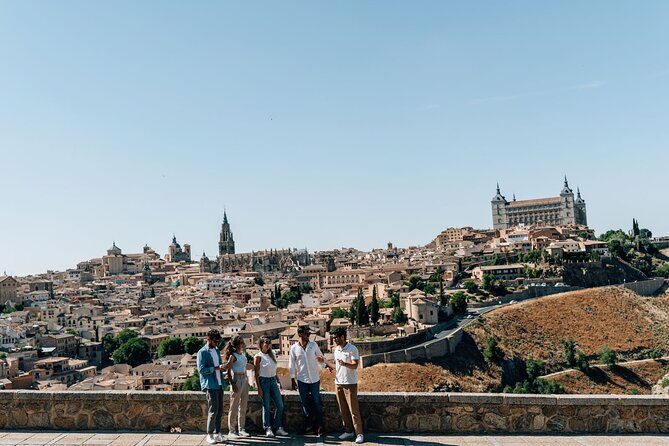
Toledo changes the moment you look down. This 2-hour private walk is all about the city’s underground layers—cisterns, baths, wells, and hammams—plus how water and power shaped life here. It’s guided by an official local expert in English, and you’ll move through places most visitors never even spot.
What I like most is the focus on real archaeological spaces you can actually enter, not just view from street level. I also like that you get individual headphones when the group is over 5, which makes the history easier to follow in the quieter underground rooms. One thing to keep in mind: access to Cuevas de Hércules has strict time windows on certain days, so your tour day matters.
In This Review
- Key highlights I’d circle first
- Underground Toledo is really a story of water
- Private walking tour logistics (that actually matter)
- Stop 1: Cuevas de Hércules and its layered Roman-to-medieval story
- Stop 2: Las Termas Romanas de la Plaza de Amador de los Ríos
- Stop 3: Plaza Colegio Infantes and the Baño del Caballel remains
- Stop 4: Plaza del Salvador and the Well of El Salvador
- Stop 5: Casa del Judío in Toledo’s Jewish Quarter
- Stop 6: Calle del Ángel hammam basement and the hypocaust clues
- 2 hours in Toledo: pacing, walking, and what to expect
- Price and value: is it worth about $172.82 per person?
- Who will enjoy this most (and who should rethink)
- Local guide quality: what you can hope to hear
- Should you book Underground Toledo with Toledo Forever?
- FAQ
- How long is the Underground Toledo private walking tour?
- Is the tour offered in English?
- Is this tour private or group-based?
- Are tickets included for the stops?
- Do we get headphones?
- Is access to Cuevas de Hércules limited?
- What’s the cancellation policy?
Key highlights I’d circle first
- Official local guide in English for a tight, story-driven route
- Cuevas de Hércules with Roman cisterns plus later layers (mosque and church)
- Roman thermal complex at Las Termas Romanas de la Plaza de Amador de los Ríos
- Water history told on the walk through wells, baths, and hammam heating systems
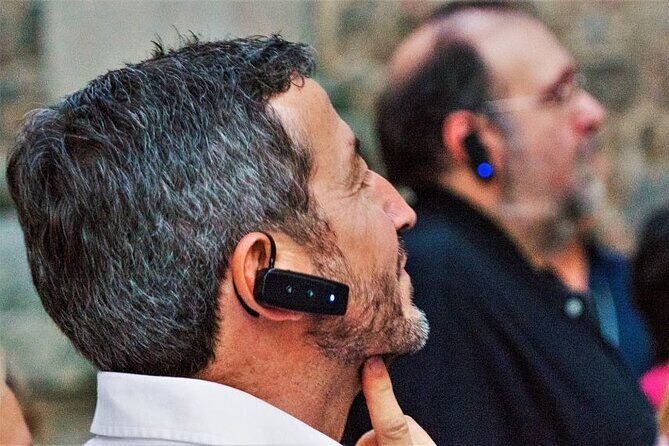
- Headphones if your group tops 5 so you don’t lose the details underground
- Private tour = just your group, with a mobile ticket for smooth entry
Underground Toledo is really a story of water
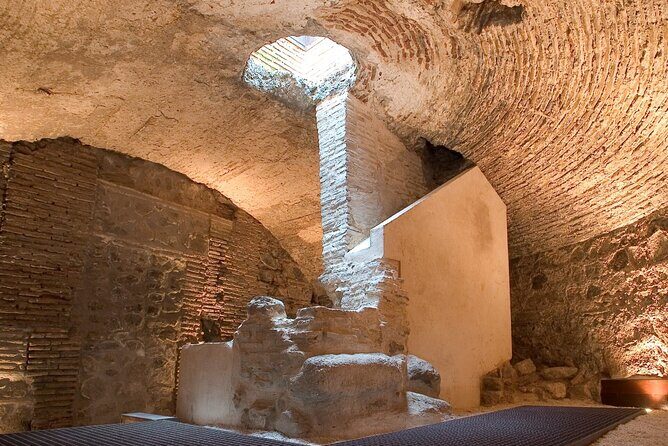
If you care about how cities worked, you’ll love this tour’s theme. Toledo isn’t presented as a pile of monuments. Instead, you see the city through the plumbing and the tech: cisterns that stored water, bath and thermal systems that heated it, and wells that supported daily life. Even better, each site sits in or under a place you’d otherwise walk right past.
The route also gives you a “layers of time” feeling. You start with earlier remains tied to Roman engineering, then you see later phases such as a mosque and a church at Cuevas de Hércules. From there, the story keeps shifting—Roman thermals, medieval wells, and a hammam heating system preserved in a basement setting.
You can also read our reviews of more walking tours in Toledo



Private walking tour logistics (that actually matter)
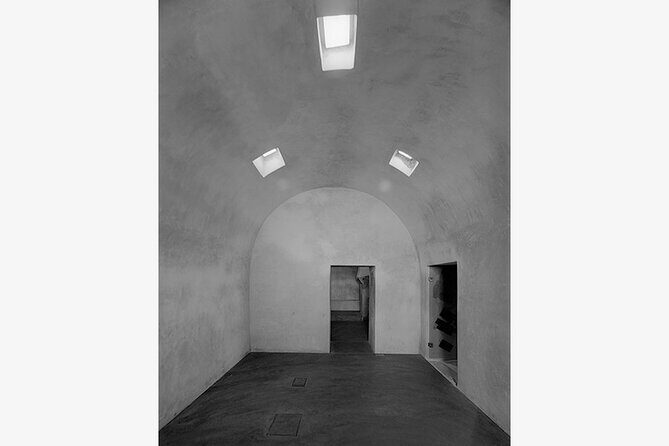
This is a private tour/activity, so it’s only for your group. That’s a big deal in underground spaces where groups can get cramped and the pacing is harder to manage. With a private format, the guide can keep you moving without losing the explanation.
A few practical notes help you plan:
- Language: offered in English.
- Headphones: provided when the group exceeds 5, using individual devices to help you hear clearly in low-noise spots underground.
- Mobile ticket: you’ll have it on your phone, which tends to speed up check-in.
- Getting there: it’s near public transportation, so you’re not forced into long taxi rides just to start.
- Shoes: comfortable shoes are recommended—because you’ll be walking between several central plazas and side streets.
You’ll also see service animals are allowed, and most travelers can participate. If your group includes kids, older adults, or anyone who needs a steady pace, this tour style generally works well because it’s not a huge crowd shuffle.
Stop 1: Cuevas de Hércules and its layered Roman-to-medieval story
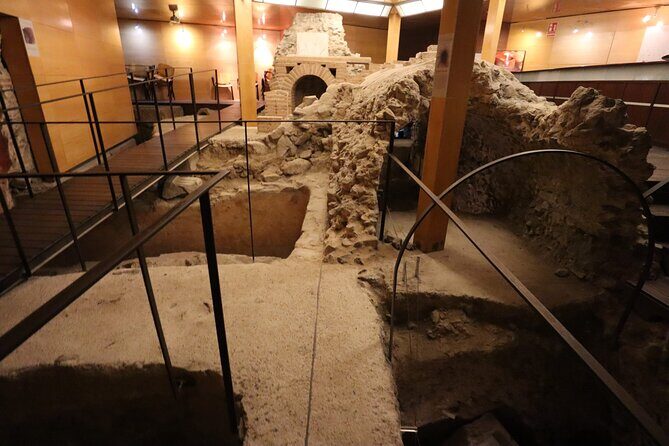
Cuevas de Hércules is your first true “how is this here?” moment. You’re looking at underground archaeological remains that connect multiple time periods. The site is described as steeped in history, with Roman cisterns and later layers including a mosque and a later church. That mix alone turns the visit into more than sightseeing—it becomes a timeline you can stand in.
Expect a short stop (about 12 minutes) where the guide ties together what you’re seeing: where water storage fits in, how later cultures reused or reinterpreted space, and why legends grew around these remains.
One key consideration: access to Cuevas de Hércules is limited to specific days and hours—Tuesday to Saturday, 12:00–14:00 and 17:00–19:00. If you’re booking without flexibility, this can affect whether you can actually access this stop during your tour window. Check your tour day early, and if your schedule is tight, treat those time windows like part of the itinerary planning.
Stop 2: Las Termas Romanas de la Plaza de Amador de los Ríos
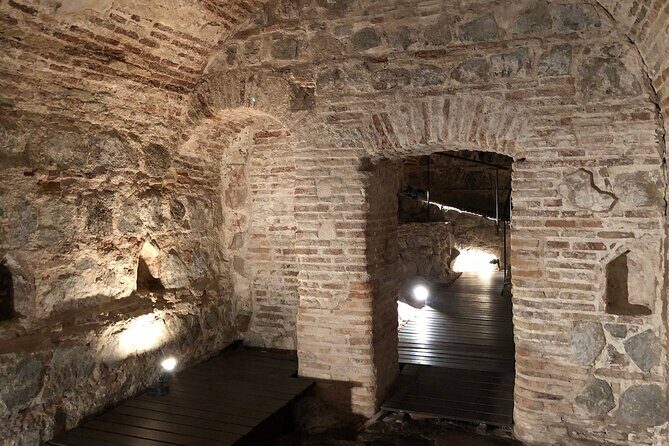
Next comes Las Termas Romanas de la Plaza de Amador de los Ríos, a gigantic thermal complex from the 2nd century. This is where the tour shifts from “water storage” to “water use”—how bathing and heated spaces helped define daily routines.
You get another brief visit (around 12 minutes), but the payoff is the scale. A thermal complex isn’t small-room archaeology. It’s a city-level system: heating, circulation, and the idea that comfort and hygiene were engineered, not accidental.
This stop also pairs nicely with what you saw at Cuevas de Hércules. After the cistern-and-layers start, Las Termas helps you see the bigger picture: water wasn’t just saved. It was processed and delivered for heat, bathing, and communal life.
Admission is included here, which is nice for budgeting. It also keeps you from having to manage extra ticket lines while you’re already focused on the guide’s flow.
Stop 3: Plaza Colegio Infantes and the Baño del Caballel remains
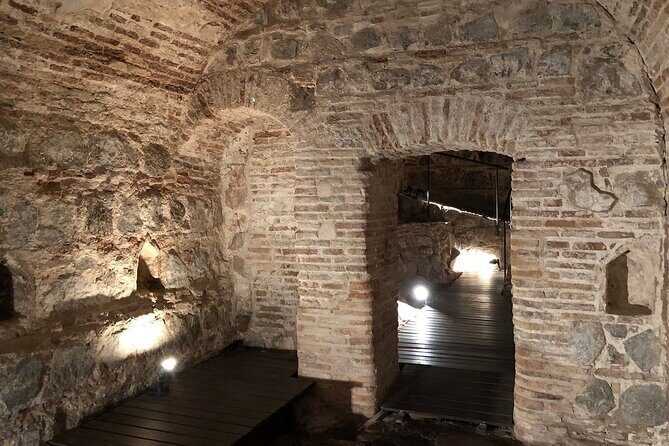
Plaza Colegio Infantes is a smart contrast stop. Above ground, it looks like a normal plaza. Under the surface, you’re connected to archaeological remains, including those of the Baño del Caballel and Baños del Cenizal. The stop lasts about 20 minutes, and it’s one of the longer segments.
This is a good place to slow down mentally. You’re learning how Toledo’s underground world isn’t tucked away in a single museum building. Instead, it lives under everyday streets and squares. That makes the explanations more than academic—you’ll start noticing the city differently as you walk.
Admission is free for this stop, so it’s a great value moment: you get time with the guide and the interpretation work, without adding ticket cost.
Potential drawback here is subtle: because the stop is free and publicly located, it can feel less dramatic than the fully underground sites. The value is in the guide’s pointing and context—so pay attention to what they highlight rather than waiting for a big “reveal.”
You can also read our reviews of more guided tours in Toledo





Stop 4: Plaza del Salvador and the Well of El Salvador
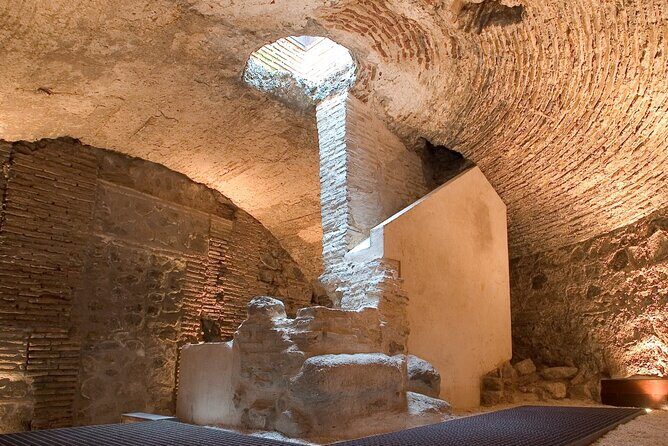
Under Plaza del Salvador, you’ll find the former cloister of Trinitarian monks and the remains of the Well of El Salvador, described as eleventh century. This stop is about 13 minutes and is also admission free.
This is where the “water tech” theme turns practical. A well isn’t just a piece of stone—it’s a lifeline. The explanation connects how spaces were organized around water access and how religious and community buildings depended on reliable underground sources.
If you like architecture and planning, you’ll probably enjoy how the guide makes the underground layout feel understandable. It’s one thing to hear the words. It’s another to see how a well fits into a bigger building story and how that influences what you’re standing over.
Stop 5: Casa del Judío in Toledo’s Jewish Quarter
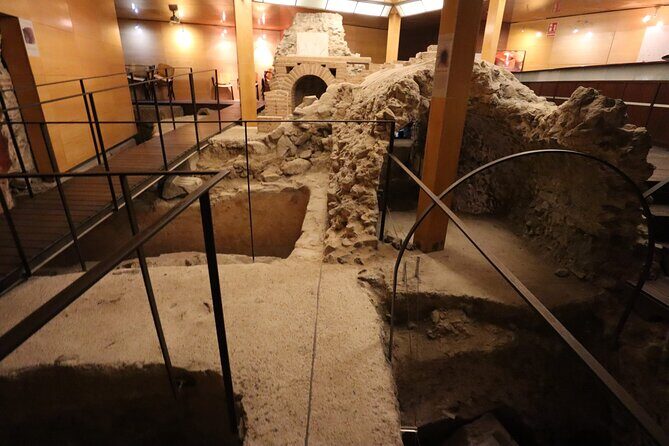
Casa del Judío adds a different flavor to the route. Instead of only focusing on baths and wells, you shift into a historic setting tied to Toledo’s Jewish Quarter. This stop is about 15 minutes and includes admission.
What makes it valuable is how it expands the tour’s layers theme. Water systems tell a lot about daily life, but the Jewish Quarter context helps you understand that Toledo’s history wasn’t single-track. Different communities, different eras, and different uses of space all overlap in this city.
Because this stop is ticketed and included, it also strengthens the “value per hour” side of the tour. If you’re deciding between doing several standalone entrances versus a guided plan, this is one of the places where having the guide’s narrative helps you connect the dots faster.
Stop 6: Calle del Ángel hammam basement and the hypocaust clues
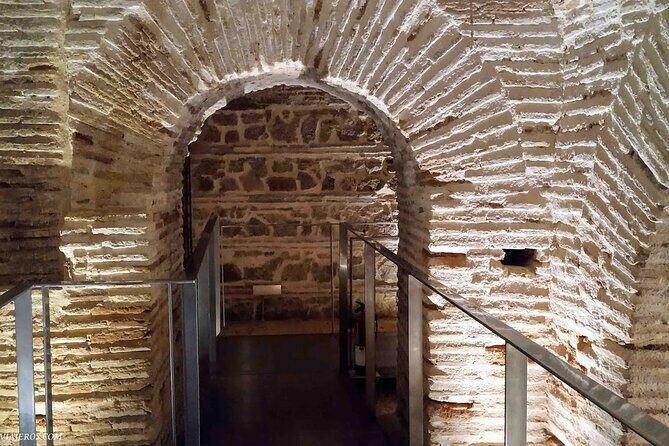
Calle del Ángel is another surprise. Here you’ll see a preserved hammam in one of the basements of the street, including part of its hypocaust. The hypocaust is the heating system—an important detail because it tells you how comfort and warmth were engineered underground.
This is about 15 minutes and admission is free. The value is in the explanation: the guide helps you understand what you’re seeing in relation to how Roman and later cultures powered heat in enclosed spaces. You’ll likely leave with a clearer mental model of how warm water baths worked without modern infrastructure.
The hammam stop also closes the loop with your earlier sites:
- Cuevas de Hércules starts the story with stored water and layered religious reuse.
- Las Termas shows the scale of Roman thermal engineering.
- The plazas and the well connect it to medieval life and daily dependence on underground water.
- Calle del Ángel gives you the heating piece in a more direct way.
2 hours in Toledo: pacing, walking, and what to expect
This tour runs about 2 hours. That time length is ideal for short visits because it gives you multiple underground stops without turning your day into a half-day trench mission.
You will walk between sites. It’s central Toledo—plazas and nearby streets—so you’re not dealing with long transit legs. Still, comfortable shoes matter. Underground stops also tend to feel cooler and sometimes dimmer, so if you’re the type who needs steady visibility to read details, keep that in mind and don’t rush your steps.
One more timing note: Cuevas de Hércules access has day-and-hour limits. If you book a day outside those windows, you might miss that specific underground entry opportunity. Build your schedule around the tour days rather than treating it as optional once you arrive.
Price and value: is it worth about $172.82 per person?
At $172.82 per person for roughly 2 hours, this is not a bargain-basement tour. But it also isn’t just “a walk with a story.” You’re paying for access and interpretation.
Here’s where the value shows up:
- Underground access is part of the core experience, and that’s not something you get just by roaming.
- Admission is included for several key stops: Cuevas de Hércules, Las Termas Romanas de la Plaza de Amador de los Ríos, and Casa del Judío.
- You also get included headphones when the group gets larger, which protects the quality of the experience in confined spaces.
- It’s private, meaning the guide can tailor pacing and explanation to your group size and ages.
If you split the cost across multiple people, the private factor can feel even better. But even solo travelers can find it worth it because the tour’s structure gives you a focused route through places that are otherwise easy to miss.
So the decision comes down to what you want most from Toledo. If you mainly want sweeping views and big public sights, this route may feel more niche. If you want how the city actually functioned—water, heat, and how communities reused the same spaces—this price starts to make sense fast.
Who will enjoy this most (and who should rethink)
This tour fits best if you like:
- architecture and archaeological layers you can physically access
- history told through how places were used
- water systems—cisterns, baths, wells, and hammams
- a guided route that keeps you from wandering aimlessly through plazas
It can also work well for mixed-age groups. Guides for this experience are praised for adapting to groups that include a wide age range, even when the group is big. That matters when your party includes kids plus adults who want different levels of detail.
What might be less ideal:
- If you need slow, very careful English pacing, note that at least one participant felt the guide spoke quickly. For you, the fix is simple: ask for repetition or slower explanations at the start.
- If you’re trying to fit Cuevas de Hércules into an inflexible schedule, the restricted access hours are the big caution.
Local guide quality: what you can hope to hear
The names that keep showing up around this tour are Javier, Alejandro, Enrique, and Anna—each highlighted for making the sites understandable and fun. One guide in particular was described as having an archaeologist background, which can help when the tour turns technical about space use and engineering details like heating systems.
In plain terms: you’re not just getting dates. You’re getting explanations of why these underground spaces mattered—how they were reused over centuries, and how the city’s water story connects Roman, later Islamic-era elements, and medieval periods.
Should you book Underground Toledo with Toledo Forever?
Book it if you want a side of Toledo that most people never experience: the underground water world tied to baths, wells, and hammams. I’d especially recommend it if you have even a short stay and want the visit to feel organized and purposeful.
Before you click confirm, do two things:
- Make sure your tour day lines up with the Cuevas de Hércules access windows (Tuesday–Saturday, 12:00–14:00 or 17:00–19:00).
- Wear comfortable shoes and plan for a true walking route between several sites.
If your goal is only to tick off famous viewpoints, you may find this too focused. But if you want Toledo to make sense at ground level—under your feet—this is a strong choice.
FAQ
How long is the Underground Toledo private walking tour?
It lasts about 2 hours.
Is the tour offered in English?
Yes, the tour is offered in English.
Is this tour private or group-based?
It’s a private tour/activity, meaning only your group participates.
Are tickets included for the stops?
Admission tickets are included for Cuevas de Hércules, Las Termas Romanas, and Casa del Judío. Plaza Colegio Infantes, Plaza del Salvador, and Calle del Ángel are listed as admission free.
Do we get headphones?
You get individual headphones when the group exceeds 5 people.
Is access to Cuevas de Hércules limited?
Yes. Access to Cuevas de Hércules is only available Tuesday to Saturday, 12:00–14:00 and 17:00–19:00.
What’s the cancellation policy?
Free cancellation is available up to 24 hours in advance for a full refund.