REVIEW · MADRID
Tour from Madrid to Cuenca with access to Cathedral
Book on Viator →Operated by Cuenqueando · Bookable on Viator
Cuenca has a way of grabbing you fast. The day trip strings together old streets, major viewpoints, and a rare cathedral experience that goes past the usual photo spots. I also like how the group moves at a comfortable pace, with a guide who helps you read the city instead of just passing it by, whether your crew includes Antonio for the run-in or Christian as the main guide. Along the way, you get top views and ticketed interiors without turning the day into a checklist.
Two things I really like: the Cathedral of Cuenca stop is more hands-on than you expect, with time to get up to the ceiling-level viewpoints via that tiny spiral stair in the clerestory area. And the abstract art visits make Cuenca feel surprising, especially when the art links to local architecture in the Hanging Houses.
One possible drawback: you’ll do a fair amount of walking and there are stairs involved, including that spiral stair. If you’re not a fan of heights or tight staircases, plan your comfort level before you go.
In This Review
- Key points to know before you book
- The Madrid to Cuenca Day Trip: why it’s such a good use of time
- Getting oriented in Cuenca’s historic walled town
- Mirador Barrio del Castillo and Plaza Mayor: where the city starts to make sense
- Catedral de Cuenca: the clerestory viewpoint and that spiral stair
- Museo de Arte Abstracto Español: abstract art in a place with real altitude
- The sculpture moment and the Hanging Houses wayfinding
- Puente de San Pablo and the viewpoint walk for people who like edges
- Convento de San Pablo: how the day closes without feeling abrupt
- Price and value: what you’re actually paying for
- Who this tour is best for
- Should you book this Madrid to Cuenca tour?
- FAQ
- How long is the Madrid to Cuenca tour?
- What time does the tour start, and where do we meet?
- Is the cathedral viewing included?
- Is there a museum visit included?
- Are there free-admission stops during the day?
- What language is the tour offered in?
- What’s the group size limit?
- What should I consider if the weather is bad?
Key points to know before you book
- Cathedral access with a special viewpoint from the clerestory area and up a narrow spiral stair
- Abstract art stops tied to Cuenca architecture, including time at the Museo de Arte Abstracto Español
- Panoramic city views from the Mirador Barrio del Castillo and other viewpoints over the gorge area
- Good structure for a long day, with multiple guided stops spread across the historic center
- Small-to-medium group feel, with a maximum of 50 people and guided time that stays orderly
The Madrid to Cuenca Day Trip: why it’s such a good use of time
A nine-hour day trip sounds like a lot until you realize Cuenca is the kind of place where seeing it “well” takes more than wandering. This itinerary is built to do that: you get time in the historic walled town, multiple viewpoint breaks, and two ticketed cultural stops that actually add context.
The big win is that you don’t just arrive, point, and shuffle. You start with orientation, then you build a mental map: where the main square sits, how the cathedral sits in relation to the Hanging Houses, and how the gorge side shapes the city’s layout. That makes everything you see after that feel less random and more connected.
You’ll also feel the value in how much is guided versus self-guided. Some parts are marked as free admission stops, but guided time is still the core of the experience, and the two ticketed moments (cathedral and abstract art) are where you’ll want the help most.
You can also read our reviews of more tours and experiences in Madrid.

Getting oriented in Cuenca’s historic walled town
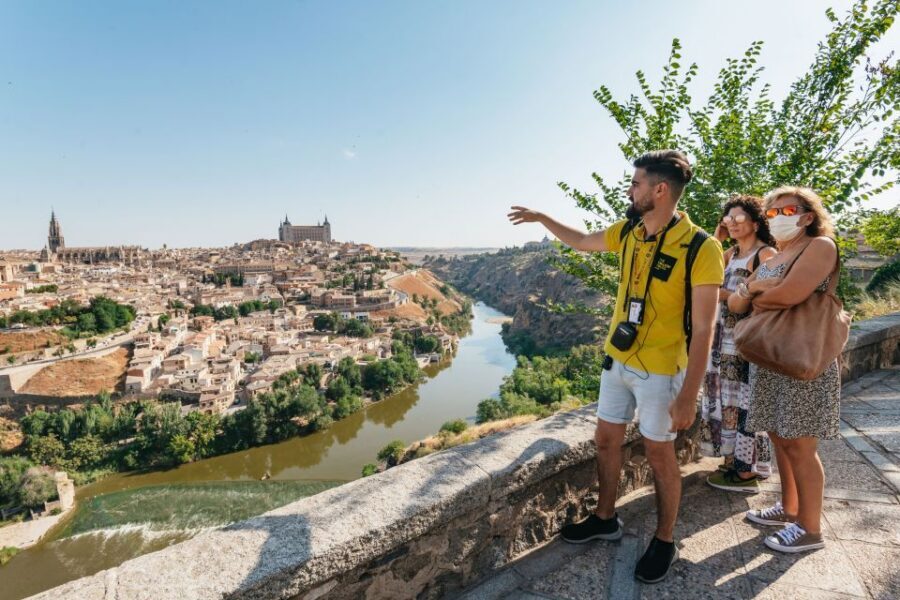
You start with a long, easy-to-digest chunk of time in Cuenca’s world heritage city core, with guided wandering through the old streets. This is where you get the first payoff: the city’s layout makes sense once you hear how the different areas connect visually.
Cuenca is the kind of place where a lot of the “wow” is not only the big sights, but also the angles between them. Early on, your guide’s job is to help you start spotting those angles and patterns. You’re better equipped to enjoy later stops—especially when you’re looking for how the gorge setting affects what you see from the viewpoints.
Practical tip: wear shoes you’re comfortable walking in for hours. You’re not doing extreme hikes, but you will move through uneven, historic-city surfaces. If you’re bringing a camera, think about strap length and quick-access pockets, because you’ll want both hands free at the viewpoints.
Mirador Barrio del Castillo and Plaza Mayor: where the city starts to make sense
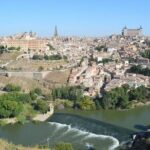
After the initial historic area time, you head to the Mirador Barrio del Castillo for about 20 minutes. This is a classic “get your bearings fast” moment. From here you can see the city as a whole, which helps you understand why Cuenca looks the way it does from street level.
The next stop, Plaza Mayor de Cuenca, is about 15 minutes. It’s short, but it’s not rushed sightseeing. This is the kind of square where a guide’s explanation matters, because once you understand what you’re looking at—how the square fits into Cuenca’s story—you’ll look at it differently later from above, especially after the cathedral stop.
If you like your tours with built-in context, these middle-of-the-day quick hits are a good sign. You’re not stuck waiting for the big attractions. You’re building background while the city is still unfolding in front of you.
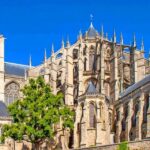
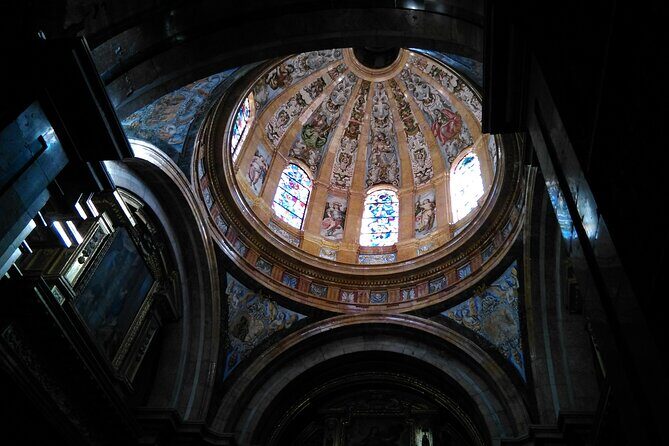
Catedral de Cuenca: the clerestory viewpoint and that spiral stair
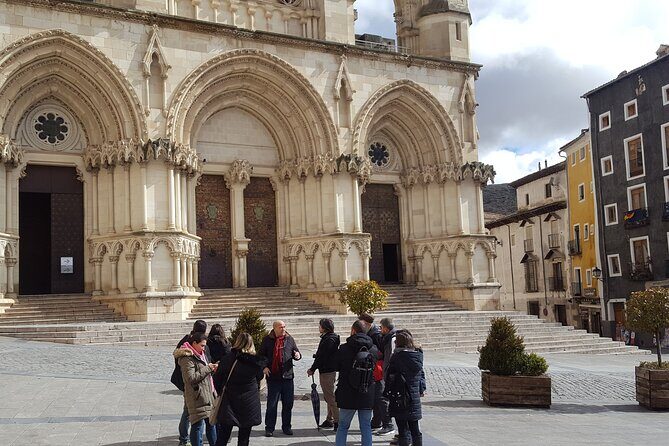
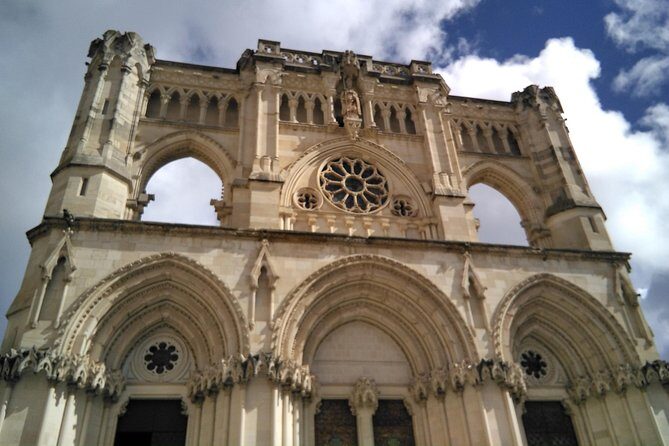
This is the part that gives this tour its edge. The Catedral de Cuenca stop lasts about an hour, and it’s not just a quick look at the exterior or a brief interior pass.
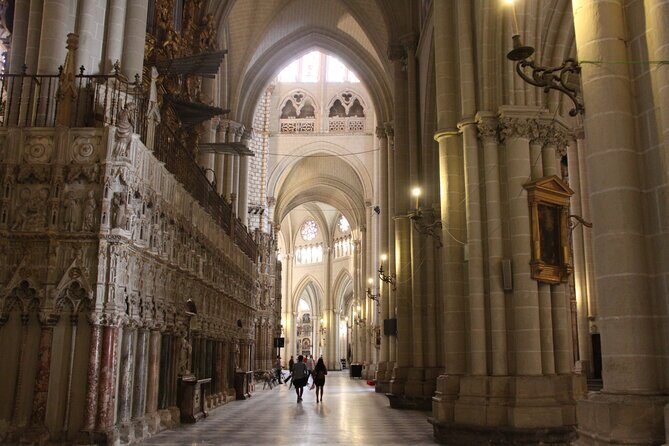
The highlight is the viewing experience from the cathedral’s clerestory, with time to appreciate details from a higher perspective. You’ll also use a tiny spiral staircase that leads up toward the cathedral ceiling-area viewpoints. It’s one of those moments that changes your whole impression of the building: you stop thinking of it as a single room and start noticing layers—lines, angles, and how light and structure work together.
From up there, you get views that connect cathedral life to city life: you’ll see the Main Square scene and also a panoramic look out toward the Júcar River meanders. That matters because Cuenca’s beauty isn’t only architectural. It’s architectural plus geography. The river curves far enough away that you get that sense of distance and scale, even within the compact city center.
Consideration: the spiral stair is narrow. If you don’t love tight stairs or heights, take it slowly. If you prefer not to climb, still consider the stop worthwhile because the cathedral setting and the overall guided context are part of the value.
Museo de Arte Abstracto Español: abstract art in a place with real altitude
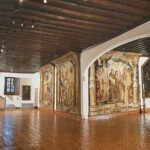
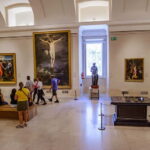
After the cathedral, the tour shifts gears into a more modern contrast: the Museo de Arte Abstracto Español with about 30 minutes of guided visit time. This stop is included, so you’re not hunting tickets or trying to line up museum hours during a packed day.
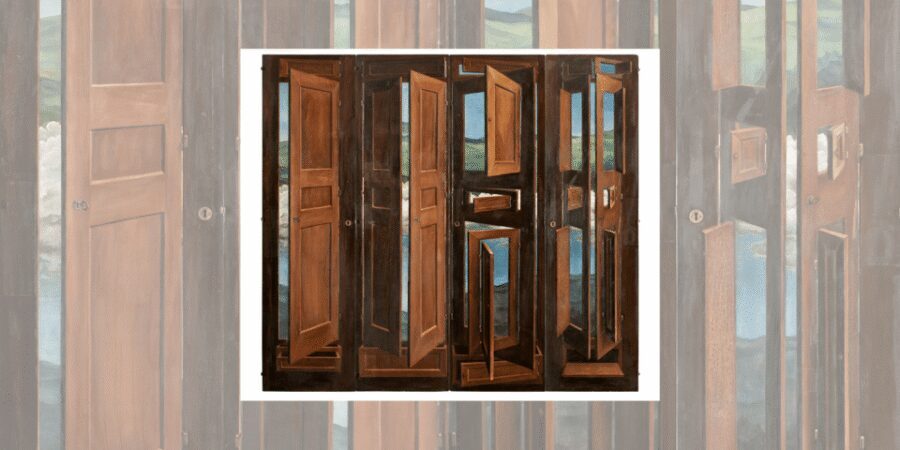
Abstract art can feel difficult in a normal museum room, but here it hits differently because of the surrounding architecture and the overall mood of Cuenca. The museum time ties into the Hanging Houses story—so you’re not seeing abstract works in isolation. You’re seeing them in a city where space, structure, and viewpoints are part of the identity.
If you’re into art history, your guide’s framing can help you connect the “why” behind the collection to the broader Spanish abstract movement of the 1950s and 1960s. The museum includes works and sculptures from that generation, and the context links to artists you may already know, like Picasso, Miró, and Gris, in terms of the creative ideas they represent.
Practical tip: bring patience for a shorter museum visit. Thirty minutes is enough to appreciate the main collection and understand the theme, but it’s not built for long, slow wandering in every room. If you love reading every label, you might have to pick highlights.


The sculpture moment and the Hanging Houses wayfinding
Between the cathedral and the Hanging Houses, you’ll pass a sculpture situated in the road area between those two key zones. This kind of mid-route stop matters more than it sounds because it helps you lock in spatial relationships. After the cathedral views, you’ll likely start noticing how the Hanging Houses relate to the cathedral’s position in the center.
You’ll then reach what Cuenca does best for first-timers: the Casas Colgadas, the famous Hanging Houses. You’re given time here (about 30 minutes), and this is where the city stops being a lecture and starts being a visual experience.
The Hanging Houses are known for balconies that hang toward an abyss. Standing near them changes the scale of the city. Up close, you can see how the architecture is built to live with the gorge edge rather than hide from it.
The tour also points you toward another architecture reference: the Skyscrapers of San Martin, described as the first ten-floor buildings of the world. Even if you don’t remember the claim word-for-word, it’s a neat contrast cue—Cuenca isn’t only medieval stone. It’s also a place where modern ambition has left fingerprints.
And here’s the clever part: inside the emblematic Hanging Houses, you’ll find the Museum of Abstract Art connection again. So you’re getting art in a setting that already has a story. It’s not random museum placement; it’s a blend.
Puente de San Pablo and the viewpoint walk for people who like edges
Next up is the Puente de San Pablo (about 15 minutes). This bridge is described as designed by the Eiffel school, and the tone of the experience is clearly for people who like a little “edge” to their travel.
From a practical perspective, this bridge is useful because it links your viewing angle. You’re not just seeing the city from street level. You’re getting a walking pause that places you in the right line of sight for what comes next, and it sets you up to feel the gorge scale.
The tour frames the bridge as a walk for the audacious and an adventure for the vertiginous, but everyone ends up feeling like they’re in one of Cuenca’s best zones. That matches what you’ll notice: Cuenca’s drama is in the drop-offs and the way viewpoints open over deep gorges.
How to enjoy it more: take your time when you stop. Quick glances don’t show you much here. Look, then re-look from a slightly different angle. That’s where photos get better.
Convento de San Pablo: how the day closes without feeling abrupt
Your visit ends near the Convento de San Pablo, after crossing the Saint Paul Bridge. It’s a shorter stop (about 15 minutes), and the good news is that it works as a gentle landing. By the time you reach it, you’ve already gotten the cathedral heights, the abstract art, and the Hanging Houses drama.
So instead of ending with yet another “main attraction,” you finish with a calm historic feel. It’s the kind of stop that lets the day settle in your memory as more than just a list of famous sights.
Price and value: what you’re actually paying for
At $89.83 per person for roughly 9 hours, this day trip can feel like a splurge—until you look at what’s included. You’re paying for a full guided structure across Madrid and Cuenca’s main zones, with English interpretation and a group size that caps at 50.
The best value piece is that two key stops include admissions: the Cathedral viewing (including that ceiling-area clerestory experience) and the Museo de Arte Abstracto Español time. Those are the parts most people would otherwise pay to do separately or would struggle to time cleanly during a day trip.
You’re also getting a lot of free-admission guided wandering. Even when admission is free, you still benefit from the guide explaining what to look for, where to stand, and why those views matter. That’s the part that turns a “cheap ticket” into a satisfying day.
Also, the mobile ticket helps. Less time figuring out paperwork means more time ready for the next stop.
One more practical value signal: the fact that this tour is booked well in advance tells you it’s popular for people who want a structured Cuenca day without headaches.
Who this tour is best for
This is a strong fit if you want:
- a guided introduction to Cuenca rather than DIY wandering
- a cathedral experience that goes beyond standard viewpoints
- art plus architecture in one day
It can also work well for couples and small groups who like photos but don’t want to spend the whole day trying to coordinate where to meet again.
If you’re traveling solo, you may appreciate the group size and the steady rhythm. And if you’re on a tight schedule in Madrid, this kind of day trip gives you a major payoff with minimal planning.
The main mismatch is comfort-related. If tight stairs and gorge-edge angles make you uneasy, you should think carefully about the cathedral spiral stair and the Hanging Houses area.
Should you book this Madrid to Cuenca tour?
I’d book it if you’re aiming for a first-time Cuenca day that feels guided and complete. The combination is what sells it: cathedral access with a true viewpoint payoff, plus abstract art time in a setting that already has drama, plus panoramic stops that help you understand the city’s layout.
I’d hesitate only if you know you strongly dislike stairs or enclosed-narrow staircases, or if your travel style is more “wander slowly without structure.” This tour is structured for a reason, and it moves.
If you’re excited by architecture, views, and a bit of art surprise, this is one of those day trips that leaves you with images and context working together. And that’s the best kind of souvenir.
FAQ
How long is the Madrid to Cuenca tour?
It runs for about 9 hours.
What time does the tour start, and where do we meet?
It starts at 8:30 am at C. de Carlos y Guillermo Fernández Shaw, 1, Retiro, 28007 Madrid, Spain.
Is the cathedral viewing included?
Yes. The Catedral de Cuenca stop is listed with admission included.
Is there a museum visit included?
Yes. The Museo de Arte Abstracto Español is included with a guided visit.
Are there free-admission stops during the day?
Yes. Several stops are marked with free admission, including time in Cuenca’s historic walled town and multiple viewpoint and square stops.
What language is the tour offered in?
The tour is offered in English.
What’s the group size limit?
The tour has a maximum of 50 travelers.
What should I consider if the weather is bad?
This experience requires good weather. If it’s canceled due to poor weather, you’ll be offered a different date or a full refund.