REVIEW · MADRID
Tour “Madrid of the Austrias” | Old Town ❤️
Book on Viator →Operated by Trip Tours Madrid · Bookable on Viator
Madrid’s Habsburg stories start on its main square. This walk strings together essential Old Town streets and squares, explaining the Austrias era with curiosities and street-level anecdotes that make the city feel readable. I love the pacing and how guides like Marta, Paola, and Félix turn facts into scenes you can picture.
One thing to plan for: entry tickets are not included for Almudena Cathedral, the Royal Palace, and Teatro Real. If you want to go inside (instead of just seeing exteriors), you’ll need to budget extra and allow time.
The value is strong for the money: the price is mainly for your place in the group (a group purchase up to 5), and the group is capped at 15. That smaller size helps the guide keep things moving and still answer your questions.
In This Review
- Key highlights at a glance
- Why the Madrid of the Austrias walk feels like time travel
- Meeting at Puerta del Sol and how the walk actually starts
- Puerta del Sol: El Oso y El Madroño and the city’s pulse
- Plaza Mayor: the busy square that has seen everything
- Mercado San Miguel: a historic market break (and yes, it’s a good stop)
- Plaza de la Villa: medieval Madrid in three narrow streets
- Almudena Cathedral: modern-looking, older beneath the surface
- Royal Palace of Madrid: the kings’ world and what you can learn outside
- Teatro Real: Europe-scale drama with a facade worth the pause
- Price and value: what you’re really paying for
- What to watch for during the walk (so it sticks)
- Who this walk is best for
- Should you book the Madrid of the Austrias Old Town walk?
- FAQ
- Where does the tour start and where does it end?
- What time does the tour begin?
- Is admission included for Almudena Cathedral, the Royal Palace, and Teatro Real?
- Are the stops at Puerta del Sol, Plaza Mayor, Mercado San Miguel, and Plaza de la Villa included for free?
- How long is the experience?
- What is the cancellation policy?
Key highlights at a glance
- Puerta del Sol to Teatro Real: an Old Town route that keeps you moving through the center, not circling one spot
- Austrias connections: you connect daily landmarks to the Habsburg-era story thread
- Guide energy matters: you may see high-energy, clear-English storytelling from guides such as Paola, Carlota, Dina, and Félix
- Free stops early on: multiple major squares and the market are free to enjoy from outside or in the public areas
- A small group (max 15): easier Q-and-A than the big-bus crowd
- Modern stops with older layers: Almudena’s Gothic look plus a neo-Romanesque crypt adds texture without being just sightseeing wallpaper
Why the Madrid of the Austrias walk feels like time travel
Madrid can look like a patchwork of styles—medieval corners here, grand government buildings there. What I like about this walk is that it stitches those layers to a single storyline: the Madrid of the Austrias and how power left fingerprints on streets, squares, and institutions.
You’re not stuck in one “look at this, move on” routine. Instead, the guide helps you notice why each place matters—who was here, what changed, and what little details people often miss.
This is also a good fit if you already know the big names. You’ll still get new angles, because the tour focuses on the connections between ordinary public spaces and royal-era decisions.
You can also read our reviews of more tours and experiences in Madrid.

Meeting at Puerta del Sol and how the walk actually starts
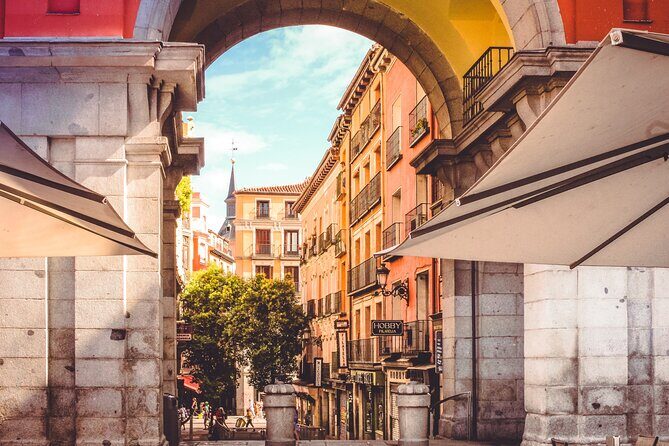
You meet near Puerta del Sol at the Trip Tours Madrid point, with a start time of 11:00 am. The tour uses a mobile ticket, so have your phone ready and don’t wait until the last minute to get the app or confirmation sorted.
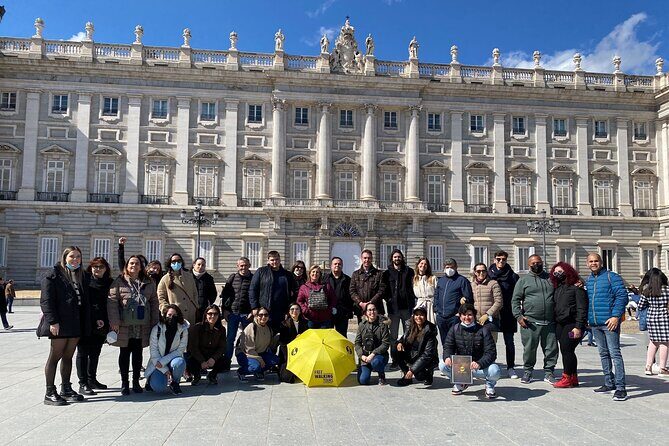
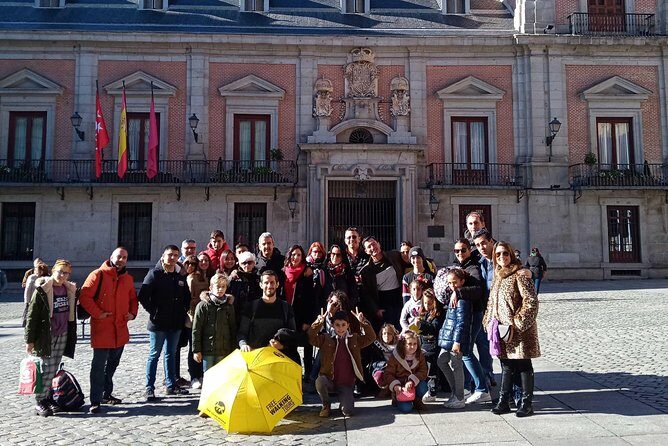
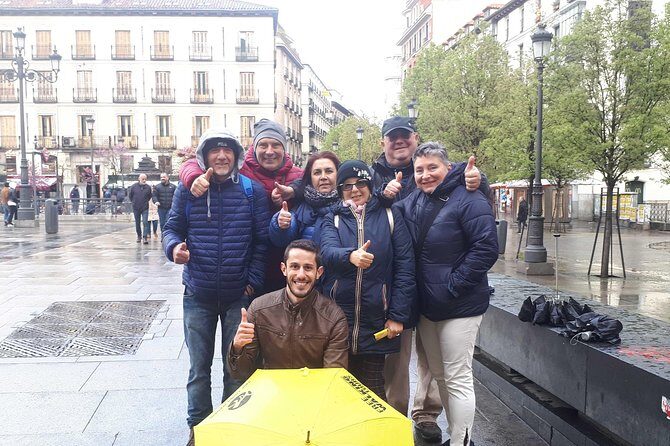
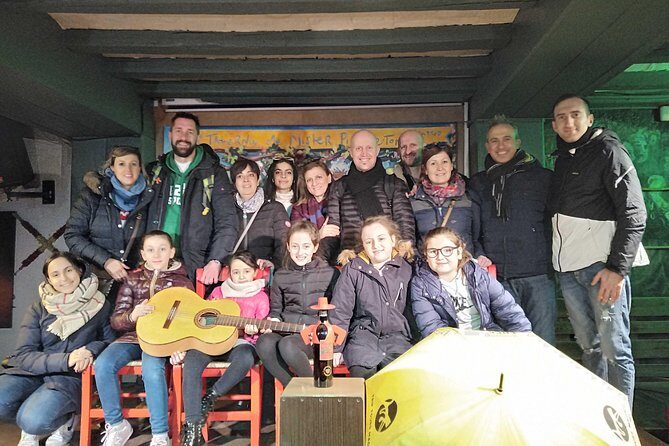
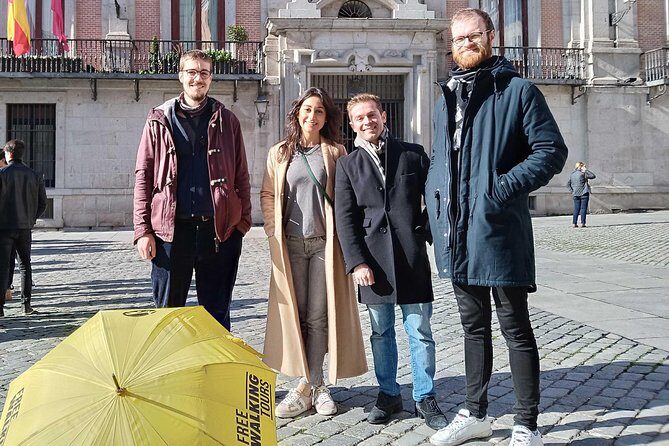
Here’s a small but useful tip: the guide’s hallmark is a yellow umbrella. That makes it easy to find your group quickly, especially in a place as crowded as Sol.
The walking pace is designed for a small group. With a maximum of 15 travelers, the guide can keep questions from turning into a traffic jam, and you can actually ask the stuff you care about without shouting.
Puerta del Sol: El Oso y El Madroño and the city’s pulse
Every first-time walk in Madrid starts here for a reason. Puerta del Sol is the city’s headline square, and the tour begins with what it has witnessed over time.
You’ll see the famous pairing of El Oso y El Madroño, the bear and the strawberry tree. It’s the kind of symbol people snap photos of—yet most visitors don’t know the story behind it. This is where the guide adds the missing link so the square stops being just a backdrop.
Puerta del Sol also sets expectations for what comes next. The guide frames Madrid as a city shaped by public space—where power and politics were acted out in plain sight, right in the middle of daily life.
Plaza Mayor: the busy square that has seen everything
From Sol, the walk heads to Plaza Mayor, one of Madrid’s most important and early plazas. This stop works because it shows you how a grand square can function like a stage.
You’ll get history and curiosities, but the real payoff is learning how the layout and role of the plaza supported the city’s public life. Big squares like this aren’t just for tourists—they’re where crowds, announcements, and events have happened for centuries.
One practical note: Plaza Mayor is busy. Give yourself a moment to look around slowly. The guide will point out details, but you’ll also get more out of the stop if you let your eyes adapt to the scale.
Mercado San Miguel: a historic market break (and yes, it’s a good stop)
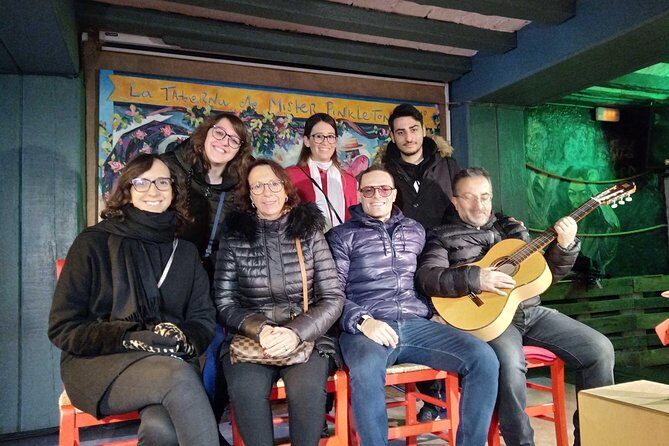
Next comes Mercado San Miguel, a market known for having history inside its walls. This stop is shorter, so it’s less about a full lesson and more about setting a vibe.
This is a smart break in the middle of the walk. The guide gives you context, then you can step back and enjoy the atmosphere. If you feel like it, it’s also a convenient spot to grab a drink and keep the energy up.
Keep your expectations realistic: this is still a market in a tourist-heavy area. The value here is the combination of meaning plus a chance to slow down for a moment.




Plaza de la Villa: medieval Madrid in three narrow streets
If you like the feeling of Madrid as an older, more human-sized city, Plaza de la Villa delivers. The square connects to medieval Madrid and the idea of the city’s primitive layout.
The big clue is the presence of three narrow streets radiating from the area. It’s the kind of street pattern that tells you the city grew in stages, not with one grand blueprint.
This stop is a reminder that Madrid’s story isn’t only about royal buildings. It’s also about how daily life was organized—block by block, street by street—until those neighborhoods became the essential center you walk through today.
Almudena Cathedral: modern-looking, older beneath the surface
Now you hit a more “official landmark” moment: Catedral de Santa María la Real de la Almudena. The exterior reads modern, but the point of this stop is the layers inside the story.
The guide explains it as a Gothic cathedral with a neo-Romanesque crypt. That combination matters because it helps you understand why Madrid’s religious architecture doesn’t look like one single style era. It’s an evolving project—built with past ideas still in mind.
Here’s the key practical detail: admission is not included for the cathedral. So decide ahead of time whether you want to pay for entry. If you do, plan to treat this as one of your “ticket stops” and give yourself breathing room for it.
Either way, even just seeing it in the tour flow is useful, because it ties the Austrias storyline to the city’s spiritual and political centers.
Royal Palace of Madrid: the kings’ world and what you can learn outside
Then you arrive at the Royal Palace of Madrid, an imposing building with famous surrounding gardens. The guide shares stories and anecdotes about the kings who lived there, which is the right angle if you want the place to feel real—not like a poster.
This is one of those stops where the exterior can tell you a lot, especially if the guide points out what you should be noticing: scale, position, and the way royal power is presented in stone.
But again: the Royal Palace ticket isn’t included. If you want to go in, you’ll need your own admission. If you don’t, you can still get value by focusing on the palace as a symbol—where the Austrias-era state wanted to be seen.
Teatro Real: Europe-scale drama with a facade worth the pause
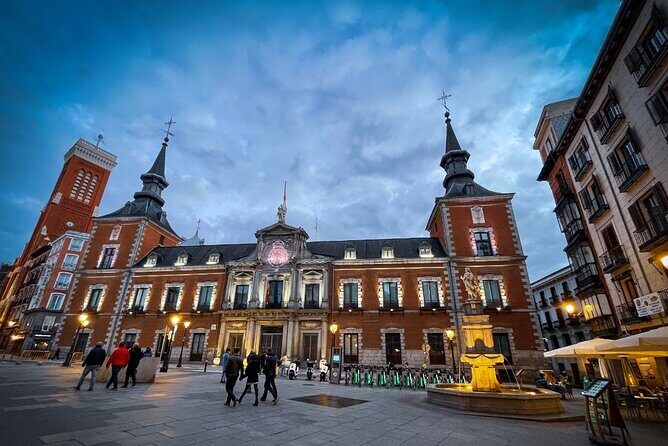
The walk ends at Teatro Real, one of Europe’s important performing arts institutions. It’s also described as the first performing arts institution in Spain, which gives this stop extra context beyond just its impressive appearance.
The guide focuses on the imposing facade and the theater’s place in the story of Madrid. This is a great finish because it turns the walk from “power and religion” into culture and public life.
As with the palace, admission is not included. Still, the timing of the end makes sense: you arrive at a meaningful location in the center and can continue your day from there.
Price and value: what you’re really paying for
Let’s talk money in plain terms. The price is listed as $3.48 per group (up to 5), and what you’re buying is basically a place on the walk. The tour itself doesn’t include snacks, and several major indoor sights require separate tickets.
So the value depends on your goals:
- If you want an efficient, guided Old Town orientation with context and free public stops, this is a bargain.
- If you plan to enter Almudena, the Royal Palace, and Teatro Real, your total spending will rise—but you’re still getting the benefit of having a guide explain what you’re looking at before you pay to go inside.
Also, booking is often made about 34 days in advance on average. That tells me it’s popular enough that you should lock in your spot if you want the 11:00 am departure.
What to watch for during the walk (so it sticks)
This tour is built on stories and noticing details. You can get more out of it with a few small habits.
First, keep your phone charged and your mobile ticket accessible. You don’t want to burn time at the meeting point when the group is waiting.
Second, wear comfortable shoes. The stops are close, but you’re walking through the core of Madrid, and cobbles and crowds can slow you down.
Third, treat ticketed stops as decision points. Almudena, the Royal Palace, and Teatro Real are not included, so think about your priorities:
- If you want maximum inside time, plan to pay for at least one or two.
- If you want a light day, enjoy the exteriors with the guide’s context and keep the rest of your afternoon flexible.
Finally, listen for the guide’s little “why this matters” connections. That’s what turns a standard sightseeing loop into an understanding of Madrid’s Austrias-era logic.
Who this walk is best for
I think this tour suits three types of visitors best:
First timers who want essential Old Town anchors without needing to research every square beforehand.
Repeat visitors or locals who have walked the center before but want a clearer story thread for what they’re seeing.
History lovers who prefer stories attached to real places, not a lecture detached from the street.
If you hate walking or want purely indoor attractions with everything paid in advance, you may find the mix of free public areas plus separate-ticket landmarks a bit annoying. But if you’re okay with making smart ticket choices, it works well.
Should you book the Madrid of the Austrias Old Town walk?
Book it if you want a guided route that gives you context fast—especially if you’re aiming to understand how Madrid’s public spaces connect to the Austrias era. The small group size (up to 15) and the strong reputation for lively, clear guide storytelling make it a low-risk way to get oriented.
Skip or rethink if you’re determined to do only included attractions with zero extra costs. Several top sights along the route require separate admission, and you’ll decide how many of them you want to enter.
If you’re traveling with limited time and you want your day to feel organized, this is a smart way to start in the center and end at Teatro Real with the city still in motion.
FAQ
Where does the tour start and where does it end?
It starts at Trip Tours Madrid near Puerta del Sol (Centro, 28013 Madrid) and ends at Teatro Real, Pl. de Isabel II, s/n, Centro, 28013 Madrid.
What time does the tour begin?
The start time listed is 11:00 am.
Is admission included for Almudena Cathedral, the Royal Palace, and Teatro Real?
No. Admission tickets for the Catedral de Santa María la Real de la Almudena, the Royal Palace of Madrid, and Teatro Real are not included.
Are the stops at Puerta del Sol, Plaza Mayor, Mercado San Miguel, and Plaza de la Villa included for free?
Yes. Puerta del Sol, Plaza Mayor, Mercado San Miguel, and Plaza de la Villa are listed as free admission stops.
How long is the experience?
The duration is listed as approximately 2 to 30 minutes.
What is the cancellation policy?
Free cancellation is available if you cancel up to 24 hours in advance for a full refund. If you cancel less than 24 hours before the start time, the amount paid will not be refunded.