Madrid modern hits your feet fast.
This 2 hours 20 minutes walking route is built around big-name streets and landmarks, but the real point is how they connect into one story of how Madrid grew. I like that it’s mostly free to view (no museum entries required) and that the guide uses printed materials and teaching tools to help you spot what matters instead of just taking photos. One thing to consider: it’s an exterior-focused walk, so if you want lots of indoor time, you’ll be steering your own schedule afterward.
I also love the start-to-finish flow. You begin at Puerta del Sol and end at El Retiro Park, which makes it easy to keep moving the same day. Guides like Tambo and Marta come across as energetic and good at answering questions, including how to make sense of all the layers in buildings and squares. The main drawback is practical: with walking tours, weather and pavement count, and you’ll want to wear comfortable shoes.
Booking tip from the vibe of the route: plan this one early. On average it’s booked about 14 days in advance, and the group stays small (max 30), so popular times can fill.
In This Review
- Key highlights worth your attention
- A modern Madrid walk that starts with orientation at Puerta del Sol
- Calle de Alcalá: walking Madrid’s longest street like a timeline
- Casino de Madrid and the Gran Vía corridor: power, money, and modern spectacle
- Instituto Cervantes: a former bank repurposed for the Castilian language
- Cibeles Fountain and the Banco de España: the city’s icon loop
- Paseo del Prado: the boulevard stretch you’ll want to keep walking after
- Puerta de Alcalá and the Retiro finish: where you can exhale
- Price and value: why $3.59 can still be a smart deal
- The guide makes the difference: Tambo, Marta, Tomas, Maikel, and Alba
- Logistics that matter: duration, group size, tickets, and language
- What you don’t get (so you can plan for it)
- Who should book this Walking Tour of Madrid Modern
- Should you book this tour? My decision guide
- FAQ
- How long is the Walking Tour of Madrid Modern?
- Where does the tour start and end?
- How much does it cost?
- Is this tour offered in English?
- Do you need to buy tickets to enter sites?
- Will I receive a mobile ticket?
- How big is the group?
- Is it easy to use public transportation to reach the meeting point?
- What happens if I cancel?
Key highlights worth your attention
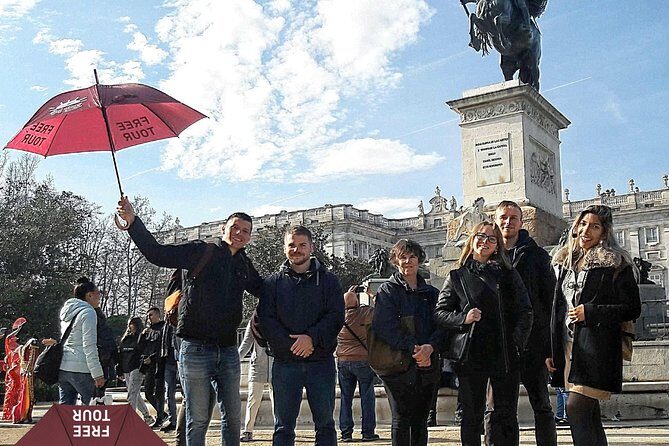
- Puerta del Sol to Retiro in one continuous story with a clear end point at the park lake area
- Free-to-see stops where you focus on façades, plazas, and streets instead of ticket lines
- Urban “modern Madrid” landmarks like Gran Vía and the Casino area tied to the city’s power centers
- Language and culture stop at the Instituto Cervantes, housed in a former bank
- City icon moments including Cibeles Fountain and the Banco de España exterior
- A UNESCO-listed boulevard finish line along Paseo del Prado (recognized since 25 July 2021)
A modern Madrid walk that starts with orientation at Puerta del Sol
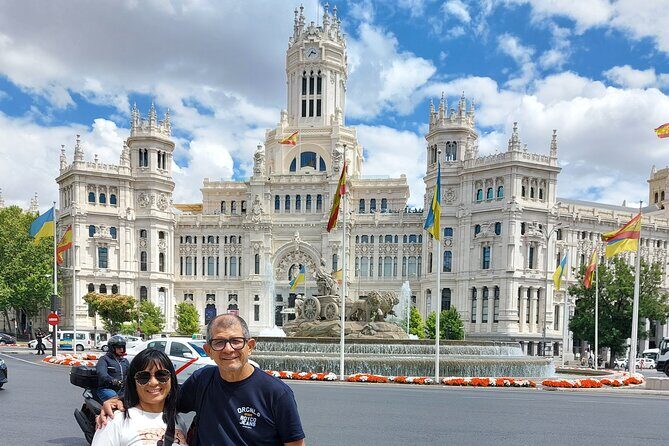
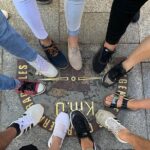
The whole experience is designed to help you get your bearings fast. Puerta del Sol is the classic Madrid hub, and the tour uses it like a launchpad. You’ll stand at Puerta del Sol and take in the cluster of the Royal Post Office and the famous Kilometer 0 area, plus nearby symbols that tell you Madrid’s center is not just geographic, it’s symbolic. Even with a short stop, it works because the guide frames what you’re looking at: how the city marks its points, and why this spot became a natural meeting ground.
What I like here is the “anchor effect.” After Sol, you move into Calle de Alcalá, so the tour doesn’t feel random. It builds momentum: center first, then outward along the city’s main arteries.
What to watch for: the details around Km 0 and the surrounding icons. If you glance at them like they are just postcards, you’ll miss why the guide points them out.
Time on this stop: about 15 minutes, with the expectation that you’ll absorb the basics quickly and move on.
You can also read our reviews of more walking tours in Madrid


Calle de Alcalá: walking Madrid’s longest street like a timeline
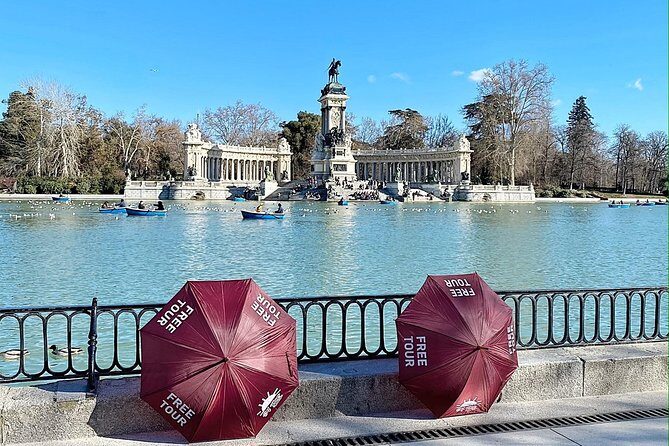
Calle de Alcalá is the kind of street that can make first-timers feel lost. The tour solves that by giving you a simple narrative: this is Madrid’s long connector, and you’re walking it for orientation, not wandering forever.
The stop is short (around 10 minutes), so don’t expect a deep stop-and-stare. Expect the guide to point out what makes the street important: how it functions as a corridor for movement, commerce, and attention. The value is in seeing the street’s scale against your own location. You start to feel the city’s rhythm instead of just naming neighborhoods.
Possible drawback: if you like slow street life—cafés, shop browsing, and long pauses—this portion may feel quick. The tradeoff is you’ll still hit a lot of major sites within the overall 2h20.
Casino de Madrid and the Gran Vía corridor: power, money, and modern spectacle
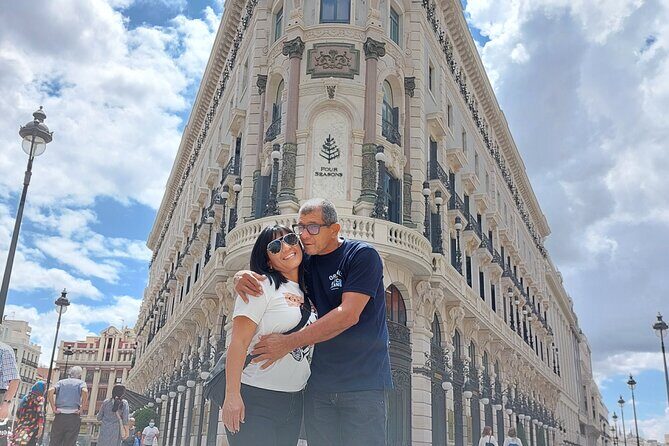
From here, the route moves to the Casino de Madrid area. The wording around the “golden mile” makes sense once you see the mix: the Casino sits in front of big modern presences, including the new Four Seasons Hotel and the BBVA building with its famous quadrigas. That combination is exactly why this tour is called modern: you get the city’s older institutions and the newer “confidence” architecture in the same gaze.
Then you continue to Gran Vía, one of Madrid’s main arteries for theaters, bars, and shopping. Even with only about 10 minutes here, the guide can make Gran Vía more than a busy shopping street. The framing helps you recognize it as a stage for Madrid’s image-making—where the city decided it wanted to look modern in public.
What I like: the tour treats architecture like a language. You’re not just told what things are; you’re taught how to read why they exist in this setting.
Time on these stops: about 20 minutes for the Casino area, then about 10 minutes for Gran Vía.
Instituto Cervantes: a former bank repurposed for the Castilian language
Next is a culture-and-language moment that feels like a plot twist. The tour stops at the Instituto Cervantes, which is in a former bank. That repurposing matters, because it shows how Madrid’s institutions evolve: money spaces can become learning spaces, and prestige can shift from commerce to language and scholarship.
You’ll get about 10 minutes here. That’s not time for an exhibition visit, but it’s enough to understand the building’s role and why the guide calls out the significance of Castilian language works being housed here.
Why it’s valuable even without entry: the tour teaches you to see function in the architecture. You notice how a historic banking shell can host something that supports global culture and education.
Cibeles Fountain and the Banco de España: the city’s icon loop
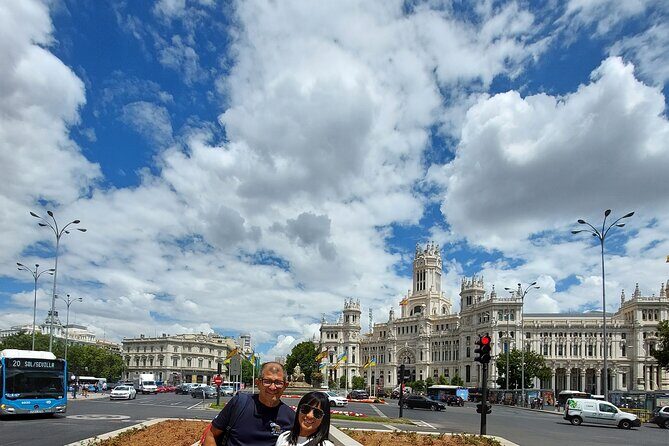
Then comes Cibeles Fountain. It’s one of Spain’s most recognizable images, and the tour uses it as a “reset point.” You’ll likely see it framed with the kind of grand civic geometry that Madrid does so well—open space, big stone, and a sense of ceremony even when you’re just walking by.
After that, you reach the Banco de España exterior. The stop is short (about 10 minutes), but the guide’s job is to connect this banking icon to the surrounding civic atmosphere. Put simply: you’re looking at how Madrid puts financial power near public meaning.
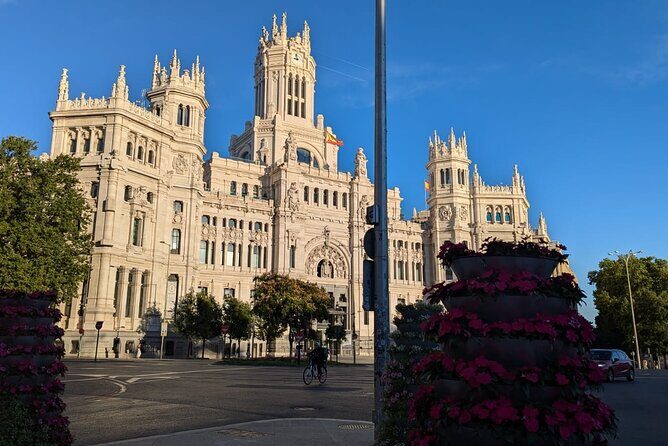
Then you move to Cibeles Lounge, the Palace of Cibeles, which is the current seat of the city council. This makes a natural trio: fountain as icon, bank as authority, city hall as governance. Even if you only glance, you start to see a pattern: modern Madrid is built out of repeating symbols of who runs things—and where people gather.
Time on these stops: about 10 minutes each for Cibeles Fountain, Banco de España, and Cibeles Lounge.





Paseo del Prado: the boulevard stretch you’ll want to keep walking after
This is one of the most satisfying parts of the route because it changes pace. You go from tight, busy-looking landmark moments into a long, tree-lined boulevard: Paseo del Prado.
The tour places it as a historical first—an urban boulevard concept dating back to the 16th century—and it links you to a museum and culture axis you can still follow on your own. The tour also notes a major modern honor: since 25 July 2021, it has been recognized as a UNESCO World Heritage Site.
While your official time here is about 10 minutes, the practical payoff is bigger. You’ll see the line of major cultural stops and walk away knowing where to go next without starting from scratch. The names you’ll hear along the way (like Prado Museum and Thyssen Bornemisza, plus CaixaForum Madrid and the Royal Botanical Gardens) become a map in your head, not random facts.
What I like: this segment turns the tour into a planning tool, not just a “see it once” walk.
Puerta de Alcalá and the Retiro finish: where you can exhale
At the end, you stop at Puerta de Alcalá, the city’s famous gateway work linked to King Charles III. Even with about 10 minutes, it lands because it’s both a monument and a threshold. The guide helps you understand why gateways become symbols of identity—this one is meant to feel like Madrid talking about itself.
Then you head into Parque del Retiro, the “vegetable lung” of central Madrid. Your stop here is about 25 minutes, which is generous for a walking tour finale. You finish near the park lake area, so you can slow down right away, grab a drink, and keep wandering without feeling like you missed the best part.
Time on the finish: about 25 minutes.
Price and value: why $3.59 can still be a smart deal
At $3.59 per person, this is one of those bargain-style city walks where the value is not in paid access. The tour doesn’t include entries to sites because the focus stays outside. That’s actually a benefit if you’re short on time or you dislike spending your day lining up for tickets.
Instead, you’re paying for:
- a local guide
- printed material and teaching tools
- personalized recommendations via a link on what to do in Madrid
- personalized attention from your guide after the tour
That last part matters more than people think. A good guide can help you decide what to do next based on your interests, and the route already does the heavy lifting by connecting multiple city “power” and “culture” points in one sweep.
The other side of the coin: because you’re not entering museums as part of the price, you’ll likely want to plan at least one ticketed experience on your own later. This walk sets up the choices; it doesn’t replace them.
The guide makes the difference: Tambo, Marta, Tomas, Maikel, and Alba
In this kind of route, the guide’s skill is the whole product. Based on what I’ve learned from different guide styles tied to this tour, the best moments tend to be the ones where the guide turns a building into a story you can recall later.
- Tambo stands out for being fun and answering questions clearly, even when the day is gray or rainy.
- Tomas is remembered for enthusiasm and for walking guests through places they might otherwise miss, with architectural variety as the backbone.
- Maikel is praised for making complicated Spanish history easier to understand.
- Marta gets high marks for being both knowledgeable and super fun, with extra restaurant and planning ideas at the end.
- Alba Gallego is noted for being friendly and explaining the city in a way that feels interesting and not stiff.
If you’re the type who asks questions during tours, this route fits you well. The stops are close enough that you’re not stuck waiting forever, and the guide seems prepared for curiosity.
Logistics that matter: duration, group size, tickets, and language
This walk runs about 2 hours 20 minutes. It’s offered in English, and you’ll get a mobile ticket. The group size is capped at 30, which helps keep the experience from turning into a crowded shuffle.
You’ll also have practical support built in: printed material along the route and near public transportation connections, plus service animals are allowed. Most people can participate, which is good to know if you’re debating whether to do a city-walk like this.
My advice: arrive a few minutes early at Puerta del Sol so you’re not stressed when the group gets going.
What you don’t get (so you can plan for it)
This tour is built around seeing exteriors and major urban spaces. That means:
- there are no site entries included
- the time at each stop is brief enough that you’re collecting highlights, not doing deep museum time
So if you want interior access—chapels, galleries, or major exhibits—you’ll likely add those later. The tour is best when you use it to set context first, then choose one or two ticketed places afterward.
Also, don’t ignore tipping. Tips aren’t included in the booking price, and the guide’s effort may come up at the end. One note to keep you prepared: in at least one case, a guide discussed taxes not covered by the original payment and suggested a tip level. I can’t predict what you’ll hear, but I’d plan to have something ready.
Who should book this Walking Tour of Madrid Modern
This is a strong fit if you:
- want a city-center orientation in a short time
- like architecture, streets, and civic landmarks as a connected story
- want a guide who will answer questions and share planning ideas after the walk
- prefer paying for guidance rather than stacking ticket costs
You might skip it (or at least pair it differently) if you:
- want mostly indoor time and long museum visits
- dislike walking among crowds or along major shopping corridors like Gran Vía
- need an itinerary with lots of free time between stops (this one is structured)
Should you book this tour? My decision guide
Book it if you want Madrid modern explained where you can see it. The route connects Puerta del Sol’s central symbolism, Gran Vía’s modern spectacle, language and institutional repurposing at the Instituto Cervantes, and civic identity through Cibeles and the Banco de España. It then gives you a satisfying breather at Retiro, plus a UNESCO-listed boulevard (Paseo del Prado) that helps you plan the rest of your day.
Skip it if your idea of value is ticketed museum time. This one is for getting the map in your head and understanding why these buildings sit where they do.
FAQ
How long is the Walking Tour of Madrid Modern?
It lasts about 2 hours 20 minutes.
Where does the tour start and end?
The tour starts at Puerta del Sol (Puerta del Sol, s/n, Centro, 28013 Madrid) and ends at El Retiro Park (Park Lake, Retiro, 28009 Madrid).
How much does it cost?
The price is $3.59 per person.
Is this tour offered in English?
Yes, it is offered in English.
Do you need to buy tickets to enter sites?
No. Entries to sites are not required because you do not enter during the tour.
Will I receive a mobile ticket?
Yes, it includes a mobile ticket.
How big is the group?
The maximum group size is 30 travelers.
Is it easy to use public transportation to reach the meeting point?
Yes. The meeting point is near public transportation.
What happens if I cancel?
You can cancel for a full refund up to 24 hours in advance. If you cancel within 24 hours of the start time, the amount paid is not refunded. If the tour is canceled because a minimum number of travelers isn’t met, you’ll be offered a different date/experience or a full refund.