REVIEW · MADRID
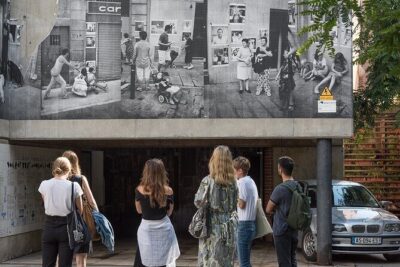
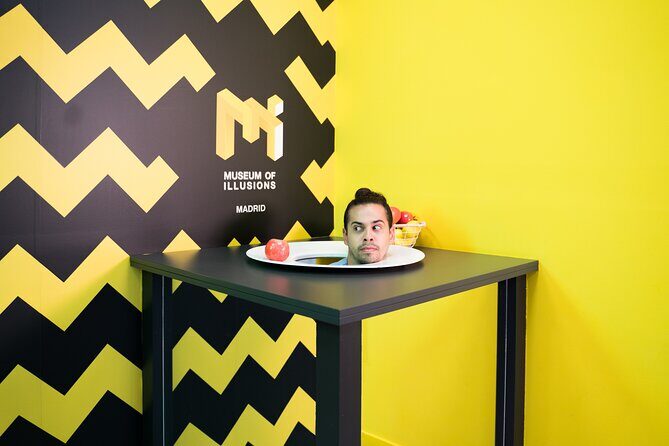
Entrance to the Museum of Illusions Madrid
Book on Viator →Operated by Museum of Illusions Madrid · Bookable on Viator
Your eyes will argue with you.
The Museum of Illusions Madrid turns vision and perception into hands-on puzzles. You walk through brain-bending installations that show how easily your sight can be fooled, and you’ll want to take your time even though the visit runs about an hour. There’s also a key note: you need a prior appointment by email at [email protected], so don’t treat this as a walk-up.
I especially like the focus on interactive, repeatable illusions—things you can try, reset, and try again. I also love that the experience is built for fun and photos, and the staff are described as helpful with getting pictures. One possible drawback to consider is flow: the museum is a small space, and the organization can feel uneven, especially when kids are around and everyone is moving in the same areas.
In This Review
- Key highlights you’ll actually care about
- Museum of Illusions Madrid: what you’re really paying for
- Where to meet on Calle del Dr Cortezo (and why it matters)
- Tickets, timing, and the mobile entry system
- The email appointment requirement (don’t skip this)
- How the 1-hour visit flows inside the Museum of Illusions
- What you’ll experience: vision, perception, and “wait, what?”
- Photo moments that fit real life
- The explanations may be bilingual or limited
- Price and value: is $18.06 a good deal?
- Who should go (and who should plan differently)
- Practical considerations: organization, contact, and language
- Tips to make your visit smoother (what I’d do)
- Should you book the Museum of Illusions Madrid?
- FAQ
- How long is the Museum of Illusions Madrid entrance experience?
- How much does admission cost?
- Where is the meeting point?
- Do I need to print or download a mobile ticket?
- What’s included in the price?
- Do I need to contact the museum before going?
- What is the cancellation policy?
Key highlights you’ll actually care about
- Optical illusions tied to perception: the point is how your brain interprets what your eyes see.
- About 1 hour inside: enough time to try plenty without dragging the day.
- Mobile ticket: makes entry simple if you keep your confirmation handy.
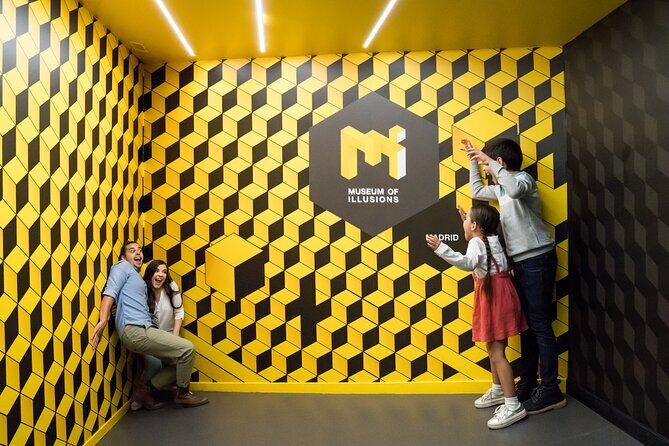
- Photo-friendly interactions: many spots beg for a quick shot and a second take.
- Small space limits comfort: when it gets busy, older visitors may have to edge around.
Museum of Illusions Madrid: what you’re really paying for
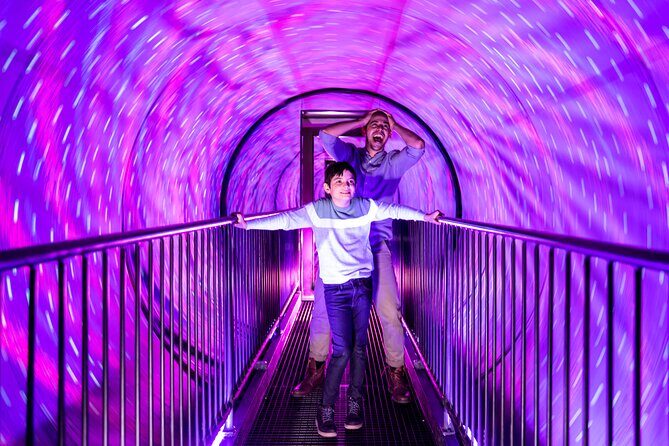
The Museum of Illusions Madrid isn’t about art history or big-name masterpieces. You’re paying for a focused hour of interactive perception games. Each installation is designed to create a moment where your brain makes a confident guess, and then the exhibit quietly proves that guess wrong.
That’s the real value for most people. You get a repeatable experience—try it, react, and figure out why your brain lied to you. And unlike many attractions, this one rewards slower attention. If you move room to room quickly, you’ll still have fun, but the illusion impact gets sharper when you stop long enough to watch what changes when you shift your angle or position.
Also, if you’re the type who likes explanations, this museum leans into how humans see. The themes are vision, perception, and the human brain—simple concepts, but shown in a playful way that keeps it from feeling like a lecture.
You can also read our reviews of more museum experiences in Madrid



Where to meet on Calle del Dr Cortezo (and why it matters)

Meet at Calle del Dr Cortezo, 8, Centro, 28012 Madrid, Spain. This matters because you’re not just finding a building—you’re syncing with a timed experience. Your ticket is for entry, and that works best when you arrive on time and not 20 minutes later while you’re still hunting the right door.
The activity ends back at the meeting point. That’s convenient. You don’t have to figure out a second location or plan a separate meeting spot later in your day.
Good news: it’s near public transportation, so you won’t need a taxi if you’re hopping between sights. The experience is also set up so most travelers can participate, and service animals are allowed.
Tickets, timing, and the mobile entry system
This experience runs about 1 hour. That’s a sweet spot. Long enough to get through multiple interactive zones, short enough to fit cleanly into a busy Madrid day.
You also pay $18.06 per person (the listing price). That sounds straightforward, but here’s the value angle: you’re not buying a guided tour across multiple stops. You’re buying timed museum entry to a hands-on attraction. For that format, $18.06 is often a fair trade if you like interactive exhibits and taking photos.
Average booking lead time is about 5 days in advance. I’d treat that as a sign to book early rather than waiting for luck, especially if you’re visiting on weekends when families can pack in.
You’ll use a mobile ticket, so keep your phone charged and your confirmation easy to find. If you rely on screenshots, save them ahead of time.
The email appointment requirement (don’t skip this)
One important detail: it’s necessary to make a prior appointment by email at [email protected]. Don’t assume the booking alone covers entry in every case. If the museum asks for a prior email step, complete it so you don’t arrive stressed.
If you’re a last-minute planner, this is the one constraint that can catch you off guard. Plan the email step early and you’ll move through the day more smoothly.
How the 1-hour visit flows inside the Museum of Illusions

You’ll have one stop: the Museum of Illusions Madrid. Think of it like a sequence of short illusion challenges rather than one long performance. You move from installation to installation, and each one is built to trigger a specific kind of misreading—things that look one way, but behave differently when you pay attention.
Most people get the best results by doing two passes with your brain switched on:
1) First pass: try everything without rushing.
2) Second pass: revisit the ones you enjoyed most, because your understanding improves once you’ve seen how the illusion works.
Because it’s about an hour, pacing matters. The museum is compact, so you’ll reach spots quickly. That’s good for efficiency. It can also mean crowding if lots of people arrive around the same time.
There’s an important practical consideration here for different ages. Some visitors found it easier when groups weren’t mixing too much. If the museum is busy with kids, you may notice that the areas get crowded faster, and you might have to wait your turn for the photo angle or the best viewing position.






What you’ll experience: vision, perception, and “wait, what?”
The theme is clear: vision and perception, with the human brain as the main character. The installations are meant to prove that seeing isn’t passive. Your eyes gather information, and then your brain makes a best-guess interpretation.
That’s why the experience feels fun even when you’re not a science person. You’re not studying. You’re reacting. And the exhibits are designed to create that quick moment of confusion followed by curiosity.
Photo moments that fit real life
This museum earns praise for exactly one thing that matters for many visitors: it’s good for photos. Not just because it’s visually interesting, but because the illusions often depend on position. That means you can usually get multiple shots without changing anything dramatic—shift your angle, change your stance, and you’ll see different results.
If photos are part of your plan, give yourself time. Don’t treat the camera as an afterthought. For best results, pause long enough to test how the illusion changes when you move.
Also, staff are described as willing to help with photos. That’s a comfort when you’re visiting as a couple or family and you don’t want to rely on strangers to capture the moment.
The explanations may be bilingual or limited
One downside noted by a visitor is that descriptions were only in Spanish for some individual points. If you prefer explanations in English, you might find some sections less satisfying than you expect. You can still enjoy the optical effect, but your understanding may depend on your own interest in visual puzzles rather than the text.
If you’re traveling with a group that wants lots of written explanation, it’s worth keeping expectations flexible.
Price and value: is $18.06 a good deal?
At $18.06 per person, you’re buying admission to a compact, interactive museum with about 1 hour on the clock. You’re not paying for transport, and that’s a good thing to confirm upfront. Your travel costs are separate, so plan your route to the meeting point in advance.
Here’s how I’d judge value:
- If you like hands-on stuff and enjoy figuring out why things look wrong, you’ll likely feel it’s worth the price.
- If you expect a large, spread-out museum with long content, you might feel it’s too small for what you hoped.
The most common positive theme is simple: people found it fun, funny, and surprising. That kind of reaction is exactly what this attraction is built for. In that sense, the price aligns with the experience style.
The main value risk is expectation. Some people felt they wanted more, or that organization and space limited how smooth the visit felt. If you’re sensitive to crowding or want a more guided, structured walkthrough, you may not love it as much.
Who should go (and who should plan differently)
This is a strong fit for:
- Families with kids who enjoy interactive exhibits and a little chaos (the good kind).
- Couples looking for a playful stop and photo opportunities.
- Anyone who likes brain puzzles and doesn’t need a formal museum setting.
It’s also a decent pick if you’re short on time. You can slot it into a day without committing to a half-day museum marathon.
But if you’re an older visitor traveling solo or with a small group, consider the crowding pattern. One concern raised is that the museum can feel tight when younger visitors dominate shared spaces. If you want the most comfortable experience, aim for calmer entry times if you can, and be ready to take turns waiting for openings at the best illusion spots.
If you only want an adults-only experience, note that this isn’t positioned that way in the information provided. Families are part of the atmosphere.
Practical considerations: organization, contact, and language

A few friction points came up:
- The museum space is small, and organization can feel lacking. That can affect how long you wait to try an illusion or where you stand for photos.
- There’s a note that there wasn’t phone contact available for changes. If you’re the type who might need to adjust your timing, that’s a real-world risk.
Also, the requirement to email for a prior appointment means you need to check your inbox mindset. Don’t ignore it and don’t assume you can fix it last minute through a phone call.
Language is another practical factor. If you rely heavily on text, you might be disappointed if descriptions are only in Spanish at certain points. The good news is that the illusions themselves don’t require language to understand what you’re seeing. You’ll still get the core effect.
Tips to make your visit smoother (what I’d do)
Since this is a tight, interactive visit, small planning choices make a big difference:
- Do the email appointment step early so entry doesn’t become a stress event.
- Arrive at the meeting point with buffer time, not right on the second.
- Bring a fully charged phone for the mobile ticket and photos.
- If it’s crowded, focus on one or two top illusions first, then come back for the rest once space opens up.
And if you care about comfort, pick a slower pace. You’ll get more out of it even if you don’t try every single interaction at maximum speed.
Should you book the Museum of Illusions Madrid?
Book it if you want a fun, photo-friendly, hands-on attraction built around vision and perception—and you’re happy to spend about an hour in a compact space. The price makes sense for that format, especially if you enjoy optical puzzles and don’t need a long, curated museum tour.
Skip it or adjust expectations if you’re looking for:
- a large, spacious museum feel,
- lots of detailed explanations in English, or
- highly structured adult-only organization.
If that describes you, you might still have fun, but you’ll likely notice the limits more than the surprises.
Overall, this is a solid “easy win” stop in Madrid when you want something different from monuments. Your eyes will do the talking.
FAQ
How long is the Museum of Illusions Madrid entrance experience?
It’s listed as about 1 hour.
How much does admission cost?
The price is $18.06 per person.
Where is the meeting point?
The meeting point is Calle del Dr Cortezo, 8, Centro, 28012 Madrid, Spain.
Do I need to print or download a mobile ticket?
You’ll use a mobile ticket.
What’s included in the price?
Entrance to the museum is included.
Do I need to contact the museum before going?
Yes. It says you must make a prior appointment by email at [email protected].
What is the cancellation policy?
It’s non-refundable and cannot be changed for any reason.