REVIEW · MADRID
Historical Visit to the Royal Palace Madrid
Book on Viator →Operated by VENEZIA EXPERIENCE · Bookable on Viator
Skip lines and meet Spain’s kings on their terms. The Royal Palace of Madrid is still the official residence of the monarch, even if the king uses it mainly for big public events and official lunches. You get a guided walkthrough of the palace’s most important rooms, plus the kind of behind-the-scenes context that turns statues and paintings into living history. Royal Palace of Madrid is a building you feel in your feet.
Two things I really like: the skip-the-line fast track entry (you move quicker, but it’s not a totally empty front-of-the-line moment), and the fact that you’re with an official licensed guide who keeps explanations clear and practical. One possible drawback: with a group tour that runs about 2 hours, you have to pick what matters most, because you won’t see every corner of a palace with thousands of rooms.
If you want a smart, story-led visit that respects your time, this is a good fit. If you want total freedom to wander at your own pace for half a day, you may find the schedule a bit tight.
In This Review
- Key things to know before you go
- The Royal Palace isn’t just a palace, it’s a whole world of rooms
- What skip-the-line means when you’re facing a palace entrance
- Your 2-hour plan: what you’ll likely cover (and what you won’t)
- Stop inside the Royal Palace: grandeur you can actually understand
- The palace’s origin story: fire, rebuild, and a famous architect
- What the palace symbolizes today: official residence vs real-world use
- Guide style matters: friendly, clear explanations and lots to see
- Pricing and value: when $119.30 makes sense
- Comfort tips that actually help in Madrid
- Who this tour suits best
- Should you book Regal Residency Discovery?
- FAQ
- How long is the Royal Palace Madrid tour?
- Where does the tour meet in Madrid?
- Does skip-the-line mean there will be no waiting at all?
- Is this tour private or shared?
- Do I receive a mobile ticket?
- Can I cancel for free, and what happens if my time slot isn’t available?
Key things to know before you go

- Fast track entry, not zero waiting: skip-the-line means you’ll be in the faster lane, and some people may still be ahead.
- Short guided time inside: the tour is about 2 hours total, and in practice you may only spend around an hour inside.
- A palace of huge scale: it covers about 135,000 m² and has 4,318 rooms, so your guide helps you focus.
- You’ll learn the big construction story: from the 1734 Alcázar fire to construction starting on April 6, 1738, with architect Giovanni Battista Sacchetti.
- Shared group experience: up to 15 people, so you get guidance without the feel of a private show.
The Royal Palace isn’t just a palace, it’s a whole world of rooms
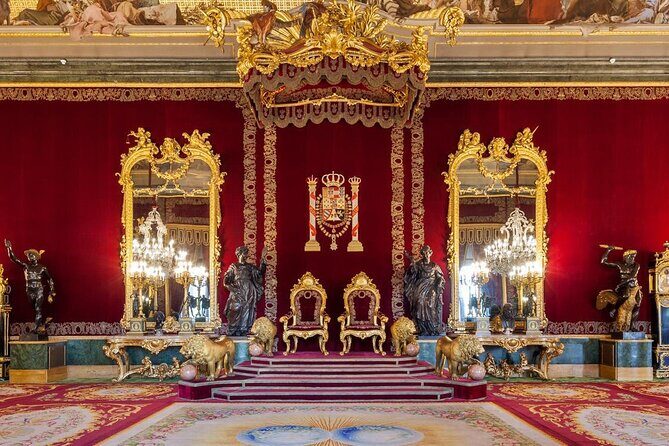
When people picture palaces, they often think of a single big hall. The Royal Palace of Madrid is different: it’s closer to a small city. The numbers are almost hard to hold in your head—about 135,000 m² and 4,318 rooms—and that’s exactly why a guided visit helps so much.
I like the way this tour frames the building as a lived-in place, not a museum display. You’re not just looking at gold trim and painted ceilings. You’re learning how monarchy worked as a system—who used what rooms, how official life shaped the palace, and why certain spaces feel theatrical.
You also get to connect the dots between eras. The palace has been known by different names through Spain’s political changes, and it remains the official residence of the king even today, though he uses it mainly for gala occasions, lunches, and official receptions. That tension—official status versus everyday use—adds an interesting layer to what you see.
You can also read our reviews of more historical tours in Madrid



What skip-the-line means when you’re facing a palace entrance

Skip-the-line sounds perfect, until you learn the fine print. Here, skip-the-line means fast track access, not a guaranteed front-of-the-line pass with nobody ahead. In real life, that still matters. It’s the difference between standing around with nothing to do and getting to start your visit sooner.
This is especially valuable at the Royal Palace because it’s a major stop in Madrid. Even when the line isn’t chaos, waiting can eat your energy—especially if your day already includes other sights. With this tour, the entry is handled for you, and your guide helps you transition from street to history smoothly.
One practical tip: don’t plan two timed tours back-to-back too closely. Even with fast track entry, your start time and pace can shift slightly in busy periods. A buffer of at least a couple hours keeps your schedule from turning into a stress test.
Your 2-hour plan: what you’ll likely cover (and what you won’t)
The tour runs about 2 hours. The palace is too large to cover everything, so the guide steers you through the most meaningful parts. Based on how the experience is described, you may spend roughly an hour inside, with the rest of the time used for group movement, orientation, and walking between key rooms.
That timing is a real advantage if you’re visiting Madrid with a packed itinerary. It lets you say yes to the palace without losing an entire morning. It’s also helpful for first-timers, because you’ll come away knowing what you’re looking at—and why those rooms matter—rather than just collecting random photos.
The trade-off is also honest: you won’t see the whole palace. If you love architectural spelunking and want to inspect every detail independently, this tour will feel selective. But if you want the palace’s highlights with context, the structure works well.
Stop inside the Royal Palace: grandeur you can actually understand
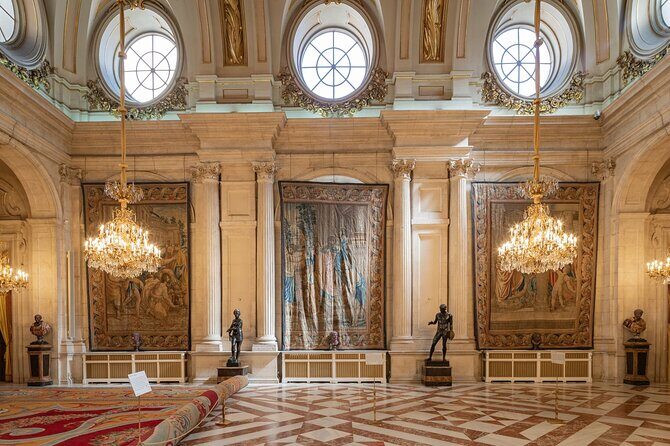
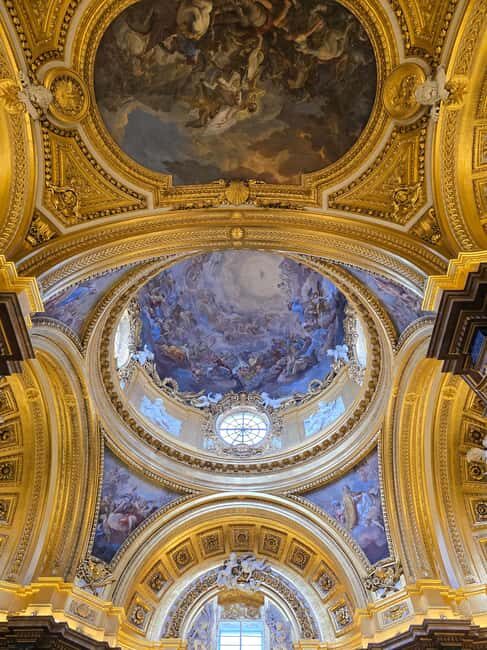
Once you enter, the building hits you fast. Lofty ceilings, elaborate frescoes, and polished ceremonial spaces create that classic sense of power. The best part of a guided tour is that it doesn’t leave you staring silently. You’re shown what to notice and what it means.
I’d expect your guide to point out details that turn the palace from scenery into a story. That includes how the rooms reflect royal life—space designed for status, ceremonies, and official presence. Even when you’re surrounded by decoration, you’re learning the logic behind it.
This is also where the “more than photos” effect happens. Paintings and ceilings can look stunning but confusing on your own. With a licensed guide, you’re given the storyline: who lived here, how authority was displayed, and how the palace’s layout supported public and private royal routines.
The palace’s origin story: fire, rebuild, and a famous architect
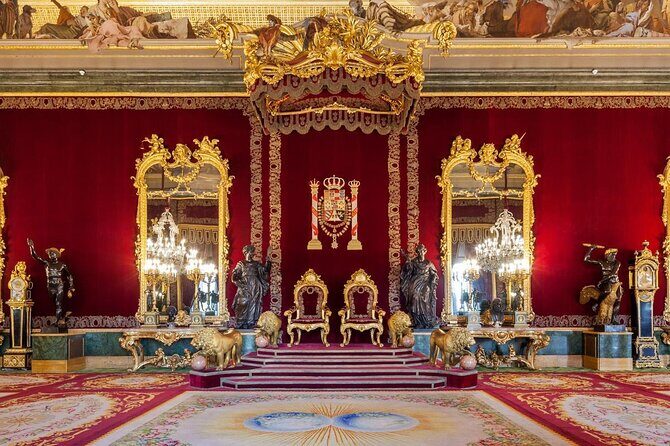
One of the most interesting parts of this experience is the construction background. The Royal Palace you see today wasn’t built from scratch in a blank field. It rises on the site of the earlier Royal Alcázar of Madrid, which was destroyed after a fire that lasted three days in 1734.
After that disaster, the rebuilding began in a big way. Construction started on April 6, 1738, when the first stone was laid. The architect credited for this work is Giovanni Battista Sacchetti. Knowing that timeline changes how you view the palace: it’s not just beautiful decoration. It’s a monument born from rebuilding, loss, and renewed ambition.
That kind of context is exactly why I recommend a guided visit rather than relying only on signage. When you understand why a palace had to be rebuilt and who designed it, the rooms feel more intentional. Even if you only remember a few facts, those facts create a stronger connection to the building.






What the palace symbolizes today: official residence vs real-world use

A key point you’ll learn is that the Royal Palace remains the official residence of the king. That said, the monarchy does not use it like a lived-in home in the day-to-day sense. Today, it’s used for special moments: gala occasions, lunches, and official receptions.
This distinction gives you a fresh way to look around. When you’re standing in opulent rooms, you can imagine how they’re used for ceremony—how the palace performs Spain’s identity to the world. It’s palace life as a stage, not just palace life as housing.
The palace’s changing names across political eras also help you understand Spain’s modern story. It has been known as the Palace of Oriente, and during the Second Spanish Republic it was called the National Palace. That’s a reminder that buildings can outlast governments, while still being reinterpreted by them.
Guide style matters: friendly, clear explanations and lots to see

The guides for this tour are a major part of the value. The most praised trait is clarity—information delivered in a way that feels explicit and concrete, not vague. You should expect a lot of detail, but it’s organized around what you’re seeing right now, not a random lecture.
Another strong theme is friendliness. A tour can become annoying if the guide sounds rushed or stuck in a script. Here, the tone described is helpful and welcoming. That matters because a palace visit is visually overwhelming—there’s so much to look at that your brain needs guidance to sort it all.
One more practical note from the experience: you may move through the palace at a pace that balances listening and looking. The group stays together, and the guide keeps you from wandering down dead-end corridors that don’t help your understanding.
Pricing and value: when $119.30 makes sense

The price is listed at $119.30 per person. That’s not pocket change, so you’ll want to know what you’re buying besides the right to enter.
Here, you’re paying for two core things:
- Skip-the-line fast track tickets, which save time at a major attraction.
- An official licensed tour guide who helps you understand what you’re looking at.
If you’re traveling with limited time in Madrid, the math is simple: time saved plus higher-quality context. Even if you love guidebooks, a live explanation is harder to replicate when you’re standing under a ceiling with a story you don’t know how to read.
Also, this tour is usually booked well ahead—on average around 168 days. That’s a sign it’s a popular time slot, not a last-minute option you can always count on.
If you’re the type of visitor who enjoys learning as you go, this price can feel fair. If you mostly want quiet wandering and zero structure, you might decide to buy a cheaper self-guided entry instead. But if you’re doing the palace as a highlight, the guidance tends to justify the cost.
Comfort tips that actually help in Madrid
Even a perfect tour can go sideways if you’re uncomfortable. One review tip that’s worth taking seriously: dress casually for summer heat. Madrid can bake, and palace visits can involve time outdoors at the start plus time inside with crowds.
Bring water if you’re sensitive to heat. Plan to wear shoes you can walk in comfortably, because moving through a large complex means real steps even if the tour is only around two hours.
If you’re visiting during hot weather, keep your expectations realistic: you’ll be focused on rooms and details, but you’ll also want to manage your comfort. That one small choice—lighter clothing, breathable layers—can make the difference between a great visit and a sweaty scramble.
Who this tour suits best
This is a strong match if you want:
- A guided visit that keeps your time under control.
- Clear explanations and stories behind what you see.
- Skip-the-line fast track entry instead of waiting at the ticket area.
It may be less ideal if you want:
- Full-day palace exploration with zero structure.
- A totally private, customize-everything experience.
Because the group is shared and relatively small—up to 15 people—you still get a sense of personal attention, without paying for a private guide setup.
Should you book Regal Residency Discovery?
I think you should book this tour if the Royal Palace is a top priority for your Madrid trip and you want to understand it, not just look at it. The combination of licensed guidance, fast track entry, and a realistic 2-hour time window is a very practical way to do one of Madrid’s biggest “wow” sights.
If you’re traveling fast, have limited days, or hate wasting time in lines, this works especially well. If you’re the type who wants to roam every room slowly and read every label at your own pace, you might prefer a self-guided visit instead.
My call: for most first-time palace visitors, this is a solid value purchase because it compresses a massive building into a guided experience you can remember.
FAQ
How long is the Royal Palace Madrid tour?
The tour is about 2 hours (approx.).
Where does the tour meet in Madrid?
The meeting point is ÓperaCentro, 28013 Madrid, Spain, and the tour ends back at the meeting point.
Does skip-the-line mean there will be no waiting at all?
No. Skip-the-line here means you’ll use the fast track line, not that there will be nobody in front of you.
Is this tour private or shared?
It’s a shared tour (not private) with a maximum of 15 travelers.
Do I receive a mobile ticket?
Yes. The experience includes a mobile ticket.
Can I cancel for free, and what happens if my time slot isn’t available?
You can cancel for free up to 24 hours in advance for a full refund. If your selected time slot isn’t available, you’ll be transferred to another time slot on the same day, and for last-minute unavailability you may be booked for the following day after the reserved date.