REVIEW · MADRID
Madrid: Street Art Tour with Local Graffiti Hunter
Book on GetYourGuide →Operated by Cooltourspain · Bookable on GetYourGuide
Madrid’s street art tells stories fast. In just 2 hours, you can trace the underground world of graffiti, stencils, and stickers across Lavapiés, Embajadores, and La Latina. What makes it click is the local graffiti hunter approach, linking what you see on the walls to the neighborhoods around it, not just the art itself.
I especially love two things: the guided stops at La Tabacalera (the former tobacco factory) where urban work fills big building walls, and the tour’s focus on specific landmark spots like Esta es una Plaza and Plaza del Sombrerete. One possible drawback: it’s a walking tour on city sidewalks, so you’ll want comfortable shoes and patience for getting to and from photo spots.
In This Review
- Key points before you go
- Meeting on Calle de Valencia: find the tour and settle in fast
- Lavapiés and Embajadores: graffiti, stencils, and sticker art you can read
- La Tabacalera: the former tobacco factory turned street-art engine
- Esta es una Plaza and Plaza del Sombrerete: where the guide makes the city click
- The biggest center-district mural: why one wall can change your whole attitude
- Workshops and follow-up energy: what to do after the walk
- Price check: is $29 worth a 2-hour street art walk?
- Who should book this Madrid street art experience
- Quick note on guides you may see
- Should you book this tour?
- FAQ
- How long is the Madrid street art tour?
- How much does it cost?
- Where is the meeting point?
- Is the tour guide English-speaking?
- Is the tour wheelchair accessible?
- Are beverages included?
- What should I bring?
- What is the cancellation policy?
Key points before you go
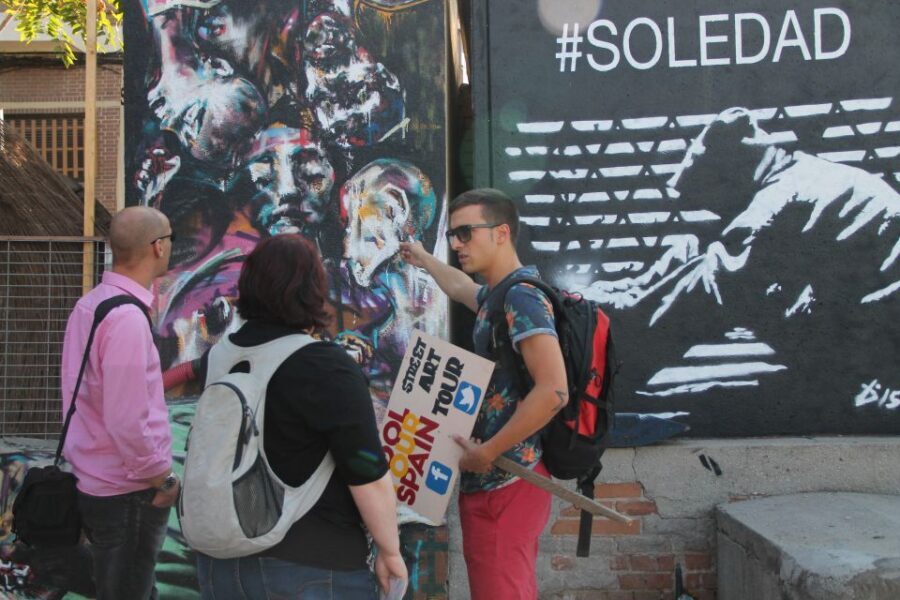
- Local graffiti hunter guide who connects Madrid’s street art with neighborhood life
- La Tabacalera walls from the former tobacco factory, made for big artistic scale
- Esta es una Plaza + Plaza del Sombrerete: an insider route for street-art storytelling
- Lavapiés and Embajadores streets along Calle Argumosa and Calle de Embajadores
- A chance to see the biggest mural highlighted in Madrid’s Center District on this route
Meeting on Calle de Valencia: find the tour and settle in fast
You’ll meet at the entrance of Teatro Valle Inclán, Calle de Valencia, 1 (metro: Lavapiés). This location is handy because it puts you right at the start of the neighborhoods this tour actually talks about, instead of hauling you into the “nice view corridor” only.
Plan to arrive a bit early and use the time to look around. Lavapiés has that lived-in feel where walls act like bulletin boards. If you’re the type who likes to understand a place through what it leaves visible, you’ll be in your element before the first stop.
Practical tip: bring your passport or ID card, and wear shoes you can walk in for two hours without thinking about it. Since this is about seeing details on walls, you’ll also be standing still and looking up more than you expect.
You can also read our reviews of more tours and experiences in Madrid

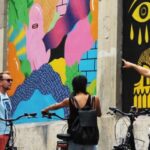
Lavapiés and Embajadores: graffiti, stencils, and sticker art you can read
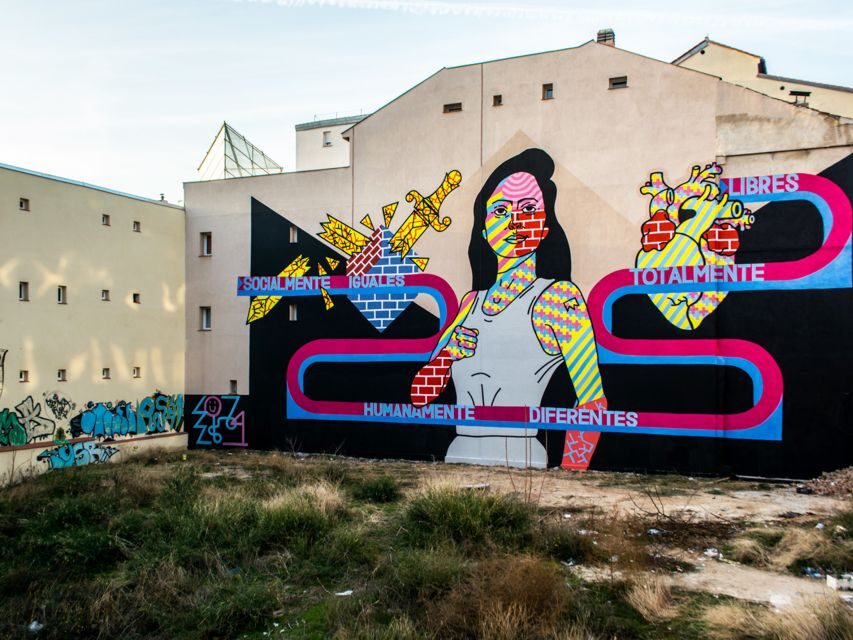
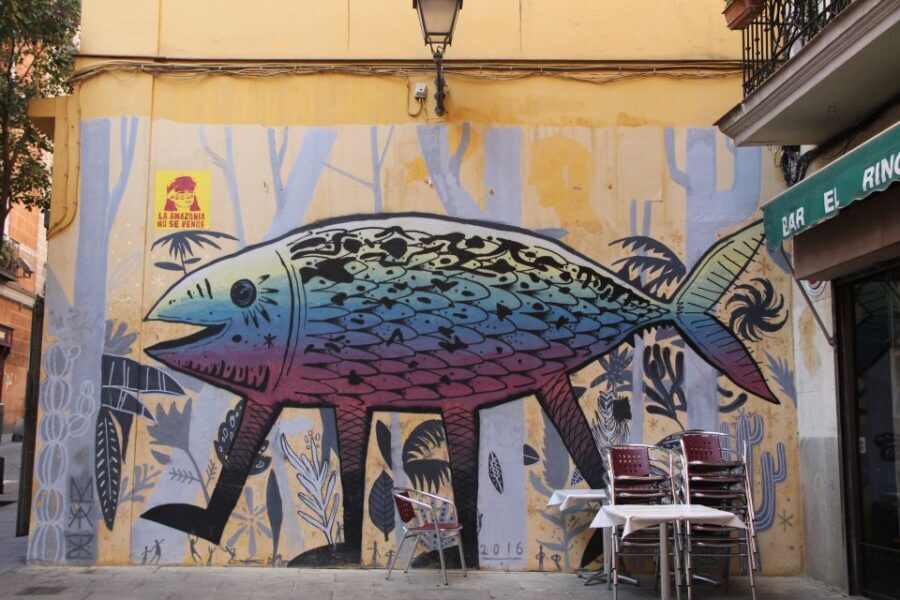
The heart of the tour is a guided stroll through Lavapiés and Embajadores, where the street art isn’t separate from daily life. You’re not just chasing pretty walls. The guide helps you notice style cues—how tags differ from stencil work, why sticker art pops up where it does, and what different techniques say about the artists’ goals.
You’ll spend time along key streets, including Calle Argumosa and Calle de Embajadores. This is where a lot of the learning payoff happens. In some cities, a street art tour feels like a string of murals. Here, you start seeing patterns: where artists place work, how different neighborhoods respond to the same kinds of graffiti culture, and how styles evolve rather than staying frozen in time.
What I like about the route is the mix. You see pieces that feel like pure expression (spray tags, bold letterwork), plus quieter forms like stencil and sticker art. If you’re new to this scene, the guide’s job is to translate. If you’re already a fan, you’ll likely catch more of the “why” behind the marks.
And yes, you’ll get chances for questions. Several guides on this experience are described as interactive, using questions as a way to keep everyone involved—street art can be visual, but it’s also opinion-based. That back-and-forth is part of what keeps the walk from turning into a lecture.
La Tabacalera: the former tobacco factory turned street-art engine
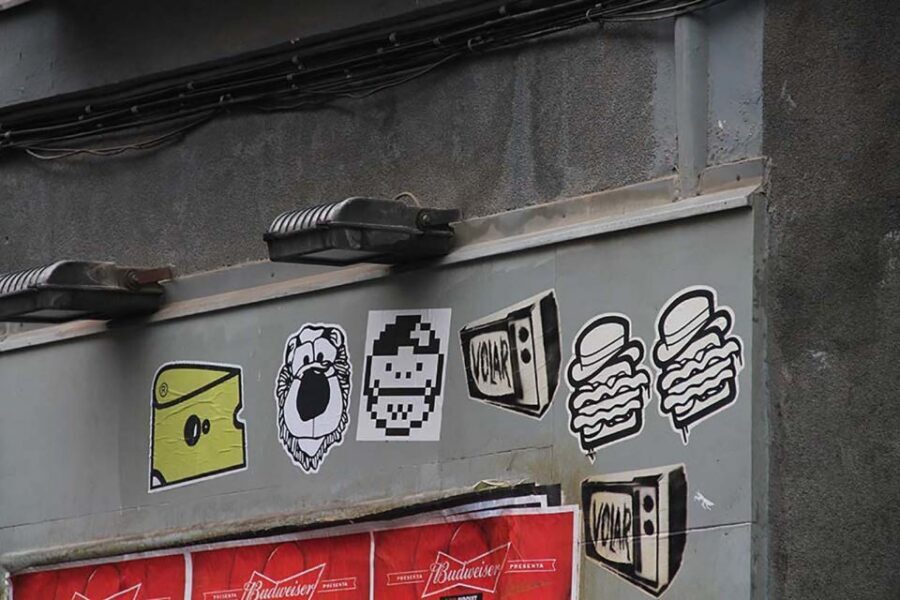
One of the biggest reasons to take this tour is the stop at the walls of La Tabacalera, the former tobacco factory. Industrial spaces like this matter. They give street artists scale, texture, and a built-in audience, because the walls and open areas make big works feel natural.
Here, you’ll see more than one type of urban art. The tour frames the site as part of a larger street-art festival and community ecosystem, not as a one-off wall. That’s important because graffiti and street art don’t live in a vacuum. They’re shaped by local culture, permissions and legality debates, and the momentum of events.
You also get insider context about the kinds of festivals and collaborations happening in Madrid. The guide is described as working with organizations connected to major street-art events such as CALLE Lavapies, Urvanity, and Muros Tabacalera. So when you’re looking at a wall in La Tabacalera, you’re not just admiring it—you’re being taught how it fits into the scene around it.
If you’re thinking, Should I come for one wall only? I’d say no. This is better if you enjoy multi-stop storytelling. The factory stop works because you’ve already walked through smaller, more everyday street art, so the jump in scale feels earned, not random.
Esta es una Plaza and Plaza del Sombrerete: where the guide makes the city click
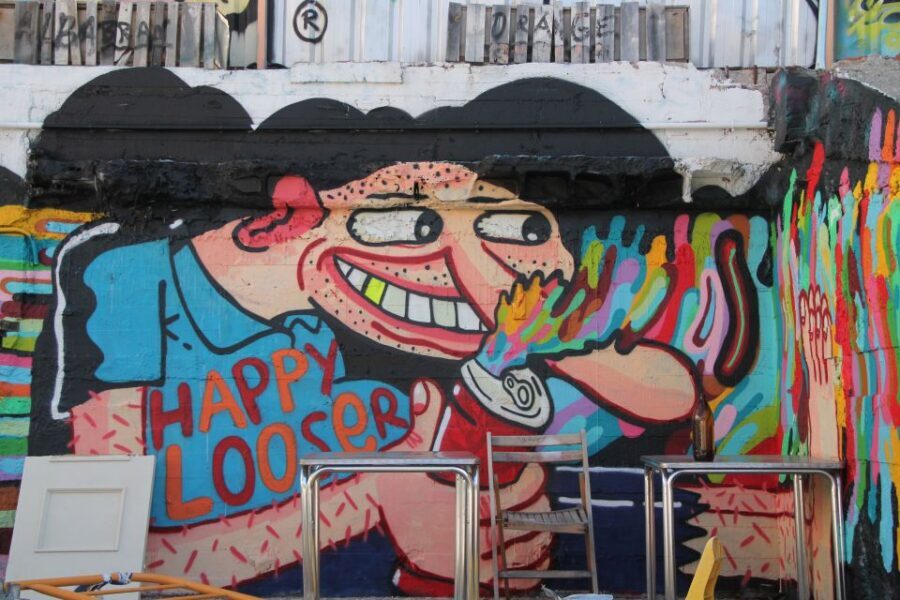
This tour includes an insider guide to the street art at Esta es una Plaza and Plaza del Sombrerete. These names sound like normal city spots until your guide explains what street art does in places like this: it changes how people move, it creates landmarks you didn’t know you were looking for, and it gives neighborhood identity a visible voice.
This is also a good moment for you to slow down. Plaza areas are where it becomes easier to see layers—how older pieces influenced newer ones, how themes show up across the district, and how artists use public space to make conversations happen.
The guide also points out how the work differs between veteran artists and newer talent. That matters if you care about the street art scene beyond aesthetics. You start to see that it’s not just a style; it’s a living community where reputations, techniques, and mentorship flow through the streets.
The biggest center-district mural: why one wall can change your whole attitude
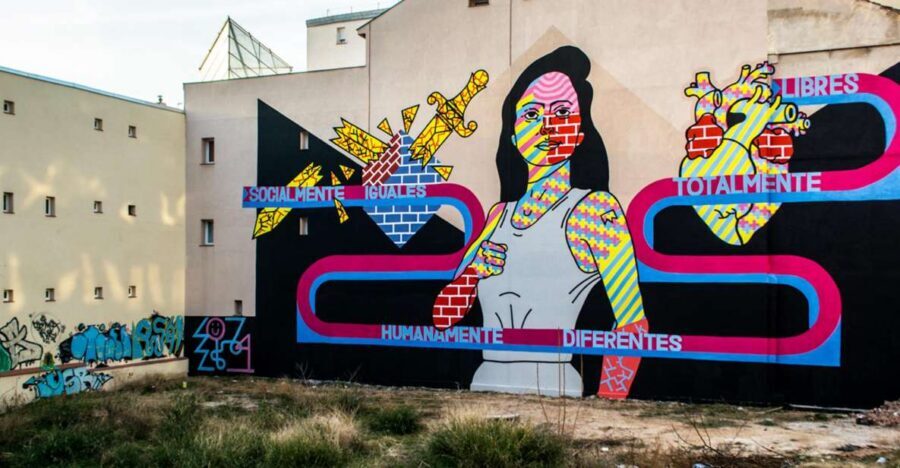
One of the highlights is a chance to see the biggest mural in Madrid’s Center District on this route. A mural at this scale can feel like a “tourist photo” moment, but the guide’s framing helps it land differently. You start paying attention to the composition and the visual storytelling, not only to the size.
If you’re unsure about street art, this is the checkpoint. Big works often make it easiest to understand why graffiti cultures have both defenders and critics. They can be art, activism, branding, or simply a way to leave a mark. Seeing a major mural with context gives you a more balanced lens.
Also, murals tend to attract attention from both locals and artists. That means this stop can feel like a snapshot of how the art world meets everyday Madrid.






Workshops and follow-up energy: what to do after the walk
During the route, you’ll hear about free workshops offered in areas like photography, dance, yoga, cycling, longboarding, and more. Even if you don’t sign up, the value here is knowing the street art scene connects to wider creative and movement communities.
It’s a smart add-on because it changes how you plan the rest of your trip. Instead of treating street art as a one-time sightseeing task, you can keep the thread going afterward—especially if you like workshops, meetups, and learning something local that isn’t tied to a museum ticket.
This is also where the neighborhoods shine. Lavapiés and the surrounding districts are a mix of cultures, and the arts show up as part of how people spend time. If you want your Madrid days to feel lived-in, this kind of detail helps.
Price check: is $29 worth a 2-hour street art walk?
At $29 per person for about two hours, the value is tied to what’s included: an English-speaking guide who knows how to point, explain, and connect dots. You’re not paying for a building entry fee. You’re paying for interpretation and route design—basically, someone helps you see what you’d miss if you just wandered.
The tour also includes meaningful stops, not random corners: La Tabacalera walls, specific plaza sites like Plaza del Sombrerete, and streets such as Calle Argumosa and Calle de Embajadores. Those choices reduce the guesswork and make the art feel purposeful rather than scattered.
What’s not included is beverages, so budget for water on your own. Also, this is walking time, so your “cost” is effort, not just money. If you’re tired that day, you might feel it more than expected.
My take: for $29, this works best if you enjoy street-level learning—history, context, and technique—without needing to sit inside a museum.
Who should book this Madrid street art experience
This tour is ideal if you want:
- A route that focuses on Lavapiés, Embajadores, and La Latina, not just the headline murals
- A guide-led explanation of graffiti techniques and how different art forms show up in public space
- A street-art view that blends art with neighborhood life
It also suits you if you like meeting people through shared interests. The reviews mention small-group pacing and room for questions, which usually makes the experience feel more personal.
You might want to choose something else if you prefer indoor art, curated galleries, or if you dislike walking in busy urban areas. Also, this is operated in English, so if you’re expecting a multilingual guide experience, plan accordingly.
Quick note on guides you may see
Different guides lead different departures, and their personalities can change the tone. Names you might see include Ester, Esther, Julian/Julien, Santy, and others. The consistent thread is the same: guides are tied into Madrid’s street-art scene, speak clearly in English, and use neighborhood history to explain what’s on the walls.
Should you book this tour?
Yes, if you want a practical street art route that teaches you how to look. The price is reasonable, the stops are specific, and the focus on places like La Tabacalera and Plaza del Sombrerete makes it more than a photo scavenger hunt.
If you’re on the fence because street art feels too chaotic, this is one of the better ways to get oriented. A good guide turns the chaos into patterns you can actually understand. Bring solid shoes, bring your curiosity, and plan for a hands-on walking experience through Madrid’s real neighborhoods.
FAQ
How long is the Madrid street art tour?
The tour lasts 2 hours.
How much does it cost?
It costs $29 per person.
Where is the meeting point?
Meet at the entrance of Teatro Valle Inclán, Calle de Valencia, 1, 28012 Madrid, Spain. The nearest metro station is Lavapiés.
Is the tour guide English-speaking?
Yes, the live tour guide speaks English.
Is the tour wheelchair accessible?
Yes, the tour is wheelchair accessible.
Are beverages included?
No, beverages are not included.
What should I bring?
Bring your passport or ID card and comfortable shoes.
What is the cancellation policy?
You can cancel up to 24 hours in advance for a full refund.