REVIEW · MADRID
Street Art Guided Tour in Madrid
Book on Viator →Operated by Cooltourspain · Bookable on Viator
Madrid’s walls have something to say. This guided street art tour takes you through the city’s latest mural scene and the places that make it possible, from La Neomudéjar to community spots like Campo de Cebada. You’ll hear how artists build messages with paint, stencils, and protest—and how the neighborhood story matters as much as the artwork.
I like two things right away: the tour focuses on real creative sites, not just random photos, and you get guide-led context tied to what you’re looking at in each place. The route also includes major mural and performance spaces in Lavapiés, so the art feels connected to everyday Madrid life, not a museum display.
One thing to consider: a couple stops depend on what’s open on the day. La Tabacalera can have restrictive timing on weekdays, and the urban garden stop is only guaranteed when the location is open—so build a little flexibility into your schedule.
In This Review
- Key Points to Know Before You Go
- Street Art Madrid in Two Hours: Meeting, Pace, and What You’ll See
- La Neomudéjar: From a Power Plant to a Protest Stage
- The Atocha Area and the Transport-Museum Effect
- La Tabacalera de Lavapiés: Tobacco Workers, Basement Stencils, and Real Creative Energy
- Lavapiés Walking Blocks: How Neighborhood Culture Shapes the Art
- Campo de Cebada: The Reclaimed Square Where Art Meets Community
- Price and Value: Is $30.38 a Good Deal for Street Art in Madrid?
- Who This Tour Fits Best (and Who Might Want Something Else)
- Should You Book This Street Art Guided Tour?
- FAQ
- FAQ
- How long is the street art guided tour in Madrid?
- How much does the tour cost?
- What languages are available?
- Where does the tour start and end?
- What time does it start?
- What’s the maximum group size?
- Is the tour done in all weather?
- Is food or drinks included?
- Is hotel pickup included?
- Can I cancel for a full refund?
- Are service animals allowed?
Key Points to Know Before You Go

- La Neomudéjar: a former power plant now hosting local and international street artists
- La Tabacalera de Lavapiés: a 19th-century tobacco warehouse with basement stencils and exhibition walls
- Lavapiés walking blocks: you’ll learn the neighborhood side of the street art story
- Campo de Cebada: a community gathering space shaped by reclaiming public areas
- Small group size (max 13): easier conversation and sharper stop-by-stop explanations
Street Art Madrid in Two Hours: Meeting, Pace, and What You’ll See
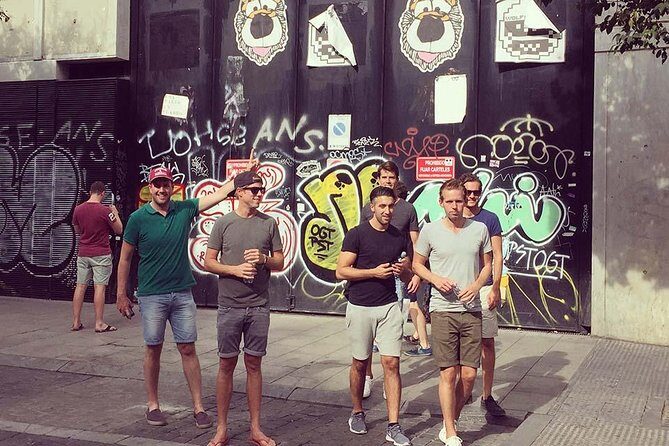
This is a short, focused walk—about 2 hours—so you’re not stuck in a long slog trying to “hit murals” like a checklist. It runs in the morning or afternoon, and the start time listed is 11:15 am. The meeting point is at Teatro Valle-Inclán, Pl. de Ana Diosdado, s/n, Centro (and you finish at Plaza de Cascorro).
The group stays small—up to 13 people—which matters because street art works best when you can actually look, ask, and hear the why behind the paint. A mobile ticket is used, and the guide covers multiple languages, with this experience offered in English.
One practical tip: wear shoes you can stand in, and keep your attention moving between the ground and the walls. Street art messages often sit at different heights, and you’ll want to keep up with the pace without missing the details the guide points out.
You can also read our reviews of more guided tours in Madrid


La Neomudéjar: From a Power Plant to a Protest Stage
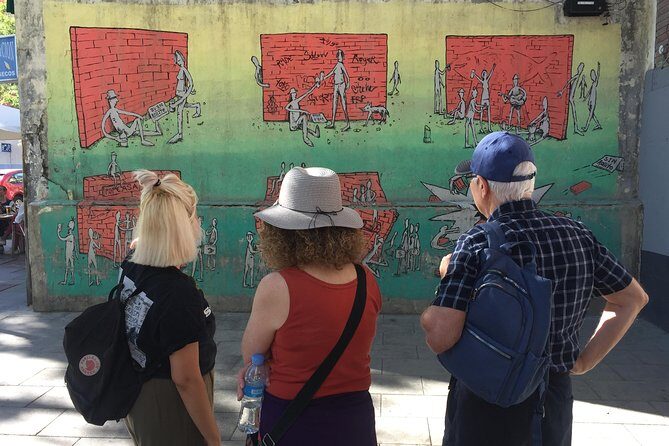
Your walk begins with a quick transfer to La Neomudéjar, located about a 5-minute walk from the starting point. This building used to power the train station in the 19th century, and now it’s a reclaimed art space. The shift is the point: the city didn’t just “decorate a building,” it let artists take over a working piece of infrastructure and turn it into a message wall.
What I’d pay attention to here is how the art reads like a living debate. Works by street artists such as Himen, Ze Carrión, and Laguna626 are part of the story. Many pieces also connect to protest against Spanish article 626, a law aimed at penalizing graffiti creators.
If you enjoy street art for more than the aesthetics, this stop is a strong match. You’ll see how the walls become a public conversation—about rules, identity, and who gets to be seen. Even if you only catch part of the explanations, the building’s history helps everything land faster.
The Atocha Area and the Transport-Museum Effect
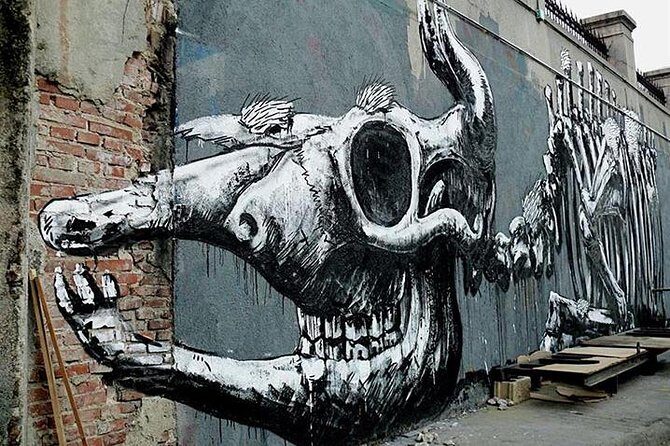
As you walk toward the next stops, you pass landmarks that show how Madrid mixes old and new culture. One quick visual moment is the “big-headed babies” monument in front of Atocha train station. It’s the kind of detail that makes the city feel playful, even when you’re headed for serious art topics.
You also pass an avant-garde photo center that now lives inside the transport hub at the Mediodía metro station. That matters because it’s a reminder: street art doesn’t sit apart from galleries. Madrid often threads creativity through everyday places—stations, passages, and courtyards—so your eyes learn to look differently while you’re moving.
This part of the route is short, but it changes your mindset. By the time you reach the big mural locations, you’re already noticing how “public space” becomes “art space.”
La Tabacalera de Lavapiés: Tobacco Workers, Basement Stencils, and Real Creative Energy
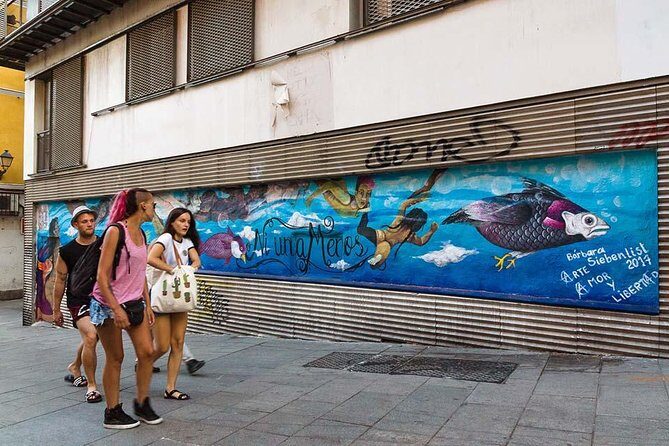
Next comes La Tabacalera, a former 19th-century tobacco warehouse that once employed over 1,000 workers to chop, shred, and roll tobacco products. Today it’s a performance and exhibition space, which is important because it keeps the art from feeling stuck in one format.
On the walls, you’ll focus on exterior graffiti walls and the messages, artists, and techniques used. This is also tied to major street art festival energy. In past groups, you’ve even had moments where artists were painting for an upcoming festival, and people were able to talk with them about their work. That doesn’t always happen on every single day, but it’s worth knowing because it’s the difference between seeing finished pieces and seeing art in progress.
Then there’s the basement level. You’ll head downstairs to see the kind of street art storage and tooling that normal visitors rarely get to notice. The basement is lined with hundreds of street art projects and stencils—so you get a behind-the-scenes sense of how murals get planned, layered, and reproduced.
One caution: La Tabacalera can have restrictive timing on weekdays. If you’re visiting on a weekday, keep expectations flexible. The tour still happens in all weather, but what you can access inside may be influenced by schedules.
Lavapiés Walking Blocks: How Neighborhood Culture Shapes the Art
After you’ve absorbed the big-location walls, the tour shifts into the neighborhood itself. You’ll walk around Lavapiés, a district known for being multicultural and full of street art and graffiti. The guide helps explain the area’s history, but the real value is that the art you’re seeing stops being random.
Here’s what you should look for while walking: you’ll start noticing how different styles cluster in different places, and how certain messages feel connected to the streets around them. It’s less about “spot the mural” and more about “understand why that wall is that wall.”
A couple stops along the way focus on exterior walls and a local urban garden area. One of the named stops is Esta es Una Plaza, an urban garden where the visit is only guaranteed if the location is open. If it’s closed that day, don’t panic. The rest of the route still does the heavy lifting.
You can also read our reviews of more tours and experiences in Madrid


Campo de Cebada: The Reclaimed Square Where Art Meets Community

You finish at Campo de Cebada, a reclaimed public gathering place and community art project. It connects directly to Spain’s 15-M Movement, when people recaptured public streets and squares for communal use. This stop isn’t just “pretty murals.” It’s about how street art grows where people actually spend time.
Historically, the site was known for being a home for a swimming pool. Now local associations have reorganized the space into something more everyday: summer movie nights, music, and even a collective vegetable garden. So the street art story here feels less like a spectacle and more like a long-term practice.
What I like about ending here is the emotional reset. After walls that often carry protest or commentary, you land in a space that shows the softer side of community-making. You can leave thinking, okay, this is how street art survives past the initial photo moment.
Price and Value: Is $30.38 a Good Deal for Street Art in Madrid?
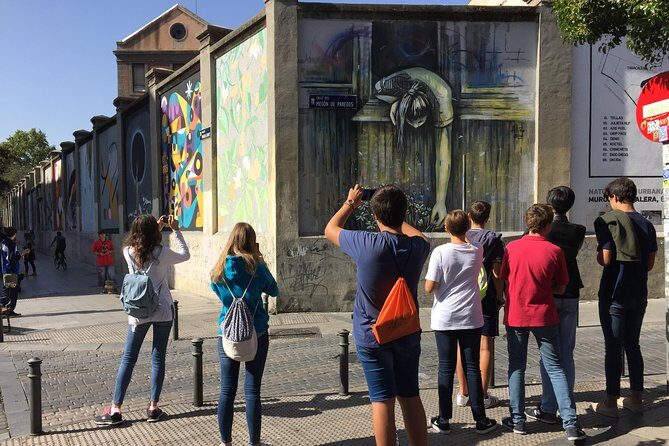
At $30.38 per person for around 2 hours, this isn’t a bargain tour, but it also doesn’t feel overpriced for what you’re getting. The key value isn’t the sites alone—it’s the way the guide ties each stop to meaning: technique, messages, and the neighborhood angle.
The tour includes a local guide, and the guide is multilingual (English/French/Spanish). It also includes visits centered on Muros La Tabacalera, which signals you’re not just walking past buildings—you’re getting time with the walls and their context.
Admission isn’t something you should worry about for the stops listed as free (the itinerary mentions free admission for the major wall visits). And the total experience stays short enough that you can pair it with other Madrid plans without eating your whole day.
Two more value signals from real feedback: guides like Santi and Julia have earned praise for being friendly, engaging, and strongly connected to the area. One guide was described as having contagious enthusiasm, and that matters because street art can go from “cool images” to “I get what this is doing” pretty fast when the explanation clicks.
Who This Tour Fits Best (and Who Might Want Something Else)
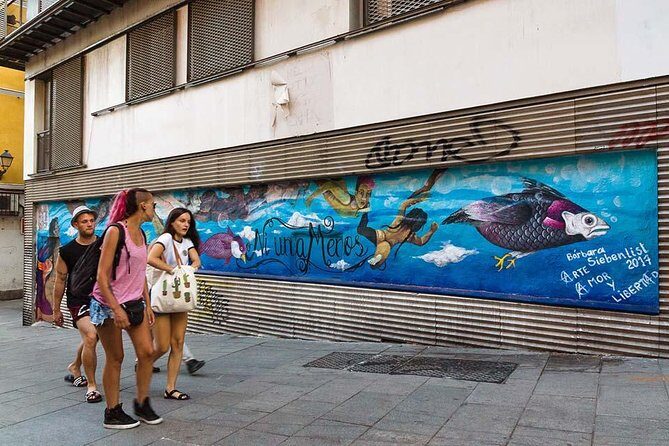
This is ideal if you want street art with context—technique, messages, and the connection to places like Lavapiés. If you like walking tours that focus on “why” as much as “what,” you’ll get more out of this than a typical photo hunt.
You might want to consider another option if you already know a lot about street art and are expecting a tightly themed focus on only the biggest famous names. One concern that pops up in the feedback is that some people felt the selection wasn’t what they hoped for, even though the neighborhood walk part still appealed. Another practical downside: if you want to hear every single detail, you’ll need to stay close to the guide. On walking routes, it’s easy to miss words when you drift toward the wall you’re photographing.
Still, for most people, the combination of strong locations and guide-led street art storytelling makes it a smart use of time.
Should You Book This Street Art Guided Tour?
I’d book this tour if you want a high-impact, 2-hour street art overview that doesn’t feel generic. The stops cover three major layers of Madrid street art: a reclaimed industrial art space (La Neomudéjar), a creative performance-and-mural hub (La Tabacalera), and a community-shaped square (Campo de Cebada). Add in a small group size and English-led guiding, and you’ve got a solid plan for seeing more than just paint.
Book it sooner rather than later. This tour is commonly reserved about 16 days in advance, which usually means schedules can tighten around popular dates.
FAQ
FAQ
How long is the street art guided tour in Madrid?
It runs for about 2 hours (approximately).
How much does the tour cost?
The price is $30.38 per person.
What languages are available?
The guide is multilingual (English/French/Spanish), and this experience is offered in English.
Where does the tour start and end?
It starts at Teatro Valle-Inclán, Pl. de Ana Diosdado, s/n, Centro, 28012 Madrid, and ends at Plaza de Cascorro, Pl. de Cascorro, Centro, Madrid.
What time does it start?
The listed start time is 11:15 am.
What’s the maximum group size?
The tour has a maximum of 13 travelers.
Is the tour done in all weather?
Yes, it operates in all weather conditions, so dress appropriately.
Is food or drinks included?
No. Food and drinks are not included.
Is hotel pickup included?
No. Hotel pickup and drop-off are not included.
Can I cancel for a full refund?
Yes. You can cancel up to 24 hours in advance for a full refund.
Are service animals allowed?
Yes. Service animals are allowed.