REVIEW · MADRID
Madrid to Avila & Segovia: Full-Day Highlights Tour
Book on Viator →Operated by Fun and Tickets · Bookable on Viator
Two Castilian cities in one long day.
This tour is interesting because it stacks medieval walls, Roman engineering, and Gothic spires into a single rhythm you can do without an overnight stay. I like the Walls of Ávila segment (it is the star for photos), and I also like how you get guided context with a radio guide and headset setup. One watch-out: some stops are short, and monument tickets are not included, so interiors may cost extra.
You leave Madrid in the morning on a comfortable air-conditioned bus with Wi‑Fi, and you work your way through the Sierra de Guadarrama for quick scenery breaks before heading into Old Castile towns. Along the way you get a 1-hour guided walk in Ávila and a 1-hour guided walk in Segovia, plus a drink and light bite in Ávila.
If you want a slow stroll with lots of free time, this is not that kind of day. It is built for seeing the big icons, not lingering for hours in cafés.
In This Review
- Key highlights you’ll feel in real time
- First stop: the drive to the Sierra de Guadarrama
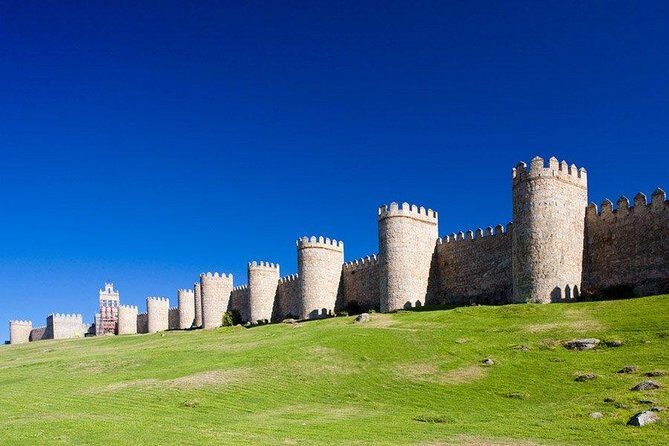
- Ávila’s Walls: medieval defenses that still look serious
- Cathedral-fortress Avila: Romanesque meets Gothic, then defense
- Basilica de San Vicente: why Romanesque still feels powerful
- Saint Teresa’s birthplace setting: the convent church stop
- Quick photo break in transit: a classic route to Segovia
- Segovia’s Roman aqueduct: the symbol you recognize instantly
- Segovia Cathedral: Gothic in the main square
- Alcázar of Segovia: the castle-palace that looks like it belongs in a movie
- Pacing and walking: a 9-hour day means you plan for your feet
- Audio and guide style: what the radio guide + headphones change
- Price and value: what $61.67 buys you in the real world
- The Ávila vs Segovia balance: choose your own priorities
- Who this tour fits best (and who should skip)
- Should you book the Madrid to Ávila and Segovia highlights tour?
- FAQ
- What time does the tour start?
- How long is the trip?
- Is the tour in English?
- Are monument tickets included?
- Is lunch included?
- How much walking should I expect?
Key highlights you’ll feel in real time
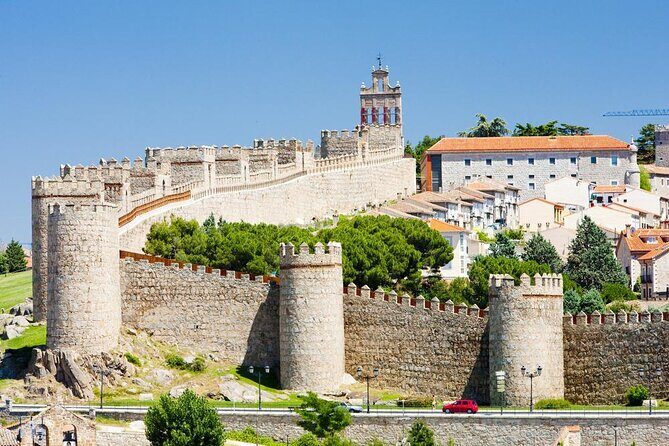
- Walls of Ávila photo moment: tightly packed fortifications that feel like a time machine
- Cathedral-fortress storytelling: you’ll understand why the apse sits like part of the defenses
- Roman aqueduct views: quick stop, huge impact, and easy sightseeing photos
- Segovia’s Alcázar setting: the castle-palace perched above the river confluence looks dramatic from multiple angles
- Guides that keep moving with you: radio guide + headphones help you follow the day’s history
- Drink and snack in Ávila: a simple break so you’re not running on empty
First stop: the drive to the Sierra de Guadarrama
The day starts with a morning departure from central Madrid (the meeting point is Fun and Tickets on San Bernardo). The bus ride is part of the experience: it is air-conditioned, has Wi‑Fi, and keeps you comfortable while you travel between cities.
Right after you get rolling, you pass through the Sierra de Guadarrama area. This is not a long hike—think of it as a photo-and-breathe moment. Even if you’re not a “mountain person,” the change in scenery helps you mentally switch gears from Madrid’s city pace to Castile’s medieval rhythm. On cloudy or rainy days, it still works as a reset, even if you’ll want to keep your camera accessible.
You can also read our reviews of more tours and experiences in Madrid
Ávila’s Walls: medieval defenses that still look serious

You’ll first hit Ávila’s most recognizable feature: the Las Murallas de Ávila (Walls of Ávila). These fortifications were completed between the 11th and 14th centuries, and they are considered the most complete set of city walls in Spain. That matters, because you don’t just get a quick glimpse—you get enough time to read the structure with your eyes.
What I like about this stop is how it changes the way you see the town. From certain angles, the walls don’t feel like a monument; they feel like a working border that shaped daily life: where people could move, where enemies would approach, and how the city defended itself.
Practical note: the walls and the tight historic streets mean you should expect some uneven walking. Good shoes help, especially if it rains.
Cathedral-fortress Avila: Romanesque meets Gothic, then defense
Next comes the Catedral de Ávila, which is famous for its cathedral-fortress design. It blends Romanesque and Gothic elements, and it was planned as a fortress with the apse linked to the city walls via turrets.
A lot of people assume a cathedral is just a place of worship. Here, the guiding story makes it clear that the building served two jobs. It was spiritual center and defensive structure in one, which is why the architecture feels a little like a hybrid between church and stronghold.
Tip for your visit: if you choose to buy tickets for interior access, give yourself a bit of mental time. Cathedral spaces can be visually overwhelming. With the guide’s background, you’ll understand what you’re looking at rather than just scanning for the tallest spire.
Basilica de San Vicente: why Romanesque still feels powerful
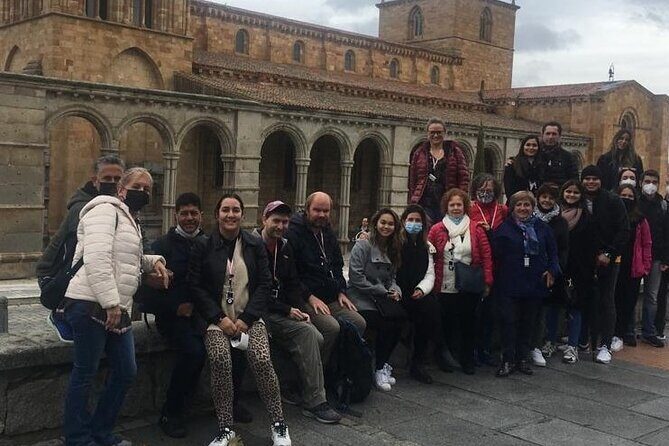
You then visit the Basilica de San Vicente, one of the best-known Romanesque examples in Spain. The timing is short, but the point of this stop is to show you how Romanesque churches communicate solidity: thick forms, heavy rhythm, and an overall sense of durability.
This is also where a good guide can make the difference between seeing a church and understanding why people built like this. In past groups, guides such as Beatrice and Rafael have been praised for answering questions calmly and keeping the history practical rather than academic.
Even if you don’t go inside for long, look at the shapes and proportions. They’re the clues that tell you how the style was meant to last.
Saint Teresa’s birthplace setting: the convent church stop
One of Ávila’s most compelling stops is the Church and birthplace of Saint Teresa of Jesus at the Iglesia-convento de Santa Teresa. This is a church and convent linked to the Discalced Carmelites, built in the 17th century, and traditionally associated with the spot where Saint Teresa of Ávila was born.
Why this stop works in a one-day plan: it gives you a human center to the day. After walls and fortifications, you shift to spiritual geography—where people believed something sacred happened in the city.
If you want a little extra time here, use the guided minutes to anchor the story, then slow down for your own observations. Look at the setting and how religious life is still tied to the city’s identity.




Quick photo break in transit: a classic route to Segovia
Between Ávila and Segovia, you’re back on the bus heading toward the river and mountain-meets-city feel that Segovia is known for. Expect scenic views around the Guadarrama region, and keep your camera ready even if the weather is changing.
A quick note on weather: some groups reported hard rain at times. If rain shows up, the bus helps, but the walking in historic centers can still get slippery. Bring a small umbrella or a hood, and plan for the possibility that your photos may be more dramatic than you expected.
Segovia’s Roman aqueduct: the symbol you recognize instantly
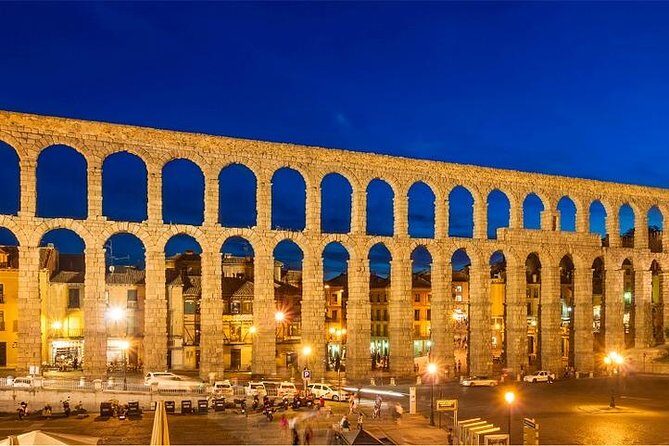
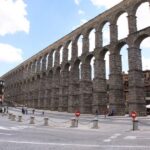
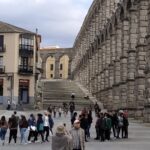
When you arrive in Segovia, your first major icon is the Aqueduct of Segovia. It’s one of the best-preserved elevated Roman aqueducts, and it is one of the city’s main symbols (it even appears on the coat of arms).
This is a stop where the short timing can still feel satisfying. Even without long ticketed time, the structure hits you immediately: its tiers, the spacing of arches, and the way it holds its shape across centuries.
If you’re serious about photos, arrive with a simple plan:
- get one wide shot for scale
- then move for a second angle to show height
- if rain hits, shoot anyway; wet stone can look extra textured
The aqueduct stop is listed as free, so it’s also one of the easiest wins for value.
Segovia Cathedral: Gothic in the main square
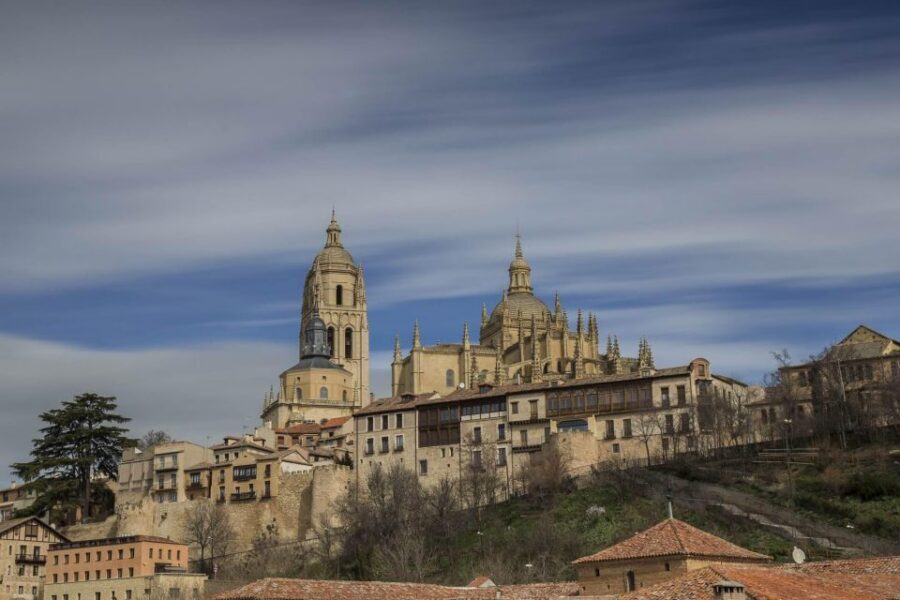
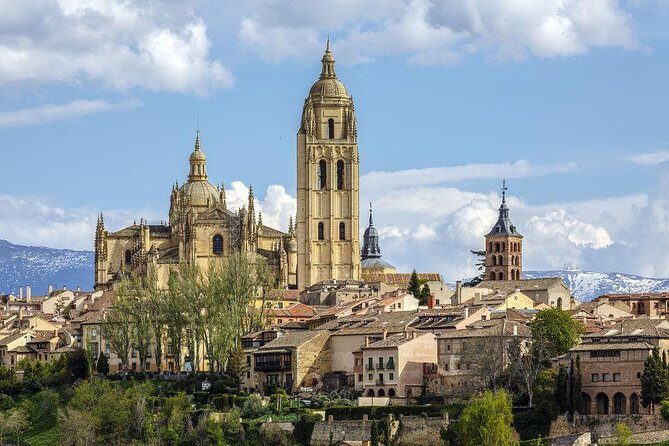
After the aqueduct, you’ll see the Segovia Cathedral in the main square area. It is a Gothic-style Roman Catholic cathedral built in the mid-16th century and dedicated to the Virgin Mary.
This stop is a good bridge between Roman and medieval eras. The Roman aqueduct is all about infrastructure; the cathedral represents spiritual power, community focus, and architectural style shifting into vertical Gothic forms.
Time is listed at about an hour here for the cathedral segment, but monument tickets are not included. If you want the interior, budget for it. If you don’t, you can still enjoy the exterior and the surrounding square atmosphere—just don’t expect a long, quiet visit with no movement in a guided group.
Alcázar of Segovia: the castle-palace that looks like it belongs in a movie
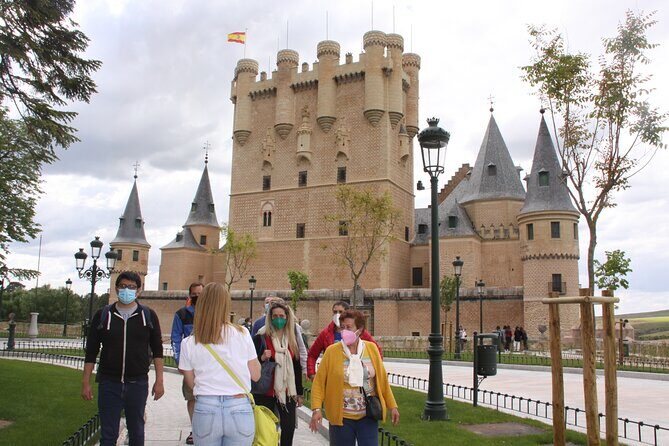
The final big icon is the Alcázar of Segovia, a medieval alcázar that rises out of a rocky crag above the confluence of two rivers near the Guadarrama mountains. It is often described as ship-bow shaped, and in person it really does look like it’s perched in a dramatic, almost impossible spot.
This is one of the stops where the guided time can feel short, but the photo opportunities are strong. The exterior views from different directions can make you feel like you’re seeing a new angle each time.
One more value note: as with other monuments, the Alcázar interior ticket is not included. If you care about museums and rooms, you’ll likely want to add the ticket. If you mostly want views and atmosphere, you can still leave with a memorable Segovia moment.
Pacing and walking: a 9-hour day means you plan for your feet
This is roughly a 9-hour day, and it moves. Many people are ready for it, but the key is footwear and pacing. Some groups noted around 12,000 to 15,000 steps, which is a lot for a single day with historic stairs and uneven pavement.
My practical advice:
- wear shoes you’ve already broken in
- bring water (even with breaks)
- set expectations that you’ll see a lot of churches and façades, not only one long stop per site
Also, you’ll likely feel the August heat or a hot October afternoon if you hit sun between stops. One review specifically praised the bus air-conditioning, which is a good reminder: you get comfort on the road, but you still do the sightseeing on foot.
Audio and guide style: what the radio guide + headphones change
The tour includes a radio guide with gift headphones, so you’re not stuck trying to hear over other groups. That system matters on narrow streets and in crowded squares.
Guides have varied by group name, but the consistent theme in feedback has been strong, patient explanations. People have singled out guides such as Carlos, Beatrice, Rafa, Laura, David, Luis Miguel, and Marta for clear storytelling and good question handling. If you’re the type who likes to ask, this is the kind of setup where your questions can actually land.
One consideration: not all audio setups feel perfect in every ear. If you’re sensitive to sound, you might want to come prepared for a slightly different fit than what you’re used to.
Price and value: what $61.67 buys you in the real world
At about $61.67 per person, the value is mostly in the logistics and guidance.
Here’s what you’re getting that often costs extra when you book it piece-by-piece:
- round-trip coach travel from Madrid with Wi‑Fi and air-conditioning
- guided walking tours in both Ávila and Segovia (about 1 hour in each city)
- a guide for the stop-by-stop history and city context
- radio-guide support with headphones
- a drink plus a light snack in Ávila (there is no included full lunch)
What you should account for separately:
- monument tickets at stops where admission isn’t included (many of them are “not included”)
- optional meals, if you decide you want more than the drink and light bite
So think of this as a guided sightseeing package where you pay for your level of entry. If you like walking, photos, and seeing interiors only when you choose, it can be a smart deal. If you want to pay for every interior ticket, you’ll spend more than the base price—but you’ll also avoid the headache of coordinating everything yourself.
The Ávila vs Segovia balance: choose your own priorities
This day is set up to give you two kinds of satisfaction.
In Ávila, you get walls, fortress architecture, Romanesque churches, and Saint Teresa’s spiritual location. The town feels tightly bound to its medieval defenses.
In Segovia, you get the Roman aqueduct as the headline, plus Gothic cathedral and the Alcázar. Segovia is the more “wow from every direction” city on this route.
A practical tip: if you care more about interiors, you might want to prioritize which monuments you’ll pay for. You’ll spend time walking between them regardless. Decide ahead so your money goes to what you actually want to see up close.
Who this tour fits best (and who should skip)
This is a great fit if you want:
- a one-day Madrid plan that hits both cities
- guidance that explains what you’re seeing as you walk
- lots of iconic photos: walls, aqueduct arches, castle silhouettes
- comfort on the bus so you’re not worn out before you even start
It may be less ideal if you:
- hate fast pacing and want hours of free wandering in each town
- have reduced mobility, since the tour is not recommended for it
- want a long, unstructured lunch break (there is no included lunch, just a light drink-and-snack moment)
Should you book the Madrid to Ávila and Segovia highlights tour?
I’d book it if your goal is classic sights with a real guide story and zero overnight planning. The value is in the schedule: you compress a lot into one day, and the audio-guided experience helps you keep up without getting lost in the group noise.
Skip or consider a different format if you want lots of downtime in Ávila, or if you prefer a self-guided day where you buy only the single monument you care about most. With monument tickets not included, the day becomes more appealing if you’re comfortable paying entry fees selectively.
If you do book, go in with a “walking shoes and photo angles” mindset. This tour is built for momentum—and that is exactly why it works.
FAQ
What time does the tour start?
It starts at 8:45am, with pickup at the Fun and Tickets meeting point on San Bernardo in central Madrid.
How long is the trip?
The total duration is listed as about 9 hours.
Is the tour in English?
Yes. The tour is offered in English (with an official bilingual guide setup).
Are monument tickets included?
No. Tickets for monuments are not included. The Roman aqueduct stop is listed as free, but other sites are not.
Is lunch included?
No lunch is included. There is a drink and snack in Ávila, and you can expect to handle meals separately.
How much walking should I expect?
Expect a lot of walking. Some groups reported around 12,000 to 15,000 steps depending on how you explore each stop.