REVIEW · TOLEDO
The Enchanted City: A Mysterious Tour of Toledo
Book on GetYourGuide →Operated by FOLLOW ME TOLEDO · Bookable on GetYourGuide
Toledo turns mysterious after sunset, and this night walk is built for that feeling. You’ll follow a local guide through the tight streets and dramatic viewpoints, with legends and local lore tied to real landmarks.
I really like two things here. First, the guide storytelling is sharp and fun, and in the best cases you’ll get a lively host like Adrián, who makes the history feel human instead of textbook. Second, the route focuses on the names and meanings of places, so the alleys stop being random and start feeling like part of a bigger Toledo myth.
One caution: the tour runs in Spanish only and it’s designed for small groups, with a minimum of 6 people and a max of 6 per group. If you’re not comfortable in Spanish, or if you’re traveling as a large group, plan ahead.
In This Review
- Key things you’ll notice fast
- A night tour made for Toledo’s legends
- From Zocodover to the Alcázar: where the story starts
- Plaza del Seco and the Templar quarter feeling
- Calle Cristo de la Calavera, Callejón Infierno, and Callejón Diablo
- Practical note
- Puerta del Reloj and the clock-gate feeling
- Calle Nuncio Viejo: a “street that belongs to Toledo”
- Plaza Santo Domingo Real and the Primary Cathedral stop
- San Pedro Mártir Convent and the auto-da-fe detail
- San Román: seeing how the city looks below
- Alfileritos Street and the Virgen de Alfileritos legend
- Ending back at Zocodover: you’ll leave with a mapped Toledo
- Price and value: is $10 a good deal?
- Who should book this night tour
- Should you book The Enchanted City night tour
- FAQ
- How long is The Enchanted City night tour in Toledo?
- Where do I meet the guide?
- What language is the tour offered in?
- Is the tour wheelchair accessible?
- Do I need to buy tickets or pay extra at the stops?
- Is there a group size limit?
Key things you’ll notice fast
- Zocodover as the starting heartbeat of everything that happened in town
- Templar footprints worked into the streets, not just museum facts
- Callejón Infierno and Callejón Diablo where the street names get explained
- Auto-da-fe history at San Pedro Mártir Convent tied to a real location
- Primary Cathedral area used to talk about 15th-century power and people
- Virgen de Alfileritos legend that adds local color to the final stretch
A night tour made for Toledo’s legends
Toledo at night feels different in a way you can’t fully get during daylight. The streets are narrower, the shadows longer, and it’s easier to imagine the city as something more than monuments on a route. This tour leans into that. It’s not just a “look at this building” walk. It’s built around mysteries, myths, and gossip that connect the past to the street names you’ll see in front of you.
You’ll also get history in a practical, human way. The guide doesn’t treat Toledo like a distant story. They connect events to specific corners, squares, and doorways, including dark episodes that happened right here. If you like your sightseeing with a little atmosphere and a lot of local context, this fits.
You can also read our reviews of more city tours in Toledo

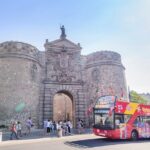

From Zocodover to the Alcázar: where the story starts
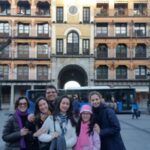
You begin in Plaza de Zocodover, at Pl. Zocodover, 5, next to the Koker shop and a pharmacy area—your meeting point is with FollowMe Toledo. Zocodover is the place you want first, because it helps your brain map the city fast. It’s a natural hub and the tour uses that fact.
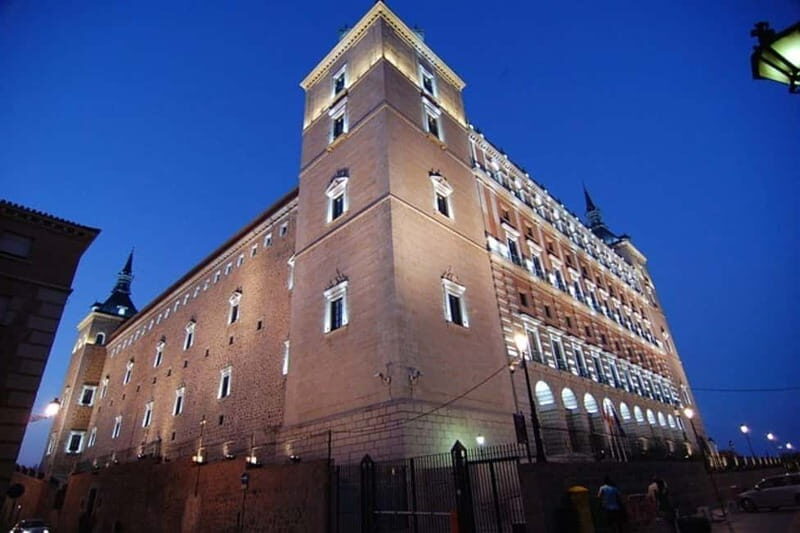
From there, you head toward the Alcázar of Toledo, up high. The guide uses the setting to talk about what happened there during the Spanish Civil War. Even if you don’t know the details yet, the viewpoint and the presence of the building help you understand why this spot mattered.
Why this stop matters for you: Toledo is layered. Starting at Zocodover and then climbing toward the Alcázar helps you feel that layering in your feet. You’re moving through the city’s social and political geography, not just walking from one postcard to the next.
Plaza del Seco and the Templar quarter feeling
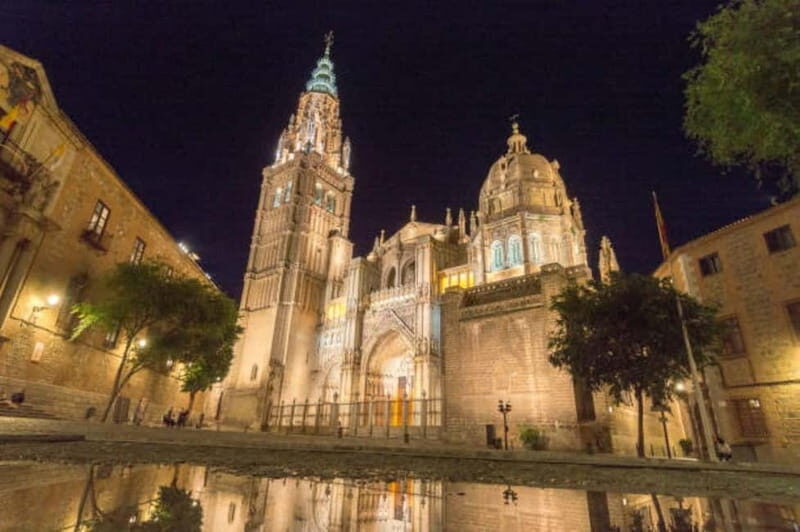
Next comes Plaza del Seco, which the tour frames through the idea of a Templar footprint in Toledo. This is one of the moments where the tour’s “other Toledo” theme really shows. Instead of only discussing Templars as a distant legend, the guide points you toward the idea that traces of that influence are part of the city’s story.
You’ll also hear a famous legend tied to the area: the story that Solomon’s table once belonged to this city. Whether you take every claim at face value or treat it like folklore, the point is how people once explained their world. Legends like this reveal what Toledoans valued enough to pass down through time.
Possible drawback here: if you only want hard, proven timelines and don’t care about myth, this portion may feel story-heavy. The upside is that the guide ties the legend to physical places, so it still feels grounded.
Calle Cristo de la Calavera, Callejón Infierno, and Callejón Diablo
Toledo has street names that sound like fantasy, and this tour turns them into a conversation. You’ll move through areas tied to devil and hell imagery, including:
- the area connected with Callejón Infierno (alley of hell),
- Callejón Diablo (devil alley),
- and nearby spooky-named streets like Calle Cristo de la Calavera.
At these stops, the guide explains why these names exist and what people in different eras might have associated with them. This is where you really start learning how language shapes memory in a city. A name can act like a tiny time capsule—carrying superstition, fear, humor, or local branding from when the street first earned its identity.
Why I think you’ll like it: these are the parts of Toledo that feel most alive. You’re walking the same corners that carry those stories, and the guide’s job is to help you see the logic behind the myth.
Practical note
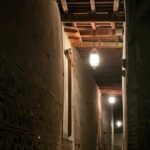
These lanes can feel tight and dark at night. Wear shoes you trust on uneven stone, and slow down when you need to. The tour is only about 1.5 hours, but you’ll still want your footing to feel solid.




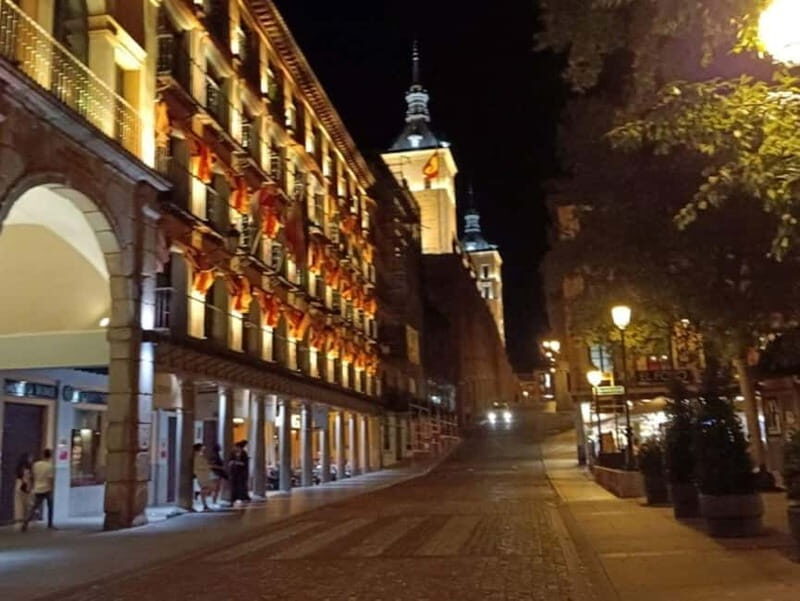
Puerta del Reloj and the clock-gate feeling
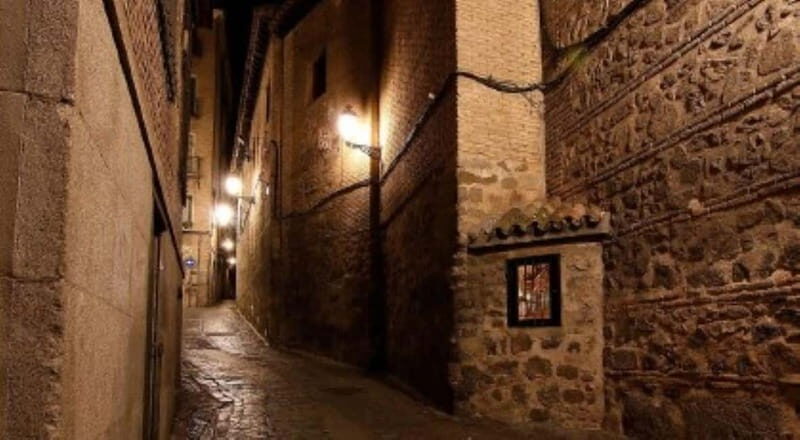
As you continue, the tour includes Puerta del Reloj. This is one of those places where a city’s layout becomes obvious. Gates and entrances are naturally dramatic. Even if you’ve seen photos, standing near them helps you understand how movement worked—who came in, who moved through, and how control of space mattered.
The guide uses this moment to keep the story moving instead of stopping cold. Think of it like a chapter break: you get backstory, then you move onward to the next layer.
Calle Nuncio Viejo: a “street that belongs to Toledo”
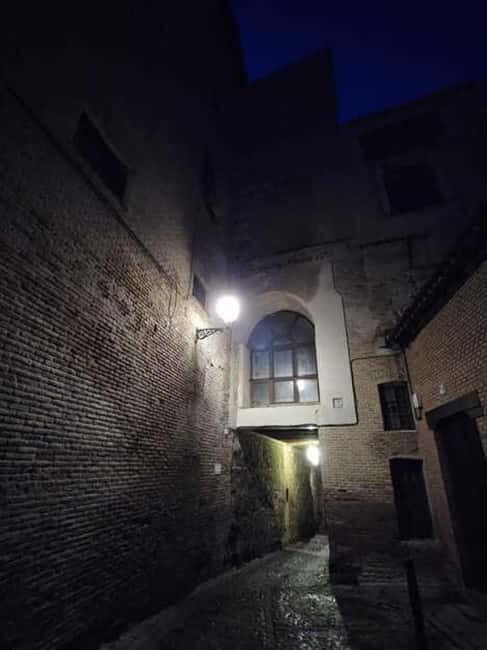
You’ll pass through Calle Nuncio Viejo, described as a street that belongs to Toledo. That phrasing isn’t random. It points to how old streets hold identity. Even without dramatic monuments, a street can still feel important if you understand the people who walked it and the role the city assigned to its corners.
This part of the tour is a good reset for your brain. After the darker, name-driven lanes, you get a more reflective stroll while the guide keeps connecting story to place.
Plaza Santo Domingo Real and the Primary Cathedral stop
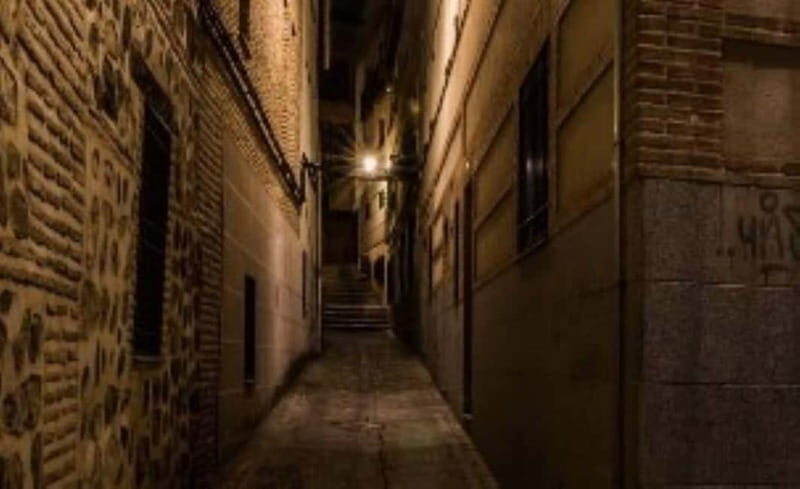
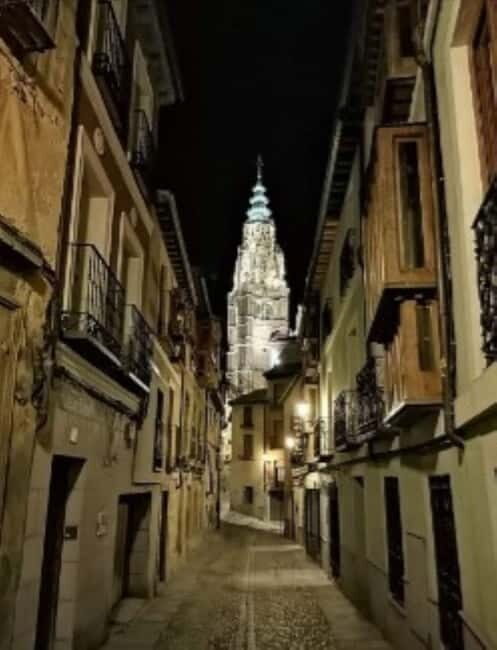
Then you reach Plaza Santo Domingo Real, and from there the tour focuses on the Primary Cathedral. The cathedral construction is finished in the 15th century, and the guide uses that long timeline to talk about the people who passed through it for everyday life—prayer, weddings—and the darker angles too, including stories about crypts and what happened there.
This is not presented like a dry lecture. It’s more like a guided walk-through where you’re encouraged to imagine what life looked like in a city where power and religion were tightly linked.
Why this stop is valuable: day tours often treat cathedrals like static art. A night tour gives you permission to think about human stakes—ritual, status, fear, and conflict—in a setting built for centuries of those realities.
San Pedro Mártir Convent and the auto-da-fe detail
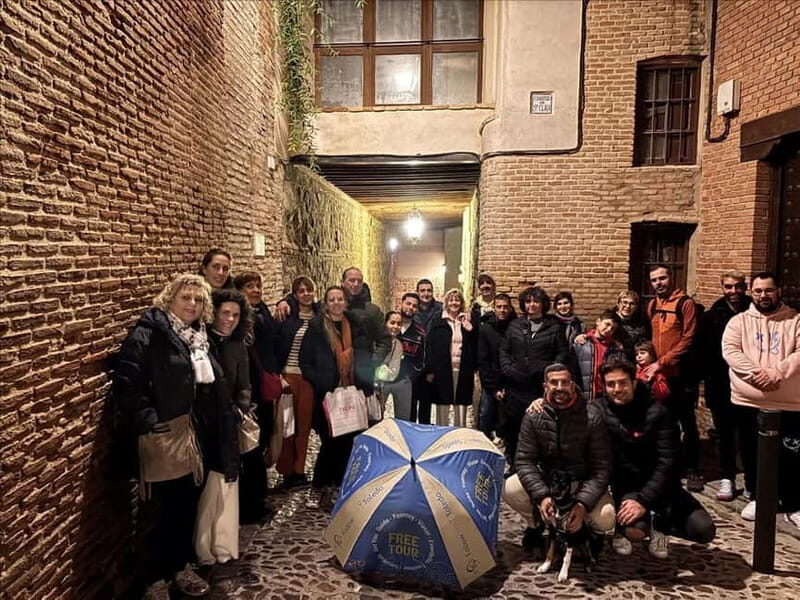
The tour includes San Pedro Mártir Convent, and it brings up a specific, heavy detail: the first auto-da-fe made in Toledo came from the doors of this building.
That’s the kind of fact that can change the way you see a place. You’re standing somewhere connected to punishment and public spectacle, not just architecture. It’s also a reminder that Toledo’s “mysteries” aren’t only supernatural. A lot of the mystery is history—what people decided to do to each other, and how the city witnessed it.
Balanced perspective tip: if you prefer gentle storytelling, you might find the subject matter intense. The good news is the guide frames it within Toledo’s physical spaces, so it doesn’t stay abstract.
San Román: seeing how the city looks below
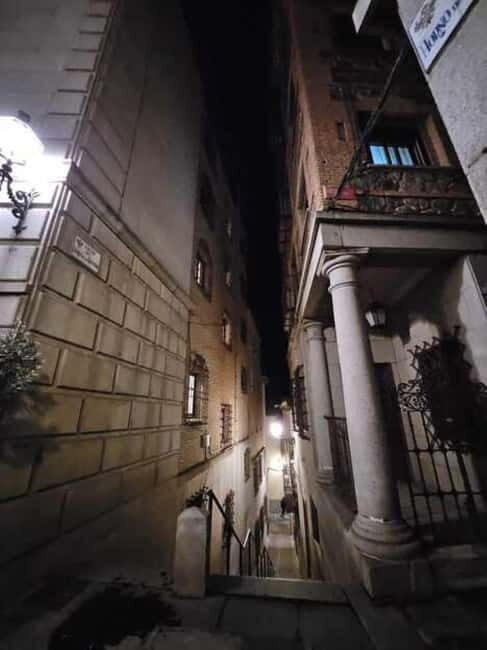
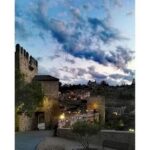
Next comes San Román—the tour encourages you to think about how Toledo looks from above and what you can imagine from below. This is where the night atmosphere helps. Even if you don’t get a formal viewpoint platform (the tour doesn’t promise a specific lookout), the walking line and the city’s layout give you that “how does this all fit together?” feeling.
If you want photo moments, this is usually a good window. Keep your camera steady, and be mindful of dark corners and steps.
Alfileritos Street and the Virgen de Alfileritos legend
Near the end, you reach Alfileritos Street and the tour includes the legend and image of the Virgen de Alfileritos. The tour describes the area with a mix of local color—stories about appearances and waiters, plus the idea that it’s a street where different kinds of people crossed paths.
This stop works as a contrast to earlier darker themes. It gives you a dose of human-scale Toledo: devotion, social life, and how street traditions turn into identity.
Ending back at Zocodover: you’ll leave with a mapped Toledo
After the final legend stop, the tour returns to Plaza de Zocodover. Ending where you started matters. You leave with a sense of how the city’s pieces connect: the squares, the gates, the alleys with names that carry meaning, and the big institutions that shaped life.
When the last story lands, you don’t feel like you just walked a loop. You feel like you learned how Toledo thinks. That’s the real value of an “enchanted” night walk when it’s done well.
Price and value: is $10 a good deal?
At $10 per person for about 1.5 hours, this is one of those tours that can make sense even if you’re on a tight schedule. You’re paying for three things:
- a local guide who connects story to place,
- a focused route that hits major landmark zones and alley-name lore,
- a nighttime setting that changes the mood of everything you see.
If you’re already walking Toledo on your own, you’ll still enjoy the city. But you’ll likely miss the “why this name” and “what happened at this doorway” layer. That’s what you’re buying here.
Two practical checks before you commit:
- The tour is Spanish only, so plan accordingly if you need English.
- The group rules are strict: there’s a minimum of 6 people to run the tour, and large group reservations aren’t accepted (max 6 per family/friends group).
If that fits your travel style, it’s strong value.
Who should book this night tour
I’d point you to this tour if:
- you like spooky atmosphere without sacrificing real place-based history,
- you enjoy legends explained in context,
- you want a short guided walk that covers multiple key Toledo zones quickly.
I’d think twice if:
- you need an English-language guide,
- you’re sensitive to darker historical topics like public punishment,
- you’re in a large group and can’t break into a small party.
Should you book The Enchanted City night tour
Book it if you want Toledo after dark to feel like a story you can walk through. This tour’s best strength is the guide-driven storytelling—especially when the guide brings personality, like you can see from the standout 5/5 experience with Adrián. The route also gives you meaningful stops, from Zocodover and the Alcázar area to the cathedral zone and the convent connection, with alley names that become part of the lesson.
Don’t book it if you’re chasing only famous sights with straightforward facts and little mood. This one is intentionally about legends, myths, and the “other Toledo.”
If you’re flexible, you can also consider reserving and paying later, so your plans stay intact if your schedule shifts.
FAQ
How long is The Enchanted City night tour in Toledo?
The tour lasts about 1.5 hours.
Where do I meet the guide?
Meet at FollowMe Toledo, Pl. Zocodover 5, next to the Koker store and a pharmacy. The tour ends back at the same meeting point.
What language is the tour offered in?
The live tour guide language is Spanish.
Is the tour wheelchair accessible?
Yes, the tour is wheelchair accessible.
Do I need to buy tickets or pay extra at the stops?
No. The tour does not require payment of tickets or additional expenses.
Is there a group size limit?
Yes. There must be a minimum of 6 people for the tour to take place, and large group reservations are not accepted. The maximum allowed per group (family/friends) is 6.