REVIEW · MADRID
Toledo Day Trip from Madrid: Self-Guided Tour with 7 Monuments
Book on Viator →Operated by Fun and Tickets · Bookable on Viator
Toledo in one doable day. This self-guided plan threads together UNESCO Toledo’s highlights with admissions handled by a tourist wristband and comfortable round-trip bus transport. The main catch: the day is structured, so you should expect some waiting and tight time windows at the monuments, especially early on.
The upside is that you’re not stuck in a rigid lecture all day. After an initial walk-in to get started, you use your wristband to go at your own pace through the stops, with bus-side support in English and guides like Arantxa, Oscar, and German showing up on different departures. Just plan for hills and lots of walking once you’re in the old city.
In This Review
- Key things I’d watch for
- Madrid to Toledo: the easy win is getting there and back
- Self-guided with a twist: how the wristband day really works
- The order of monuments makes a story: Mudéjar to Baroque to stacked mosques
- Synagogue of Santa María la Blanca: Mudéjar details you can spot fast
- Jesuit Church of San Ildefonso: long construction, Baroque drama
- Church of Santo Tomé: medieval bones with a famous local anchor
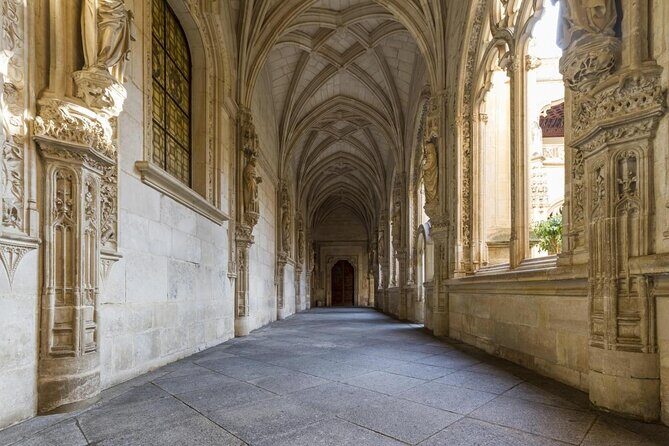
- Monasterio de San Juan de los Reyes: royal politics in building form
- Mosque of Cristo de la Luz: one of the city’s Moorish survivors
- Iglesia del Salvador: the stacked-story church you can actually visualize
- The 7th included stop: Royal College of Doncellas Nobles
- Mirador del Valle and the panoramic bus ride: views as a reset
- Walking pace and time math: how to keep the day from feeling rushed
- Value check: why $58.87 can work well (and when it might not)
- Who should book this Toledo day trip from Madrid?
- Should you book it?
- FAQ
- How much does the Toledo day trip cost?
- How long is the experience?
- Is this tour truly self-guided once you arrive in Toledo?
- What is included for monument entry?
- Is lunch included?
- Does the tour include round-trip transport from Madrid?
- What language is the tour offered in?
- What if I cancel?
Key things I’d watch for
- Seven monuments, one wristband: fewer ticket hassles, faster entry at the first sites
- Air-conditioned bus both ways: saves you from train/parking stress in Madrid
- A panoramic bus segment plus a viewpoint stop: you may catch Mirador del Valle if the timing works
- Short monument time blocks: great for coverage, not for slow, lingering hours in every room
- A start-of-day bathroom break: it costs time, but it helps keep the rest of the day comfortable
- Group size stays reasonable (up to 50): big enough to feel social, small enough to move
Madrid to Toledo: the easy win is getting there and back
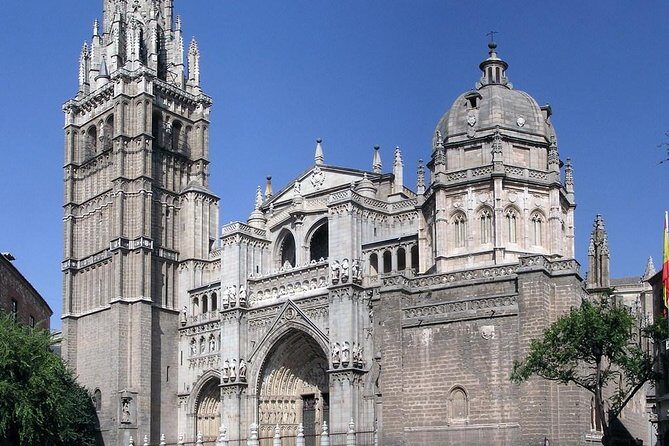
Starting at 9:00 am from Fun and Tickets (C. de San Bernardo, 7, Centro, Madrid), you ride an air-conditioned bus with an official guide aboard. The travel time is about an hour each way, which is key. You get to Toledo without worrying about schedules, tickets, or squeezing in local transfers while you’re also trying to sightsee.
Once the bus arrives, the day becomes a mix of guided support and self-guided freedom. The bus guide handles the ride and the orientation. Then you’re sent forward so you can move through Toledo on your own pace using the wristband.
One practical tip: charge your phone and keep your mobile ticket handy before you step off the bus. With a day like this, anything that saves a few minutes matters.
You can also read our reviews of more guided tours in Madrid



Self-guided with a twist: how the wristband day really works
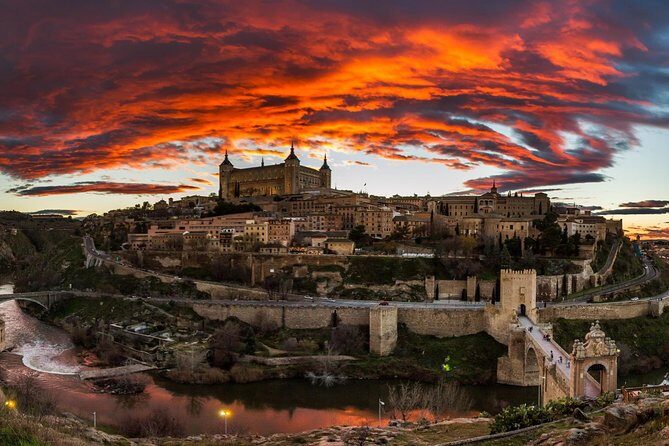
The selling point is simple: your admission fees for the included sites are covered by a tourist wristband, and you don’t need to buy separate entry tickets for those monuments.
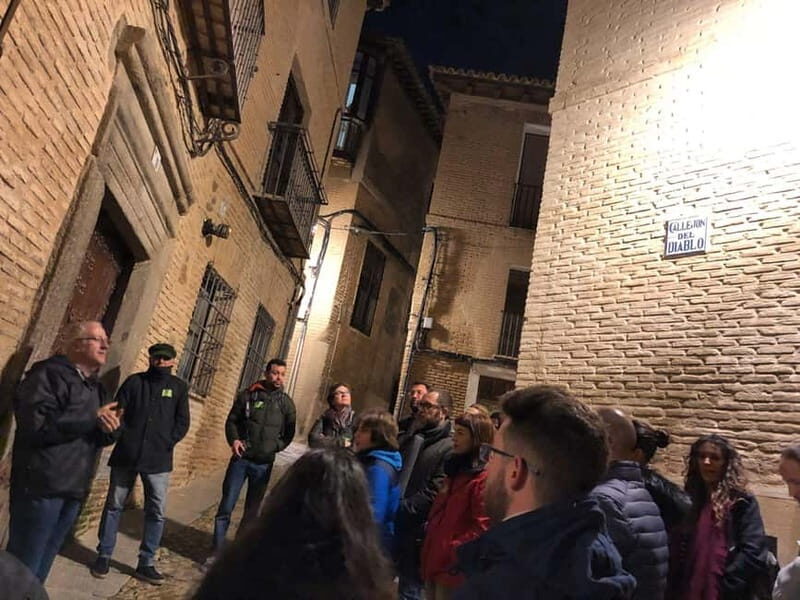
In practice, the day usually starts with a short walk to the first monument, then the wristband route kicks in. A couple of departures can feel less hands-off than the wording implies because the on-the-ground guide may gather the group, explain the flow, and sort wristbands at the start. If you’re hoping to sprint off alone to the first stop the moment you arrive, show up on time and be ready to ask for your wristband right away.
Also note the time-management rhythm. One early half-hour bathroom break is built in so you can use facilities in a nearby square before you head into older areas where options are limited. It’s not thrilling, but it’s a smart move for a day packed with stops.
The order of monuments makes a story: Mudéjar to Baroque to stacked mosques
This route is built around a theme you can actually feel when you walk it: Toledo is a layered city. You see Islamic, Christian, and even older Roman traces all overlapping, sometimes in the same footprint.
That’s why the order matters. You’ll start with a Mudéjar masterpiece (a style blending Christian and Islamic influences), then move through Baroque and medieval churches, and end up at places famous for architectural layering—mosque foundations under later churches.
If you like architecture and want to understand how Toledo changed hands over centuries, you’ll get a lot out of the sequence—even if you only spend about 30 to 60 minutes per stop.
Synagogue of Santa María la Blanca: Mudéjar details you can spot fast
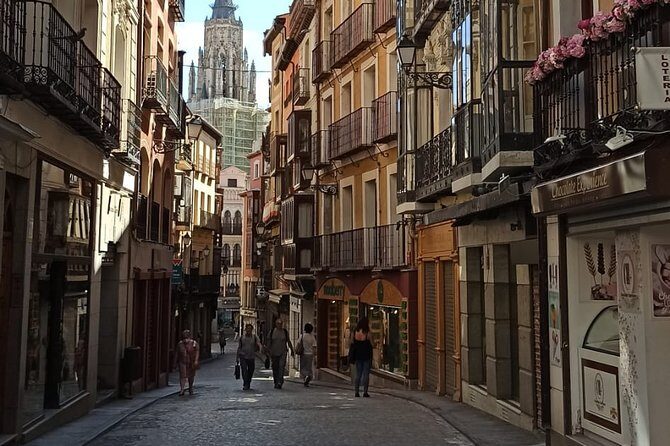
Your first stop is the Synagogue of Saint Mary the White, a Mudéjar construction built in 1180. The building has five naves separated by pillars and horseshoe arches, which is the kind of structural layout that helps you read the space quickly, even if you only have about 40 minutes.
It later got converted into a church in the 15th century, so you’ll also see later additions, including a coffered wooden ceiling and Plateresque altars. There’s an altarpiece linked to the school of Berruguete, too.
How to make this stop feel worth it: look up. The ceiling and arcade rhythm are the star here. With limited time, you don’t want to miss the vertical beauty.
Jesuit Church of San Ildefonso: long construction, Baroque drama

Next up is Iglesia de San Ildefonso (the Jesuit Church). It’s Baroque in style and consecrated to Saint Ildefonso of Toledo. Construction took more than 100 years, with work beginning in 1629 on Jesuit lands acquired in 1569.
If you’re thinking this will be a quick Baroque pop-in, it’s actually the kind of church where you can feel the slow build through the overall grandeur. This is also tied to local religious identity—Saint Ildonsus was connected to the place, and the church’s promoters included high Castilian nobility.
Expect about 40 minutes. If you’re the type who likes church interiors but hates rushing, this is one of the easier stops because the concept is straightforward: Baroque form, Jesuit devotion, and Toledo’s patron saint connection.
You can also read our reviews of more tours and experiences in Madrid




Church of Santo Tomé: medieval bones with a famous local anchor
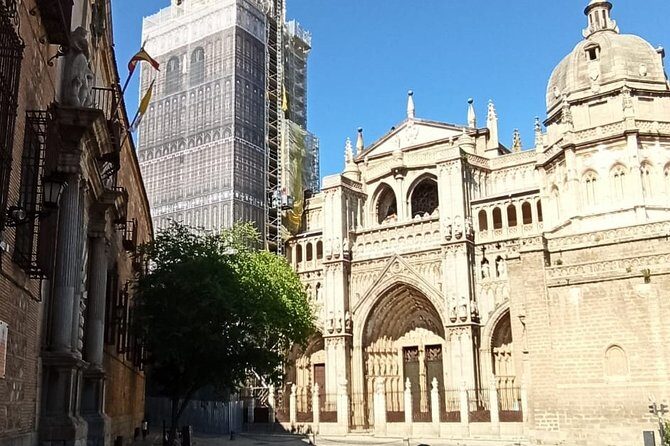
Then you’ll visit Iglesia de Santo Tomé, a parish church tied to Toledo’s post-Reconquista era. After Alfonso VI’s reconquest in 1085, news of the church appears by 1142, and it retains elements from earlier Mudéjar building styles.
A standout feature is the large multifoil arch set within the interior layout, plus the buttresses in the nave area and a brick frieze with a surviving trefoil arch. In other words, the details are architectural, not just decorative.
This stop is also listed as the Burial of the Count of Orgaz, so it has that extra emotional pull for people who like local legends and named burials tied to art and devotion. With only about 40 minutes, keep your focus on the key interior architecture and the significance that gives this church its name.
Monasterio de San Juan de los Reyes: royal politics in building form
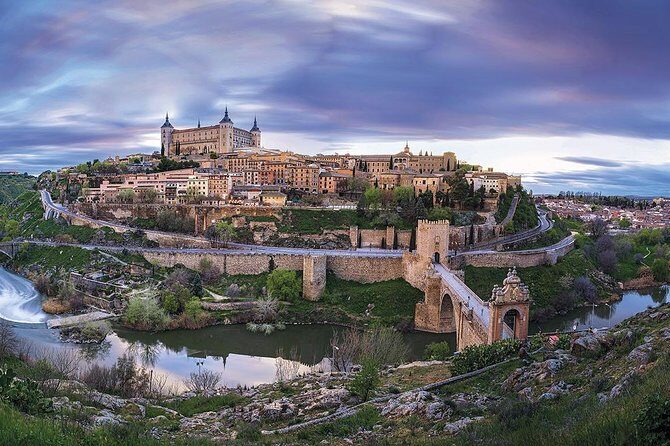
The big time slot is Monasterio de San Juan de los Reyes, and you’ll get about 1 hour here. This monastery was founded by Ferdinand II of Aragon and Isabella I of Castile to mark two things: the birth of their son, Prince John, and their victory at the Battle of Toro in 1476 against Afonso V of Portugal.
Toledo was chosen for two reasons that matter when you’re standing there. It was geographically central, and it also had symbolic value as the old Visigoth kingdom’s capital—something Isabella and Ferdinand helped reframe as a restoration of Spanish unity through the union of Castile and Aragon.
I like this stop because it’s not just pretty stone. It explains why the structure exists, which makes the layout and scale feel logical instead of random.
Mosque of Cristo de la Luz: one of the city’s Moorish survivors
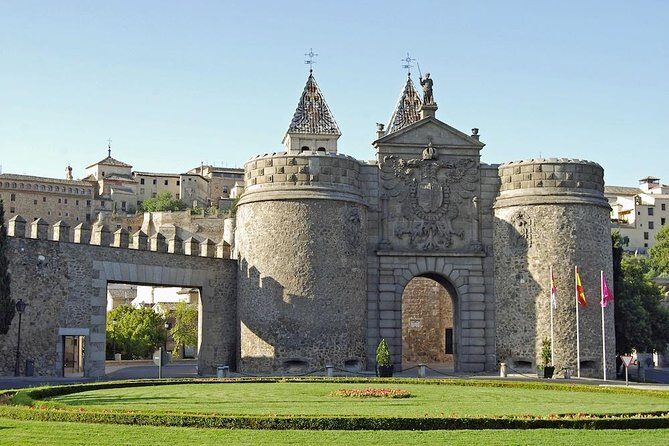
Next is the Mosque of Cristo de la Luz, a former mosque and one of the ten that existed in Toledo during the Moorish period. It was known as Mezquita Bab-al-Mardum, named after the city gate Bab al-Mardum.
It sits near Puerta del Sol in an area once called Medina, where wealthy Muslims lived. That makes the setting part of the story: you’re not just touring an artifact, you’re walking through a neighborhood that once held power and daily life.
Plan for about 40 minutes. Even in that time, you can appreciate why this is often considered a core Toledo monument: it’s a clear surviving piece of the city’s Islamic past, and it’s easier to understand when you remember Toledo’s layers show up in many different places.
Iglesia del Salvador: the stacked-story church you can actually visualize
The final main monument stop is Iglesia del Salvador. It’s small, but it’s exceptional because it’s basically a timeline in building form.
This church area saw four successive constructions on top of each other: a 12th-century church built on an 11th-century Taifa mosque, which expanded a 9th-century Umayyad mosque, which in turn sat on a Visigothic religious building. Roman elements from the 2nd century were also reused.
About 30 minutes is the plan. You don’t have time to study everything, but you can still do something useful: stand in one spot and build a mental map of the layers. That is where Toledo’s complexity really clicks.
If you tend to ignore small churches, don’t do it here. This is the kind of place that makes the city’s history feel physical.
The 7th included stop: Royal College of Doncellas Nobles
Your wristband also covers entry to the Royal College of Doncellas Nobles. The included route lists it as one of the seven included monuments, so it’s worth planning a slot for it even if you’re more excited about the bigger-name churches.
Because no extra time block is specified here, treat it as your flexible stop. If you’re spending slower on the early monuments, this is where you might need to keep your pace steady.
Mirador del Valle and the panoramic bus ride: views as a reset
Before your in-city walking really ramps up, the bus includes a panoramic tour of Toledo and a stop at Mirador del Valle, described as offering breathtaking views.
Here’s how I’d think about it: it’s a great break from the footwork, and viewpoints are perfect for orienting yourself—figuring out where the historic core sits and where the river and hills run.
One caution based on real-world operations: occasionally schedule timing can shift. So I’d treat Mirador del Valle as a welcome bonus. If it’s there, great. If it doesn’t happen, don’t let it ruin the day—your monument cluster still delivers the main value.
Walking pace and time math: how to keep the day from feeling rushed
This is a full-day format: about 8 to 9 hours, with 6 described monument stops and one additional included site. The entry time blocks are short on purpose, so the day is designed to cover ground rather than slow-tour every room.
That means two things:
- You should wear comfortable shoes with real grip. Toledo’s old lanes don’t always forgive poor soles.
- You should pick one or two places you want to linger in, and treat the rest as structured check-ins with key moments to spot.
If your goal is deep study of every altar, mural, and chapel, this may feel tight. If your goal is to understand Toledo’s architectural layers and get a strong first sweep, it’s a solid format.
Also, be ready for group flow. Since the day starts with a group pickup and moves through landmarks, the slowest moments often happen at transitions, not inside monuments.
Value check: why $58.87 can work well (and when it might not)
At $58.87 per person, you’re buying a bundled day: round-trip coach, an official guide on the bus, a panoramic component, and wristband-covered entry to 7 monuments.
You’re not just paying for tickets. You’re paying for the logistics: transportation out of Madrid and back without planning, plus the wristband that removes most ticket-buying friction.
Where it may feel less worth it is if you end up wanting more free roaming in between monuments, or if you personally dislike structured routes and quick entry windows. In those cases, it can still be a good transport deal, but you may resent the pacing.
My rule of thumb: if you want a structured orientation to Toledo and you’re fine moving with the day’s rhythm, this is good value. If you’re the slow-stroller type, you’ll likely want to build your own itinerary instead.
Who should book this Toledo day trip from Madrid?
This tour works best for you if:
- You want easy round-trip transport from Madrid.
- You like architecture and want to see the city’s layers fast: Mudéjar, Baroque, and stacked mosque-to-church history.
- You prefer a plan where the heavy lifting (bus + tickets) is handled, but you still get independence once you’re on site.
You might want to skip it if:
- You want a full, unstructured day where you can drift for hours without time blocks.
- You hate any chance of waiting around for group flow at the start.
If you do book, come with a simple strategy: decide which 2 monuments you want to photograph and study more, and which ones are for quick architectural recognition.
Should you book it?
If your ideal Toledo day is practical and efficient—bus from Madrid, a wristband that covers 7 monuments, and time to explore on your own—this is a strong option. The best part is that you get the big architectural story without needing to coordinate transport and multiple ticket lines.
If your dream day is slow, quiet wandering with no schedule pressure, you’ll probably feel boxed in by the monument time blocks and transition flow. In that case, you’ll be happier building your own Toledo plan.
FAQ
How much does the Toledo day trip cost?
It costs $58.87 per person.
How long is the experience?
It runs about 8 to 9 hours.
Is this tour truly self-guided once you arrive in Toledo?
It’s designed as on-your-own sightseeing using a tourist wristband, though you may start with an initial walk and early help from a city guide.
What is included for monument entry?
Your tourist wristband covers admissions to the included monuments listed in the experience (Synagogue of Santa María la Blanca, Jesuit Church of San Ildefonso, Church of Santo Tomé, Monastery of San Juan de los Reyes, Mosque of Cristo de la Luz, Iglesia del Salvador, plus the Royal College of Doncellas Nobles).
Is lunch included?
No, lunch is not included.
Does the tour include round-trip transport from Madrid?
Yes. You get round-trip bus transport with air conditioning and an official guide on the bus, plus a panoramic ride in Toledo.
What language is the tour offered in?
It’s offered in English.
What if I cancel?
You can cancel for a full refund if you cancel at least 24 hours before the start time.