REVIEW · TOLEDO
Underground Visit
Book on Viator →Operated by Secretos de Toledo · Bookable on Viator
Toledo has a second city under your feet. This tour focuses on five usually-closed underground spaces, turning what looks like normal streets above ground into a living story of reuse and survival. I love the hands-on way you’re guided through places like the Cenizal bath Arab hammam and the Roman-era thermal spaces, and I also like how guides such as Ruth, Luis, and Javi make the details easier to follow. One catch: it’s in Spanish, and the explanations can feel long if you don’t follow the language well.
You’ll spend about 2 hours moving at a manageable pace with a small group (max 24), and you’ll get a mobile ticket—so you’re not fussing with paper. At $14.90, it’s strong value because you’re paying for access to places most people can’t just wander into.
What really makes it click is the idea that Toledo’s layers keep stacking: Muslims, Romans (via reused buildings), and later Christian life all leave traces in water systems—baths, cisterns, wells—beneath your shoes. You’ll see conversions like an 11th-century cistern linked to the mosque period, now connected to El Salvador.
In This Review
- Key highlights worth choosing this tour for
- Toledo Under Your Feet: what this 2-hour tour really delivers
- Price and value: $14.90 for spaces most people can’t access
- Meeting at C. del Hombre de Palo (and what to expect from the route)
- Stop 1: Toledo’s Cenizal bath hammam (how to read an 11th-century space)
- Roman reuse at the Old Nuncio baths (why the Romans still matter)
- El pozo del Salvador cistern: from mosque water storage to El Salvador
- The Baths of the Angel and Baños del Caballel: finishing strong
- What makes the guides matter (Ruth, Luis, Javi, and the Spanish storytelling factor)
- “Some doors are closed” — why you shouldn’t expect every underground tunnel
- How long is it, and what about comfort?
- Who should book this underground visit?
- Quick planning tips to get the most out of it
- Should you book the Secretos de Toledo underground visit?
- FAQ
- What language is the underground tour conducted in?
- How long does the Toledo underground visit take?
- How many underground spaces does the tour include?
- Where does the tour start and finish?
- Do I get a mobile ticket?
- Is there a limit on group size?
- What if the weather is bad or the minimum number of travelers isn’t met?
Key highlights worth choosing this tour for
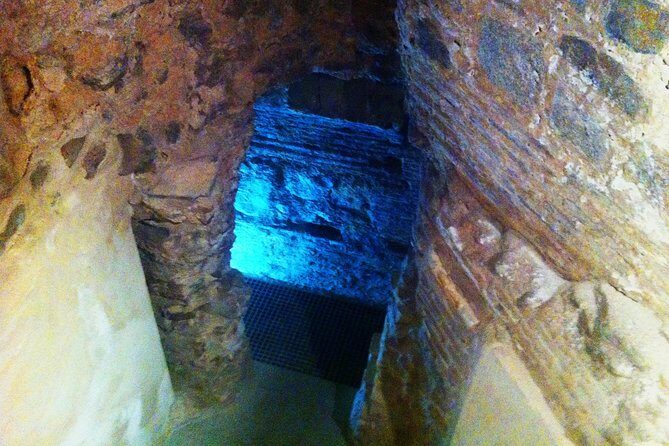
- Five underground spaces usually closed to general tourism, including baths and waterworks
- Arab and Roman layers are explained through the architecture and how these sites functioned
- A small group size (max 24) keeps it more workable than big walking tours
- Spanish-guided storytelling with guides frequently praised (Ruth, Luis, Javi, Santiago)
- Toledo’s “below-streets” reality: tunnels were later blocked with construction to protect private properties
Toledo Under Your Feet: what this 2-hour tour really delivers
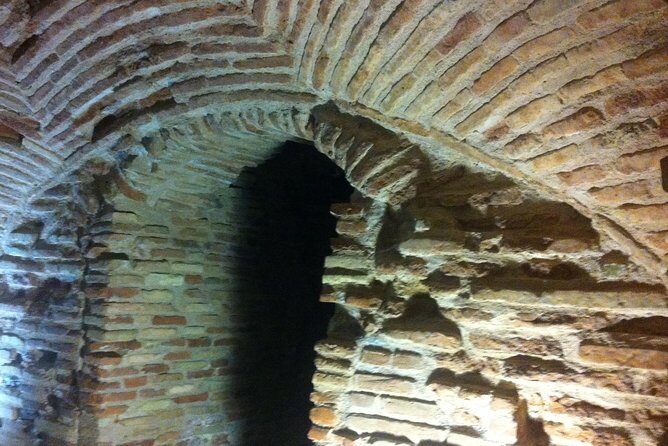
This is not a museum that stays behind glass. It’s a route built around the idea that Toledo has a second city under the first one. The guide leads you into five underground spaces, and each stop is framed around what it was used for—then how later cultures reused or repurposed the same physical bones.
If you like history, the “wow” factor here is practical: water had to be stored and managed, baths had to be heated, and stone structures had to be built to last. That’s why these underground rooms matter. They aren’t just spooky basements; they’re a clue to daily life, engineering, and community.
I also like that the tour openly acknowledges limitations. Some parts of the underground city aren’t fully open all the time, because certain areas are closed to the public and some tunnels were later sealed for privacy. That means you should expect a route that mixes access points—often with short walks between spaces—rather than a single uninterrupted underground tunnel fantasy.
You can also read our reviews of more tours and experiences in Toledo.


Price and value: $14.90 for spaces most people can’t access
At $14.90 per person for roughly 2 hours, this is priced like a budget-friendly guided experience, not an expensive “special access” VIP day. The value comes from the access: you’re paying to enter sites that are typically closed and learn what you’re looking at once you’re inside.
A big part of the value is the guide’s job: taking places that would be confusing on your own and turning them into a clear timeline. You’re not just “seeing old rooms.” You’re being walked through why each space existed and how the city kept changing above and below ground.
Booking tends to move fairly quickly (on average, it’s booked about 24 days in advance). If you’re traveling in busier months or want a specific departure, I’d book early and not wait for last-minute price drops.
Meeting at C. del Hombre de Palo (and what to expect from the route)
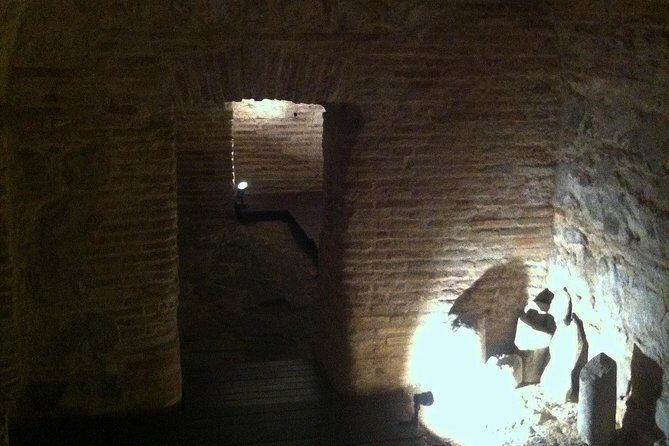
The tour meets at C. del Hombre de Palo, 7, 45001 Toledo, Spain and returns there. The activity lasts about 2 hours and runs in Spanish. It’s also close to public transportation, so you can plan without a complicated taxi strategy.
Because it’s limited to 24 travelers, you can usually expect a more guided feel than the huge group tours that move like school buses. You’ll still want comfortable shoes. Underground spaces can mean uneven footing and stair steps, and even if the route isn’t extreme, it’s still a lot of “move, stop, listen” for 2 hours.
Stop 1: Toledo’s Cenizal bath hammam (how to read an 11th-century space)
The first major underground highlight is the Cenizal bath, an old Hammán (Arab bath) dating to the 11th century. This isn’t just “an old room.” The guide explains architectural curiosities—why the space was shaped the way it was, what it was likely used for, and how the bath functioned as a social and practical space.
This is one of the best stops for first-time Toledo visitors because it helps you understand the logic of the underground city. Baths weren’t only for cleanliness. They were also a social setting and a place that required heating, water movement, and careful design.
Practical tip: once you’re underground, your brain slows down a bit. I’d be ready to focus on what the guide points out—shapes, reuse of materials, and how water relates to the layout—rather than expecting every corner to feel obvious on first glance.
Roman reuse at the Old Nuncio baths (why the Romans still matter)
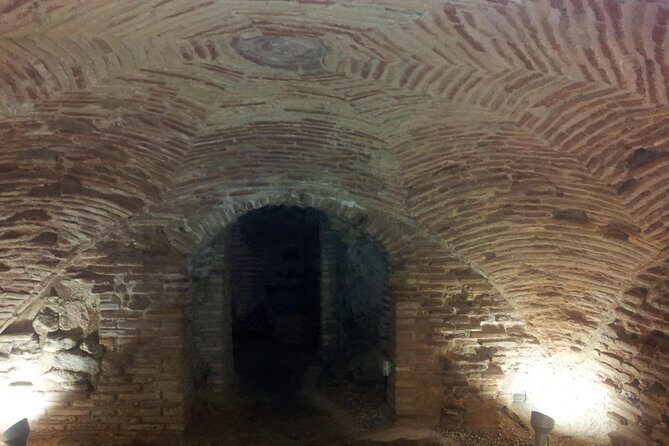
Next comes the Roman baths of old Nuncio—a reminder that Toledo’s story isn’t a straight line. It’s layered. Here, the guide focuses on thermal and social use in Roman Toledo and also the way later periods reused these structures.
What I like about this stop is that it teaches you how to look at a building over time. If you’ve been to old cities where everything feels like separate “chapters,” this stop shows the messy reality: older spaces weren’t erased; they were often incorporated into what came next.
You’ll get explanations about Roman building habits too—how the civilization constructed for function, and how that function supported everyday routines. It’s a good counterweight to the Arab bath stop, because it gives you two different ways of using water and heat, both built into the same city fabric.






El pozo del Salvador cistern: from mosque water storage to El Salvador
Then you’ll step into El well del Salvador, an old cistern from the 11th century that belonged to the mosque, and later became connected with the church of El Salvador.
This is a standout stop because cisterns and wells are the underground city’s “infrastructure.” They may not sound glamorous, but they’re a direct link to how settlements survived: water had to be stored safely, and underground structures helped keep it stable.
Also, the mosque-to-church connection is exactly the kind of Toledo transformation that makes the whole tour worth it. It gives you a clear example of continuity and change at the same time: the physical water space stays, but the cultural layer on top shifts.
The Baths of the Angel and Baños del Caballel: finishing strong
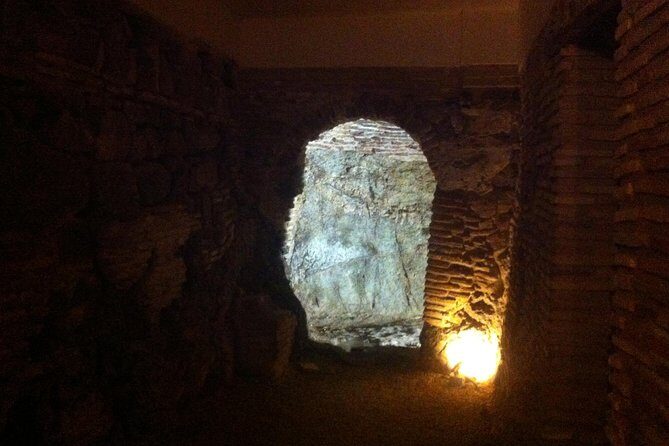
After the first set of water-and-baths stops, the tour continues with more underground spaces, including the Baths of the Angel and Baños del Caballel (Arab baths).
Even when you don’t have every detail memorized, these final rooms usually make the theme click: Toledo’s underground life wasn’t one single underground attraction. It was multiple bath-related sites tied to the city’s daily rhythms.
This part of the route also helps you get oriented for the rest of your Toledo stay. After you’ve seen these rooms underground, things you pass on the surface start to feel connected—like you’re walking the top layer of a much older system.
What makes the guides matter (Ruth, Luis, Javi, and the Spanish storytelling factor)
Most of the strongest impressions from past participants revolve around the guide. Names that come up often include Ruth, Luis, Javi, and other guides like Santiago. People consistently praise guides for being professional and good at making complex ideas easier to understand.
Still, here’s the reality check: it’s a Spanish tour, and the pace depends on how much you can follow. One common issue is mental fatigue for non-Spanish speakers because the explanations are detailed and thorough. If you’re comfortable with Spanish and enjoy listening, you’ll probably feel carried along.
If you’re not, plan smart:
- Bring a small notebook and jot down key place names as you go.
- Use your curiosity as a compass: even if you miss words, you can often track the logic of architecture and water.
- Consider doing this on a day when you won’t be rushing to other activities immediately afterward.
“Some doors are closed” — why you shouldn’t expect every underground tunnel
Toledo’s underground isn’t entirely open for the public, and the tour reflects that. Some areas are normally closed to tourism, and spaces can be far apart. Also, access can involve practical details like needing a key for certain areas.
There’s another important reason the underground feels fragmented: over the centuries, new construction sealed tunnels to maintain privacy for private properties. So don’t imagine a single continuous underground route stretching for miles. Think of it more like carefully selected access points into the second city.
If you go in expecting five specific underground spaces and a structured route, you’ll feel satisfied. If you’re expecting everything to be underground nonstop, you might feel a bit disappointed.
How long is it, and what about comfort?
The tour runs about 2 hours. With underground stops, stairways, and pauses for explanation, it’s not the kind of experience where you can treat it like background music.
Because the group max is 24, the schedule should be manageable. But you still need to be ready to listen for stretches of time. If you’ve got short attention spans, bring patience—or plan to lean into the visual side when language is hard.
Also, it’s best as a daytime activity. Underground spaces can be cooler and can change your focus, so I’d avoid piling it back-to-back with tours that require intense walking later.
Who should book this underground visit?
This is a great pick if you:
- want a Toledo tour that’s not just viewpoints and plazas
- like water-related history—baths, cisterns, wells
- enjoy architecture explanations and want a guide to connect the dots
- want a small-group experience rather than a crowd
It can also work for families, since one account highlighted that an 8-year-old enjoyed seeing the underground sites. The tour may be long for very young kids, but if your child likes learning and doesn’t melt down easily, it can be a fun way to make history concrete.
Quick planning tips to get the most out of it
- Go with shoes you can trust on stairs and uneven ground.
- Wear layers. Underground rooms can feel cooler than the street.
- If you speak little Spanish, treat the tour as a guided look-and-learn rather than a full lecture.
- Plan your next activity with breathing room. You’ll likely leave with lots of names in your head—El Salvador, Cenizal bath, Roman baths of old Nuncio—and your brain will want a little time to sort them.
Should you book the Secretos de Toledo underground visit?
I’d book this if you want a focused Toledo experience that shows you the city’s hidden layer in a structured way. At $14.90, you’re paying for access to five underground spaces that most people never see, plus explanations from guides who consistently earn praise for clarity and friendliness.
Skip it (or book with lower expectations) if you:
- need a fully bilingual experience (it’s conducted in Spanish)
- hate long explanations
- only enjoy nonstop underground walking without street segments
If you’re on the fence, decide based on one thing: can you handle a Spanish-guided history route for about 2 hours? If yes, this is an easy choice for anyone who wants Toledo to feel real, not just photographed.
FAQ
What language is the underground tour conducted in?
The tour is conducted in Spanish.
How long does the Toledo underground visit take?
It takes about 2 hours (approx.).
How many underground spaces does the tour include?
The tour includes visits to five underground spaces.
Where does the tour start and finish?
It starts at C. del Hombre de Palo, 7, 45001 Toledo, Spain and ends back at the same meeting point.
Do I get a mobile ticket?
Yes, the tour uses a mobile ticket.
Is there a limit on group size?
Yes. The maximum number of travelers is 24.
What if the weather is bad or the minimum number of travelers isn’t met?
The experience requires good weather. If it’s canceled due to poor weather, you’ll be offered a different date or a full refund. If the minimum number of travelers isn’t met, you’ll also be offered a different experience or a full refund.