REVIEW · MADRID
Madrid Expert Plus Tour with Local Guide in Eco Tuk Tuk Private
Book on Viator →Operated by Eco Tuk Tuk - Spain · Bookable on Viator
Madrid clicks into focus fast. This private ride in a covered, 100% electric eco tuk-tuk turns a long list of Madrid landmarks into a smooth route with real context from the guide. I especially like the way storytelling + photo-ready stops work together, from Atocha Station’s scale to the art-packed streets near the Prado Museum and the free Temple of Debod visit.
Two practical benefits jump out: you start with no queues or waiting, and you can see a lot without walking yourself into a puddle. The only drawback to plan for is that it’s a highlight tour—some stops are quick looks and set photo moments, not a slow museum marathon.
In This Review
- Key things to know before you ride
- Madrid’s major sights, minus the parking-and-walking headache
- Where to meet by Puerta del Príncipe (right by the Royal Palace)
- The ride itself: electric, covered, and made for quick stops
- Stop 1: The covered market area from around 1916
- Stop 2: Atocha Station and Madrid’s big-rails energy
- Stop 3: Palacio de las Cortes and the idea of power
- Neptune’s Fountain and the neoclassical Madrid “pause button”
- The Prado Museum area: European masterpieces on the same route
- San Jerónimo el Real, with royal ties you can feel
- Puerta de Alcalá: the neoclassical arc that beats Paris and Berlin in timing
- Las Ventas bullring and why it’s more than a tourist photo
- Barrio Salamanca and the Bernabéu drive-by on Paseo de la Castellana
- Columbus monument, the Gardens of Discovery, and the cultural center beneath
- The National Library of Spain (BNE) and why it’s part of Madrid’s brain
- Cibeles fountain and the Banco de España area: religion of fandom meets stone finance
- Plaza de Santa Ana, San Francisco el Grande, and Almudena Cathedral
- Royal Palace, Campo del Moro, and the free Temple of Debod
- Price and comfort: does $28.67 per person feel fair?
- Who this tour suits best
- Should you book the Madrid Expert Plus Eco Tuk Tuk tour?
- FAQ
- How long is the Madrid Expert Plus Tour?
- What’s the price per person?
- Is the tour private or shared?
- What language is the tour offered in?
- Is the tuk-tuk electric and covered?
- Are blankets or weather protection provided?
- Where is the meeting point?
- Is there a free admission stop on the itinerary?
- Are hotel pickup and drop-off included?
- Can I cancel for a refund?
Key things to know before you ride
- Covered, weather-friendly comfort: blankets in winter plus rain/wind protective layers
- Private for your group: you ride together, not mixed with strangers
- Fast orientation through Madrid: you get major districts in a few hours
- Guide-led context at each stop: stories connect monuments to everyday life
- Photo stops are planned: you can’t swap them out or request detours
Madrid’s major sights, minus the parking-and-walking headache
If Madrid is your first stop in Spain, this tour is a smart way to get oriented without turning your day into a long slog. An eco tuk-tuk can slip into tighter streets and keep you moving when big buses can’t. The covered design also matters: you’re not stuck under direct sun or exposed to a cold wind while you hunt for the next viewpoint.
The vibe is practical, not performative. Your guide is there to connect what you’re seeing—markets, government buildings, fountains, churches, stadiums—with the bigger story of how Madrid works. And in the cold or wet, the tour leans into comfort with blankets and protective layers, so you can keep your energy for later (tapas, long dinner, late strolls).
One thing I’d keep in mind: this is not built for deep, ticket-heavy experiences at every stop. It’s built for getting bearings fast, then letting you choose what to explore later on your own.
You can also read our reviews of more guided tours in Madrid

Where to meet by Puerta del Príncipe (right by the Royal Palace)
You’ll meet at C. de Bailén, 4 in Centro, near the Royal Palace area. The tour company notes that Calle Bailén 4 may not be obvious on the map, so your best bet is to search for Puerta del Príncipe in Google Maps. Look for the stairs near the gate and the underground bus station access—then head to the Eco Tuk Tuk signage.
This matters because tuk-tuk tours live and die by timing. If you’re even a bit late, the schedule can get compressed. The rules also say the activity can be reduced if you delay, and it can be canceled (without a refund) if you’re delayed too long. So show up early enough to relax, not to sprint.
The ride itself: electric, covered, and made for quick stops
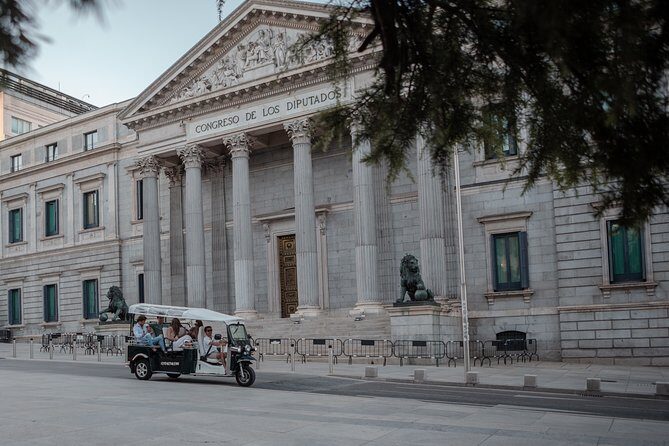
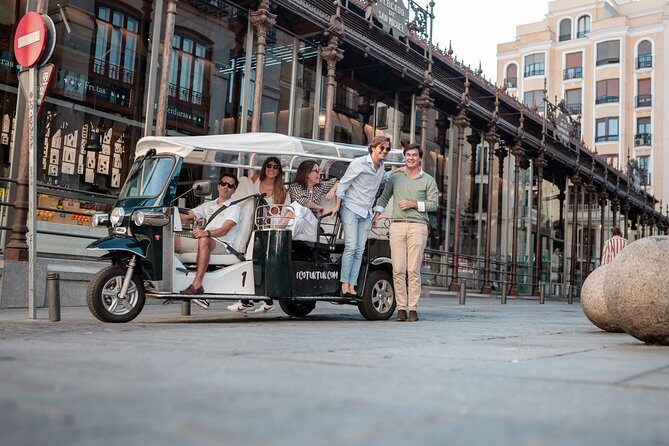
You’re in a private vehicle for your group only, with tuk-tuks reserved based on group size (up to 4 passengers per tuk-tuk). That means you’re not squeezed into a shared herd. It also means the guide can steer the pace to your group—especially helpful if you’re mixing adults, couples, or older travelers.
The tuk-tuk is designed for comfort in real Madrid weather. You’ll have blankets in winter, plus rain and wind protective layers. One small detail: during colder conditions, side panels can be lowered to keep you warm and dry, which can slightly affect sightlines. It doesn’t stop the experience, but it’s worth mentally preparing for a more sheltered ride.
Stop 1: The covered market area from around 1916
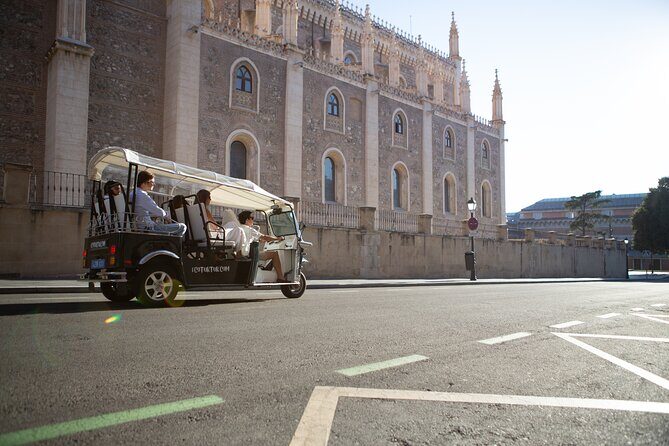
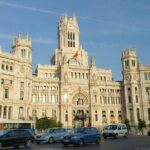
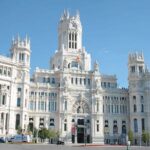
A Madrid orientation tour should include food, because the city runs on food culture. The first stop is a covered market that dates back to around 1916, with local food, delicatessens, and events held in an elegant indoor setting.
Even if you don’t do a full tasting on this stop, it sets the tone. You start learning how Madrid prefers “small, real, and close by” over tourist-only spectacles. It’s also a nice mental reset early in the tour: you’re indoors, you get to see how vendors and specialty counters shape daily life, and then you roll back out into the monument-heavy streets.
If you’re the type who likes to eat your way through a city, this stop is a great early breadcrumb. You’ll leave with ideas for what to look for later—cheese counters, cured meats, and the kind of bite-size snacks that don’t feel like tourist traps.
Stop 2: Atocha Station and Madrid’s big-rails energy
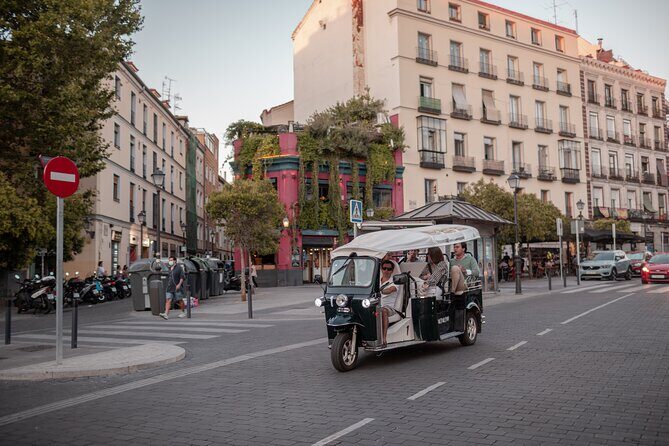
Next you hit Atocha Station, one of Spain’s busiest rail hubs. The key detail here is scale: it’s not just a station, it’s a major transport complex near Plaza del Emperador Carlos V, and it serves as a central connection point for Spain and beyond.
Atocha is a perfect tour stop because it shows Madrid as a city in motion. You’re not just looking at old stone—you’re looking at how the city moves people every day. It also helps your brain connect neighborhoods. After this, you’ll understand why certain streets feel like arteries, and why the city’s “center” is more layered than just one plaza.
You can also read our reviews of more private tours in Madrid




Stop 3: Palacio de las Cortes and the idea of power
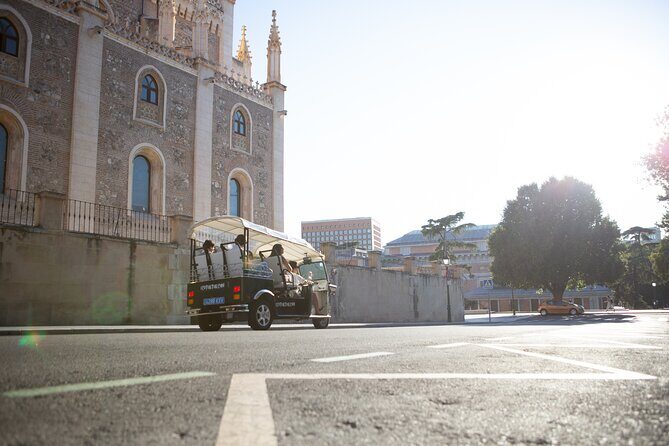
The Palace of the Spanish Courts (Palacio de las Cortes) is where the tour shifts from daily life into government symbolism. Built on the site of a former convent of the Holy Spirit, it later served as the seat of Congress between 1834 and 1841.
The exterior details are the kind you might miss if you were simply walking past: a neoclassical porch with six imposing columns, a triangular pediment with reliefs, and emblematic lions flanking the entrance. One of the most striking stories tied to the building is that those lions are linked to iron from cannons captured during the war in Africa. It’s a good example of how Madrid’s stonework often has a history lesson hiding in plain sight.
You’ll also hear about interior features like the well-known session room, plus other notable spaces sometimes called the lost steps room. Even if you don’t spend long inside, the guide’s explanation helps you read the building like a message, not just a facade.
Neptune’s Fountain and the neoclassical Madrid “pause button”
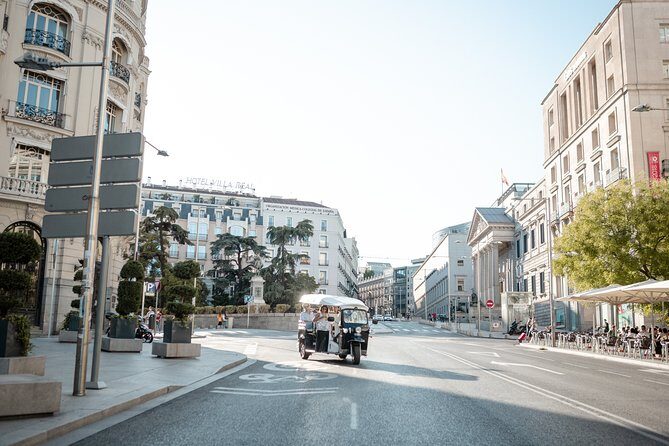
From the seat of power, you roll into a more graceful scene: the Fountain of Neptune in Plaza de Cánovas del Castillo. This neoclassical fountain sits at the center of the roundabout that gives the area its popular name.
It’s a good breather between heavier stops. Your guide connects the dates—proposed in 1777, construction started 1782, completed 1786—so you start noticing how Madrid’s big projects often took years, not weeks. That pacing fits the city: planning, building, then letting monuments become meeting points over time.
If you’re traveling in a short window, these “pause stops” are valuable. They give you a quick visual anchor before the next cluster of art and royal sites.
The Prado Museum area: European masterpieces on the same route
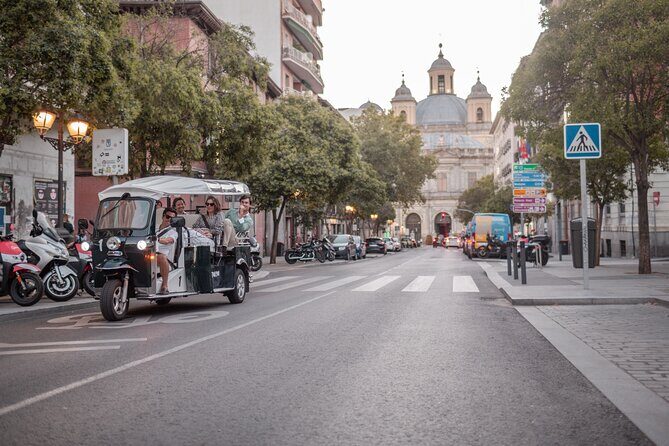
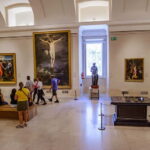
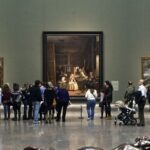
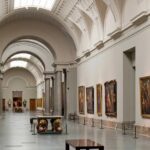
Then comes one of the biggest pulls in Madrid: the Prado Museum area. The tour framing here focuses on the museum’s importance in European painting. You’ll hear about major names across centuries—Velázquez, El Greco, Goya, Tiziano, Rubens, and Bosch, among others—plus a wide set of other important artists represented in the collection.
You’re not going to leave with museum depth in a few minutes. But you do leave with a roadmap. If your interest is art, this is the moment when your brain starts labeling Madrid as the city where you’ll want at least one serious museum block later.
It also helps you decide what kind of Prado visit you want. If you’re a first-timer, a short guided plan can keep you from wandering room to room. If you’re a returning fan, you’ll know which artists to prioritize before you buy tickets.
San Jerónimo el Real, with royal ties you can feel
Right near the Prado area is San Jerónimo el Real, popularly known as Los Jerónimos. It’s a late Gothic church with Renaissance influences from the early 1500s, and it has been restored and remodeled many times.
This stop is about relationships—specifically the church’s connection to the kings of Spain. Built by order of the Catholic Monarchs, it also became a spiritual retreat for several monarchs. It even played a role in royal investiture and ceremonies, including the wedding of Alfonso XIII. The great stairway leading up to the door was built in 1906, adding a very visible “ceremony-ready” element.
If you like to understand places through their roles, not just their architecture, this is a rewarding stop. You look at the church and automatically think: this wasn’t just a building for ordinary worship. It was built for status and ritual.
Puerta de Alcalá: the neoclassical arc that beats Paris and Berlin in timing
One of Madrid’s most recognizable monuments is Puerta de Alcalá. It was commissioned by Carlos III to replace an earlier gate and was inaugurated in 1778, designed by Francesco Sabatini.
This is a neoclassical triumphal arc with a granite look and five openings instead of the usual three. That detail alone is a reason to pay attention. The tour also points out how the two facades differ: the inner face is simpler at first glance, and the exterior is richer—so you understand it as a gate designed for the experience of entering the city.
Sabatini’s gate is also described as a kind of early European echo of later triumphal structures. It’s a nice reminder that Madrid didn’t just borrow styles; it participated in the broader architectural conversation of Europe.
Las Ventas bullring and why it’s more than a tourist photo
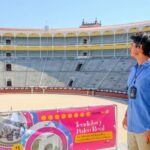
Madrid’s bullfighting tradition is represented by Las Ventas, the city’s major bullring. The numbers help you respect the scale: 23,798 spectators and a ring diameter of 61.5 m. The capacity today is 81,044, and it was inaugurated on December 14, 1947.
Even if you don’t care about bullfighting, this stop works as an architecture-and-culture marker. It’s an example of how Madrid has long put big public events into monumental spaces.
Also, seeing it from the street angle helps you understand Madrid’s rhythm. It’s not one central “wow plaza.” It’s multiple worlds—government, art, sports, religion—all connected by the way neighborhoods line up.
Barrio Salamanca and the Bernabéu drive-by on Paseo de la Castellana
After the bullring, your route shifts toward the Barrio Salamanca streets: Velázquez, Ortega y Gasset, and Serrano. This is where Madrid starts feeling stylish and upscale, and the guide’s commentary helps you connect those names to modern city life instead of treating them like random street labels.
Then the tour moves along Paseo de la Castellana toward Santiago Bernabéu stadium. Even if you’re not catching a match, it’s part of Madrid’s identity engine—especially if Real Madrid is on your trip radar.
The key value here isn’t the stadium itself. It’s the transition. You move from older stone and ceremonial gates into a Madrid that still builds its pride around major public arenas.
Columbus monument, the Gardens of Discovery, and the cultural center beneath
You’ll also pass the Christopher Columbus monument in the square where it sits centered near traffic circulation. The monument is white marble, neo-Gothic in style, and around 17 meters tall. It was built in 1885 by Jerónimo Suñol tied to the wedding celebration of Alfonso XII and María de las Mercedes de Orleans.
From there, the tour points to the Gardens of Discovery, opened in 1970, where you can see sculptures that connect to the theme of exploration. Beneath the gardens is the Cultural Center of Villa Fernán Gómez, which is a reminder that even “monument spaces” often have layered uses beyond photos.
This part of the route is good when you want variety. After art and royal ceremony, you get public sculpture and city-space planning.
The National Library of Spain (BNE) and why it’s part of Madrid’s brain
Madrid isn’t only for monuments; it’s also a place of paperwork, archives, and long memory. The tour includes a stop near the National Library of Spain (BNE), an autonomous body responsible for collecting and conserving Spain’s bibliographic and documentary heritage.
The numbers are big: the library has custody of around thirty million publications produced in national territory since the beginning of the 18th century—books, magazines, maps, prints, drawings, scores, and brochures. It also explains how the library’s collections and history are shared through museum-like dissemination and exhibition halls.
Even if you never step inside, this stop adds perspective. It helps you understand why Madrid feels like it can handle both grand tourism and serious study.
Cibeles fountain and the Banco de España area: religion of fandom meets stone finance
Next comes the most recognizable scene for Real Madrid fans: the fountain of Cibeles. It features the Roman goddess Cibeles symbolizing land, agriculture, and fertility, riding in a car pulled by two lions. The sculptural work is credited to Francisco Gutiérrez for the goddess and Roberto Michel for the lions.
This stop is about symbolism that people actually use. The tour ties Cibeles directly to celebrations of Real Madrid titles and successes of the Spanish soccer team. So you don’t just see a fountain—you understand it as a social landmark where emotions gather.
Nearby, you’ll also see the Banco de España building. The exterior tells you it’s meant to match the importance of its functions. The interior is restricted: the tour notes access is generally for groups from educational centers and universities, with occasional exceptions for nonprofit cultural and associative entities. It’s another example of Madrid balancing open spectacle with controlled institutions.
Plaza de Santa Ana, San Francisco el Grande, and Almudena Cathedral
As you work back toward the old center, you get a cluster of major religious and civic spaces.
Plaza de Santa Ana is an open space in Centro dating from 1810, shaped by multiple urban changes over time. It’s the kind of plaza where you can feel Madrid’s street culture without it being a single monolith.
Then you visit the Royal Basilica of San Francisco el Grande, officially Basilica of Our Lady of the Angels. And later, you reach Almudena Cathedral, which the tour describes as Madrid’s most important religious building, consecrated on June 15, 1993 by Pope John Paul II.
The Almudena Cathedral Museum is also noted, with dozens of objects telling the diocese’s story across rooms, from mosaics to episcopal shields and ornaments. If you love museums that aren’t just for tourists, this is a strong lead-in for a separate visit when you have time.
Royal Palace, Campo del Moro, and the free Temple of Debod
This is the part of the route that feels like Madrid turning toward spectacle again.
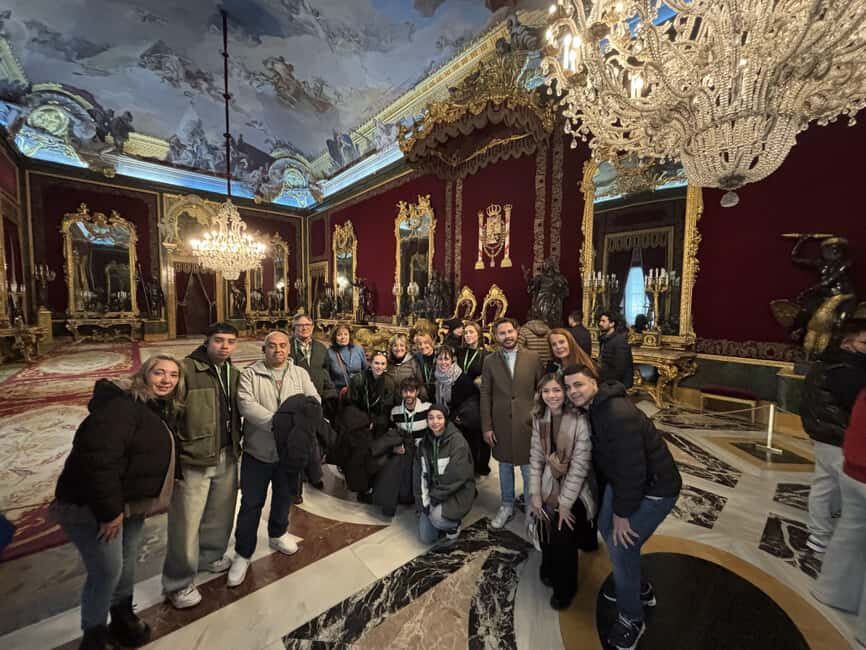
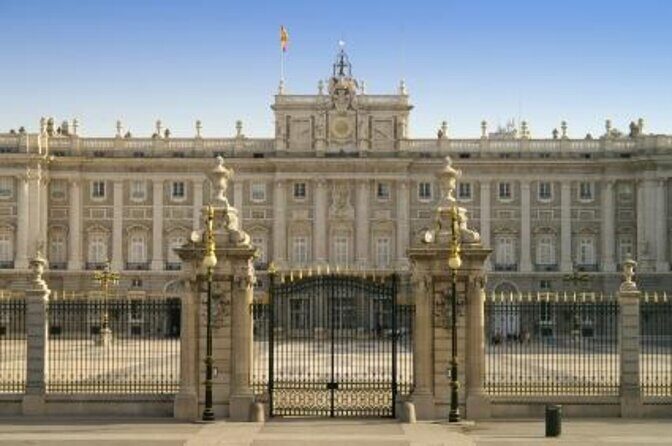
The tour includes the Royal Palace (Palacio de Oriente), used today for receptions, ceremonies, and official acts since the kings of Spain reside at the Palacio de la Zarzuela. Construction began in 1738, works lasted 17 years, and Carlos III established habitual residence there in 1764. The palace sits where the Palace of the Austrias once stood, destroyed by a fire on Christmas Eve 1734.
Around the palace are the Campo del Moro gardens and the Sabatini gardens. Campo del Moro is declared of historical-artistic interest and covers about 20 hectares, running from the western facade of the Royal Palace to the promenade of the Virgin of the Port. It’s a great “pause” zone if you want greenery between monuments.
Finally, you reach Templo de Debod, an ancient Egyptian temple placed in Madrid. It’s located west of Plaza de España, next to Paseo del Pintor Rosales on a hill where the Mountain Barracks once stood. The tour notes it as about 15 minutes with free admission.
This stop is a smart closer because it’s so unlike everything else on the route. One minute you’re in neoclassical Madrid, then you’re looking at an Egyptian temple in the city—exactly the kind of contrast that makes a short tour feel memorable.
Price and comfort: does $28.67 per person feel fair?
At $28.67 per person for a 2 to 4 hour private experience, the value is strongest if you’re doing Madrid with limited time. You’re paying for a local guide, an electric vehicle reserved for your group, and a set of major sights that cover several neighborhoods in one outing.
It’s also a value win if you hate the mental load of logistics. You get a planned route, set photo stops, and a start designed to avoid queues and waiting. That’s not just convenience—it’s time you can spend later on the parts that need tickets, reservations, or slower wandering.
The main reason you might not find it worth it is if you want maximum time inside museums and you love long walks. This tour is built for seeing and understanding, not for replacing deep ticketed visits.
Who this tour suits best
This works especially well for:
- First-time visitors who need a solid map of Madrid on day one or day two
- Couples and small groups who want private driving without renting anything
- Older travelers who appreciate help getting on and off the vehicle
- People traveling in variable weather, since it’s designed to run in rain or heat with added coverings
It’s less ideal if you:
- Want long museum time at every stop
- Need frequent stop-and-start changes to match your exact interests
- Are bringing very young children or pets (minimum age is 2 years, and the tour says babies are not allowed; pets are not allowed)
Should you book the Madrid Expert Plus Eco Tuk Tuk tour?
I think you should book if you want a fast, comfortable Madrid orientation with real context—and you like the idea of covering a lot without turning your vacation into a walking spreadsheet. The covered electric tuk-tuk, blankets in winter, and the focus on major highlights make it a strong first-day move.
I wouldn’t book it as your only plan if you’re art-obsessed or museum-obsessed. Use this to set your priorities, then come back for longer visits (Prado, government buildings, cathedral areas) on your own schedule.
If you’re ready to get your bearings fast—then spend the rest of your trip chasing whatever grabbed you most—this tour fits.
FAQ
How long is the Madrid Expert Plus Tour?
It runs about 2 to 4 hours, depending on the route and timing.
What’s the price per person?
The price listed is $28.67 per person.
Is the tour private or shared?
It’s private. Only your group participates.
What language is the tour offered in?
The tour is offered in English.
Is the tuk-tuk electric and covered?
Yes. It’s a 100% electric and sustainable vehicle, and it’s described as covered.
Are blankets or weather protection provided?
Yes. Blankets and protective layers against rain and wind are included, and winter tours include blankets to keep warm.
Where is the meeting point?
The tour starts at C. de Bailén, 4, Centro, 28013 Madrid. The guide notes you may use Puerta del Príncipe on Google Maps to find the exact spot, near the underground bus station by the Royal Palace.
Is there a free admission stop on the itinerary?
Yes. The Templo de Debod stop is listed as free admission with about 15 minutes.
Are hotel pickup and drop-off included?
No. Hotel pickup and drop-off is stated as not included and not legal.
Can I cancel for a refund?
Yes. You can cancel up to 24 hours in advance for a full refund. If you cancel less than 24 hours before the start time, it’s not refunded.