REVIEW · MADRID
Avila & Salamanca Tour with Tickets to Cathedral + Medieval Wall
Book on Viator →Operated by Amigo Tours Spain · Bookable on Viator
Two UNESCO cities in one day. That’s the charm here. You’ll bounce between Salamanca and Ávila with a guide setting the context fast, so ornate sandstone streets and massive fortifications make more sense than if you wandered solo. I especially like the way the day targets the headline sights in each town, not just random corners, and I like that the tour is capped at 30 people for a manageable group feel. The main drawback: it’s a long day with a lot of transit, so you need to be okay with a tight schedule.
My other favorite part is the “ticketed moments” built into the plan. If you choose them, you get time inside the Salamanca Cathedral (Old and New cathedrals connected internally) and access tied to the Medieval Wall in Ávila—so you’re not just looking from the outside. Still, cathedral hours can shift by season, so your exact free-time rhythm in Salamanca may vary.
In This Review
- Key highlights I’d bank on
- Two UNESCO cities in one day: what you’re really buying
- Salamanca morning sights: plazas, university, and the ornate stone city
- A practical note on pacing
- Salamanca Cathedral: Old + New, and why it’s one of Spain’s smartest ticket choices
- Season timing matters
- Using Salamanca free time wisely (so you don’t feel like you’re sprinting)
- Ávila arrival: walls that dominate the town, plus the Mercado Chico center
- Las Murallas de Ávila: how to get real value from your wall time
- Transportation, timing, and comfort: early start, big distances, and bus reality
- Price and value at $58.99: when this feels like a bargain
- Who should book this Salamanca and Ávila tour (and who should skip)
- Should you book this Avila and Salamanca tour?
- FAQ
- What time does the tour start?
- How long is the experience?
- Is entry to the Salamanca Cathedral included?
- Is entry to the Ávila Medieval Wall included?
- Does the tour include hotel pickup?
- Is this tour suitable for reduced mobility?
- What should families with young kids know?
Key highlights I’d bank on
- Salamanca’s two-cathedral setup: Old Cathedral (Romanesque, 12th–14th c.) + New Cathedral (Gothic/Baroque mix, 16th–18th c.) in one connected complex
- A university with real-world bragging rights: the oldest in the Hispanic world, formally titled in 1254 by Alfonso X and confirmed by Pope Alexander IV in 1255
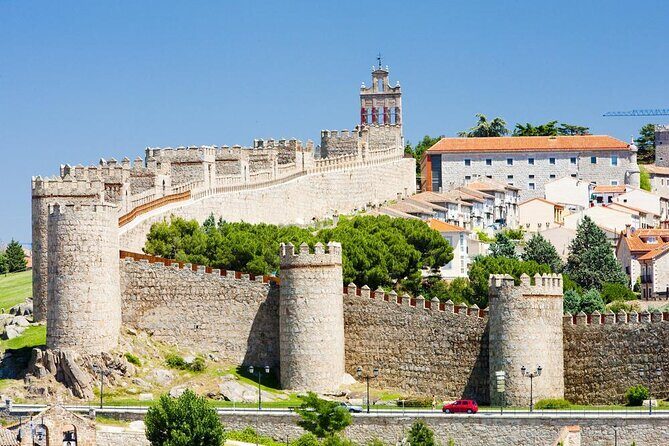
- Ávila’s full wall story: a near-complete medieval circuit with 80+ semi-circular towers and 9 gates
- Small-group pacing: max 30 travelers, with guided walks plus planned time to roam
- Optional admissions: Cathedral and wall access are available without you hunting tickets that morning
Two UNESCO cities in one day: what you’re really buying
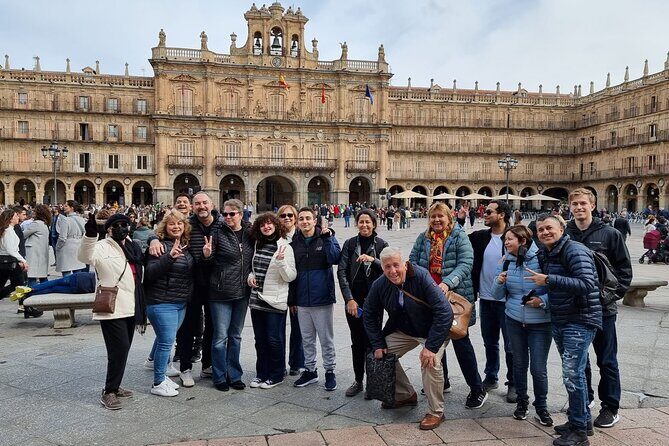
This tour works because it targets two different kinds of medieval Spain in a single loop.
In Salamanca, you get the “brains and stonework” version: the medieval university tradition, grand plazas, and the famous cathedral complex that blends Romanesque foundations with later Gothic and Baroque flourishes. In Ávila, you get the “survival and power” version: a town wrapped in fortifications, where the wall itself is the main monument.
You’re paying for more than transport. You’re paying for the guide to give you names, dates, and visual cues so you don’t walk past things and miss why they matter. And for many visitors, that’s the difference between snapping photos and actually understanding what you’re seeing.
The tradeoff is time. This is about highlights, not slow travel. If you’re the type who wants to linger over lunch for 90 minutes and wander without a timetable, you may feel a little rushed. If you like checklists done thoughtfully, this fits.
You can also read our reviews of more tours and experiences in Madrid



Salamanca morning sights: plazas, university, and the ornate stone city
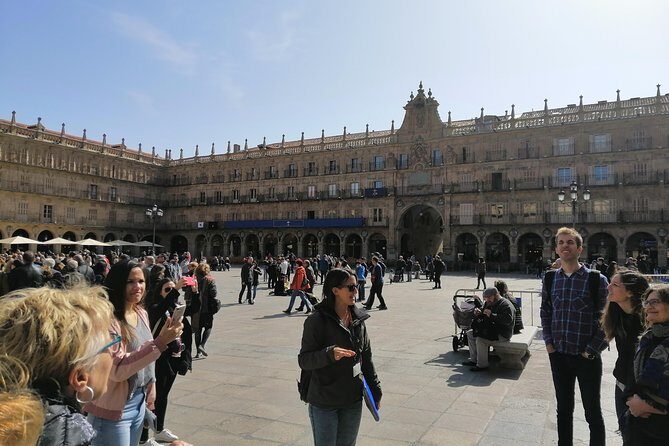
Your day starts early (meet around 7:30am) and begins in Salamanca. The first big win here is that the guide doesn’t just point. They explain how Salamanca’s identity formed—from early roots to its later role as an intellectual center.
Here are the stops that help you “read” the city:
- Plaza Mayor area and Baroque-era social life: you’ll spend time at the big central square where people gather, both in historic tradition and today’s reality. The guide’s explanation helps you notice the clock-tower backdrop and the plaza’s role as a public stage.
- The university complex and its prestige: you’ll get time with the story of the University of Salamanca. It’s described as the oldest in the Hispanic world and the third oldest university still operating globally. The formal title in 1254 came from King Alfonso X, with recognition following in 1255 from Pope Alexander IV. Even if you’re not a history nerd, those dates make the architecture feel less random.
- Casa de las Conchas: this Gothic urban palace with Plateresque elements is the kind of building where details are the whole point. With a guide, you’ll know what you’re looking for instead of just thinking it’s pretty.
- Plaza del Corrillo and the Arco del Corrillo: this area sits close to Plaza Mayor, and the “Arco” passage is part of the character of the old center—small transitions that make Salamanca feel walkable and layered.
A practical note on pacing
Salamanca’s center includes steep and/or cobbled streets. Even on a walking tour, you’ll cover ground, so comfortable shoes aren’t a suggestion—they’re the difference between enjoying the day and counting minutes.
Salamanca Cathedral: Old + New, and why it’s one of Spain’s smartest ticket choices
If you choose the Cathedral option, you’ll visit inside the Cathedral of Salamanca, which is unique because it’s actually two cathedrals connected together:
- the Old Cathedral built between the 12th and 14th centuries, with Romanesque character
- the New Cathedral built from the 16th to the 18th centuries, mixing Gothic and Baroque styles
They share a wall and connect internally, so you’re not just jumping between buildings. You’re seeing how religious architecture evolved across centuries in the same walking space.
The tour includes a 30-minute Cathedral visit when you select that option. That’s long enough to get oriented and appreciate major features, but it’s not long enough for a full slow museum-style experience. I recommend using that time with a plan: pick one area to linger (main nave or one side chapel) and let the rest be your “quick look with intention.”
Season timing matters
Cathedral opening times can change depending on the time of year. So if you’re the kind of person who wants to photograph quietly for an hour, arrive with flexibility. The value is that your ticketed slot is built in—you’re not trying to coordinate it alone.





Using Salamanca free time wisely (so you don’t feel like you’re sprinting)
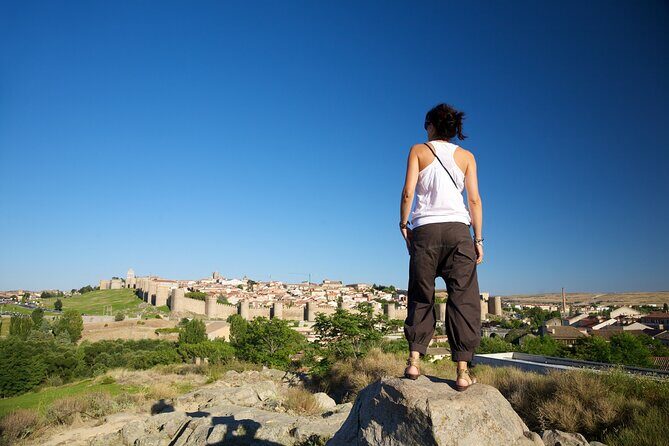
You’ll get some free time after the Cathedral portion, and the guide will point you toward the best way to enjoy it.
Here’s how I’d spend that free window:
- Go back to what you saw on the guided walk and look for the details the guide pointed out. That’s when things start clicking.
- Treat it as a reset, not a second tour. If your feet are tired, use cafés and shaded spots rather than chasing one more building.
- If you’re into skyline views, you might find it worth prioritizing the parts of the city center that have better sightlines from streets and viewpoints.
One realistic expectation: because the whole day connects Salamanca to Ávila, you won’t have hours and hours to roam Salamanca at your own pace. Several people have said they wished for more wandering time. You can prevent that frustration by setting a simple goal: enjoy the main historic blocks, then let Ávila be the longer emotional payoff.
Ávila arrival: walls that dominate the town, plus the Mercado Chico center
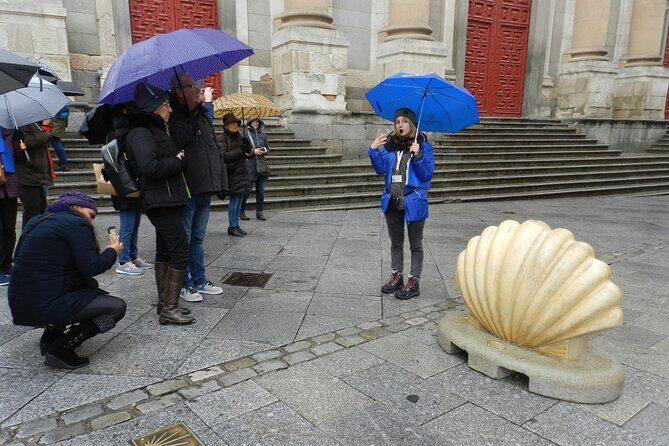
Next comes Ávila, the city famous for its remarkably intact medieval walls. The guide’s job here is especially important because the wall is huge, and it’s easy to feel like you’re standing in one giant viewpoint with no story.
You’ll learn how the fortifications work as defense and as civic identity. The highlights they describe include:
- more than 80 semi-circular crenelated towers
- 9 gates
- and the arched El Alcázar among the notable gates
When you arrive, you’ll also spend time in Plaza del Mercado Chico, the main square inside the walls. It’s rectangular, bordered by arcades on three sides, and opposite the church of San Juan Bautista. This is the kind of square that makes Ávila feel “contained,” like you stepped into a walled stage set.
Even if you only spend a short amount of time here, you’ll understand why the walls are the headline: everything revolves around that enclosed structure.
Las Murallas de Ávila: how to get real value from your wall time
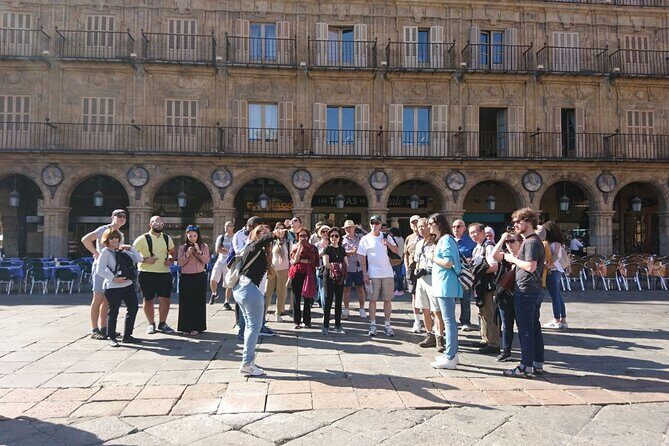
If you select the Medieval Wall option, you’ll get access tied to Las Murallas de Ávila and a chance to admire the fortifications and take photos of the surrounding views. The inclusion is 30 minutes with admission included.
Thirty minutes can sound short. But the wall is also massive, so the trick is focusing on where your time is most effective. Here’s what I recommend:
- Pick one direction and commit. Don’t try to cover “everything.” With limited time, you’ll just end up with scattered photos.
- Look for the structure rhythm: towers, crenellations, and gate areas. Even moving slowly, you’ll notice the repeating patterns that make the wall feel coherent.
- If you’re a photographer, plan for a quick “work session.” Choose a few frames rather than a constant stream.
Also, keep in mind that some visitors find the free time window more useful than a strict wall-walk plan, especially if they want to browse streets inside the walls afterward. If your goal is a longer stroll along the ramparts, build flexibility into your expectations—this is a “highlights visit,” not a full day on the wall circuit.
Transportation, timing, and comfort: early start, big distances, and bus reality
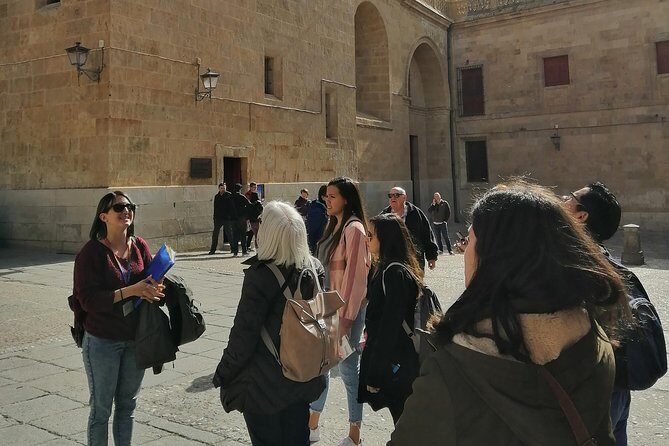
This is an 11-hour day trip in practice, not a light half-day. You’re driving from Madrid, and the day includes transportation to Salamanca and Ávila and back.
A few points that matter for comfort:
- The group size is capped at 30, which helps with coordination on meeting points and getting everyone on/off smoothly.
- There are typically breaks for bathroom and coffee/snack needs on the way (helpful on a long bus day).
- The bus ride is part of the experience, and comfort matters. Several people praised how smooth and safe the ride felt and noted the coach was comfortable.
If you’re prone to getting restless on long rides, bring what you need: a light layer, water, and something to occupy the time.
And yes, start early mentally. The day begins in the morning, so treat it like a day-long excursion, not a casual stroll you fit between lunch and dinner.
Price and value at $58.99: when this feels like a bargain
At $58.99 per person, this can feel like good value because you’re bundling several high-friction pieces:
- expert-guided walking time in two UNESCO cities
- transportation that solves the logistics problem (you don’t have to coordinate trains/buses and timing yourself)
- and optional, included admissions: Cathedral of Salamanca and Ávila’s Medieval Wall
I especially like that the admissions aren’t an afterthought. If you want cathedral time, it’s part of the plan. If you want the wall, the option includes admission so you’re not starting the day searching for tickets.
The value question comes down to what you need:
- If you want maximum structure and minimal planning, this price makes sense.
- If you hate packed schedules and want hours of independent time, you may decide it’s not worth it for your personal style.
Who should book this Salamanca and Ávila tour (and who should skip)
This fits best if you are:
- visiting Madrid and want a practical way to see two UNESCO cities in one day
- interested in medieval architecture and how it connects to universities, religion, and city defense
- comfortable with an early start and a full schedule
- okay with walking on cobbled/steep surfaces
It may not fit you if:
- you have mobility limitations (this tour is not recommended for reduced mobility)
- you need long, leisurely stops with minimal transit
- you strongly prefer purely self-guided time in a single city
One more practical point: the tour is offered in English, and many guides are used to handling mixed-language groups. If you’re sensitive to bilingual delivery, that’s something to keep in mind when judging pace.
Should you book this Avila and Salamanca tour?
Book it if you want a structured, efficient day with real highlights in two places that would take extra planning on your own. The Cathedral plus the fortified wall are the kind of pair that makes the early start feel worth it.
Skip or consider a more focused option (either Salamanca-only or Ávila-only) if you get annoyed by tight timing, want long free time to roam without a clock, or know you’ll struggle with walking on old-stone streets.
If you do book, do yourself a favor: wear good shoes, bring sun protection, carry water, and decide in advance what you care most about—cathedral details or wall views—so your limited free time feels satisfying.
FAQ
What time does the tour start?
The tour starts at 7:30am.
How long is the experience?
It runs for about 11 hours.
Is entry to the Salamanca Cathedral included?
Entrance to the Cathedral of Salamanca is included if you choose that option.
Is entry to the Ávila Medieval Wall included?
Entrance to Las Murallas de Ávila is included if you choose that option.
Does the tour include hotel pickup?
Hotel pickup and drop-off are included only with the private option. Otherwise, transportation starts from the meeting point and the activity ends back at the meeting point.
Is this tour suitable for reduced mobility?
No. It is not recommended for travelers with reduced mobility.
What should families with young kids know?
Children under 11 years old must sit on a baby car seat, and the company cannot provide it, so you’ll need to bring your own.