REVIEW · MADRID
Madrid: Guided Visit to the Royal Palace
Book on GetYourGuide →Operated by DE PASEO · Bookable on GetYourGuide
The Royal Palace is a real-life grand finale. This 1.5-hour guided visit takes you through the standout rooms of the Spanish monarchy’s former residence, including major works of art, marble interiors, and famous ceilings. I like that it mixes architecture with monarchy stories, and I really like the skip-the-line setup through a separate entrance. One thing to keep in mind: the palace has a lot of stairs and the meeting point is not at the main gates, so plan extra time to get everyone together.
What you’re buying here is focus. Instead of wandering 300-plus rooms on your own, you get a guided route that aims at the “how did they live like this?” moments: the staircase by Francesco Sabatini, the reception rooms tied to King Felipe, and the rooms that showcase Spain’s taste for ornate interiors. A possible drawback is that you’re not covering the whole palace—so if you love going slow and lingering in every corner, you may feel a bit rushed.
This is a smart choice for first-timers who want the big visual hits and clear context fast. It also helps if you’re traveling with limited time in Madrid, because the tour gives you a strong foundation for what to look for afterward on your own.
In This Review
- Key things to know before you go
- Royal Palace Madrid: what makes a guided tour worth it
- Meet at Plaza de Isabel II, not at the palace gates
- Skip-the-line entrance and what happens once you’re inside
- The route: from Sabatini’s staircase to the rooms that define the palace
- Francesco Sabatini’s staircase
- Reception room tied to King Felipe
- Private rooms of the queen and king
- Throne room ceilings by Tiepolo: the wow-factor most people remember
- Chapel frescoes (Corrado Giaquinto) and the porcelain room
- Royal chapel fresco
- Porcelain room
- Art, instruments, and tapestries: how the palace becomes a culture museum
- The guide makes the difference: small groups and real pacing
- Value check: $40 for 1.5 hours of “the best of” the palace
- Quick tips to make your Royal Palace visit feel smoother
- Should you book the Royal Palace guided visit?
- FAQ
- How long is the Madrid Royal Palace guided tour?
- What languages are available for the guided visit?
- Where do I meet the guide?
- Does this tour include skip-the-line entry?
- Is the Royal Palace tour wheelchair accessible?
- Are bags, food, or drinks allowed inside the Royal Palace?
Key things to know before you go

- Skip-the-line entry: you use a separate entrance so you spend less time stuck at the main queue
- Sabatini’s staircase: you get the wow-factor early, before the rooms start stacking up
- Royal rooms that match the story: reception spaces, private areas, and formal halls connected to the monarchy
- Art highlights in specific rooms: Corrado Giaquinto in the chapel and Giovanni Battista Tiepolo in the throne room
- Expect security + lockers: large bags go into the locker room near the hall, and food/drinks are not allowed inside
Royal Palace Madrid: what makes a guided tour worth it
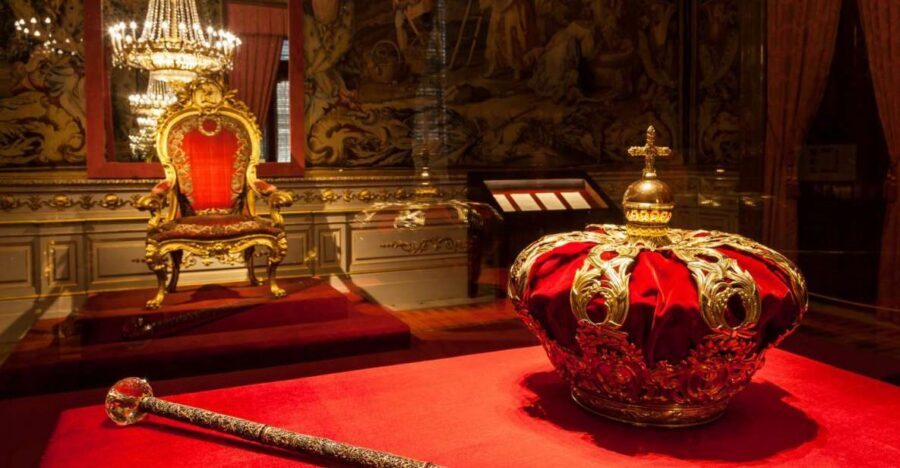
Madrid’s Royal Palace is one of Europe’s biggest, with 300-plus rooms, and that size can be a problem. Without a plan, it’s easy to feel like you’re just collecting hallways. With a guide, you get a clear path to the rooms that carry the most meaning—who used them, why they mattered, and what you’re looking at when the ceilings and details start flying by.
The strongest value here is the balance of “look at this” and “why it’s here.” You’re not only seeing marble, mahogany doors and windows, and frescoes by top artists—you’re also getting the monarchy context that makes the place click. That’s especially helpful in Spain, where palaces aren’t just pretty buildings; they’re political theater made of stone, wood, and painted ceiling.
The other big plus: this tour is designed to be doable in 1.5 hours. That’s not “see everything.” It’s “see what matters most,” which is exactly what many people need when Madrid is already packed.
You can also read our reviews of more guided tours in Madrid


Meet at Plaza de Isabel II, not at the palace gates
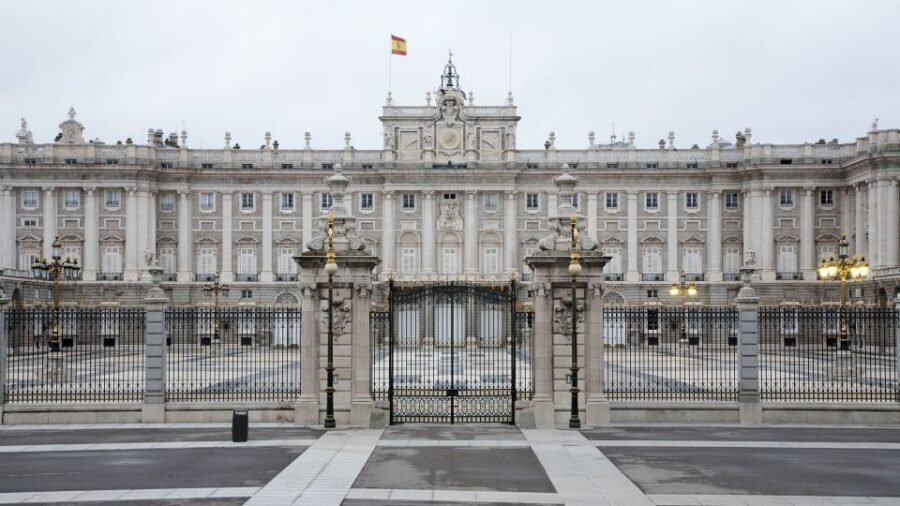
Before you even enter the palace, the success of your tour depends on the handoff.
You meet at Isabel II Square, Plaza de Isabel II, 5, 28013 Madrid, near the Isabel II statue. The guide will be carrying a white umbrella. Then your group walks together to a side entrance.
This is the part I’d treat with the seriousness of an appointment. Several people note that the meeting spot can be confusing because it’s not right at the palace entrance. My advice: arrive a few minutes early, scan the square, and keep an eye out for that white umbrella. If you’re the type who likes to snack before a museum, grab something nearby in the square first—just remember you won’t be able to bring food or drinks inside.
If you go during a very busy period, you may also see longer lines outside the palace complex. The tour’s setup reduces your time at the main entrance, but you can still feel the overall crowd level once you’re in the general area.
Skip-the-line entrance and what happens once you’re inside
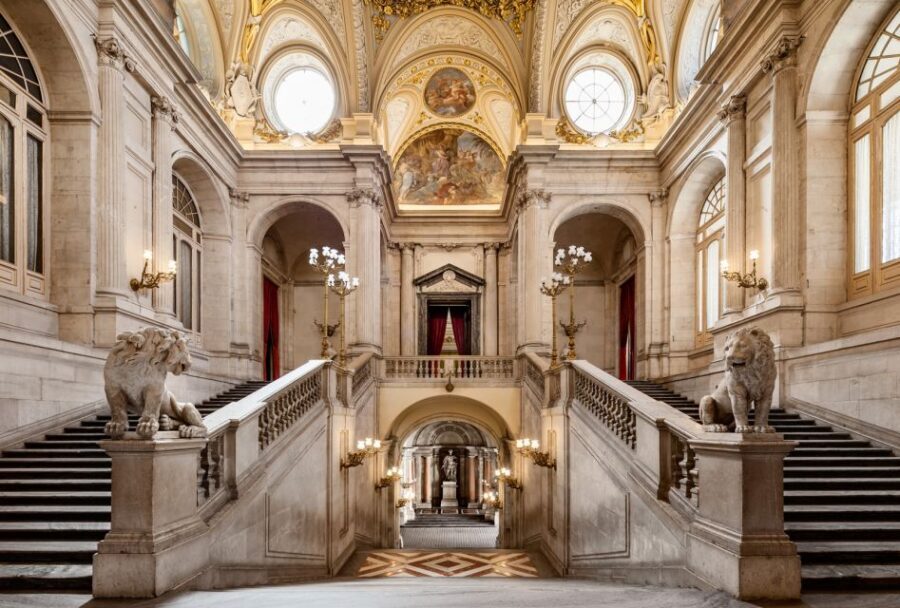
This Royal Palace Madrid guided tour includes entry to the palace and uses a separate entrance so you avoid the longest main queues. That alone can save a chunk of your day, especially if you’re visiting in peak season.
Once inside, you’ll do the usual museum reality checks: security and then storage for bigger items. Large items and bags must be left in the locker room adjacent to the hall. One practical tip I’d follow: bring a 1-euro coin for the lockers, since that’s what some visitors report needing and it’s refunded upon exit.
And yes, there’s a strict rule that food and drinks aren’t permitted inside. So plan your meal outside and treat the tour time like a focused viewing session, not a picnic.
If your group includes kids, strollers, or anyone with mobility challenges, keep expectations realistic. The palace is accessible in general terms for wheelchair users, but there are also a lot of stairs—so it can be tricky with a pram or trolley depending on the route you’re taken.
The route: from Sabatini’s staircase to the rooms that define the palace
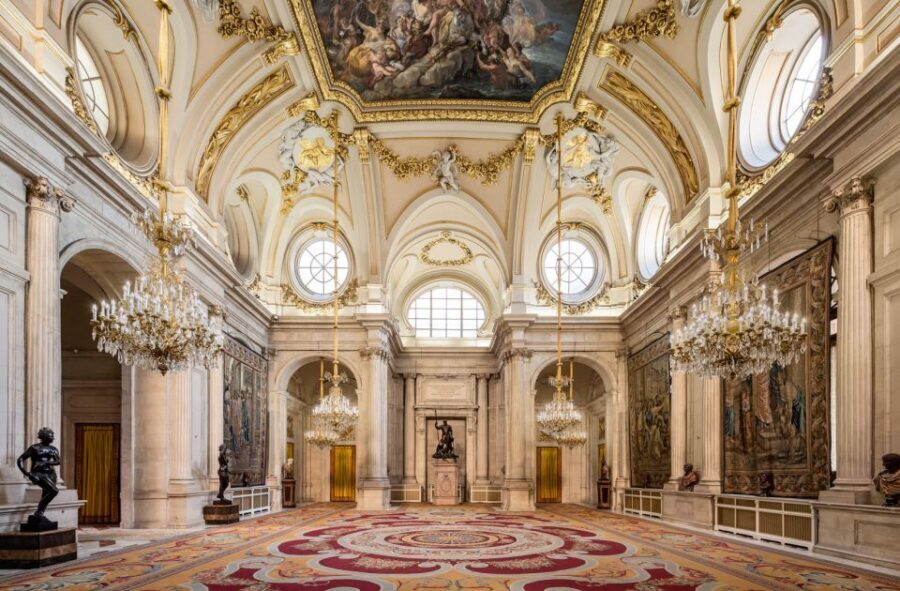
The tour is short enough that it has to be sharp, and the sequence matters. You start with the kind of visual moment that makes you stop walking and look up.
Francesco Sabatini’s staircase
You’ll climb the exceptional staircase designed by Francesco Sabatini. This is one of those palace scenes that turns the whole building into a stage. It’s also a good early stop because the lighting, scale, and materials help you understand why palaces like this were built to impress visitors as much as to house royalty.





Reception room tied to King Felipe
Next comes a reception space where international meetings are held with King Felipe as the host. Even if you don’t know Spanish monarchy dates, you’ll feel the purpose: this room is about ceremony and authority. It helps you see the palace as an institution, not just a collection of furniture.
Private rooms of the queen and king
Then you move into the more personal side of the official residence: the private rooms of the queen and king, followed by the great banqueting hall. This is where the palace stops feeling like pure theater and starts feeling like daily life, just with an absurd amount of detail.
One note: because the tour is only 1.5 hours, these stops are “key moments,” not slow meander time. The pacing depends on the guide and the crowd level that day, but it’s built for efficiency.
Throne room ceilings by Tiepolo: the wow-factor most people remember

If there’s one stop that sells the entire experience, it’s the throne room. You’ll see the gorgeous ceilings painted by Giovanni Battista Tiepolo. This is the moment where a guided tour pays off because the guide helps you read what you’re seeing—how the ceiling art ties into the idea of power, how the space is meant to frame the person in authority, and why the room is treated like the center of the palace’s public identity.
Even if you’re not an art-history person, this ceiling has a kind of gravitational pull. It’s hard not to look up and keep looking. And after a few minutes, the room stops being overwhelming and becomes specific: materials, proportions, and those painted details that feel designed to reward attention.
Chapel frescoes (Corrado Giaquinto) and the porcelain room
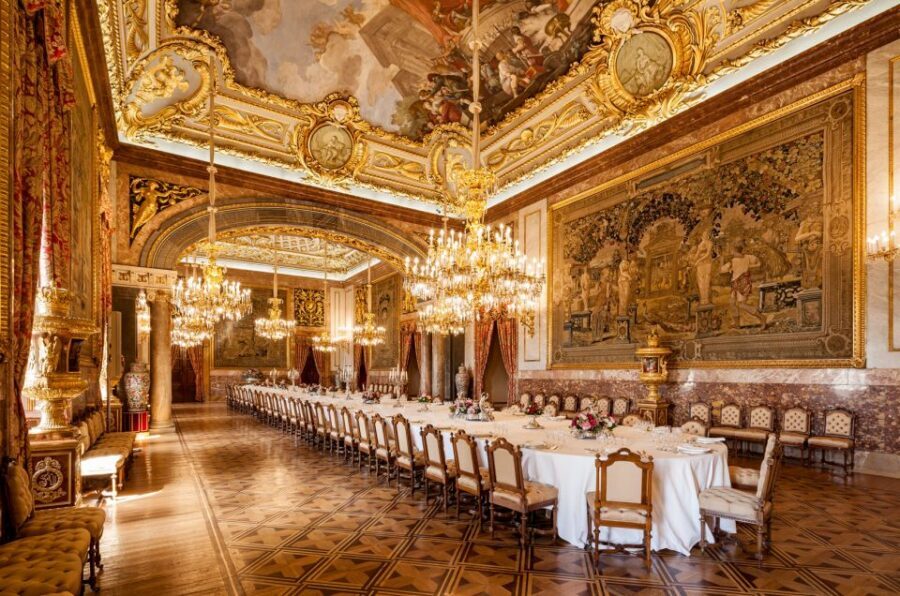
Two other highlights help break up the grandeur and add texture to the visit.
Royal chapel fresco
In the royal chapel, you’ll see an extraordinary fresco painted by Corrado Giaquinto. Chapel interiors often get skipped by people because they assume it’s only religious symbolism. In this case, the fresco gives you something visual and memorable without needing a deep background first. Your guide’s job is to connect the artwork to the palace’s role as a royal center, not just a religious space.
Porcelain room
You’ll also visit the porcelain room. The palace isn’t only about oil paintings and ceiling frescoes; it’s also about curated decorative objects and how they reinforce the monarchy’s status. Porcelain here isn’t just decoration—it signals wealth, collecting, and the kind of display that says this household traveled through time with taste.
If you’re the type who likes rooms with “stuff you can actually name,” these two spots are a win.
Art, instruments, and tapestries: how the palace becomes a culture museum

The palace visit includes more than architecture. You’ll see artworks and frescoes, and there’s mention of an exquisite range of tapestries plus a collection of stringed instruments.
This matters because it broadens the palace beyond monarchy propaganda. It turns the visit into something closer to a mini cultural museum: art, music, and decorative design all showing how power and culture were braided together.
Also, you’ll notice the contrast between heavy materials—marble, carved wood—and the softer visual layers like painted scenes and textile decoration. It keeps the tour from becoming one long look-up session.
The guide makes the difference: small groups and real pacing
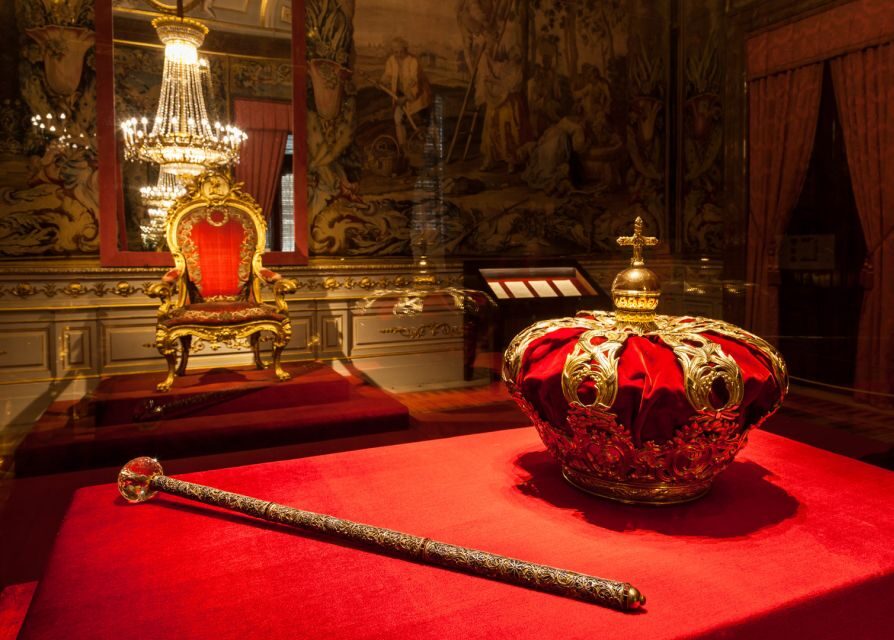
This kind of palace tour lives or dies on the guide.
The overall rating is solid, and a big pattern shows up: guides are friendly, patient, and able to explain what you’re seeing in a way that feels organized rather than like a lecture. Some tours run with small group sizes (for example, around eight people total), which tends to make the pacing more comfortable. When the group is small, you spend more time inside the moments and less time waiting for everyone to catch up.
Guide names that come up include Pacho and Tamar. While you can’t count on a specific guide every time, you can expect an expert bilingual guide experience, with English and Spanish available and the occasional bilingual delivery depending on the departure.
My advice: if you’re someone who enjoys details, arrive ready to listen. The best part of this tour isn’t just that the palace is grand—it’s that the guide helps you connect the room’s design to the monarchy’s role.
Value check: $40 for 1.5 hours of “the best of” the palace

At about $40 per person, the biggest question is: does a guided route justify the cost versus going on your own?
For me, it’s a yes—if you want the highlights without spending half a day lost in rooms. The tour includes the entrance, a bilingual guide, and skip-the-line entry. In a place this size, time is the real currency. A guided visit helps you spend your limited hours where your eyes will get the biggest payoff: staircase, reception spaces, throne room, chapel fresco, and major decorative rooms like porcelain.
It’s also good value when you’re traveling with mixed interests—someone who loves art will get ceiling frescoes and important rooms, while someone more into history will get monarchy context and how the spaces were used.
If your goal is to read every plaque and linger until your legs fall off, this might feel short. But that’s not a failure of the tour—it’s just a mismatch of expectations.
Quick tips to make your Royal Palace visit feel smoother
A few things can make this tour far less stressful:
- Get to Plaza de Isabel II early. The meeting point is not at the palace gates, so give yourself time to find the guide with the white umbrella.
- Plan for security and lockers. Leave large bags in the locker room adjacent to the hall, and bring a 1-euro coin if lockers require it.
- Wear shoes for steps. The palace route includes a lot of stairs; it can be tough with a pram or trolley even with general accessibility.
- If you have time, add one nearby stop. One smart add-on people suggest is checking out the armory building before you leave the area.
Should you book the Royal Palace guided visit?
Book it if you want a structured, high-impact palace experience in just 1.5 hours. This is a great fit for first-time visitors to Madrid, art-curious travelers, and anyone who prefers not to spend the day figuring out what matters most inside a sprawling palace.
Skip it only if you strongly prefer a do-it-yourself museum day where you control every pace, because this tour is intentionally selective. Also, if stairs are a serious issue for you, check the route details in advance even though the tour is marked wheelchair accessible.
If your schedule is flexible, it also helps that the tour offers free cancellation up to 24 hours in advance and a reserve now & pay later option—so you can keep Madrid decisions fluid.
FAQ
How long is the Madrid Royal Palace guided tour?
The tour lasts 1.5 hours.
What languages are available for the guided visit?
Tours are available in Spanish and English. In some exceptional cases, the tour may be bilingual.
Where do I meet the guide?
Meet at Isabel II Square near the Isabel II statue, Plaza de Isabel II, 5, 28013 Madrid. The guide will be carrying a white umbrella.
Does this tour include skip-the-line entry?
Yes. You’ll be able to skip the line through a separate entrance.
Is the Royal Palace tour wheelchair accessible?
Yes, the activity is listed as wheelchair accessible.
Are bags, food, or drinks allowed inside the Royal Palace?
Large items and bags must be left in the locker room adjacent to the hall. Food and drinks aren’t permitted inside.