REVIEW · MADRID
Madrid: Highlights of Madrid Walking Tour
Book on GetYourGuide →Operated by ExperienceFirst · Bookable on GetYourGuide
Madrid rewards you fast on this walk. You’ll start at Puerta del Sol, do a few satisfying photo-and-story stops, then end at the Temple of Debod—all with a local guide who tells the city like a good story.
I like two things a lot here. First, the little ritual in Puerta del Sol: you’re guided to touch the bear statue and see the famous strawberry tree moment. Second, the English storytelling quality—one guide named Nana got praise for excellent English and humor.
One thing to consider: it’s a 2-hour route, so not every major stop is a long sit-down visit. The Royal Palace is seen mostly through the sightseeing stops rather than a full, slow interior experience at every monument like Almudena Cathedral and the Temple of Debod.
In This Review
- Key highlights you’ll feel right away
- Puerta del Sol start: the quickest way to get oriented in Madrid
- Plaza Mayor and Plaza de la Villa: squares that explain how Madrid works
- Market of San Miguel: a short stop that won’t hijack your day
- Almudena Cathedral: where the guide’s storytelling meets a real landmark
- Royal Palace views and the Miguel de Cervantes moment
- Temple of Debod: the end stop that feels different from everything before
- Price and value: what $23 buys you in real sightseeing time
- How the 2-hour pace feels in practice
- Should you book this Madrid walking tour?
- FAQ
- How long is the Madrid walking tour?
- Where does the tour start?
- Where does the tour end?
- What language is the tour guide?
- Is the tour wheelchair accessible?
- What should I bring for the walk?
Key highlights you’ll feel right away
- Touch the bear at Puerta del Sol and hear why it matters to Madrid’s identity
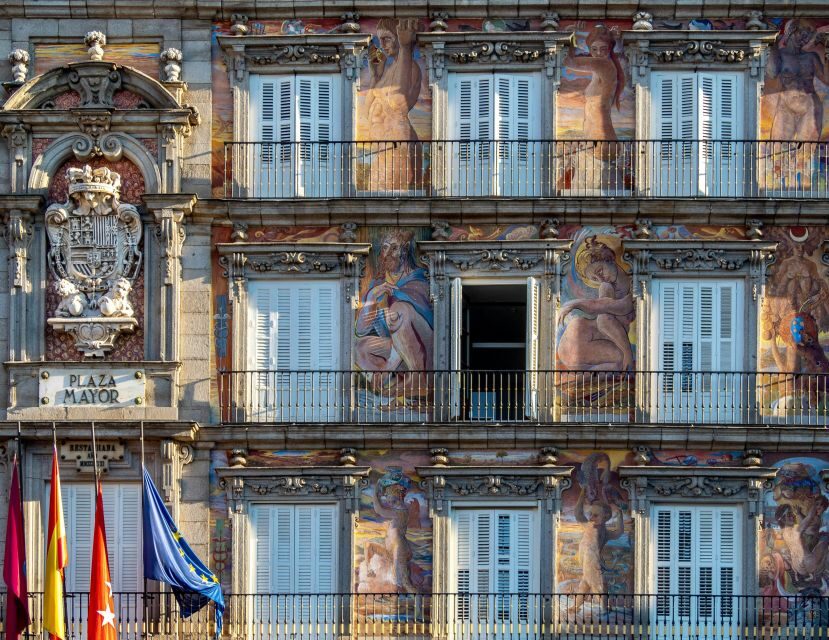
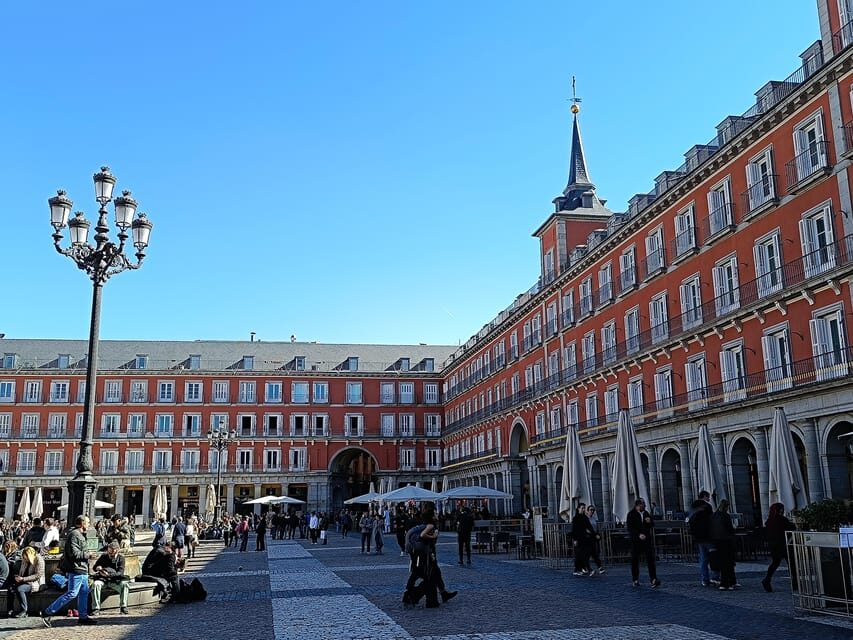
- Plaza Mayor at street level—you’ll get the feel of Old Madrid’s public life
- Plaza de la Villa storytelling tied to how the city grew and ruled itself
- An Egyptian temple in the Spanish capital: the Temple of Debod (gifted to Spain in 1968)
- A short, well-paced highlights loop designed to fit a 2-hour morning or afternoon
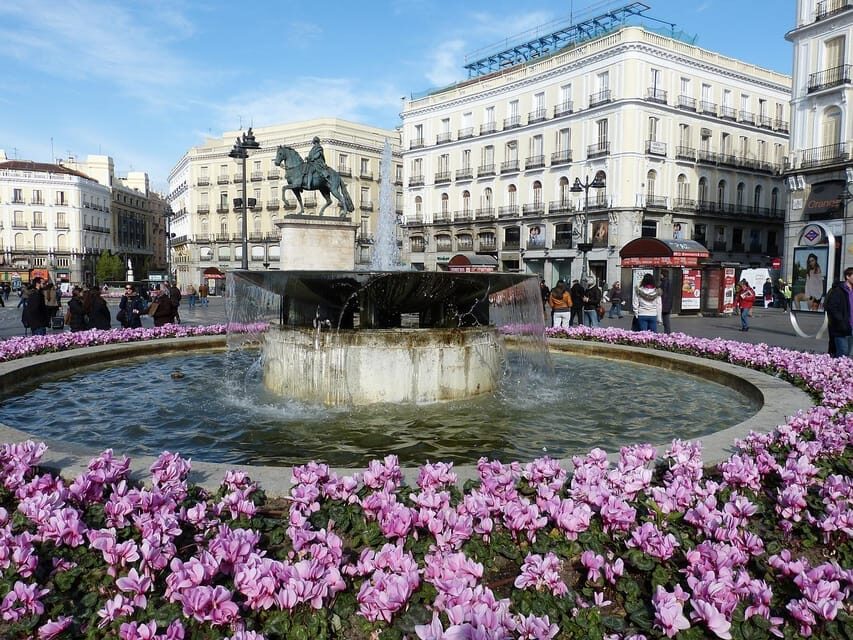
Puerta del Sol start: the quickest way to get oriented in Madrid
You meet your guide outside Heladería Palazzo in Puerta del Sol (Puerta del Sol 11). The guide holds an orange sign that says ExperienceFirst, so it’s simple to spot them and get going.
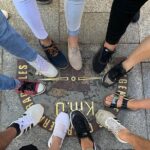
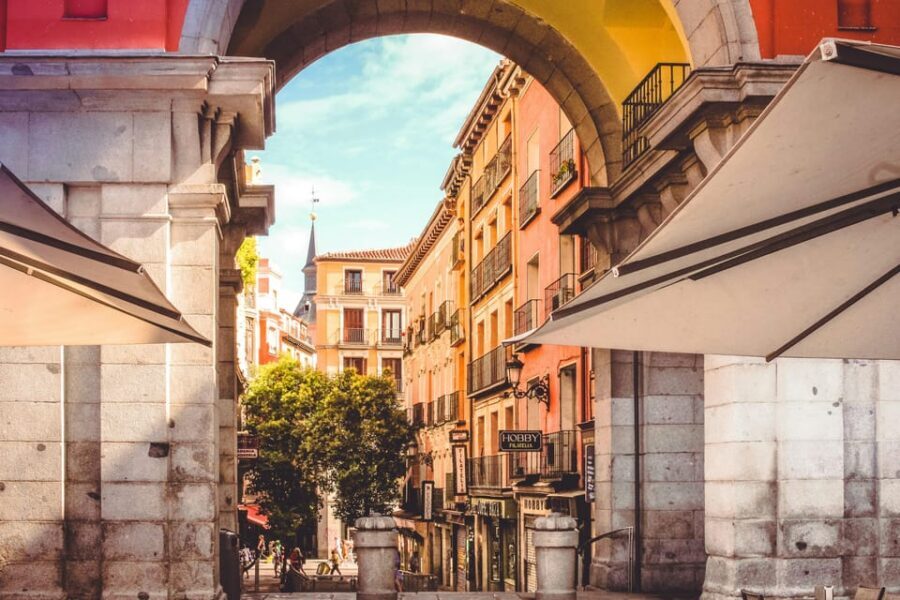
Puerta del Sol is where Madrid likes to funnel everyone into the same moment. This tour doesn’t treat it like a random plaza stop. You pause for a photo moment, then you get a guided look at two of the area’s most famous symbols: the Statue of the Bear and the Strawberry Tree. The important part isn’t the photo itself—it’s that someone explains what you’re looking at and why locals care. In just a couple minutes you start understanding how Madrid compresses identity into street-level details.
It also helps that you’re starting right at the heart of the city, which means you’ll spend your time seeing rather than figuring out where to go next. And since the tour is described as a leisurely pace, this is a good option if you want “walk and learn” without feeling like you’re racing from stop to stop.
Practical tip: bring your camera early, because Puerta del Sol is one of those places where a quick shot can turn into a useful reference later when you’re planning your next day on your own.
You can also read our reviews of more walking tours in Madrid
Plaza Mayor and Plaza de la Villa: squares that explain how Madrid works
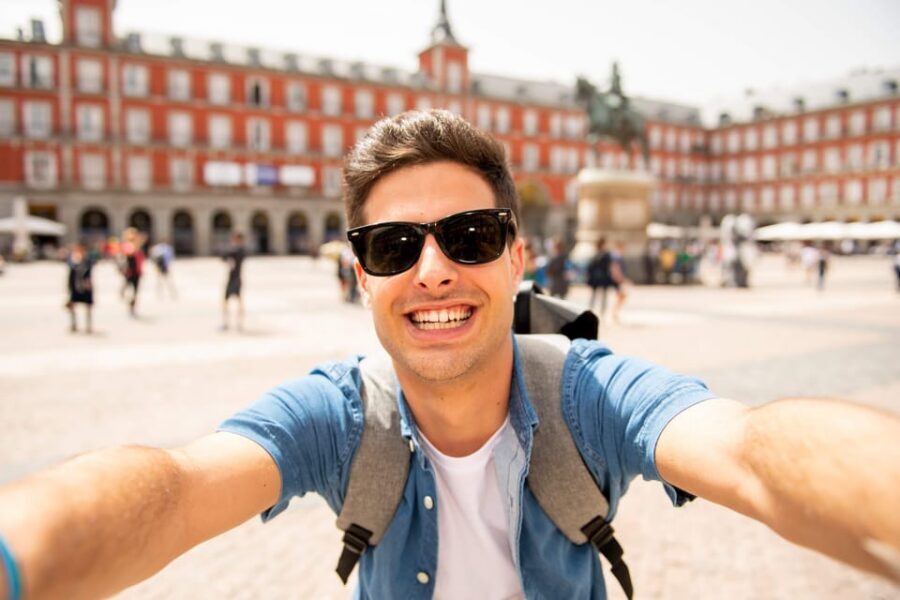
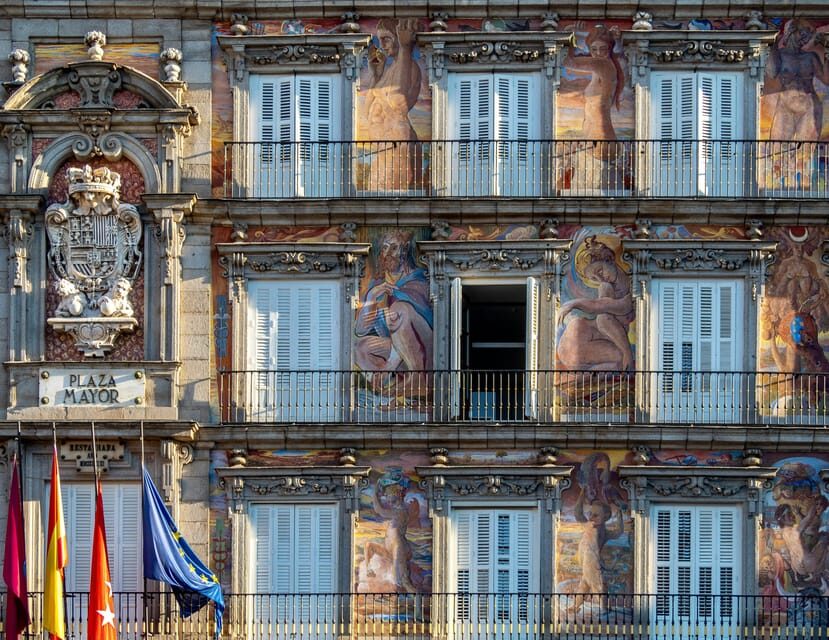
From Puerta del Sol, the walk heads into Old Madrid’s public spaces. First up is Plaza Mayor, where you’ll get a photo stop and guided tour. This is one of those squares where you can almost read the city’s rhythm just by standing there—people passing, conversations happening, and the buildings around you framing the “main character” feeling of central Madrid.
The tour also brings you to Plaza de la Villa. You’ll stop for a photo moment and get a guided explanation, even if your time there is brief. The value of a stop like this is that it gives context. When you understand why a place became important—how it functioned as an urban square—you stop seeing it as scenery and start seeing it as a stage where Madrid’s past kept unfolding.
This is where a good guide really matters. You’re not just being told dates. You’re being handed the city’s logic: what spaces mattered, who used them, and how the city’s identity shows up in the built environment.
One consideration: plazas like these can be busy. If you’re hoping for ultra-quiet photos, you’ll want to be patient. The good news is that this is a walking tour designed to move at a leisurely pace, so you can let the guide guide you into the better angles instead of fighting crowds alone.
Market of San Miguel: a short stop that won’t hijack your day
After the big open squares, the route moves to the Market of San Miguel for a guided stop and sightseeing time. Markets can go one of two ways on a walking tour: either they turn into a long food crawl, or they feel like a quick “look at the building” break.
Here, the role of the market feels practical. You get to see an iconic Madrid shopping-and-snacking space while keeping the timing intact for the rest of the route. That’s a big deal for a 2-hour tour. You’ll still want to taste on your own later if you want, but this gives you a sense of where to go next.
If you like markets for the atmosphere rather than for a full meal, this works well. If you were hoping for a long, structured tasting with lots of time inside, you might find the stop is too short for that. Still, as part of a highlights loop, it’s a smart way to add everyday Madrid flavor without breaking your schedule.
Quick tip: wear comfortable shoes. Even “short” market detours involve standing, shifting, and moving through tight spaces.
Almudena Cathedral: where the guide’s storytelling meets a real landmark
Next comes Almudena Cathedral. You’ll have a photo stop and then a guided visit. This is one of the places on the route where the tour gives you more than an exterior glance. A guided visit at a cathedral helps because religious architecture is easiest to understand when someone points out the story behind what you’re seeing—how the place reflects the city and its relationship to royal life.
Why this stop is valuable: it shifts you from squares and symbols into a landmark you can actually sit inside and experience. You get a change of pace—visually and emotionally—before the tour continues into the Royal Palace area.
A practical note: cathedrals and church interiors often mean you’ll want to dress accordingly (even if the tour description doesn’t specify dress rules). I’d still plan for shoulders and knees being covered enough to be comfortable.
Also, keep an eye on the time your guide spends at the visit. Since the tour is only 2 hours total, you’ll likely get the most important takeaways without lingering. If you want longer interior time, save that for another day.
Royal Palace views and the Miguel de Cervantes moment
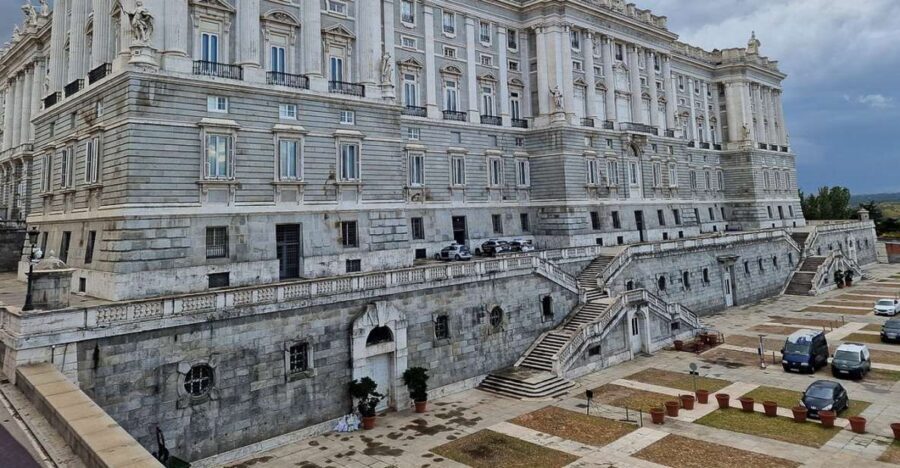
The route includes a Royal Palace of Madrid stop with a photo moment and guided sightseeing. The Royal Palace is often a “big wow” sight, and this tour treats it that way—by making sure it’s on your path and giving you the key context without eating the whole day.
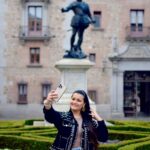
There’s also an explicit Spanish literature thread in the walking plan. You’ll visit the statue of Miguel de Cervantes, the writer behind Don Quixote. This is more than trivia. It’s a reminder that Madrid isn’t just about power and buildings—it’s also about ideas. When you see Cervantes in a public space, you start to understand why Spanish literature feels woven into everyday culture rather than stuck in classrooms.
Then you move onward toward Plaza de España for another photo stop and guided sightseeing moment. Plaza de España acts like a hinge on many Madrid itineraries. It helps you transition from the historic core toward the more “late-day” feel of the tour’s ending area.
Two-hour value check: the Royal Palace is massive and it draws big crowds, so doing it as part of a highlights walk is smart. You get the big visual payoff and context, but you’re not stuck doing a full palace day. If you want a deeper palace visit, you’ll still have the rest of your trip to decide.



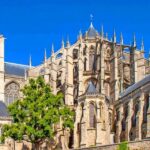

Temple of Debod: the end stop that feels different from everything before
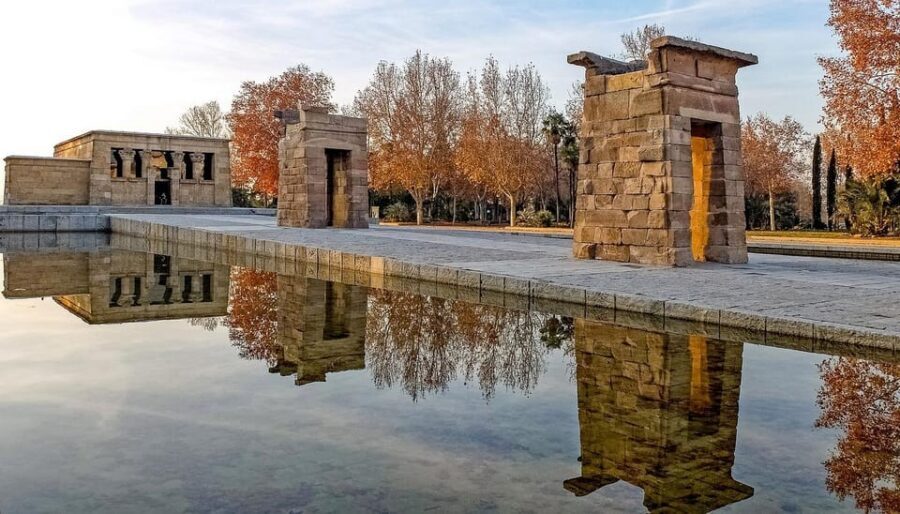
The final segment brings you to the Temple of Debod, with a photo stop, guided tour, and visit. This is arguably the most unique contrast point on the whole route.
Temple of Debod is described as an ancient Nubian temple gifted to Spain in 1968, dating back to 200 BC. That alone makes it stand out from the rest of the sightseeing. But what makes the stop especially compelling is that the city places this ancient structure in the middle of modern Madrid life. By the time you arrive, you’ve already seen Spanish royal power and major civic squares. Now you get a different kind of “Madrid story,” one that includes cross-cultural history and a much older timeline.
The tour ends at Temple of Debod, which is nice because you don’t finish with a long “go find your next transport” scramble. The end point is the destination itself. It also means you can linger if you want a few extra photos or quiet minutes after the main guided time.
If you’re the type who likes your final stop to feel memorable, this one does the job. It’s also a good choice for photography because the setting is different from the heavy stone density of the palace-and-cathedral zone you’ve just toured.
Practical tip: this is an outdoor-feeling stop. Bring your hat and sunglasses as the tour suggests, and keep your camera ready for that last moment when the whole route clicks.
Price and value: what $23 buys you in real sightseeing time
At $23 per person for about 2 hours, you’re paying for a guided route that hits multiple top sights without requiring you to figure out the order yourself. What you get is essentially a curated Madrid highlights sampler: Puerta del Sol, Plaza Mayor, Market of San Miguel, Plaza de la Villa, Almudena Cathedral, Royal Palace sightseeing, Plaza de España, and Temple of Debod.
The value depends on your goal. If you want a first-day or half-day overview with enough storytelling to help you later, this price makes sense. It’s not a budget walking tour in the sense of being vague. It’s more like: “Here’s the route, here’s the context, here’s the key symbols.”
If you already know Madrid well and you’re looking for deep time in just one site (for example, a long Royal Palace interior visit), then you might feel the tight timing. But if you’re trying to pack smart highlights without turning your trip into logistics stress, this route fits that need.
One more thought: because some stops are photo stops and some include actual visits, you’re paying for a mix of quick orientation plus a couple of real “enter and see” moments. That combo is usually what makes a short tour feel worth it.
How the 2-hour pace feels in practice
The tour runs at a leisurely pace, which matters more than it sounds. A 2-hour city walk can be either relaxed and helpful or stressful and tiring. Here, the leisurely pace suggests the guide is built to keep the group moving without sprinting you between monuments.
Still, keep expectations grounded:
- There are multiple photo moments, so you’ll be stopping often.
- Some sights are brief by design, since the route also includes a guided visit at Almudena Cathedral and a visit at Temple of Debod.
- You’ll likely get the core explanations rather than a long stop at each landmark.
Who will enjoy this most?
- First-timers who want the fast orientation of Puerta del Sol and the major landmarks.
- People who like guided storytelling and want the “why” behind symbols like the bear and strawberry tree.
- Visitors who want an efficient loop that ends at a standout final location.
If you hate walking (even a relaxed walk), you might want a different type of tour. But if you’re comfortable with a city stroll, this format is a solid way to spend a compact block of time.
Should you book this Madrid walking tour?
I’d book it if you want a high-impact Madrid highlights walk with an English-speaking local guide who includes clear stories, memorable symbols, and a truly distinctive ending at the Temple of Debod. The itinerary is built for momentum: you start in the center, see the famous squares, add a cathedral visit, get palace context, and finish at an ancient Nubian temple gifted to Spain.
I would skip it if your main goal is long, slow interior time at just one major attraction—especially the Royal Palace. This is a sampler route, not a deep-dive day. Also, if you’re sensitive to crowds in central plazas, plan your photos with patience.
FAQ
How long is the Madrid walking tour?
It lasts about 2 hours.
Where does the tour start?
You meet your guide outside Heladería Palazzo in Puerta del Sol at Puerta del Sol 11, and your guide holds an orange sign saying ExperienceFirst.
Where does the tour end?
The tour ends at the Temple of Debod.
What language is the tour guide?
The tour is led in English.
Is the tour wheelchair accessible?
Yes, the tour is wheelchair accessible.
What should I bring for the walk?
Bring sunglasses, a hat, a camera, and comfortable clothes.