REVIEW · MADRID
Madrid: Street Art Bike Tour
Book on GetYourGuide →Operated by Cooltourspain · Bookable on GetYourGuide
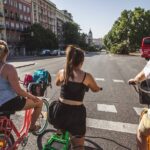
Madrid’s street art rolls by on two wheels. Led by a local graffiti artist, you’ll trace national and international festival pieces, from a tag preserved since 1989 to a stop for Boa Mistura, plus you’ll see the biggest mural in the city center. I love the neighborhood swing through Malasaña and Lavapiés on a bike, and I also like how the guide explains street-art techniques, not just the art itself. One possible drawback: the ride happens in real city traffic, and there’s one uphill, so it helps to feel comfortable on a bike.
What makes this tour especially fun is the mix of big-name festival work and the less-famous corners where Madrid’s urban culture actually lives. You’ll learn why Madrid graffiti has such a strong identity, then you’ll pedal through streets where the artwork is part of daily life, not a museum display.
In This Review
- Key Things I’d Set Your Expectations For
- Why This Bike Street Art Tour Is a Smart Way to See Madrid
- Where You Start: Gran Vía/Sol Convenience at Carrefour Express
- Before You Ride: Bike Safety, Helmets, and a Quick Real-World Briefing
- Muelle and the 1989 Tag: Understanding Why Madrid Graffiti Has Roots
- Alonso Martínez and Boa Mistura: Festival-Scale Work With a Local Link
- Malasaña by Bike: Pinta Malasaña Energy Near Plaza Dos de Mayo
- Lavapiés and Noviciado: Solar Antonio Grilo and Esto es una Plaza
- The Biggest Mural and the Center District “Stop and Look” Moments
- Traffic, Hills, and How the Guide Helps You Keep Up
- Price and Value: What $46 Buys You (and What It Doesn’t)
- Who This Tour Fits Best (And Who Might Want a Different Day Plan)
- Should You Book This Street Art Bike Tour?
- FAQ
- How long is the Madrid Street Art Bike Tour?
- Where do I meet the tour?
- What’s included in the price?
- Are helmets and locks provided?
- Is there a restroom break during the tour?
- What language is the guide available in?
- Is a beverage included?
- Is the tour hilly?
- What should I bring?
- Is there free cancellation?
Key Things I’d Set Your Expectations For
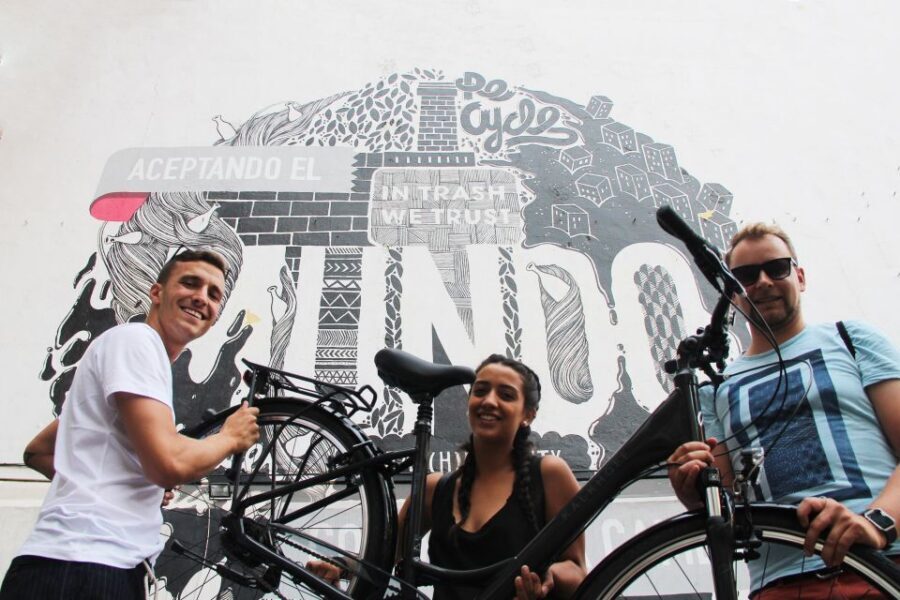
- Local graffiti artist guidance that focuses on how street art is made, not only what it looks like
- An 1989 preserved tag tied to Madrid’s graffiti pioneer story (Muelle)
- Bike route through Malasaña and Lavapiés for hip, lived-in neighborhood energy
- Alonso Martínez stop for Boa Mistura with a photo moment tied to the crew’s early piece
- Community street-art gardens at Solar Antonio Grilo and Esto es una Plaza
- One uphill, medium effort plus a guide who can adjust pacing for less confident riders
Why This Bike Street Art Tour Is a Smart Way to See Madrid
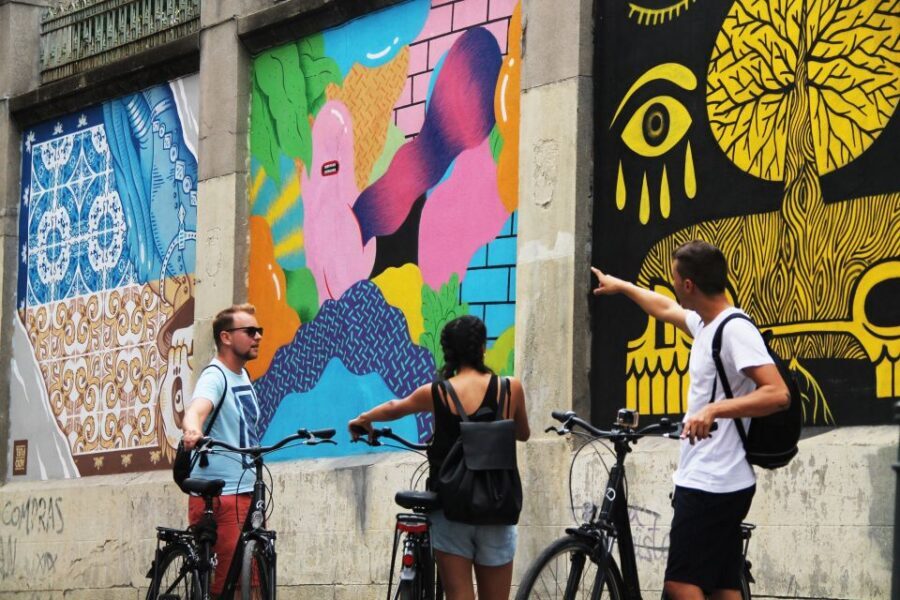
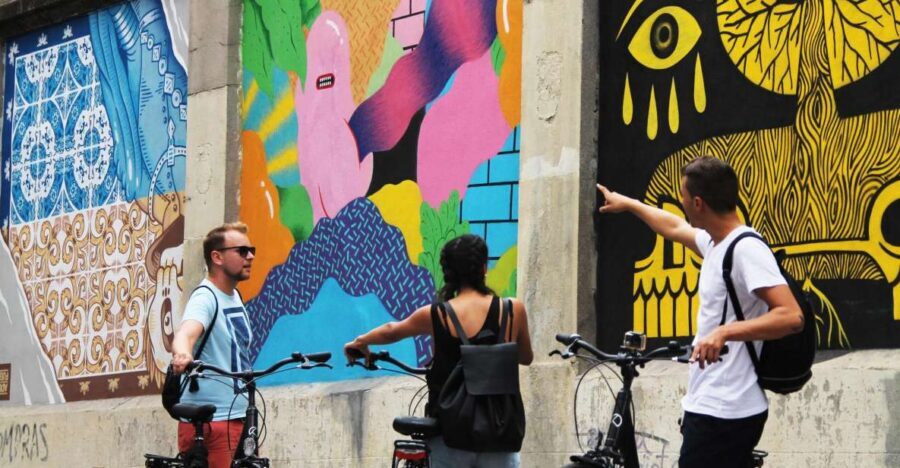
Madrid street art is easiest to understand when you see it in context: walls, metal shutters, shutters, playground-like corners, and streets with traffic flow. This tour is built around that idea. You’re not just walking past murals; you’re moving through the city as artists designed it to be seen. That bike pace also means you can cover two of the most artistically loud neighborhoods without spending your day on public transport.
I also like that it’s guided by a local graffiti artist. You get technique talk—how artists plan a piece, how tags relate to styles, and why certain materials show up on different surfaces around town. You leave with a mental map of Madrid street art history, not just photos.
And for value: $46 for a 2.5-hour guided bike tour is often the sweet spot in cities where you’d otherwise pay separately for a bike and a neighborhood guide.
You can also read our reviews of more cycling tours in Madrid


Where You Start: Gran Vía/Sol Convenience at Carrefour Express
You’ll meet at the entrance of a small Carrefour Express on C/Montera 32. The nearest metro stations are Gran Vía and Sol, so it’s easy to drop in before or after sightseeing.
This start point matters more than you might think. You begin close to major transit lines, which makes it simpler to weave the tour into a normal Madrid day. You won’t have to budget time for a long commute just to get to the art.
When you arrive, the bike setup and safety briefing happen before you roll out. That’s important because Madrid bike routes can feel straightforward until you hit the real street rhythm.
Before You Ride: Bike Safety, Helmets, and a Quick Real-World Briefing
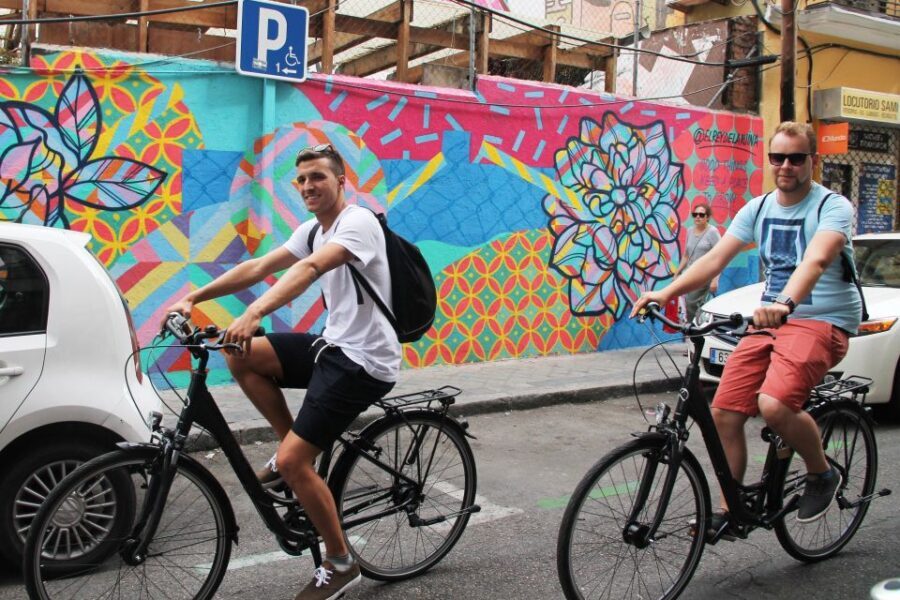
Bike rentals are included, along with a helmet and lock. That removes a common hassle: you don’t need to find a shop, pay extra, or wonder if the bike will fit you.
Expect the guide to explain safety basics before moving into the street-art route. This is where the tour earns trust. City biking isn’t only about balance; it’s about timing, lane awareness, and predicting how cars react in dense areas.
Also, plan on comfy shoes. The tour is bike-first, but you’ll still spend time looking closely at walls and details, including murals and tags up close.
Muelle and the 1989 Tag: Understanding Why Madrid Graffiti Has Roots
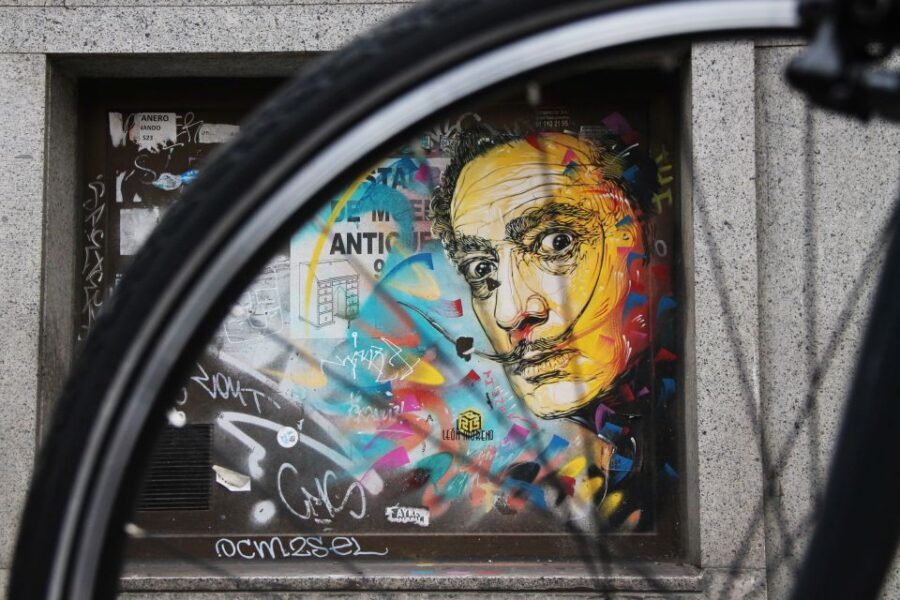
The tour’s street-art story doesn’t start with neon murals. It starts with the older layer of graffiti identity in Madrid. You’ll hear about Muelle, described as a pioneer of the graffiti movement in the city. You’ll even observe a tag preserved from 1989.
That stop is more than a curiosity. It explains something key: street art wasn’t built for gallery walls. It grew from youth culture and visual urgency, and it stuck around long enough to become part of the city’s visual memory. Seeing a preserved tag helps you connect the past to what you’ll see later in modern festival pieces.
You’ll also learn about the techniques graffiti artists use while decorating city surfaces—walls, and also the metal shutters and other features you spot around neighborhoods. That matters because Madrid street art often looks different depending on what surface it’s on. A tag that looks sharp on a shutter can read completely different on a wall.
Alonso Martínez and Boa Mistura: Festival-Scale Work With a Local Link
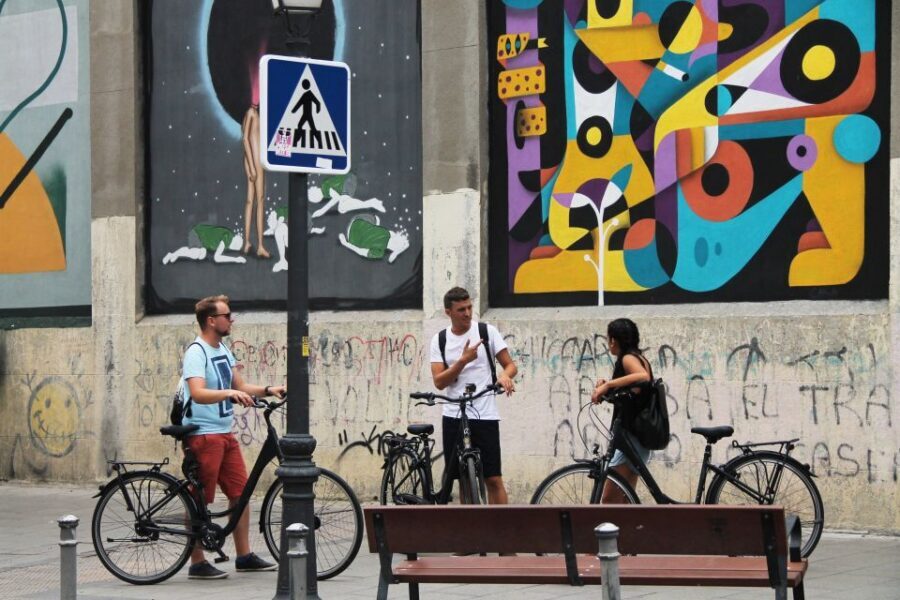
Once the safety briefing is done, you head toward Alonso Martínez. This is where you’ll photograph a first piece created by Boa Mistura.
Boa Mistura’s role on the tour is a reminder that graffiti doesn’t stay inside one style or one street. The crew is described as born and raised in the outskirts of Madrid, and they’ve taken on street art projects around the world. On this tour, they’re not treated like a distant celebrity name. They’re positioned as part of Madrid’s evolving street art identity.
This stop is a good one for two reasons:
- It gives you a recognizable reference point as you move into festival-heavy areas later.
- It helps you see how artists scale up from small street interventions to major public-facing work.
You can also read our reviews of more tours and experiences in Madrid
Malasaña by Bike: Pinta Malasaña Energy Near Plaza Dos de Mayo
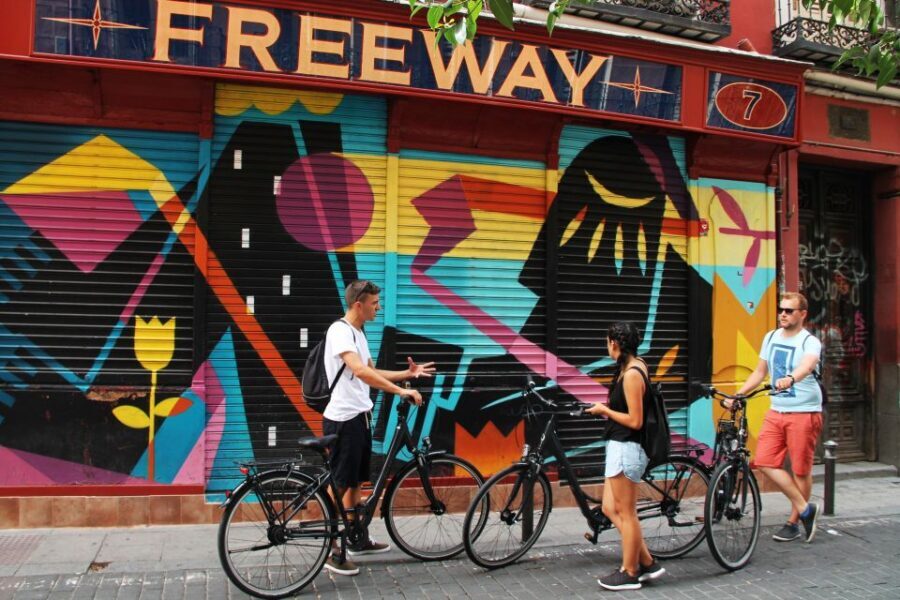
Malasaña is one of those neighborhoods where you expect creative chaos, and the tour delivers it—but with meaning. As you pedal in, you cross artwork by national artists who participated in the 2017 edition of Pinta Malasaña, a street art festival that colors the area in April.
Plaza Dos de Mayo is the center point. This is where you’ll find a colorful display called Bolardo Voy, Bolardo vengo, featuring traffic elements that turn street infrastructure into street-art canvas.
This is one of the tour’s best “wait, stop here” moments. Street art often gets treated as only walls and murals. But traffic elements show you the broader idea: artists claim space everywhere, not only on the obvious spots.
You’ll also get a rhythm in this section—stop, look, learn the technique or context, then move on. That’s a big advantage versus a walking-only approach, especially if you’re mixing street art with a full day of Madrid sightseeing.
Lavapiés and Noviciado: Solar Antonio Grilo and Esto es una Plaza
The tour’s Lavapiés and Noviciado area focus is where it feels most community-driven.
You’ll have time to visit Solar Antonio Grilo and also Esto es una Plaza by bike. These places are described as local hubs created for and by the community of Lavapiés and Noviciado, and they’re presented as urban gardens full of street art. The tour notes that these spaces were once abandoned places, now turned into examples of hybrid economy systems.
Even if you don’t care about economic models, this part changes how you read the art. It reframes street art from “decoration” to “creative use of shared space.” You start to see why certain walls get painted, why certain spaces invite gatherings, and why artists collaborate more often when a place is community-supported.
As you move through these areas, the guide will also point out interventions by street artists such as El Rey de la Ruina, Cassassola, Ze Carrión, Por Favor, and many more. The names act like signposts. They help you track how styles and voices show up across different neighborhoods.
The Biggest Mural and the Center District “Stop and Look” Moments
At some point in the ride, you’ll see the biggest mural in Madrid’s center district. This is your visual payoff.
A big mural can become just a photo-stop if you don’t have context. That’s why this tour’s earlier technique and history talk matters. By the time you reach the larger wall, you’ll be able to notice choices—scale, placement, how the piece reads from a distance versus up close.
These pauses also help you catch details you’d otherwise miss while watching your bike path.
Traffic, Hills, and How the Guide Helps You Keep Up
This is a medium-level ride with just one uphill. That sounds manageable on paper, but the real factor is Madrid street traffic. You’ll be biking through a living city, not a closed route.
One practical way to think about it: if your comfort level is low, the tour still can work, but you should expect the guide to help manage the pace. The ride is designed to be guided and responsive, so the best result comes from speaking up early if you need a slower tempo or extra care on busier stretches.
If you’re bringing kids, it helps to have them comfortable riding their own bike in city surroundings. You’ll spend time stopping and looking, so a child who can steer steadily and handle stop-and-go moments will enjoy it more.
Price and Value: What $46 Buys You (and What It Doesn’t)
At $46 per person for about 2.5 hours, this tour is priced like a thoughtful “do it once” experience rather than a budget-only add-on. You get a lot bundled in:
- Bike rental
- Helmet and lock
- Madrid city map
- English or Spanish live guide
- Restroom break
What you don’t get: beverages. Since there’s no drink included, I’d bring water with you. Street art tours are more fun when you’re not stuck searching for a shop mid-ride.
Also, you’re paying for local context. The guide isn’t just pointing at murals; they’re explaining the history of graffiti in Madrid, the techniques artists use, and how festival pieces connect to the city’s long-running street culture.
For me, that’s the value equation: you’re buying city access plus interpretation. If you’re the type who likes to understand why something exists, not just what it looks like, this price makes sense.
Who This Tour Fits Best (And Who Might Want a Different Day Plan)
You’ll love this tour if you:
- Like street art with context and technique, not only photos
- Want to cover Malasaña and Lavapiés efficiently
- Enjoy learning from a guide who’s part of the local creative world
- Prefer a guided bike route over piecing together stops alone
You might want to plan differently if:
- You hate biking in traffic or you’re not confident on city streets
- Your schedule is very tight and you can’t spare about half a day
- You want a purely walking experience (this is bike-first)
Should You Book This Street Art Bike Tour?
Yes, if you want Madrid street art that makes sense in the real city. The guide-led approach, the neighborhood selection (Malasaña and Lavapiés), and the blend of major festival pieces with older roots like the preserved 1989 tag create a tour that feels more like understanding than sightseeing.
Book it especially if you like getting the story behind the walls. This is exactly the kind of tour that turns a typical day of looking around into a day of learning how Madrid’s street art actually grew.
FAQ
How long is the Madrid Street Art Bike Tour?
The tour duration is listed as 2.5 hours, and it’s also described as a 3-hour medium level activity.
Where do I meet the tour?
Meet at the entrance of a small Carrefour Express on C/Montera 32. The nearest metro stations are Gran Vía and Sol.
What’s included in the price?
The price includes bike rental, helmet and lock, a Madrid city map, an English or Spanish live guide, and a restroom break.
Are helmets and locks provided?
Yes. Helmet and lock are included.
Is there a restroom break during the tour?
Yes, a restroom break is included.
What language is the guide available in?
The live guide is available in English or Spanish.
Is a beverage included?
No. Beverages are not included.
Is the tour hilly?
It’s described as a medium level ride with just one uphill.
What should I bring?
Bring a passport or ID card and wear comfortable shoes.
Is there free cancellation?
Yes. You can cancel up to 24 hours in advance for a full refund.