REVIEW · MADRID
Madrid: Welcome to Madrid Guided Walking Tour in English
Book on GetYourGuide →Operated by Walkative Tours · Bookable on GetYourGuide
Madrid history is best when you walk it.
This 2.5-hour English walking tour strings together Madrid’s biggest turning points, from its Arabic beginnings (Mayrit = abundant water) to the city’s political rise under the Habsburgs and later the Bourbons. You’ll move by major landmarks and learn how the city’s layout keeps telling the same story over and over. It’s a neat way to get your bearings fast, especially if this is your first time in Madrid.
Two things I really like: you cover both the grand showpieces and the civic backbone of the city. Expect time at Gran Vía for the 19th-century modernization story, plus stops in the older center where Plaza de la Villa and Plaza Mayor show centuries of architecture and public life. One thing to consider: this is a walking tour, so if you’re slow on your feet, you’ll want a guide who paces with the group. Many guides do, but the route still moves.
Across many recent groups, guides stand out for energy and clarity. Names that come up again and again include Sebastián, Adam, Daniel, Dina, Joaquín, and Esmeralda, with comments about humor, good English, and a steady rhythm of facts and stories. One guest even noted a guide checked in constantly because they were older and slower, which is exactly the kind of flexibility you want on a longer city walk.
In This Review
- Key moments you’ll remember from this Madrid walking route
- Opera Metro to Teatro Real: the meetup that actually makes sense
- How Mayrit, Habsburgs, and Bourbons show up in real streets
- Royal Palace area and Almudena Cathedral: power and style in one stretch
- Plaza de la Villa: three centuries of architecture in one square
- Plaza Mayor’s big stories: from Inquisition trials to royal celebrations
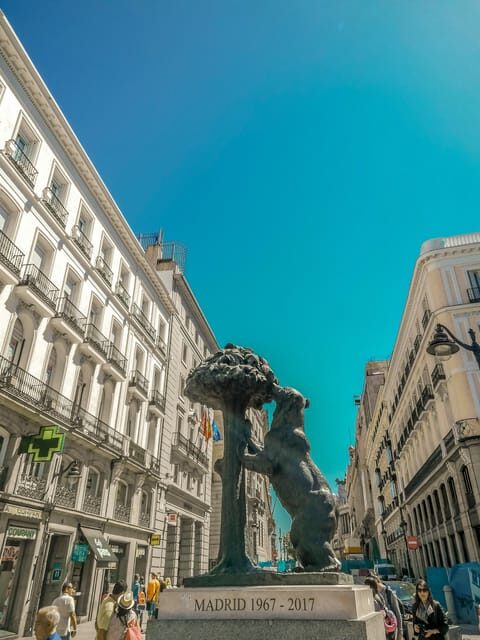
- Puerta del Sol: the city’s center, with context you can use
- Royal Academy of Fine Arts and Goya: art education you can picture
- Gran Vía and 19th-century modernization: why this boulevard looks the way it does
- Prado Museum stop: a landmark link for your next day
- Congress of Deputies: finishing with democracy in plain sight
- Price and value: what $31 buys you in real Madrid time
- Who should book this walking tour (and who might not)
- Should you book this Madrid guided walk?
- FAQ
- What is the meeting point for the Madrid walking tour?
- How long is the tour?
- What’s included in the price?
- Is there hotel pickup or drop-off?
- What language is the tour in?
- Can I pay later?
- Is free cancellation available?
- Is this a private tour?
Key moments you’ll remember from this Madrid walking route
- Opera Metro + Teatro Real starting point: easy to find, with a yellow umbrella to spot your group.
- Mayrit to monarchy: you connect Islamic foundations to Catholic dynasties in a way that feels logical.
- Three centuries in Plaza de la Villa: you’ll see how styles stack up around a working historical square.
- Plaza Mayor’s big events: from religious trials to royal celebrations, the square isn’t just pretty.
- Gran Vía’s modernization: you’ll understand why this famous boulevard looks the way it does.
- Congress of Deputies as an ending scene: you finish with Spain’s democratic institutions in focus.
Opera Metro to Teatro Real: the meetup that actually makes sense
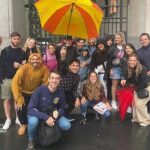
The tour meets at Opera Metro station, right outside the Teatro Real. The simplest tip is the best one: look for the yellow umbrella. It’s the kind of meeting point that reduces stress. You’re already in a central area with plenty of foot traffic, so if you’re even slightly early, you can orient yourself without feeling rushed.
This start matters because the walk doesn’t begin in a museum-like setting. It begins in the real Madrid rhythm: streets, commuters, and a busy theater district. That sets the tone for the whole tour. You’re not just learning dates; you’re learning how power, culture, and everyday life sit next to each other.
Also, there’s no hotel pickup or drop-off. That’s normal for city walking tours, but it’s worth planning your day around. Build in a little time to get yourself to Opera, and then you can spend the full 2.5 hours on the route instead of playing transit roulette.
You can also read our reviews of more walking tours in Madrid
How Mayrit, Habsburgs, and Bourbons show up in real streets
What makes this tour stand out is the storyline it follows. Madrid starts as Mayrit, an Arabic place name meaning abundant water. Even if you don’t think about the Moors day-to-day, the city’s early foundation shows up in the way the center formed and how later rulers shaped it.
From there, you’re guided into the “two Catholic dynasties” theme. The tour links Madrid’s growth with the Habsburgs, when it becomes a major political hub for an empire. Then the narrative continues with the Bourbons, especially Charles III, who modernized Madrid and pushed it toward becoming the European-style metropolis it wants to be.
The practical benefit for you: when you stand in a plaza or walk past a grand building, you’ll understand what you’re looking at. You won’t just memorize a façade; you’ll connect it to why the city expanded, where authority wanted to be visible, and how architecture helped sell the message.
Royal Palace area and Almudena Cathedral: power and style in one stretch
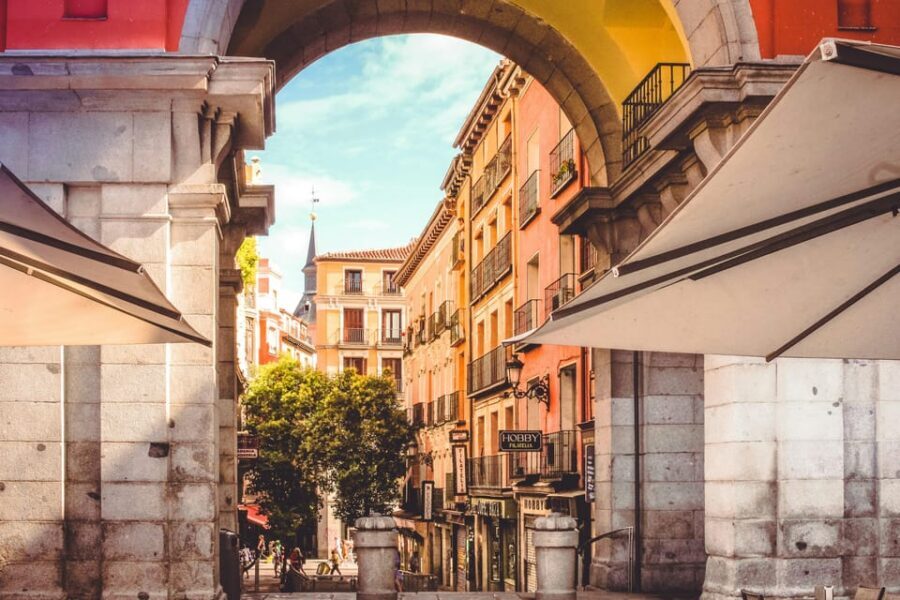
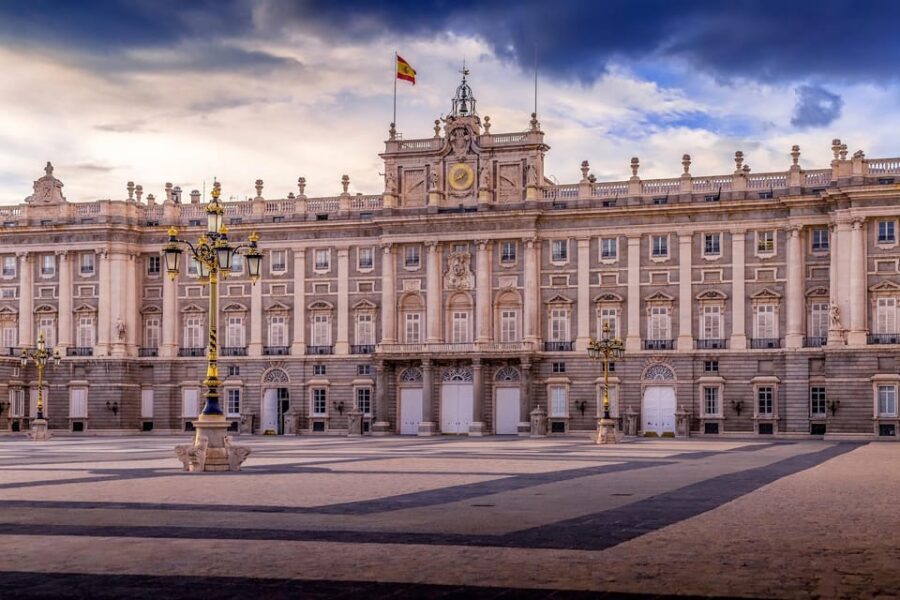
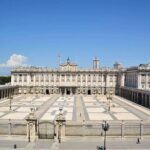
You begin near the Royal Palace, a good anchor for the “regal past” theme. Even from the outside, it’s a reminder that Madrid was shaped to project monarchy—big scale, clear hierarchy, and public visibility.
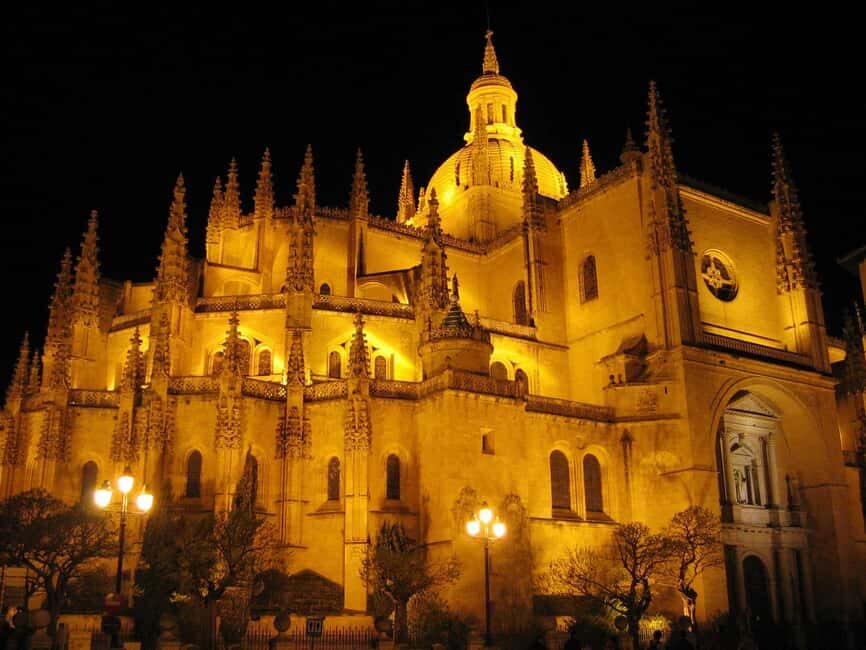
Next is Almudena Cathedral. This stop is especially useful because the guide explains it as a mix of styles rather than one tidy design era. The cathedral is described as having varied neo-styles, and that matters. It helps you see Madrid as a city that doesn’t update in one clean wave. It updates in layers.
If you’re the type who likes to connect dots, this part is a good warm-up. You’ll be primed to notice contrasts later at Plaza de la Villa and Plaza Mayor, where the city becomes even more obviously multi-era.
A small “how to enjoy it” note: if you want photos, keep your camera ready but don’t wait for the perfect pose. A guide-driven walking tour moves for a reason, and you’ll get the most out of it by stepping in quickly, listening, and then shooting right after the key explanation.
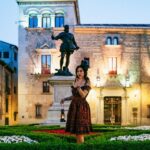
Plaza de la Villa: three centuries of architecture in one square
Plaza de la Villa is the kind of stop that rewards attention. You’re told to look for architectural styles spanning three centuries, which is a big deal because it turns a normal square into a timeline you can walk around.
This is also where the tour’s “history through place” approach clicks. Instead of listing rulers, the guide helps you see how the city’s public spaces evolved. Plaza de la Villa feels like the older Madrid center you picture when you think of Europe’s long urban development—less about one big monument, more about how everyday civic life shaped the look of the city.
Practical note: if you’re the group type who likes questions, this is often a good spot to ask. The setting supports it. There’s enough open space for the group to pause without turning the tour into a bottleneck.
Plaza Mayor’s big stories: from Inquisition trials to royal celebrations
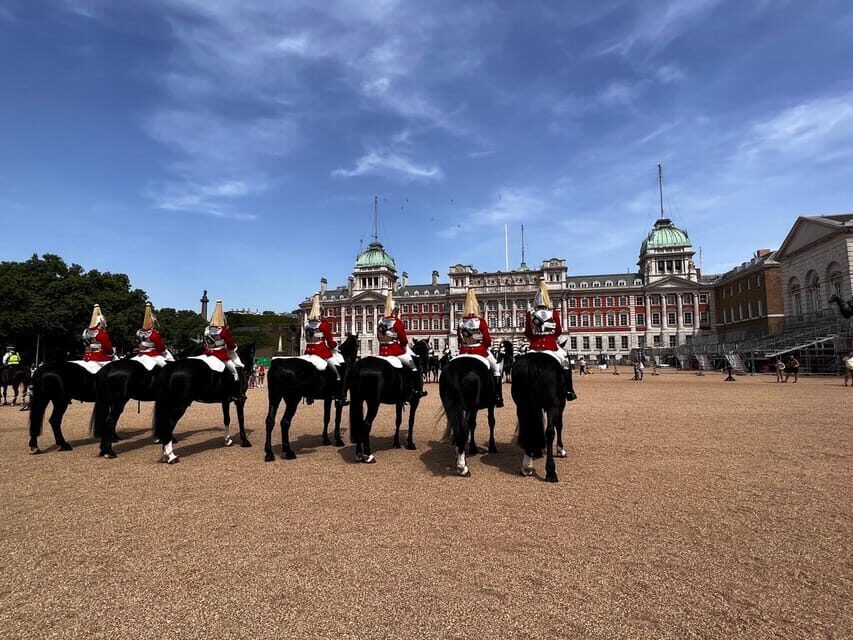
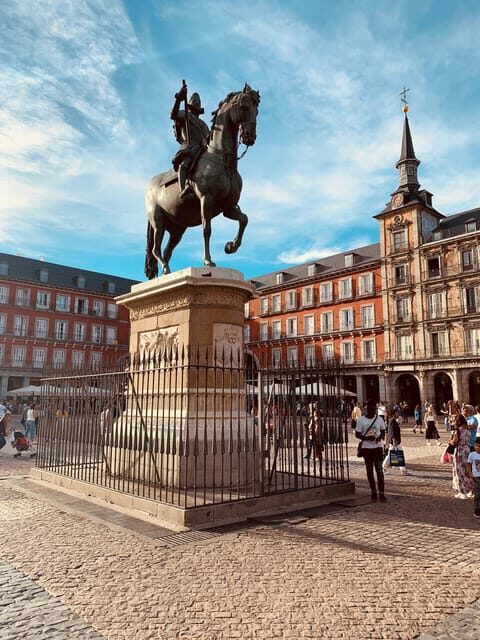
Then you reach Plaza Mayor, one of Madrid’s most famous squares. What makes it more than a photo stop is the way the tour frames its role in major events. You’ll hear about historical events that span from Inquisition trials to royal celebrations.
That mix is uncomfortable in parts, but it’s also the point. Plaza Mayor wasn’t built only for pageantry; it was built to be a stage. When you understand that, you can look at the symmetry and think about what kind of public power was being performed here.
This stop also helps you understand Madrid’s rhythm. Modern Madrid still holds ceremonies and protests in public squares. The tour shows you the older logic behind that habit: central space, visible authority, and crowds gathering in one place.
You can also read our reviews of more guided tours in Madrid


Puerta del Sol: the city’s center, with context you can use
From Plaza Mayor you work your way toward Puerta del Sol, Madrid’s central hub. The tour doesn’t treat Sol as just a landmark. You’re coached to understand it as a node in the city’s civic and daily life.
Even if you’ve seen Sol before, this stop gives you a reason to slow down. You’ll see how the city organizes itself around key points, and why the center keeps pulling people back. It’s also a useful mental map for the rest of your day in Madrid, because Sol connects so many major streets and neighborhoods.
If you’re curious, guides often share extra city planning hints here—small strategies like which streets to favor if you’re short on time or trying to avoid crowds. Those tips are the kind of thing that makes a walking tour feel like more than a history lesson.
Royal Academy of Fine Arts and Goya: art education you can picture
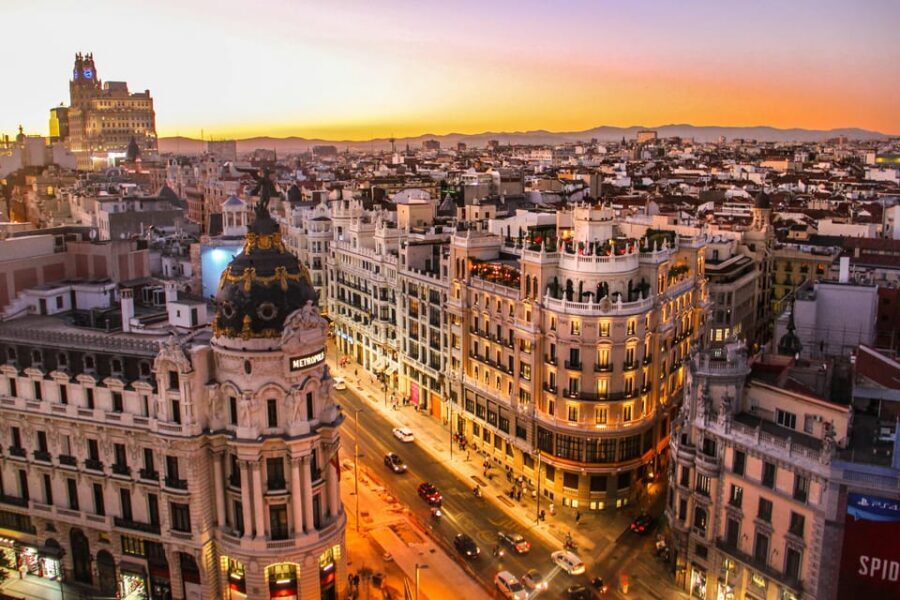
You’ll pass by the Royal Academy of Fine Arts, where masters like Goya once studied. This is one of those “quick hit” moments that still adds value, because it reminds you that Madrid wasn’t only about politics. It was also about art, training, and prestige.
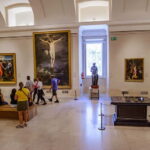
If you’re planning to visit museums later, this stop works like a warm-up. It helps explain why certain cultural institutions matter, instead of making them feel random on a ticket list.
This is also a great example of why the tour’s pace matters. You don’t need a long stop to make a point. A short, clear explanation tied to a real building helps you remember it.
Gran Vía and 19th-century modernization: why this boulevard looks the way it does
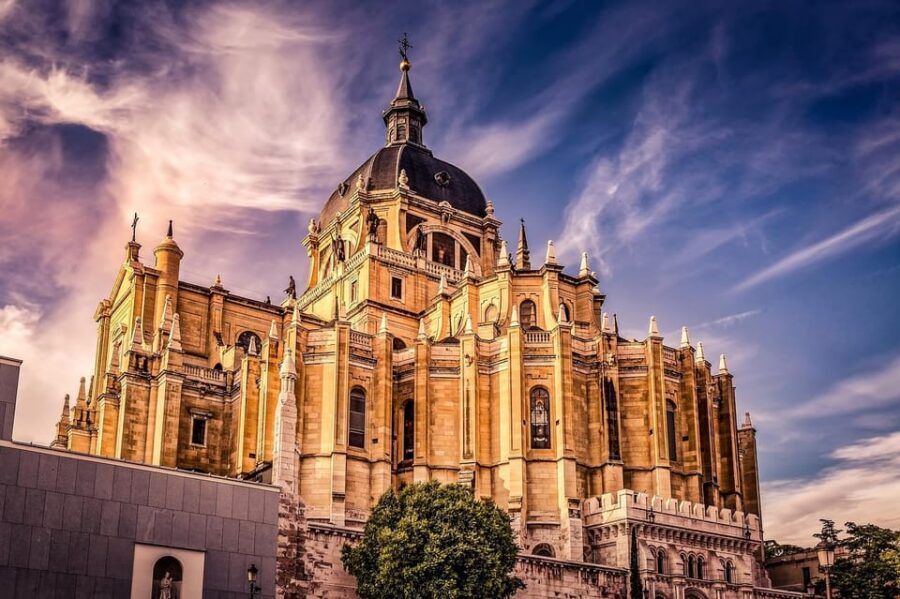
Next up is Gran Vía, and the tour’s modernization story turns this famous boulevard into something more understandable. You’ll learn about the 19th-century makeover of Madrid and how the city’s growth pushed it toward a different urban form.
Gran Vía can feel flashy if you only treat it like a shopping street. But with the guide’s context, it becomes a planning story: wider corridors, bold architecture, and a city rearranging itself for modern life.
This is one of the most praised parts of the tour format. People consistently mention the walk feeling dynamic and entertaining, and Gran Vía is where that energy usually peaks. It’s open, photogenic, and easy to connect to the narrative.
One practical tip: if you’re taking photos, do it fast. Several guides are good at moving the group along, and a couple of reviews note that you’ll want to be ready to grab images quickly rather than stopping for long framing decisions.
Prado Museum stop: a landmark link for your next day
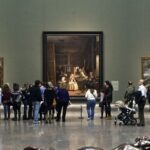
The tour includes time that connects to Prado Museum. You may not get a full museum deep dive in 2.5 hours, but you do get something useful: orientation. You’ll understand why the museum belongs in the story of Madrid’s identity and prestige.
For many first-timers, the Prado is a top priority. So the value here is simple: when you later plan your museum time, the city walk already laid down the logic of where you are and what that cultural institution means.
If you’re unsure how long to spend at the Prado, let this tour nudge you. Use it as your “choose your follow-up” moment: decide what you want most, then come back with a plan.
Congress of Deputies: finishing with democracy in plain sight
The walk ends at the Congress of Deputies. It’s a fitting closer because it shifts from buildings as art and architecture to buildings as governance and public power.
You’ll hear that Spanish democracy has been tested, and by the time you reach this stop, the rest of the route helps the idea land. You’ve already seen the monarchy’s visibility, the city’s public staging, and the evolution of Madrid from older foundations to a modern political hub. Ending here ties that thread off in one clear destination.
Even if politics isn’t your thing, this makes the tour feel complete. It’s not just a highlight reel; it’s a timeline that has an endpoint.
Price and value: what $31 buys you in real Madrid time
At $31 per person for about 2.5 hours, this tour offers solid value if you want a guided introduction. You’re not paying for museum tickets here—you’re paying for someone to connect the dots between dozens of stops and explain why each one matters.
Here’s the honest way to think about it: the biggest value is your time and mental clarity. In a city like Madrid, trying to self-guide through the center can turn into “spot and scroll.” A good guide turns those stops into a coherent route.
Also, there’s a pay-as-you-wish angle. The amount you pay covers a reservation fee and the guide’s payment, and you can still reward the guide based on your satisfaction. That matters because it aligns incentives. If the guide is funny, clear, and attentive, it shows up in how you experience the day.
Finally, the guide quality in recent trips is a major part of why the tour is rated 4.9. Many people specifically praised energy, humor, and the right amount of information at each stop. One guest mentioned a guide giving restaurant and bar recommendations; another mentioned adding a drink break for extra conversation. Those are small touches, but they make the tour feel like a local conversation rather than a scripted march.
Who should book this walking tour (and who might not)
This is a great fit if:
- You want a first-time Madrid orientation you can build on.
- You like history, politics, and culture connected to real streets.
- You enjoy walking but don’t want to plan a route from scratch.
- You want a guide who can handle questions and keep the group engaged.
It may be less ideal if:
- You have very limited mobility or find longer continuous walking hard. Reviews show many guides adapt, but the route is still a walk.
- You prefer quiet museum-style pace and don’t like group movement.
- You want to spend deep time inside major buildings. This tour is about the city’s structure and key viewpoints, not extended interior visits.
If you’re in the first group, I’d say you’ll get your money’s worth fast. If you’re in the second or third group, you might still learn a lot, but you should consider whether you’d rather do a shorter, more focused tour.
Should you book this Madrid guided walk?
I’d book it if you’re a “see the city, then decide what to do next” traveler. It’s a practical way to understand Madrid’s evolution—Arabic foundations to monarchy to modern institutions—using Plaza Mayor, Gran Vía, and political landmarks as your anchors.
If you’re on the fence, here’s the deciding question: do you want your first day to feel like a story you can repeat, or a checklist you forget? This tour leans heavily into story—and when the guide (Sebastián, Adam, Daniel, Dina, Joaquín, Esmeralda, or whoever is assigned) keeps the pace lively, the 2.5 hours tends to fly by.
FAQ
What is the meeting point for the Madrid walking tour?
It starts at Opera Metro station, outside the Teatro Real. Look for the yellow umbrella.
How long is the tour?
The duration is 2.5 hours.
What’s included in the price?
The tour includes the walking tour and a live guide.
Is there hotel pickup or drop-off?
No, hotel pickup and drop-off are not included.
What language is the tour in?
The tour is in English.
Can I pay later?
Yes, it’s reserve now & pay later, so you can book without paying today.
Is free cancellation available?
Yes, free cancellation is available up to 24 hours in advance for a full refund.
Is this a private tour?
It’s described as a general pay as you wish tour. If you want a smaller private tour, you can ask to organize it.