REVIEW · MADRID
Medieval Madrid: Discover Legends & History
Book on Viator →Operated by Trip Tours Madrid · Bookable on Viator
Madrid gets medieval fast. This 2.5-hour evening stroll strings together landmark scenes that shaped the city, with story stops paced for a relaxed walk. You start at Plaza Mayor and end at the ancient Templo de Debod, timed for those after-work golden-hour moments.
I love how the route mixes big-city icons with street life. You’ll see the power centers around the Royal Palace area, then hop over to Calle de la Cava Baja for the tapas street feeling.
One thing to consider: you’re not going into the monuments. It’s a see-and-learn walking tour, so if you’re hunting for interior access, you’ll need another plan.
In This Review
- Key highlights to know before you go
- The best time to meet Madrid: 5:00 pm to Debod
- Plaza Mayor: the pulse of old Madrid
- Calle de la Cava Baja: legends you can pair with tapas
- El Madroño: the strawberry tree symbol stop
- Real Basilica de San Francisco el Grande: dome-and-art power
- Puente de Segovia: a viewpoint that turns into a story
- Plaza de Oriente: royalty without the rush
- Templo de Debod: where sunset makes history visible
- What’s included (and what’s not), in plain terms
- Price and value: surprisingly affordable per group
- The guide factor: pacing, stories, and the Marik effect
- How much walking is this, really?
- Weather and small logistics that can matter
- Who should book this Medieval Madrid walk
- Should you book Medieval Madrid: Discover Legends & History?
- FAQ
- How long is the Medieval Madrid walking tour?
- What time does the tour start?
- Where do we meet the guide?
- Where does the tour end?
- Is this tour private?
- How many people are in a group?
- Is the tour in English?
- Are tickets or entry fees included for the sites?
- What’s included in the price?
- Do we get food or drinks on the tour?
- Is the tour affected by weather?
Key highlights to know before you go
- 7 major stops in about 2.5 hours so you get a clear Madrid overview without a full day commitment
- 5:00 pm timing that sets you up for sunset views at Templo de Debod
- No ticketed site entries means less queue stress and more time for explanations outside
- Guide-led storytelling with printed learning tools along the route for better context
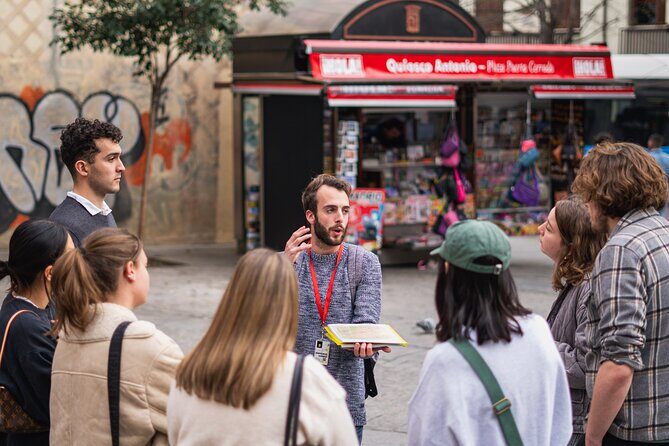
- A private group of up to 6 keeps the pace comfortable and the questions flowing
- Look for the full yellow umbrella at the start so you don’t waste time hunting
The best time to meet Madrid: 5:00 pm to Debod
This tour is scheduled to start at 5:00 pm, which is smart. Late afternoon light makes the walking route feel easier and it helps the final stop at Templo de Debod deliver its payoff.
You’ll meet at Casa de la Carnicería, Plaza Mayor (Pl. Mayor, s/n). Find the guide by looking for the full yellow umbrella. You’ll end at the Temple of Debod area (C. de Ferraz, 1), so you finish in a different neighborhood than where you began—handy if you want an easy post-tour sunset plan.
The pace is built around about 20 minutes per stop, so you’ll get time for a few key photos, a story, and a short reset before moving again. And yes, wear walking shoes—this is a proper evening stroll, not a slow sit-down history lesson.
You can also read our reviews of more historical tours in Madrid

Plaza Mayor: the pulse of old Madrid
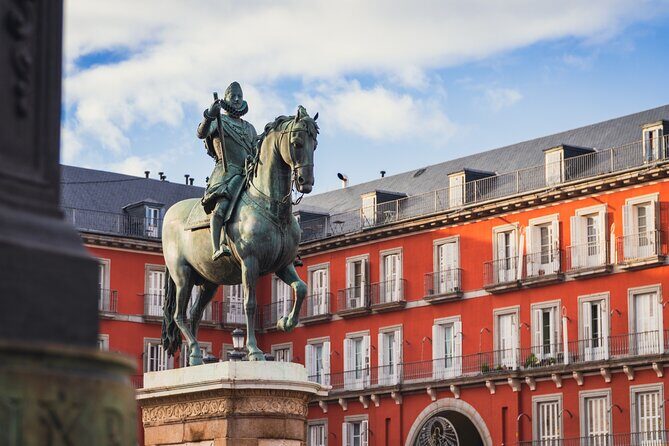
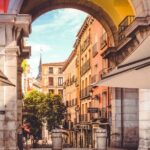
Your first stop is Plaza Mayor, the grand square that’s been at the center of Madrid for ages. Here, the tour focuses on how public space shaped daily life—market days, public spectacles, and the overall vibe of a city watching itself.
What I like about starting here: it gives you a “map in your head.” Once Plaza Mayor is explained, the rest of the route makes more sense, because you start recognizing how power, commerce, and gathering spaces connect.
Practical note: you’ll spend about 20 minutes here, so don’t expect a slow wandering photo session. Use this first stop to orient yourself and get the main context, then let the route do the rest.
Calle de la Cava Baja: legends you can pair with tapas
Next up is Calle de la Cava Baja, one of Madrid’s famous tapas streets. This is where the tour shifts from plazas and institutions into street culture—how food, talk, and local routines become part of the city’s identity.
Even if you’re not ordering anything during the tour (alcohol and food aren’t included), you still get the storytelling angle that makes the street feel more than just a place to walk through. It’s also a good break in tone: the mood is less formal, and you’re surrounded by the kind of energy that makes history feel human-sized.
One caution: it’s an active area, so keep an eye on your footing and your group spacing. At street level, crowds happen fast.
El Madroño: the strawberry tree symbol stop
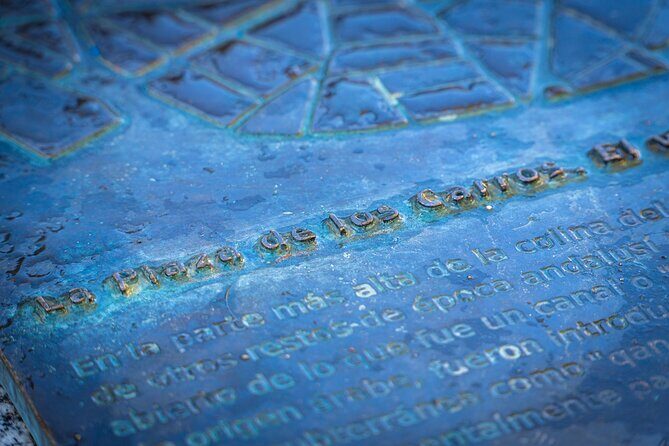
You’ll visit El Madroño, home of the famous strawberry tree symbol for Madrid. This stop gives you a local identity detail you can carry with you—why this tree matters, and how it became part of the city’s visual language.
There’s also a chance to sample Madroño liqueur. Alcohol isn’t included overall, so don’t count on it as part of the tour cost, but this particular tasting moment is a nice option if you like trying something Madrid-specific.
This is one of those stops that’s short on paper (about 20 minutes) but can make you feel like you learned something truly local—one symbol, one story, one drink moment.
Real Basilica de San Francisco el Grande: dome-and-art power
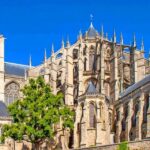
Then you’re at Real Basilica de San Francisco el Grande, known for its giant dome. The tour highlights the scale and also points you toward major art connections, including references to famous painters like Goya.
Because you’re not entering for tickets, your experience here is more about seeing from the outside and hearing what makes the church stand out in Madrid’s visual world. That can actually be a plus if you’re trying to keep momentum while still soaking up “what matters” in each location.
If big architecture gets your attention, this stop is worth paying attention to. It’s easy to walk past impressive buildings in Madrid—this tour helps you notice the why.




Puente de Segovia: a viewpoint that turns into a story
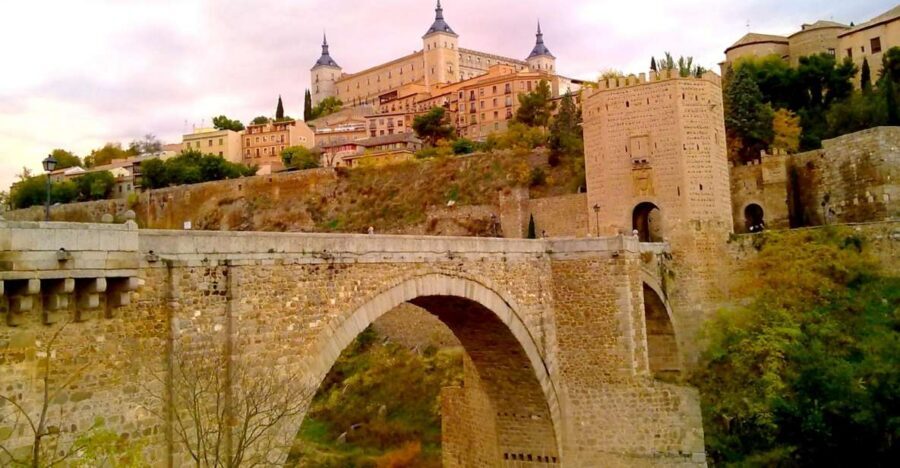
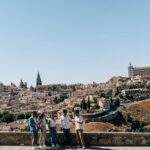
Your route then reaches Puente de Segovia, a classic bridge with panoramic views toward the Royal Palace and Almudena Cathedral. This is a photo-friendly pause, especially if you time your shots around late-day light.
The value here isn’t only the view—it’s how the tour connects what you’re seeing to the city’s layout. Bridges are like Madrid’s threading points: they show you how neighborhoods link and how major monuments relate to each other.
This stop is also useful as a breather. You’ll get roughly 20 minutes to stand, look, and reset your legs before the route heads toward the Royal Palace area.
Plaza de Oriente: royalty without the rush
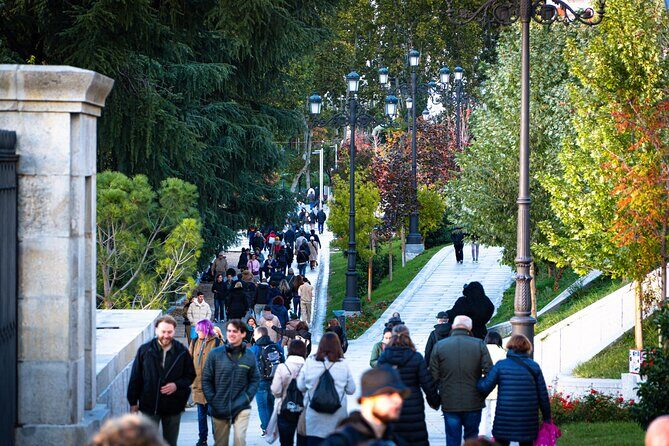
Next is Plaza de Oriente, located near the Royal Palace gardens. The tour frames this area as an in-between space—royal in theme, but still a calmer moment compared with the street scene.
I like this stop because it offers a different emotional pace. After taps street energy and a bridge viewpoint, you get a more reflective area where you can absorb the idea of Madrid’s hierarchy and design.
Spend the time here listening, then use the minutes to watch how people move through the gardens’ surroundings. It’s not a museum moment; it’s a feeling moment.
Templo de Debod: where sunset makes history visible
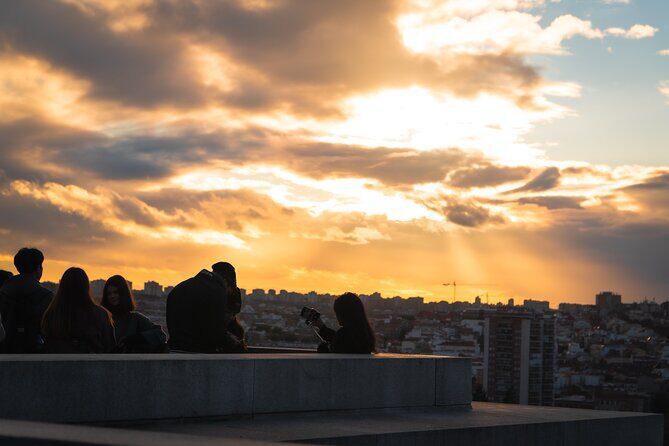
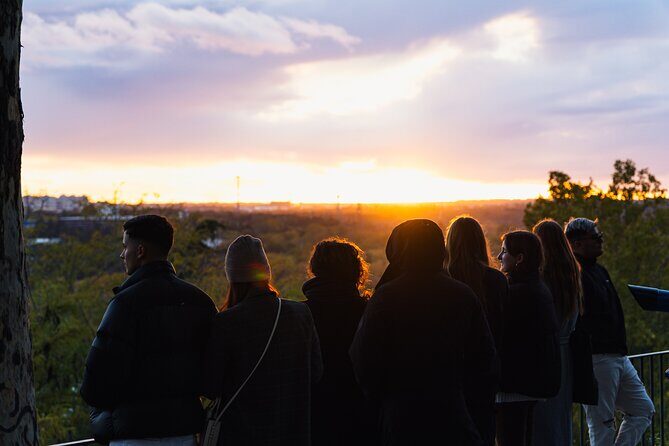
The tour ends at Templo de Debod, and this is where the 5:00 pm start pays off. The tour highlights its ancient Egyptian roots and explains the temple’s journey from Egypt to Spain.
The reason this end point works so well: the setting is made for a slow look. As daylight drops, the ruins and stone details turn more dramatic, and your “last stop” becomes the one you remember most.
Expect this to be the emotional closer of the walk—part archaeology story, part sunset viewing. And if you want an easy plan after the tour, you’re already in a prime spot for lingering.
What’s included (and what’s not), in plain terms
You get an expert guide, plus printed material and didactic tools along the route. There’s also a link included for personalized recommendations on what to do in Madrid after you finish.
You do not get entrance tickets to sites, and that’s important. The tour focuses on seeing and learning from key exterior locations rather than doing timed entry inside buildings. That keeps the flow smooth, but it does mean you should not expect interior access.
Alcoholic drinks and food aren’t included. If you want to pair your knowledge with a real tapas break, plan a meal before or after the tour ends.
One more thing: gratuities for the guide aren’t included and are given at the end. A tip is part of the culture here, and it’s also how you directly reward a guide who makes the stories land.
Price and value: surprisingly affordable per group
The listed price is $2.64 per group (up to 6). Even if you split among just a few people, this format can be an excellent value because you’re paying for a guided walk, not a per-person ticket.
For money-smart planning, the key is what you’re getting in return. You’re not spending extra on entries during the tour, and the route still hits major landmarks: Plaza Mayor, Cava Baja, El Madroño, San Francisco el Grande, Puente de Segovia, Plaza de Oriente, and Templo de Debod.
Also, it’s a private tour for your group only. That matters more than it sounds. With a small group, your guide can keep a smoother pace and explain details clearly without a giant crowd bottleneck.
The guide factor: pacing, stories, and the Marik effect
From the feedback you can see a pattern: the guide style is upbeat and story-driven. One standout detail is the guide name Marik, described as friendly and excited about Madrid’s history, with cool stories added in to keep it fun.
You’ll likely feel that in how the route is handled. The tour is structured around short stops, so your attention stays active. You get context at each location, then move on while it’s still fresh.
This approach works especially well if you like history explained in human terms rather than a classroom lecture.
How much walking is this, really?
The tour runs about 2 hours 30 minutes and is designed with about 20 minutes at each location. That means you’ll walk steadily, with short standing and looking breaks.
The route length isn’t described in miles or kilometers, but you should treat it as a real walking plan. If you’re the type who counts steps, bring your shoes and plan to be a little tired—this is a tour that earns its sunset.
Good to know: near public transportation, and service animals are allowed. Also, most people can participate, so it’s likely manageable for a broad range of fitness levels, as long as you’re comfortable with an outdoor walk.
Weather and small logistics that can matter
This experience requires good weather. Since the tour is outdoors across multiple stops, rain or extreme conditions can change the plan. If the provider cancels due to weather, you’ll be offered a different date or a full refund.
And because the start is at a specific spot inside Plaza Mayor, it helps to arrive a few minutes early. Look for the yellow umbrella and get settled before the group is called.
If you’re the anxious type, also have a backup mindset. One account reported a guide no-show and a refund was processed afterward, so treat this like any tour: keep an eye on timing, and if something feels off, follow the app messaging route right away.
Who should book this Medieval Madrid walk
This tour fits best if you want:
- A short, focused evening plan that still covers key Madrid highlights
- An English guide with explanations tied to what you see outside
- A route that ends in a place made for sunset viewing
It’s also a smart choice for first-timers who want orientation fast. And if you like learning through places instead of reading guidebooks all night, the printed tools and didactic materials are a nice support.
If you’re the kind of visitor who wants to spend long periods inside churches or museums, this may feel too quick. Remember: no ticketed site entries here—this is about the stories around the landmarks.
Should you book Medieval Madrid: Discover Legends & History?
I’d book it if you want a compact, guided evening that links major sights to legend and context, ending with sunset drama at Templo de Debod. The route is efficient, the group size is small (up to 6), and the per-group pricing makes it easy to justify even on a tight budget.
I’d skip it if your top priority is interior access and longer stays inside monuments. Since you’re mostly outside, your experience depends on good weather and your willingness to enjoy the walk and the viewpoints as the main event.
If you’re flexible, bring comfy shoes, and show up ready to listen for the stories at each stop, this is the kind of tour that leaves you with a clearer picture of Madrid than you had before.
FAQ
How long is the Medieval Madrid walking tour?
It runs about 2 hours 30 minutes.
What time does the tour start?
The start time is 5:00 pm.
Where do we meet the guide?
You meet at Casa de la Carnicería, Pl. Mayor, s/n, Centro, 28012 Madrid. Look for the yellow umbrella.
Where does the tour end?
It ends at Temple of Debod (C. de Ferraz, 1, Moncloa – Aravaca, 28008 Madrid).
Is this tour private?
Yes. It’s a private tour/activity, and only your group participates.
How many people are in a group?
The price is per group (up to 6).
Is the tour in English?
Yes, it is offered in English.
Are tickets or entry fees included for the sites?
No. Entrances are not included, and the tour says you don’t need tickets because you don’t enter the sites.
What’s included in the price?
Included items are the expert guide, printed material and didactic tools along the route, and a link for personalized recommendations on what to do in Madrid.
Do we get food or drinks on the tour?
No. Alcoholic beverages and drinks/food are not included.
Is the tour affected by weather?
Yes. It requires good weather, and if it’s canceled due to poor weather you’ll be offered a different date or a full refund.