REVIEW · MADRID
Lavapiés: The most multicultural neighbourhood of Madrid, Private Walking Tour
Book on Viator →Operated by Ventana a la Cultura · Bookable on Viator
Lavapiés has stories on every corner. This private walk through one of Madrid’s most multicultural districts connects old neighborhoods with today’s street life, and it does it at human scale. I especially liked having hotel pickup to start things smoothly, and I loved how the guide framed Lavapiés as more than food and nightlife—this area grew from real communities and real work.
The second thing I really liked was the chance to see the neighborhood’s key landmarks up close, including La Tabacalera de Lavapies and the church at San Lorenzo. One thing to consider: this tour is mostly about quick stops and street views, so if you’re hoping for long museum time, you will be looking from the outside and you will not enter Reina Sofía.
In This Review
- Key things to know before you go
- Walking through Lavapiés’ Jewish, Moorish, and industrial layers
- Private guide plus hotel pickup: what it buys you
- From Reina Sofía to San Lorenzo: the story in eight short stops
- Stop 1: Lavapiés and the neighborhood’s “why”
- Stop 2: Reina Sofía Museum from the outside
- Stop 3: San Lorenzo and the mix-up in names
- Stop 4: Plaza de Lavapiés and the last-decade rebuild
- Stop 5: Ronda de Valencia and factory facades you can still read
- Stop 6: La Tabacalera de Lavapies and women’s work
- Stop 7: Escuelas Pías de San Fernando and the library in ruins
- Stop 8: House of Sombrerete and corral-style housing
- Price, timing, and logistics that actually matter
- Who should book this Lavapiés private tour?
- Should you book this tour?
- FAQ
- FAQ
- How long is the Lavapiés private walking tour?
- What does the tour cost?
- Is pickup from my hotel included?
- Is this tour private or shared?
- Where does the tour start and end?
- Will I enter the Museo Nacional Centro de Arte Reina Sofía?
- Are there any admission fees included for the stops?
- Is transportation included?
- Is a mobile ticket used?
- Can I get a refund if plans change?
Key things to know before you go
- Private guide attention: only your group walks with the guide, so you can ask questions as you go.
- Hotel pickup in Madrid: you start where you’re staying, which saves time in a dense neighborhood.
- Old industrial Madrid, explained: you’ll connect 18th-century factories to the working-class identity of Lavapiés.
- Free admissions on the stops: the tour includes the main sites without paid entries for each stop.
- History that’s visible: churches, factories, and corral-style housing show layers of religious and social change.
Walking through Lavapiés’ Jewish, Moorish, and industrial layers
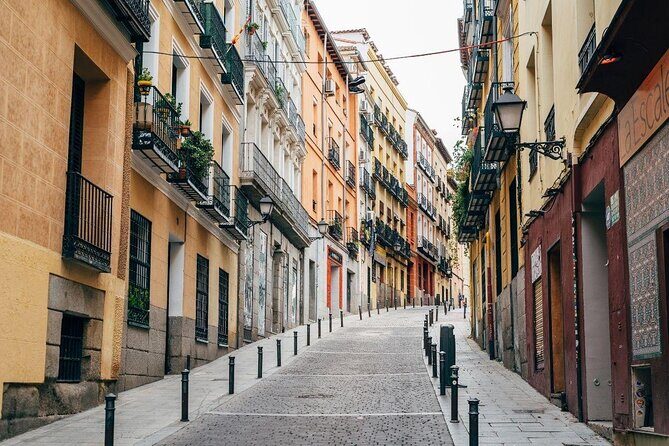
Lavapiés sits in central Madrid, and it feels like two different neighborhoods stitched together. On one side, you get the compact streets, older apartments, and everyday life. On the other side, you can read the industrial age in the buildings, especially around the old factory corridors.
What makes this area worth your time is that it’s not just a theme park for cultures. The neighborhood’s identity formed through migration, labor, and small communities living close together. Even the way the streets and buildings are arranged helps you understand why the district became such a cultural meeting point.
You’ll also learn how the area’s past is written in place names and surviving structures. Lavapiés was once associated with Jewish and Moorish quarters, then evolved as factories grew and workers moved in. Later waves of immigration, especially in the 1980s, added new languages, food, and rhythms that you still feel today.
You can also read our reviews of more walking tours in Madrid



Private guide plus hotel pickup: what it buys you

I like private tours for one simple reason: the pace is yours, not the clock’s. With a private walking tour, your guide can slow down when you look interested and speed up when your group is ready to move on.
Here, the hotel pickup is a big convenience in Madrid. Lavapiés is packed with bars, restaurants, and narrow streets, and starting near where you’re staying helps you avoid the usual scramble. It also means less time figuring out where to meet and more time getting your bearings in the neighborhood.
The guides can make a difference too. In recent experiences with this tour, the guide Jaime stood out for being friendly, patient, and very good at linking the visible sights to the stories behind them. That’s the kind of guiding that turns a quick walk into something you actually remember.
From Reina Sofía to San Lorenzo: the story in eight short stops
This tour runs about 1 hour 40 minutes to 2 hours, with a series of short, focused stops. The structure is designed to keep momentum, which is perfect for a neighborhood like Lavapiés where the streets themselves are the attraction. You won’t feel trapped waiting around; you’ll feel like you’re moving through a living map.
Stop 1: Lavapiés and the neighborhood’s “why”
You start in Lavapiés, which helps you build context before you zoom in on specific places. The guide explains how the district became an industrial area starting in the 18th century, when royal factories were created. From there, you’ll hear about traditional communities of workers—bullfighters, caleseros (carriage drivers), and Manolos, Jewish descendants tied to the area’s older identity.
Then the story shifts to housing. The neighborhood had tiny, older apartments for low-class workers, and they proved perfect for later waves of immigration. When immigrants arrived in the 1980s, they stepped into an existing fabric of dense living and community life, which is why the district’s multicultural character feels organic rather than staged.
A practical benefit of this opener: you’ll start recognizing what you see. You won’t just pass buildings. You’ll understand why they matter.
Stop 2: Reina Sofía Museum from the outside
Next you get a contrast lesson. You’ll look at the area around the Reina Sofía Museum—built as the General Hospital—and you’ll see how the world changes once you step outside the industrial-core vibe. It’s a nice reminder that Madrid’s center isn’t one uniform style.
Important detail: you do not enter Reina Sofía on this tour. You’re there to sharpen your eye, not to spend time inside a major museum. If your heart is set on a museum deep-dive, you’ll want separate museum time—but for a neighborhood walk, this outside “compare and contrast” works well.
You can also read our reviews of more private tours in Madrid






Stop 3: San Lorenzo and the mix-up in names
Then you’ll focus on San Lorenzo, a church tied to the social life and traditions of Lavapiés. There’s also a common confusion here: it has been wrongly linked with the idea of an old synagogue. This is a good kind of fact-check moment—exactly the sort of thing that makes a guide valuable on a historic neighborhood.
The stop is short, but it’s meaningful because it connects religion, community, and everyday gatherings. It’s not about abstract history; it’s about how people organized their lives in the same streets where you’re walking today.
Stop 4: Plaza de Lavapiés and the last-decade rebuild
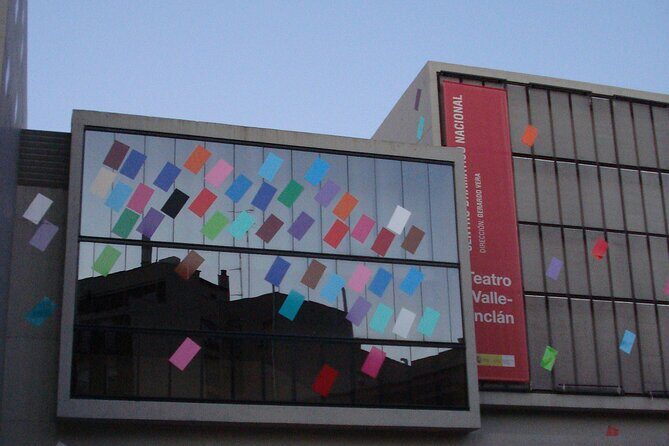
At Plaza de Lavapiés, the tone shifts toward redevelopment and culture. Over the past decade, older buildings have been rehabilitated, with an emphasis on boosting the local economy through arts and public projects. You’ll pass places like Valle Inclán Theater, plus cultural foundations and exhibition spaces that keep the area active beyond dining and nightlife.
This is also where the neighborhood’s international food and drinks show up in a visible way—dozens of bars, cafés, and restaurants from many countries. The guide’s job here is to help you connect the creative spaces to the neighborhood’s longer story: people kept moving in, work changed, and the community kept finding new ways to live together.
Stop 5: Ronda de Valencia and factory facades you can still read
Ronda de Valencia is about industry, still standing. During the industrial revolution, factories were built along here, and even now you’ll see the facades of that older architecture mixed with newer buildings.
The key idea you’ll take away: working-class movements weren’t a footnote. They helped shape Lavapiés identity, and the buildings act like evidence. It’s a helpful stop if you like understanding a neighborhood through the lens of labor, not just architecture.
Stop 6: La Tabacalera de Lavapies and women’s work
One of the best stops is La Tabacalera de Lavapies. It’s the oldest preserved factory building from Lavapiés’ factory tradition, dating back to 1780. The guide explains that up to 6,000 women worked there, and their spirit became part of the building’s legend.
Today, you’ll see how the space is used in multiple ways: part of it functions as a social center run by neighbors with non-profit goals, part serves as a contemporary art exhibition space, and part remains abandoned. That mix matters. It shows a neighborhood that keeps negotiating between art, community needs, and what happens when buildings don’t get fully restored.
If you love real-world city change—what gets saved, what gets repurposed, what stays stuck—this is your moment.
Stop 7: Escuelas Pías de San Fernando and the library in ruins
Next comes Escuelas Pías de San Fernando. It started as a school and church where orphans from Lavapiés used to study. It was destroyed during the Spanish Civil War, then left in ruins for decades.
Now the ruins are part of a library experience, and the guide frames it as one of Madrid’s most beautiful libraries. Even if you don’t read every detail, the point is clear: the area has turned suffering and loss into public learning space. It’s a strong stop because it connects history to something useful happening today.
Stop 8: House of Sombrerete and corral-style housing
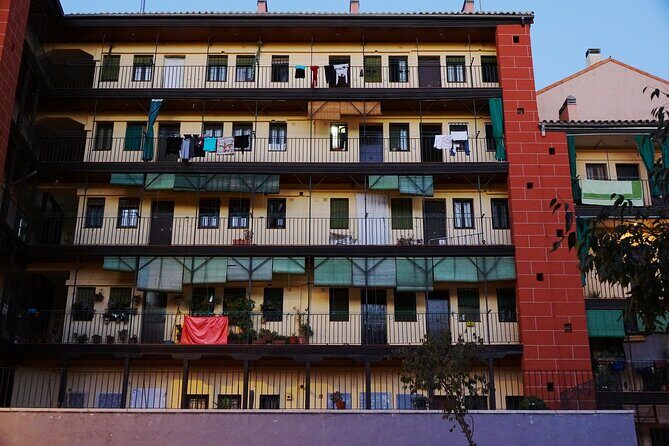
You end with the House of Sombrerete, an example of corral-style popular architecture from the industrial worker era. The guide explains how these were tiny rooms—about 10 m²—for families, often without light and without water.
This is not a polished, postcard stop. Some of these corrals are still in use, often by immigrants with limited resources. Seeing this gives you a reality check that stays with you: the neighborhood’s multicultural identity isn’t only about festivals. It’s also about housing and survival.
Price, timing, and logistics that actually matter
At $121.78 per person, this isn’t the cheapest walking tour. But you’re paying for a private format, an official guide, hotel pickup, and local taxes included. For a short (about 2 hours) private walk, that can be good value—especially if you’re traveling in a small group and you want one-on-one pacing.
Also, admissions are free on the key stops, and Reina Sofía is viewed from outside rather than entered. That structure helps you avoid surprise costs and keeps the schedule tight.
In terms of timing, tours are available at different times, and it’s commonly booked around 58 days in advance. If you have a specific day in mind, it’s smart to lock it in early.
Location-wise, the start is on C. de Sta. Isabel, 52 (Centro), close to bars and restaurants and near the metro. The walk ends at Plaza de Agustín Lara. Since it’s near public transportation, you can also fit it easily between other central-city plans.
One more practical note: there’s a mobile ticket, and service animals are allowed. If you’re coming from another part of Madrid, plan to use metro and short walking segments rather than expecting private transport.
Who should book this Lavapiés private tour?
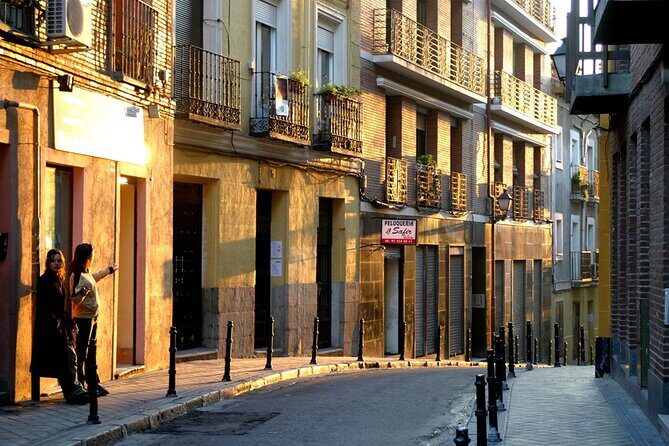
This tour is a great fit if you want a neighborhood story with context. If you like history but hate textbook tours, this one is built for you. You’ll get explanations tied to real spaces: factories, churches, schools turned library, and corral-style housing.
It also works well for people who want a slower, question-friendly experience. The private setting means your group can ask why a name is often confused, why a building still matters, or how redevelopment is changing daily life.
If you’re in Madrid for a short stay and you want to understand a side of the city that’s not only royal palaces and big museum halls, Lavapiés is a smart choice. Just remember it’s a walking tour with short stops—less about long interiors and more about seeing and connecting the dots.
Should you book this tour?
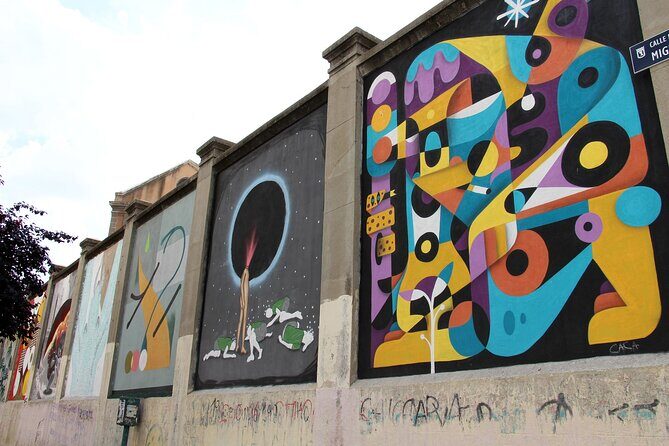
I’d book it if you want your Madrid dose of multicultural, working-class history without getting bogged down in long museum lines. With hotel pickup, short free-stop pacing, and a private guide who can explain what you’re seeing, it’s a high-value way to understand why Lavapiés looks the way it does.
I would hesitate if you mainly want museum time inside major collections, since the plan includes outside viewing and a skip on entry at Reina Sofía. Also, if your group struggles with lots of street walking, you might prefer a more vehicle-based format—this is built for the sidewalk.
FAQ
FAQ
How long is the Lavapiés private walking tour?
It runs about 1 hour 40 minutes to 2 hours.
What does the tour cost?
The price is $121.78 per person.
Is pickup from my hotel included?
Yes, pickup from your Madrid hotel is included.
Is this tour private or shared?
It’s a private tour, and only your group participates.
Where does the tour start and end?
The tour starts at C. de Sta. Isabel, 52, Centro, 28012 Madrid, Spain and ends at Plaza de Agustín Lara, Centro, 28012 Madrid, Spain.
Will I enter the Museo Nacional Centro de Arte Reina Sofía?
No. The museum stop is outside, and you will not enter.
Are there any admission fees included for the stops?
Admission is listed as free for the stops included on the tour.
Is transportation included?
No private transportation is included.
Is a mobile ticket used?
Yes, the tour uses a mobile ticket.
Can I get a refund if plans change?
Yes. You can cancel for a full refund up to 24 hours before the experience starts.