REVIEW · CUENCA
Monumental Basin Day Guided Tour
Book on Viator →Operated by Cuenca Viajes · Bookable on Viator
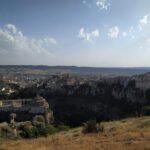
Cuenca has a way of pulling you in fast. This Monumental Basin day guided walking tour is a smart, compact intro to the city’s layout and its most striking landmarks, with clear commentary as you move between squares and cliffside architecture. I especially liked the quick orientation for first-timers and the chance to get up close to Cuenca’s Hanging Houses and the tall-house district without having to plan every turn.
The one thing to keep in mind is that it’s a walking route on uneven ground with lots of viewpoints. If you’re sensitive to heights or you’d rather do a slower pace, you may want to pair this with more independent exploring the rest of the day.
In This Review
- Key takeaways before you go
- How this tour helps you read Cuenca (fast)
- Starting at Plaza Mayor and the colored-face city vibe
- Plaza de la Merced: baroque calm, with real institutions behind it
- Torre Mangana: the clocks and the city’s big-picture views
- Los Rascacielos de Cuenca Barrio San Martin: see inside the tall houses
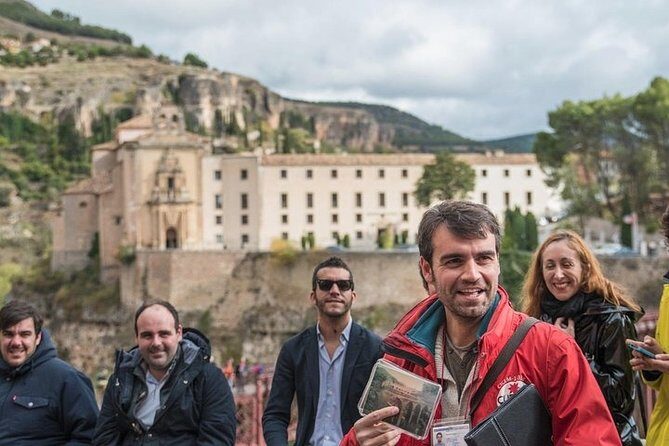
- Convento de San Pablo and the Parador on the edge
- Puente de San Pablo: an iron bridge with layered history
- Casas Colgadas: the Hanging Houses and their wooden balconies
- Escultura de Alfonso VIII: a bronze story tied to Spain’s turning points
- The city’s Gothic cathedral project: big, unusual, and unfinished
- How much walking, and when it makes sense
- Value check: why $10.31 can work here
- Who should book this tour (and who might skip)
- Should you book this Monumental Basin day guided tour?
- FAQ
- Where is the tour meeting point?
- What time does the tour start?
- How long is the guided tour?
- What are the main stops included on the walk?
- Is admission included for Los Rascacielos de Cuenca?
- Does this tour include a UNESCO World Heritage site?
- Is the tour dependent on weather?
- What’s the group size limit?
- Are service animals allowed?
- Is free cancellation available?
- Final nudge
Key takeaways before you go
- A tight 1 hour 45 route that helps you understand Cuenca’s “basin” layout right away
- Torre Mangana clocktower viewpoints for city-wide orientation in a single stop
- Los Rascacielos de Cuenca access with time to see the tallest houses in Europe from inside and out
- Cliffside architecture focus at Casas Colgadas and along the Hoz del Río Huécar
- UNESCO World Heritage context tied directly to the historic core you’re walking through
- Guides like Hugo and Carlos are praised for clear, friendly explanations
How this tour helps you read Cuenca (fast)
This is the kind of tour that makes your next hours in Cuenca easier. Instead of just pointing at buildings, your guide connects the dots between the squares, the towers, and the dramatic cliffside neighborhoods that make Cuenca feel like it was built for postcards.
The pacing is also worth appreciating. At about 1 hour 45 minutes, you’re not signing up for an all-day commitment, so you can still explore on your own afterward. And since the group is capped at 50 people, you get more of that “chat with your guide” feel than the loud, shuffle mode you sometimes get on bigger tours.
Finally, the price—around $10.31—is a big part of the value. For a guided walk that covers multiple major stops plus an included admission moment at Los Rascacielos, it’s an efficient use of your time. You’re paying for wayfinding plus stories, not just movement between places.
You can also read our reviews of more guided tours in Cuenca

Starting at Plaza Mayor and the colored-face city vibe
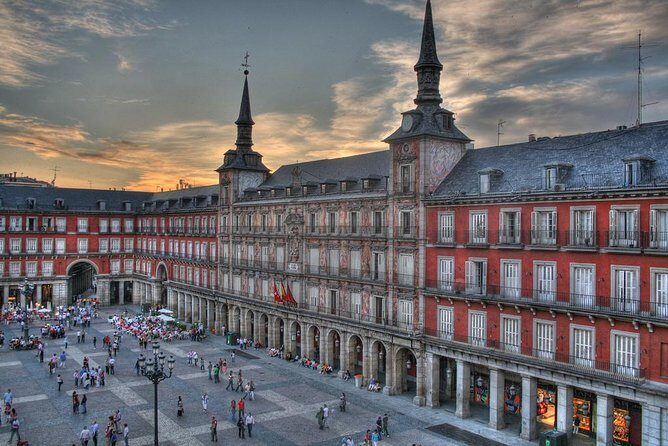
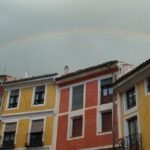
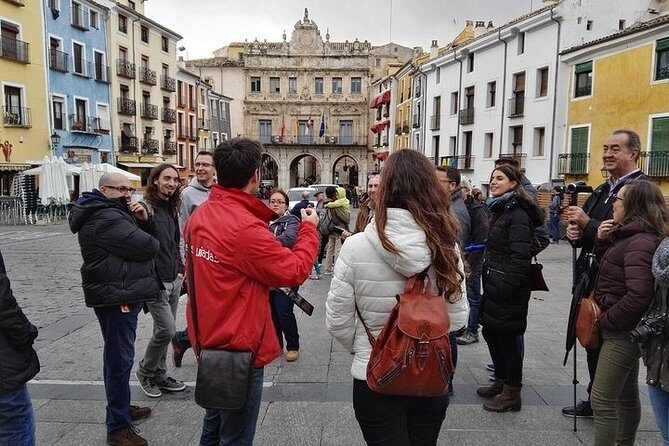
Most people arrive in Cuenca and instantly notice one thing: the center looks like a stage set. The tour kicks off at Plaza Mayor de Cuenca, where you’ll see the mix of multicolored facades dating largely to the 16th century. On one side sits the Baroque façade of the Town Hall, and nearby the gigantic Convent of Las Petras adds scale to the whole scene.
What I like about beginning here is that it gives you a “map in your head.” You get your bearings early, so when you later spot the city’s cliff edges and narrow lanes, you understand why everything lines up the way it does.
This stop is also useful if you’re a little tired from arrival travel. It’s a first anchor point with enough visual variety to keep your attention while you settle in.
Plaza de la Merced: baroque calm, with real institutions behind it
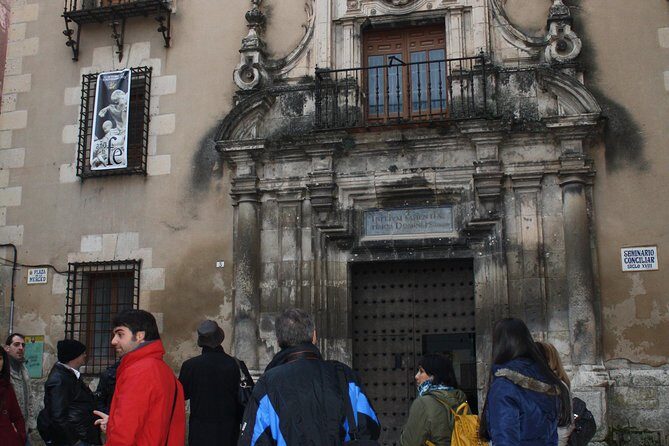
From Plaza Mayor, the tour heads to Plaza de la Merced, a smaller, more delicate square with three Baroque facades. It’s not just pretty—this square is tied to institutions you can still feel in the layout: a Seminary, a church, and a cloistered convent.
This is a great moment to slow down mentally. Squares like this teach you what Cuenca valued for centuries: religion, education, and the kind of formal architecture that didn’t need to shout to command attention.
Also, because the tour is walking-based, you’ll start to notice how Cuenca’s design funnels you between views. Plaza de la Merced is one of those stops that makes the next “wow” scenes land even harder.
Torre Mangana: the clocks and the city’s big-picture views
Next comes Torre Mangana, the 16th-century clock tower. It’s simple at first glance—until you notice the two clocks up top. Then you zoom out and realize why a tower like this matters: it’s a built-in viewpoint.
The guide’s job here is key. You don’t just look at the city; you learn how to interpret what you’re seeing—where neighborhoods sit, where historic structures cluster, and how the basin geography shapes sight lines.
The nice thing is that you don’t need a long climb schedule or special tickets. It’s a free stop and it pays you back immediately in orientation value. If you only catch one “view” moment on day one, this is a strong candidate.
Los Rascacielos de Cuenca Barrio San Martin: see inside the tall houses
Now for the stop that many people mark as a highlight: Los Rascacielos de Cuenca, Barrio San Martin. These are described as the tallest houses in Europe, built in the 16th century, and you get a chance to look at both the interior and exterior.
You’ll get about 5 minutes here, and it’s one of the few moments where admission is included. That short window can be enough if you go in with the right expectations. This isn’t about a museum-style stroll; it’s about letting the buildings make sense. You’ll see how these houses were built to fit the terrain and how their height relates to the city’s historic pressures.
Practical note: since time is tight, listen closely to what the guide says right at the start of the visit. The difference between a good look and a great one is knowing what feature to check—structure, entry points, or how space was used vertically.
Convento de San Pablo and the Parador on the edge
From Barrio San Martin, the route shifts to Convento de San Pablo, which is now the Parador. The surprise is its situation: it sits right on the edge of the abyss, the kind of spot where you automatically slow your steps just to take in the drop.
Even if you don’t go inside for a long time, the stop teaches you something important about Cuenca. The city didn’t just build on flat ground. It carved, adapted, and re-used dramatic spaces over time.
If you like architecture but also like atmosphere, this is one of the most affecting stops. You can almost feel how people once lived with the geography as part of the daily reality.
Puente de San Pablo: an iron bridge with layered history
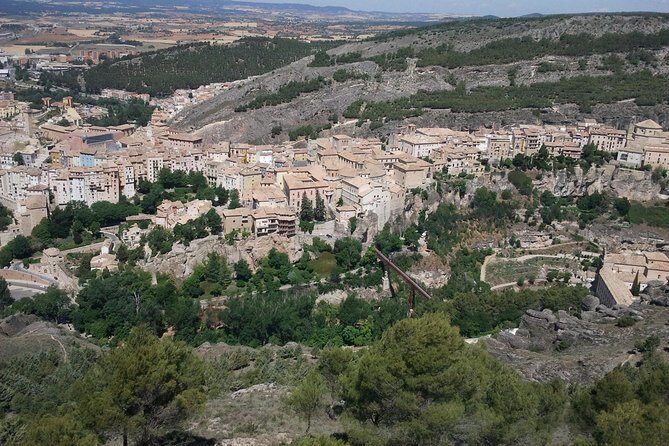
Next is Puente de San Pablo, an iron bridge from 1903 that replaced an earlier stone bridge. Some fragments of the old one can still be seen, which gives the stop a satisfying “timeline in the real world” feeling.
This is the kind of place where a guide helps you slow down and notice details. You’ll understand why bridges matter so much in Cuenca’s terrain—connecting neighborhoods across drops and channels, while also shaping the routes people take.
It’s also a good photo stop if you like architecture without only chasing big monuments. The bridge is a quieter hero, but it tells a big story about change over time.
Casas Colgadas: the Hanging Houses and their wooden balconies
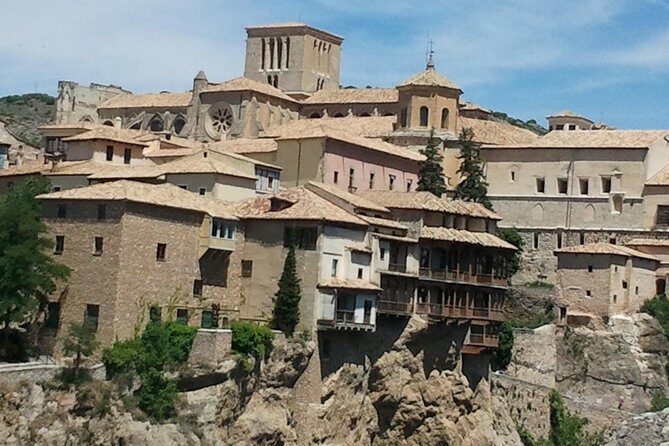
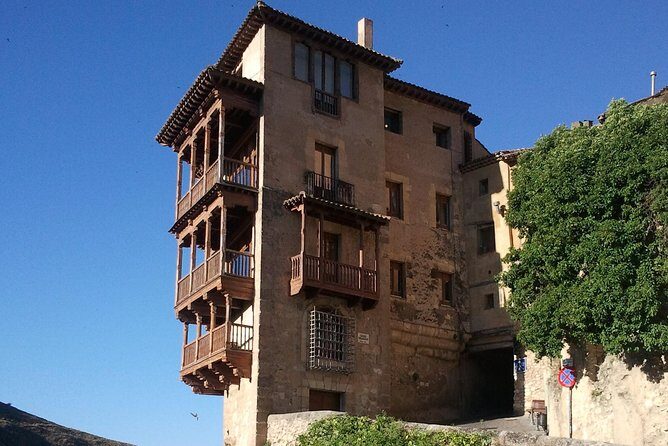
If there’s one image people think of when they think of Cuenca, it’s Casas Colgadas. These are noble houses from the 14th century hanging from the Hoz del Río Huécar, and the view is made even more distinctive by the wooden balconies projecting outward.
This is where the tour’s title theme makes sense. You’re not just seeing buildings; you’re seeing how the basin environment shaped the city’s identity. Your guide’s commentary helps you connect the location to the design choices—why the balconies appear where they do, and how the houses relate to the river channel below.
There’s one drawback to acknowledge: if heights make you uncomfortable, you’ll still be close to dramatic edges here. You can take it at your own pace, but it’s not the right stop to skim.
If you love craftsmanship, it’s also worth focusing on materials. Don’t only look at the overall silhouette—glance at the balconies and think about how wood and stone worked together in an exposed setting.
Escultura de Alfonso VIII: a bronze story tied to Spain’s turning points
After the cliffside views, you’ll reach Escultura de Alfonso VIII, a bronze sculpture honoring the King of Castile who reigned for 44 years. The key story attached to the monument is his victory in the battle of Las Navas de Tolosa, an event remembered for changing Spanish history.
This stop may feel more like a “pause” than an architectural spectacle, but it matters. It reminds you that Cuenca’s buildings weren’t created in a vacuum. Places like these grew with national power shifts, wealth, and changing priorities.
If you enjoy history that links people to places, this is a good moment to pay attention. It’s brief, but it gives the city a human backbone.
The city’s Gothic cathedral project: big, unusual, and unfinished
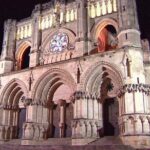
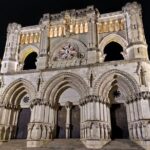
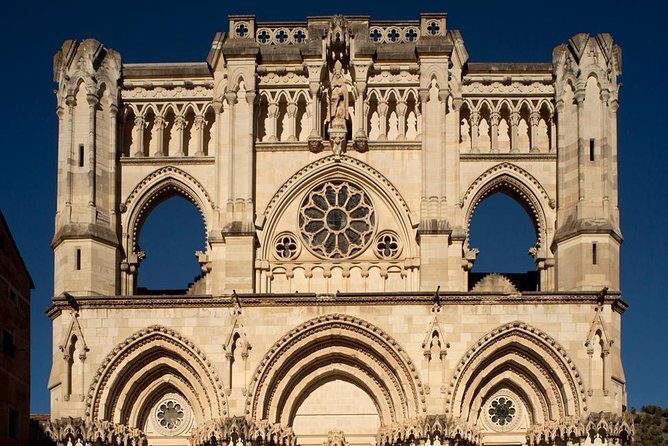
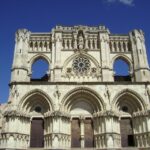
The route also includes a major cathedral element: the first cathedral in the entire kingdom begun in the Gothic style (along with Ávila). It’s described as one of the largest in the country, largely because the city accumulated enormous wealth up through the 16th century.
What you’ll notice is that the cathedral facade is neo-Gothic and unfinished. That detail is important. Many visitors expect a perfect, complete masterpiece, but this one carries its history on its sleeve. The unfinished element is part of the realism of how long-building projects worked, and it changes how you experience the space.
I like this stop because it gives you context for why Cuenca looks the way it does. Wealth funded ambitious building plans, and even when those plans weren’t finished as intended, the size and style still left a lasting mark.
How much walking, and when it makes sense
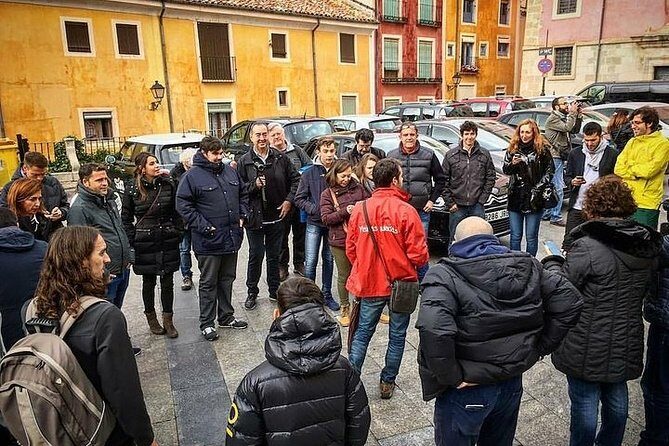
This is a daytime, meeting-in-the-center tour. You start at Pl. Mayor, 1 (11:30 am), and you return to Plaza Mayor at the end. The whole thing runs about 1 hour 45 minutes, and it’s positioned as a good first-visit orientation walk.
That start time matters. At 11:30, you generally get decent daylight for photos and enough time afterward to branch out independently. It also gives you a chance to be fresh rather than saving the big sites for late afternoon fatigue.
The tour also has a weather note: it requires good weather. If the day looks questionable, don’t treat your schedule like it’s guaranteed.
And yes, it’s free-admission at most stops. You’re not paying again and again just to see the basics. The one included ticket moment is for Los Rascacielos de Cuenca inside and out.
Value check: why $10.31 can work here
Let’s talk about value in plain terms. $10.31 is low for a guided route that hits multiple headline sights. The time cost is moderate—about 1 hour 45—so you’re not spending half your vacation attached to a schedule.
You also get more than “look at that.” The tour is designed to help you understand Cuenca’s history, attractions, and layout. That kind of contextual guidance is what makes your later self-guided walk more rewarding.
If you like museums, you might want more depth later. But if you want the best possible first impressions and a practical route map, this is the right kind of guided deal.
Who should book this tour (and who might skip)
I think this works best for you if:
- it’s your first visit to Cuenca
- you want orientation fast
- you enjoy historical explanations while walking
- you like architecture but don’t want to spend the whole day planning
I’d be a little more cautious if:
- you have limited tolerance for walking or uneven terrain
- heights make you uncomfortable, since stops around the cliff edge are part of the experience
- you want very deep, slow museum-style detail (this is more “great overview” than long-form archaeology)
If you’re on the fence, consider how you travel. If you like to hit the highlights and then wander at your own pace, this tour is a strong starting move.
Should you book this Monumental Basin day guided tour?
Yes, if you want a high-impact first day in Cuenca with clear guidance and a route built around the city’s signature sights. The free admission stops keep it cost-effective, and the short included visit to Los Rascacielos adds real value.
Skip it only if you strongly dislike cliff-edge walking or you’re already confident navigating Cuenca without help. For everyone else, this is a smart way to get your bearings fast and leave with enough context to explore the city meaningfully on your own.
FAQ
Where is the tour meeting point?
The tour starts at Pl. Mayor, 1, 16001 Cuenca, Spain.
What time does the tour start?
The tour starts at 11:30 am.
How long is the guided tour?
It lasts about 1 hour 45 minutes.
What are the main stops included on the walk?
You’ll pass major sights such as Plaza Mayor de Cuenca, Plaza de la Merced, Torre Mangana, Los Rascacielos de Cuenca Barrio San Martin, Convento de San Pablo (Parador), Puente de San Pablo, Casas Colgadas, and a sculpture of Alfonso VIII, plus the cathedral area described as a Gothic-style project.
Is admission included for Los Rascacielos de Cuenca?
Yes. Admission is included for the Los Rascacielos de Cuenca Barrio San Martin stop.
Does this tour include a UNESCO World Heritage site?
Yes. The tour highlights include visiting a UNESCO World Heritage site in Spain.
Is the tour dependent on weather?
Yes. The experience requires good weather, and if it’s canceled due to poor weather, you’ll be offered a different date or a full refund.
What’s the group size limit?
The tour has a maximum of 50 travelers.
Are service animals allowed?
Yes. Service animals are allowed.
Is free cancellation available?
Yes. You can cancel up to 24 hours in advance for a full refund, based on local time.
Final nudge
Book it if you want a guided “greatest hits” loop that helps you understand Cuenca quickly. The route is short enough to keep your freedom for the rest of the day, and the mix of squares, towers, bridges, hanging houses, and cathedral context gives you a well-rounded first visit.