REVIEW · MADRID
Madrid Highlights: Private Walking Tour
Book on Viator →Operated by MADride Travel · Bookable on Viator
Madrid clicks when you walk it. This private highlights tour strings together the city’s best-known landmarks with stories that connect royal power, religious art, and everyday street life. I like that it starts at Puerta del Sol and ends at Templo de Debod, so you get a clean path across central Madrid without the guesswork. I also like the private format for a group up to 15, which keeps the pace flexible and the questions coming. One thing to plan for: two of the stops involve places with admission not included, so you may need to pay extra if you want to go inside.
You’ll cover eight stops in about two hours, with short, focused time at each place. Expect easy “look-and-learn” moments at major squares and gardens, plus a real city-feel stop at Mercado San Miguel. It’s a smart way to set the tone for the rest of your trip, especially if you want a guided overview before you start wandering on your own.
In This Review
- Key things you’ll notice on this Madrid highlights walk
- Puerta del Sol: the meeting point that also teaches Madrid
- Convento de las Madres: a quiet break with royal history baked in
- Mercado San Miguel: more than a place to eat
- Plaza de la Villa: medieval Madrid still visible
- Royal Palace and Sabatini Gardens: power, then a breather
- Plaza de España: mixing old references with modern Madrid
- Templo de Debod: ancient Egypt in the middle of Madrid
- How the price works: $236.15 per group up to 15
- What’s included, what’s on you
- Private pacing: for questions, photos, and not rushing
- Practical planning for a smooth walk
- Should you book this Madrid Highlights Private Walking Tour?
Key things you’ll notice on this Madrid highlights walk
- Puerta del Sol monuments and Km 0: You get the meaning behind the markers and statues, not just a quick photo stop.
- Convent of the Mothers with royal-to-convent history: A calmer pause that adds contrast to the squares.
- Mercado San Miguel as a culture stop: You’ll learn why the market matters, even if you just snack lightly.
- Old-town Plaza de la Villa: A medieval-feeling square with political roots that you can actually picture.
- Royal Palace area and Sabatini Gardens viewpoints: You get the palace story and then a good rest-and-look moment nearby.
- Templo de Debod in a city park: Ancient Egypt in Madrid, with views that feel made for golden hour.
Puerta del Sol: the meeting point that also teaches Madrid
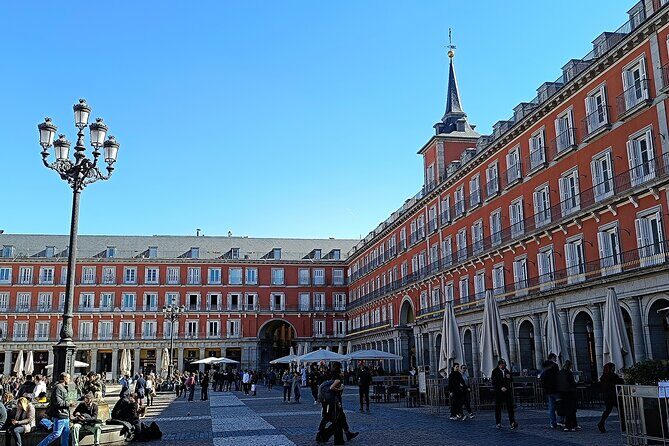
Most people start Madrid by staring at landmarks. This start is better: you begin at Puerta del Sol, right at the historic center of the city. The square isn’t just a transport hub. It’s packed with reference points that help you understand how Madrid labels its geography and identity.
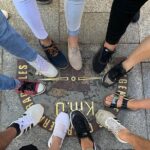
Your guide focuses on three anchors here. First is the famous Km 0 marker, which ties Madrid to Spain’s road network and gives the city a clear “starting line.” Next is the equestrian statue of King Carlos III—a reminder that Madrid’s major public spaces have always been tied to power and ceremony. And then you’ll look at the old Post Office building, a striking piece of architecture that gives context to the modern bustle around it.
Even if you’ve seen Puerta del Sol before, a guided stop changes how you read the space. You start noticing why the monuments are where they are, and what Madrid is trying to communicate with them.
Practical note: Puerta del Sol is busy in the normal way a big central square is busy. This isn’t a slow stroll through empty streets. You’ll be on your feet and you’ll be working around foot traffic, so comfortable shoes are your best friend.
You can also read our reviews of more walking tours in Madrid



Convento de las Madres: a quiet break with royal history baked in
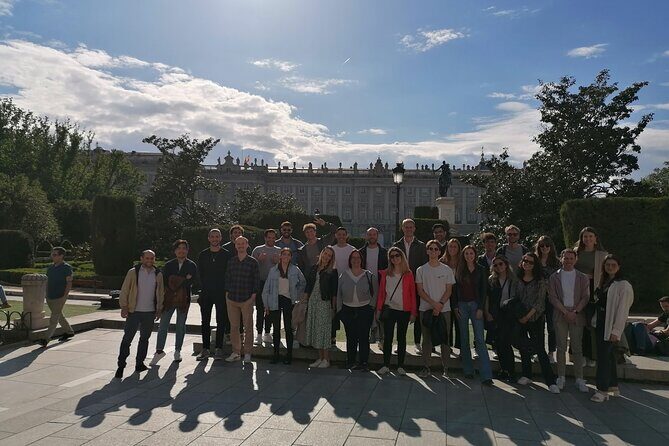
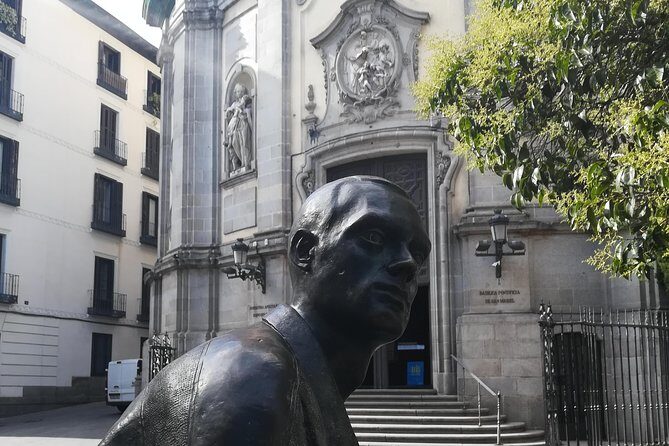
After the main square energy, you shift gears to a much quieter stop: the Convento de las Madres (Convento de las Carmelitas Descalzas). This is one of those places that can feel like a complete story in one glance—because it used to be a royal palace and later became a convent.
The guide’s explanation matters here. You’re not only looking at a religious site. You’re learning that it was tied to Joanna of Austria, and that it houses religious art and relics. That context helps you understand why the cloisters feel peaceful and why noble women of the past chose this form of devotion. In a city full of kings, courts, and public squares, this stop adds contrast.
Timing is short here, so you won’t get a long, deep visit unless you choose to spend extra time on your own. Also, admission is listed as not included, so if interior access is part of what you want, plan on paying separately.
If your Madrid trip includes museums and churches, this stop is a nice bridge between those indoor experiences and the street-level highlights you’ll cover right after.
Mercado San Miguel: more than a place to eat
Then you head to one of Madrid’s most recognizable food stops: Mercado San Miguel. This is where the tour becomes practical in a very Madrid way. You get a quick lesson on why the market is iconic—built in 1916 and now known for gourmet-style stalls.
At this stop, you’re given a city-and-culture framing, not just a shopping list. The guide helps you understand how markets fit into everyday life and why this one became a magnet for local favorites and classic Spanish bites. You can plan to grab something small if you want—though food and drink are not included—so treat this as a flexible stop rather than an all-you-can-taste experience.
One smart benefit here is that Mercado San Miguel acts like a break you can fuel. If you’ve got a long day ahead, a quick snack can save you from the classic mid-afternoon slump.
Plaza de la Villa: medieval Madrid still visible
Next is Plaza de la Villa, one of the oldest squares in Madrid. If you want the feeling of older streets and earlier civic life, this stop helps you slow down your thinking. The square is surrounded by historic buildings, including Casa de la Villa and Casa de los Lujanes, and the atmosphere fits the story: it used to be a center of political life and still carries that sense of importance.
This is the kind of place where a guide makes you look harder. From the square you can start to imagine how Madrid functioned before cars, before big commercial zones—before modern life changed the rhythm. The tour keeps it focused and doesn’t try to turn it into a lecture. You’ll come away with mental images you can use later when you walk past older-looking streets on your own.
Admission for the stop itself is free, and the tour timing keeps it efficient. You’ll get enough to appreciate the architecture and the mood without feeling stuck.
Royal Palace and Sabatini Gardens: power, then a breather
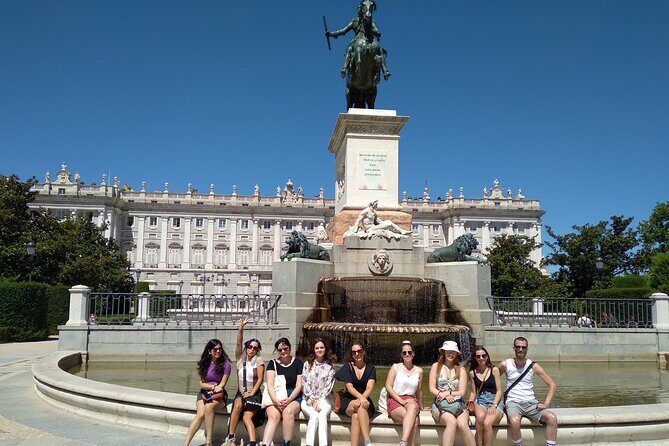
You’ll then move into the Royal Palace orbit. The Royal Palace of Madrid stop gives you the historic thread connecting the palace to the first Bourbon king of Spain. Even if you don’t go inside, that context matters because it helps you interpret what you’re seeing in the area around it. Royal spaces don’t feel random in Madrid. They reflect how the city organized authority.
Important detail: admission for the Royal Palace is not included. So if your plan is to tour the interior, budget extra and adjust expectations about time. If you’re more interested in outside views and big-photo moments, you can still get value from this stop as framed by the guide.
Right after that, you get a calmer, more scenic turn at Jardines de Sabatini. These neoclassical gardens sit beside the palace area, and your time here is designed for a pause: well-kept paths, elegant fountains, and views that let you take in the palace from a softer angle. This part is ideal when you want to lower your mental volume for a few minutes. It’s also a good reset if your day so far has been mostly squares and crowds.
You can also read our reviews of more private tours in Madrid






Plaza de España: mixing old references with modern Madrid
From the palace gardens you head to Plaza de España, one of the city’s major public spaces. This square is described as recently renovated, and the modern planning shows in the green areas and the open layout.
Here, the tour ties the monument to the story. You’ll focus on the Cervantes Monument, which connects to famous literary characters—Don Quixote and Sancho Panza—making this another stop where you learn why Madrid puts icons where it does. It’s a nice change from palace and temple topics, because it’s cultural identity in stone.
You’ll likely find yourself lingering a bit, even with the short scheduled timing. That’s normal. Plaza de España gives you space to breathe and watch life go by while you keep your guide’s explanations in your head.
Admission is listed as free for the stop, so this is another easy win for people who want structure without extra ticket costs.
Templo de Debod: ancient Egypt in the middle of Madrid
Your last stop is Templo de Debod, an ancient Egyptian temple gifted to Spain in 1968. This is the kind of contrast Madrid does really well. In a city that’s packed with its own layers of history, Debod adds a new one—an entirely different civilization—placed into a Madrid park setting.
The focus here is simple and effective: you’ll learn what the temple is and why it ended up in Madrid. And you’ll also get the benefit of the setting—views over the city that can be especially memorable toward sunset, if your schedule lines up.
This end point also makes the tour feel complete. You start in Madrid’s symbolic center at Puerta del Sol, then you move through royal space, civic squares, food culture, and finally a temple that shows Madrid is open to stories far beyond its own borders.
Transportation isn’t included, and the tour ends at Temple of Debod near C. de Ferraz 1 in the Moncloa-Aravaca area. Plan your next step accordingly. It’s easy to keep going from here, but it’s better if you already know what you want to do after the walk.
How the price works: $236.15 per group up to 15
The price is $236.15 per group for up to 15 people, lasting about 2 hours. That pricing model can be a real value if you’re splitting costs with friends or family. Instead of paying a per-person rate that punishes larger groups, you’re paying for a private guide experience scaled to your group size.
So how do you judge value? Think about your group makeup.
- If you’re two to four people, you’ll still likely feel it’s worth it because you’re getting a guided plan across multiple major stops in a tight time window.
- If you’re bigger (close to that 15-person cap), the value can sharpen fast since the guide is still one guide for the group.
- If you’re traveling solo, the price may feel steep compared to group tours, unless you strongly prefer a private, question-friendly pace.
Also consider timing. This tour is commonly booked about 90 days in advance, which suggests it’s popular and not something you should treat as a last-minute gamble.
What’s included, what’s on you
Included items are straightforward: you get a MADride Travel guide and a map of the center of Madrid. You also get a mobile ticket, which makes the whole thing feel modern and less paper-chase.
Not included:
- Entrance fees (notably for the Convento de las Madres and the Royal Palace)
- Transportation
- Food and drink
That last part matters. Mercado San Miguel and the squares give you perfect spots to eat on your own. Just don’t expect the tour to provide meals or tastings. If you want snacks, bring a little cash/card plan and choose what looks good in the moment.
One more practical upside: the guide name Fernando shows up in a five-star highlight of the experience. That aligns with what you want from a central Madrid walk: someone who can connect the dots between monuments and daily life, without turning the route into a history test.
Private pacing: for questions, photos, and not rushing
This is a private tour, meaning only your group participates. That changes the vibe. You don’t have to compete with strangers for the best angle or wait your turn to ask something that popped into your head.
The stop structure is efficient—about 15 minutes each—but private doesn’t mean stiff. If your group wants a few extra minutes at a square or an extra look at a building façade, you’re more likely to get it. It also makes it easier to regroup if someone needs a quick restroom break or a slower photo moment.
One consideration: the walking is still walking. You’re covering central highlights in about two hours, which means you’ll want sensible pacing and shoes you trust. If your group is mobility-limited, you’ll want to think carefully about whether the packed route fits your pace.
Practical planning for a smooth walk
Here’s how I’d set you up for a good experience based on the route style and the stop list.
- Wear comfortable walking shoes. The tour is short per stop, but you’ll still be moving through the center.
- Bring a light layer. Madrid weather changes fast, especially with open plazas and a park end point.
- If you care about interior access, decide early whether you want to pay admission for Convento de las Madres and the Royal Palace. Those are the two explicitly not included.
- Have a plan for a snack. Mercado San Miguel is a great place to grab something small, but you’re responsible for food costs.
- Use transit to get to the meeting point at El Oso y el Madroño, Puerta del Sol 1. The tour is listed as near public transportation, and that matters because you’ll spend less time fighting traffic.
Should you book this Madrid Highlights Private Walking Tour?
Book it if you want a structured, guided walk that covers a lot of Madrid’s recognizable highlights in just about two hours—without turning the day into a museum marathon. The combination of Puerta del Sol, a royal-to-convent contrast at Convento de las Madres, an actual food-market stop at Mercado San Miguel, and the finish at Templo de Debod gives you a smart mix of themes.
Skip it or think twice if you know you only want major interiors. Since entrance fees for the convent and the Royal Palace aren’t included, you may find the scheduled stops feel more like outside learning and short looks unless you’re willing to pay additional admissions.
If your goal is to get your bearings fast, learn what the monuments mean, and leave with a mental map you can use all trip long, this is a strong choice—especially when you’re traveling with a group and can split the cost.